
Spraying is a communication behavior, not a spite behavior. A cat that sprays is usually marking territory or reacting to stress, and punishing her or buying a deterrent before you know the cause rarely works. The first step is to confirm it really is spraying, because peeing outside the box looks similar and has different causes. The second is a vet visit to rule out a medical problem. After that, you can reduce the triggers, clean properly, and change the home so she feels less need to mark. This guide walks through that order.
Short answer
Confirm whether it is spraying or inappropriate urination. See your vet to rule out urinary tract problems. Neuter or spay a cat who isn't fixed, identify what is stressing her (other cats, a view of outdoor cats, a change at home), fix the litter box setup, clean marked areas with an enzymatic cleaner, and ask your vet about further help, such as a behaviorist or medication, if it continues. A male cat straining to urinate with little or no urine coming out is an emergency, not spraying.
In this guide:
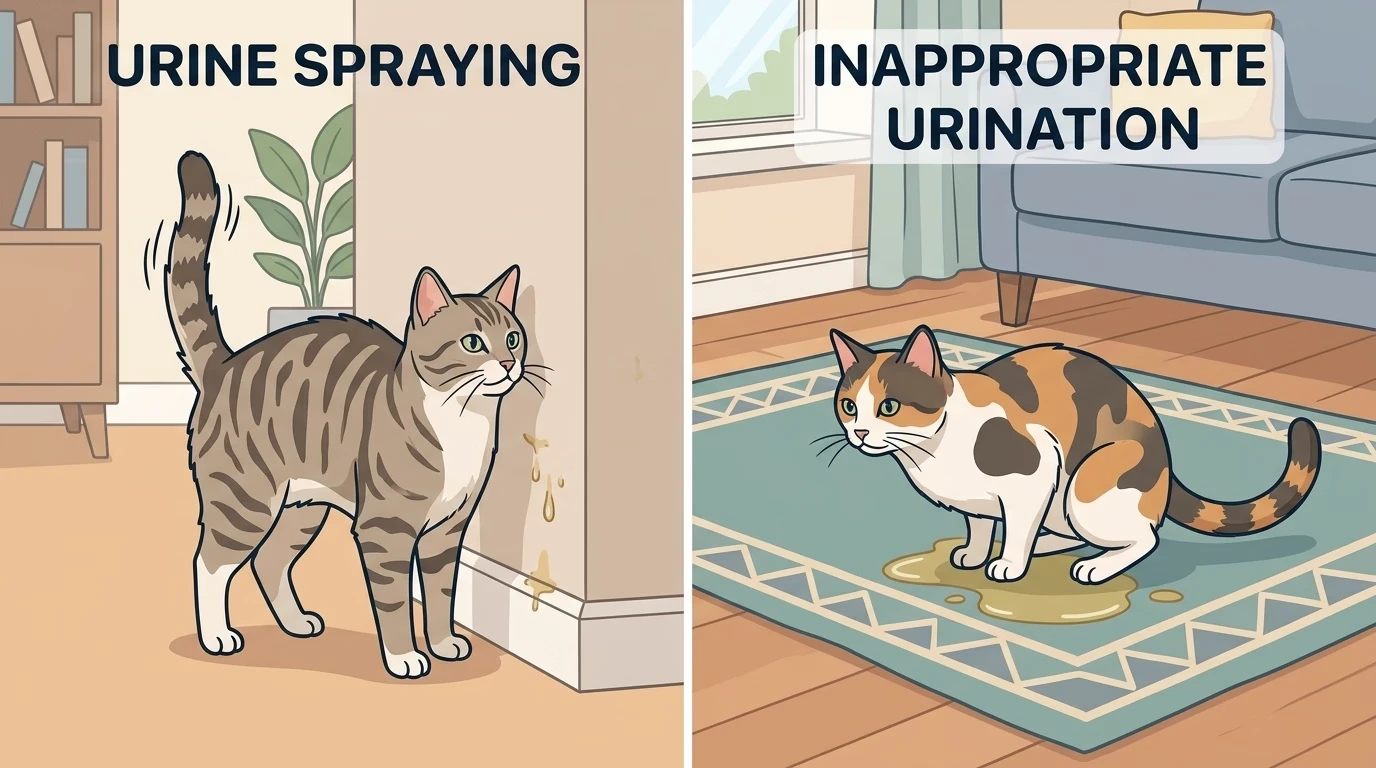
Spraying versus peeing outside the litter box
The two get confused, and the fixes differ.
Cats can do both, and a few cats mark horizontally. Videos from a pet camera help your vet decide, and a photo of the wet spot helps too. If you can't tell, treat it as unknown and go to the vet first.
Rule out medical causes first
A cat that sprays or urinates outside the box may have a urinary problem, including a urinary tract infection, bladder stones, or feline idiopathic cystitis, which is inflammation of the bladder with no identified infection and is linked to stress. Increased urination, straining, frequent trips to the box, crying while urinating, blood in the urine, or licking of the genital area all point to a medical issue. Even if your cat seems to be spraying behaviorally, a vet exam and a urine test are worth doing, because medical and behavioral causes overlap, and stress can trigger bladder inflammation.
Straining in the box is an emergency in a male cat. A urethral blockage can be fatal within a short time. If a male cat is straining, crying, or producing little or no urine, go to an emergency clinic immediately, even if you think he is marking.
Why cats spray
Cats spray to leave scent messages, and they also do it when they feel anxious. Common triggers include:
Being unneutered. Intact males spray most often, and intact females in heat can also spray. Neutering reduces or stops spraying in most male cats, and spaying reduces it in most females. The effect is not guaranteed, especially if the habit has been established for a long time.
Other cats in the home. Conflict, competition for resources, or a new cat can trigger marking, especially in multi-cat households.
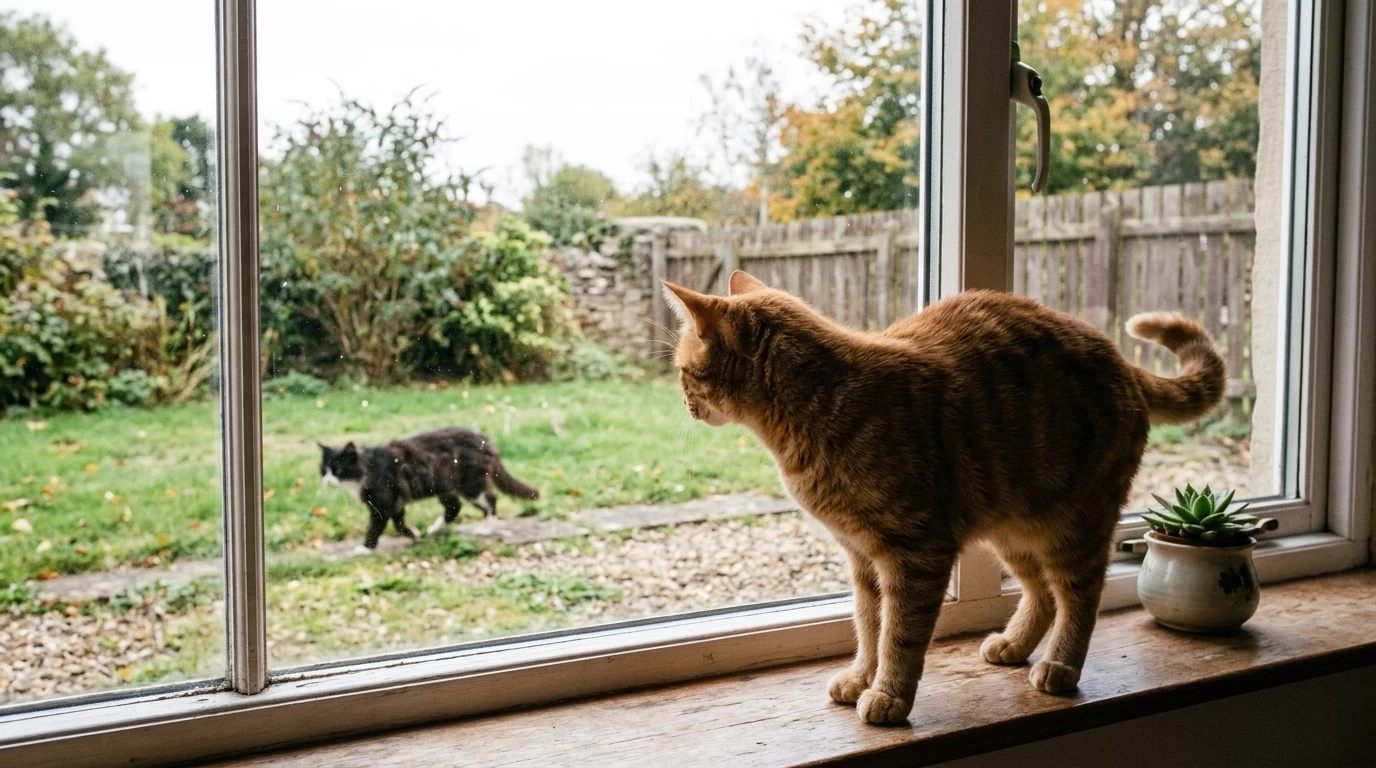
Outdoor cats near windows or doors. A cat that sees or smells a stray in the yard may mark near the window or door.
Changes at home. A move, renovation, new furniture, a new baby, a new pet, a change in work schedule, or a person leaving can all raise her stress.
Litter box issues. Not enough boxes, dirty boxes, boxes in noisy places, or a litter she dislikes can contribute to stress and marking, although these more often cause inappropriate urination.
Boredom or anxiety. A cat with little to do or a lack of hiding and climbing options may be more prone to stress.
Scent of other animals. Visitors, pets, or items that carry unfamiliar scents can prompt marking.
Step by step: a plan that addresses causes
Step 1: See the vet
Get a physical exam and a urine test. Tell your vet exactly where, how often, and in what posture the cat urinates. If your cat is unneutered, ask about neutering or spaying.
Step 2: Track the pattern
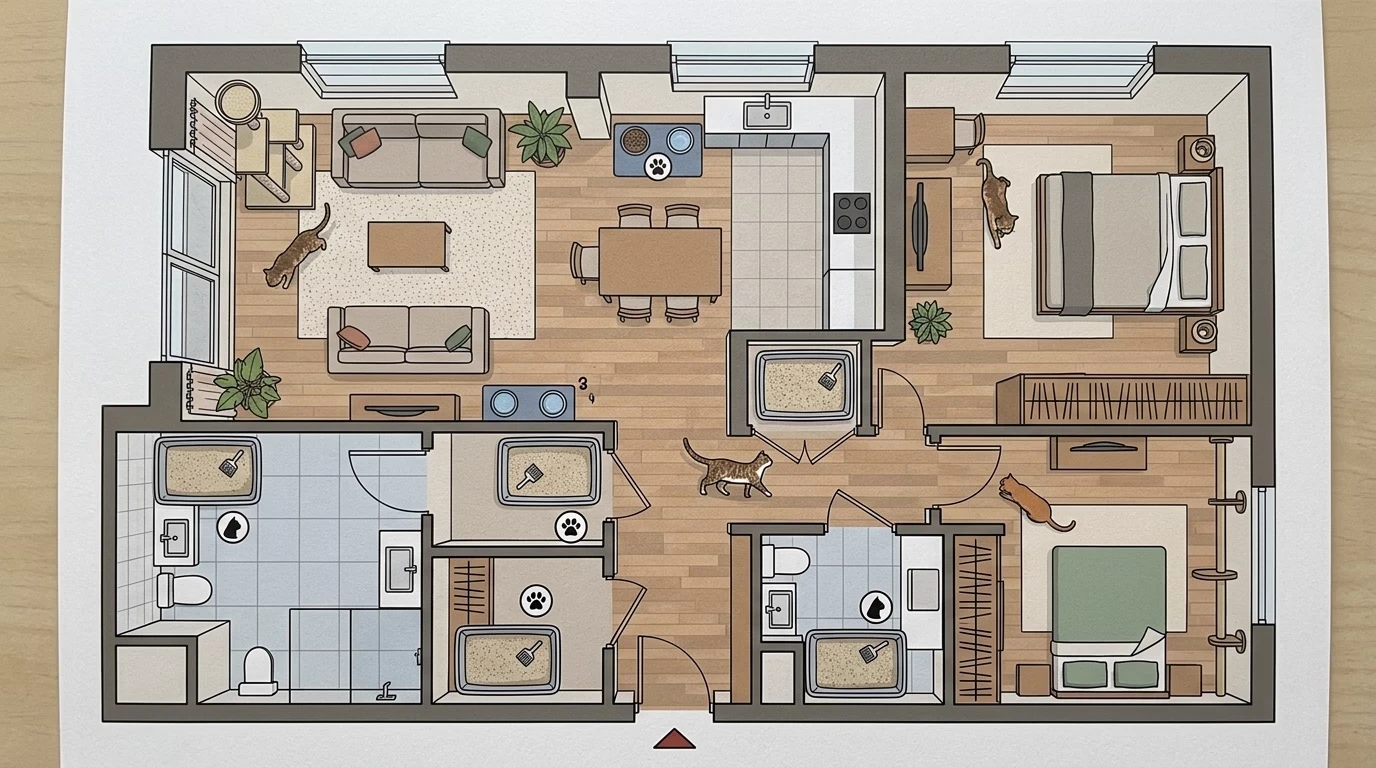
Write down when and where each incident occurs. Look for patterns: a particular wall near a window, times when other cats are outside, after visitors, or after a change. Mark spots on a sketch of the home. A log often shows the trigger faster than guesswork.
Step 3: Reduce visual and scent triggers
If she sprays near windows or doors, block her view of the outside. Options include frosted window film, closing blinds, or moving furniture so she can't reach the window ledge. If strays come into your yard, deterring them from the yard may help, or ask a neighbor to keep their cat in. Don't use anything near the cat that is unsafe for her.
Step 4: Fix the litter box setup
A common guideline from cat behavior groups is one litter box per cat plus one extra, placed in different locations rather than lined up. Use large, uncovered boxes if she doesn't like hoods, keep them scooped at least once a day, and place them in quiet but accessible spots. Don't change the litter abruptly. If you have more than one cat, make sure no cat is guarding the box.
Step 5: Give each cat what she needs
Provide separate food bowls, water, resting spots, scratching posts, and hiding places so cats don't compete. Add vertical space, such as cat trees and shelves, so cats can avoid each other. Daily play with a wand toy can lower tension. Keep routines predictable when possible.
Step 6: Clean marked spots properly
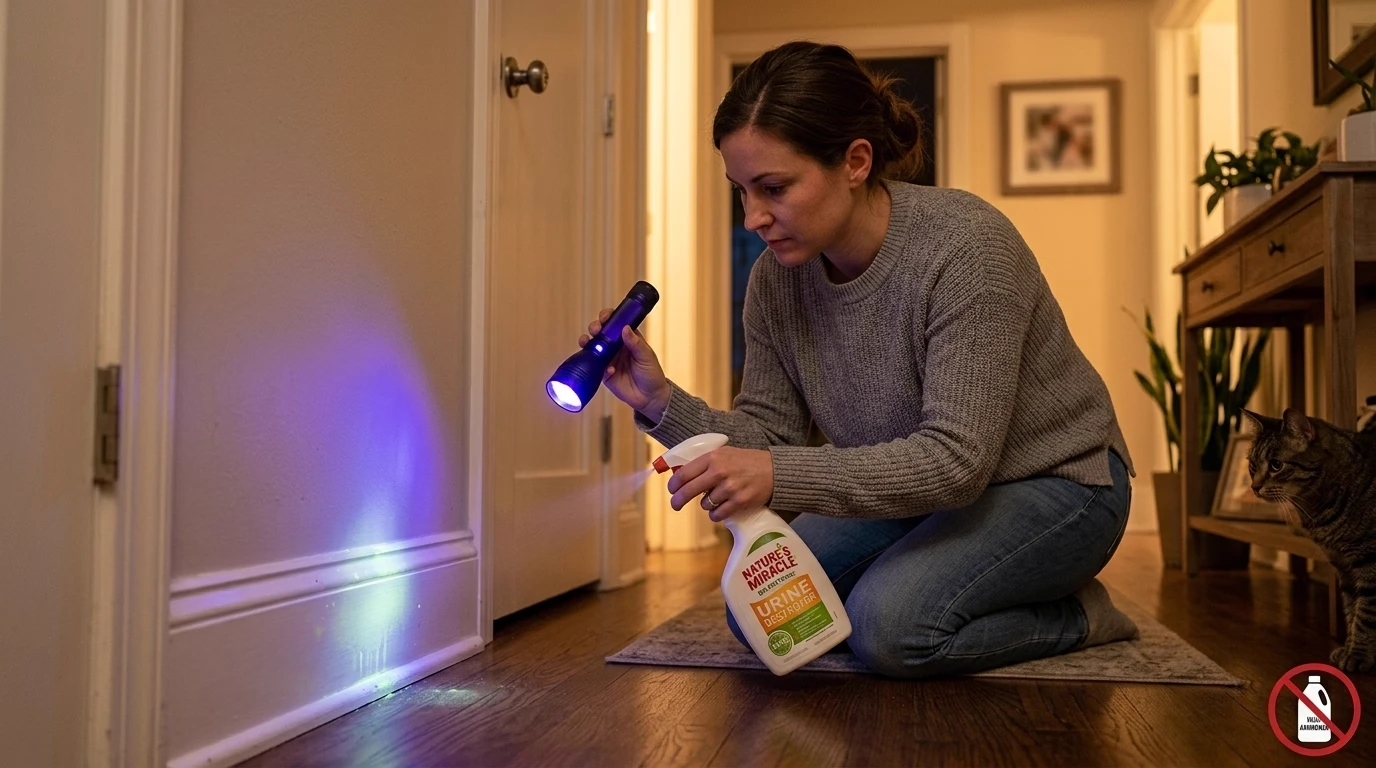
Cats return to places that smell like urine. Soap and water or household cleaners often leave enough odor for a cat to detect, and ammonia-based cleaners can smell like urine to a cat, which may encourage more marking. Use an enzymatic cleaner made for pet urine, follow its directions, and test on a hidden spot first. A UV flashlight can help you find old spots, although it isn't perfect. For soft surfaces such as carpet, you may need to treat the padding underneath, or in bad cases replace it.
Step 7: Change how the spot feels
Some owners make a sprayed spot less attractive by covering it with a surface the cat dislikes, such as plastic sheeting, or by placing a food bowl or a play station there, since cats usually don't mark where they eat. Results vary, and these are temporary aids rather than solutions. Don't use scent-based deterrents that could irritate her.
Step 8: Consider pheromone products
Synthetic feline facial pheromone diffusers are widely sold for marking and stress. Studies have produced mixed results, and some cats seem to benefit while others don't. They are low risk, and some owners use them as one part of a plan. Don't expect them to solve the problem alone.
Step 9: Ask about behavior help
If spraying continues despite these steps, ask your vet about a referral to a veterinary behaviorist or a certified cat behavior consultant. Some cats benefit from prescription anti-anxiety medication alongside environmental changes, but only a vet can prescribe it. Medication works best combined with the steps above.
What not to do
Don't punish her. Yelling, spraying her with water, or rubbing her nose in urine increases fear and can make marking worse. Cats don't connect punishment with an event that happened earlier.
Don't confine her without a plan. Isolation may add stress. Ask your vet if you need a temporary arrangement.
Don't use ammonia products. They can encourage remarking.
Don't assume it's revenge. Cats act from stress or instinct, not spite.
Don't wait for it to go away. The longer a habit continues, the harder it can be to change.
Multi-cat households
In a multi-cat home, you may not know which cat is spraying. Ask your vet about options such as camera monitoring or, in some cases, a safe marker used under vet guidance to identify the cat. Work on relationships between cats: reintroduce them slowly if conflict is the trigger, make sure resources are not guarded, and give each cat her own safe place. If one cat bullies another, the stressed cat may be the one marking.
When to call the vet
Immediately for a male cat straining to urinate, or any cat with blood in her urine, repeated unproductive trips to the box, crying while urinating, or lethargy.
Soon for new spraying, a change in litter box habits, or marking that does not improve after you make the changes above.
For a referral if you have tried the environmental steps and the problem continues.
Frequently Asked Questions
Does neutering stop spraying?
It reduces or stops spraying in most male cats, and in many females. It's not a guarantee, and the earlier the cat is fixed, the better the chances.
Do female cats spray?
Yes, though it is less common. A spayed female can spray, particularly under stress.
Why did my cat suddenly start spraying?
Look for new stressors and see your vet to rule out a medical cause.
Do pheromone diffusers work?
Results vary. They are low risk but not a cure.
Is spraying a sign my cat hates me?
No. It is a sign she feels stressed or insecure about something in her environment.
How long does it take to stop?
It depends on the cause and how long it has been going on. Some cats improve within weeks, and others need longer or professional help.
Related reading
References
International Cat Care, spraying and marking resources (icatcare.org)
AAFP and ISFM Feline Environmental Needs Guidelines (catvets.com)
Cornell Feline Health Center, inappropriate urination and marking (vet.cornell.edu)
A veterinary behavior source such as the American College of Veterinary Behaviorists (dacvb.org)
Check the evidence for pheromone products before making claims about effectiveness
Indoor Cat Flea Treatment: How to Choose a Safe Option