This post may contain affiliate links. If you buy through them I may earn a commission, at no extra cost to you. I don't rank products here, because the right flea treatment depends on your cat and should be chosen with your vet.
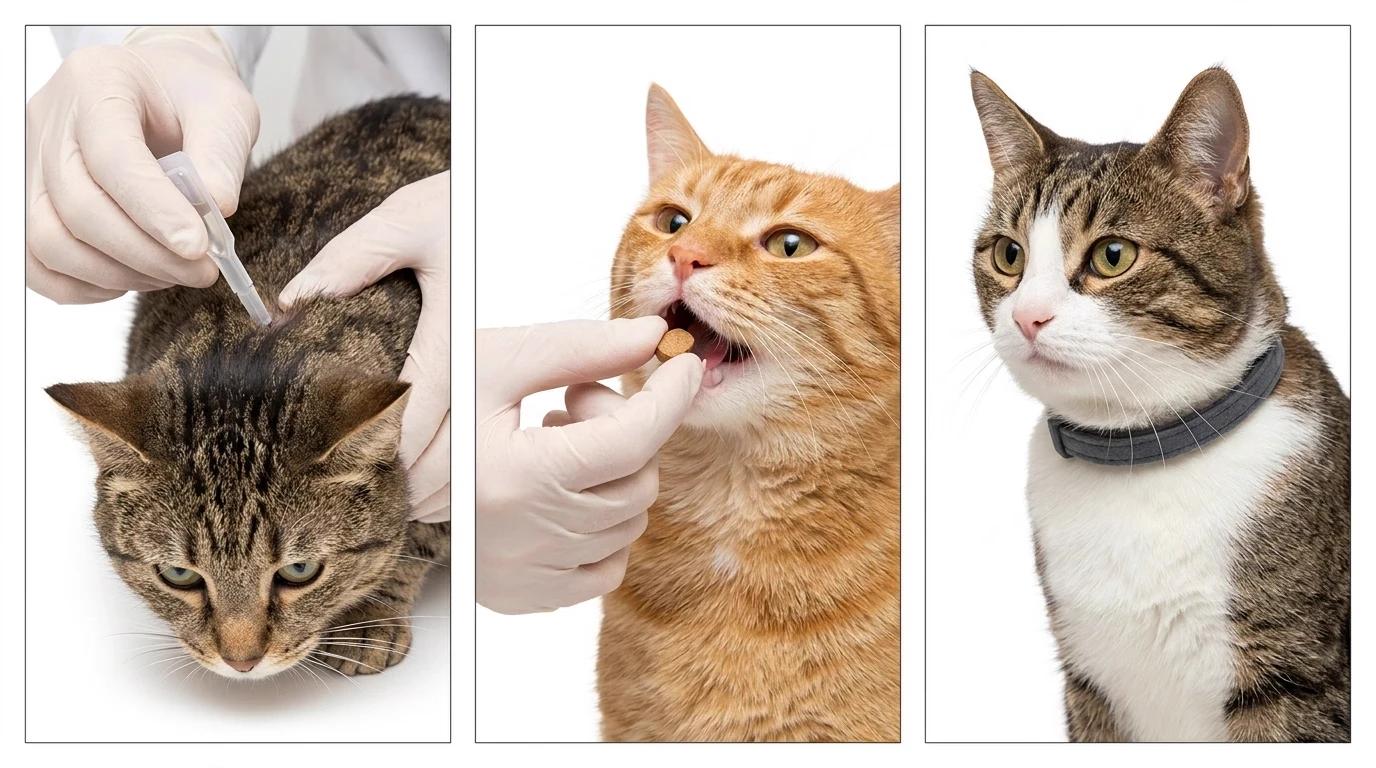
The safest flea treatment for an indoor cat is a product made and labeled for cats, matched to her weight and age, and chosen with your vet. Several types work well, including topical spot-ons, oral tablets, and some collars. The mistakes that hurt cats are using a dog product, using the wrong dose, and trusting "natural" claims. This guide explains the main product types, the safety checks that matter most, how to treat the home, and what to do if your cat reacts badly to a product.
Short answer
Ask your vet which product suits your cat, then read the label for three things: that it says "for cats," that your cat's weight and age fall within the labeled range, and that the active ingredient is one your vet approves. Never use a dog flea product on a cat, treat all pets in the home, and continue for the length of time your vet advises, which is often at least three months.
In this guide:
Start with the one rule that prevents most poisonings
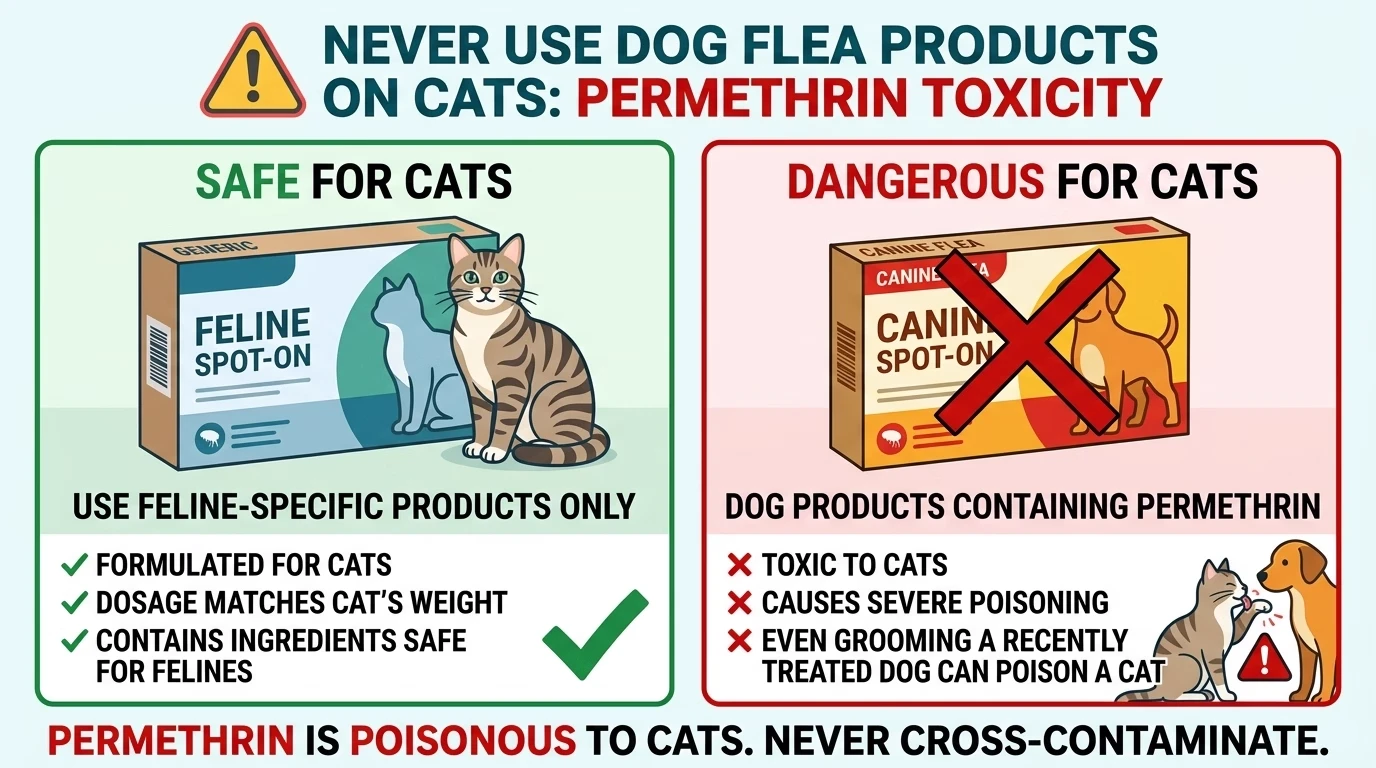
Permethrin and related pyrethroids are common in dog flea products and are highly toxic to cats. A cat can be poisoned by a dog spot-on product applied to the cat, and also by close contact with a dog that was just treated, for instance by grooming the dog's wet fur or sleeping on the same bedding. Signs include drooling, twitching, tremors, seizures, vomiting, and in severe cases death.
So the practical rules are:
Don't apply or give any product that is labeled for dogs, even in a small dose or "diluted."
Read the label of every product that enters the house, including your dog's.
If you treat a dog with a permethrin product, keep the cat away from the dog until the product is completely dry, and ask your vet about the safest approach.
If you think your cat has been exposed, call a vet or poison hotline immediately. In the US, the ASPCA Animal Poison Control Center is (888) 426-4435 and Pet Poison Helpline is (855) 764-7661. Both may charge a fee, and both are US numbers.
What kinds of treatment exist
Flea products differ in how they're given, how fast they kill, and how long they last. These are categories, not endorsements. Available products and regulations change, so check the current label and ask your vet.
Product names and ingredients vary by country, so I'm not listing brands. Ask your vet what's available and approved where you live.
Safety checks before you buy
Run through these every time.
Label and species. The label should say it is for cats. Check it isn't a dog or "dog and cat" product with different dosing.
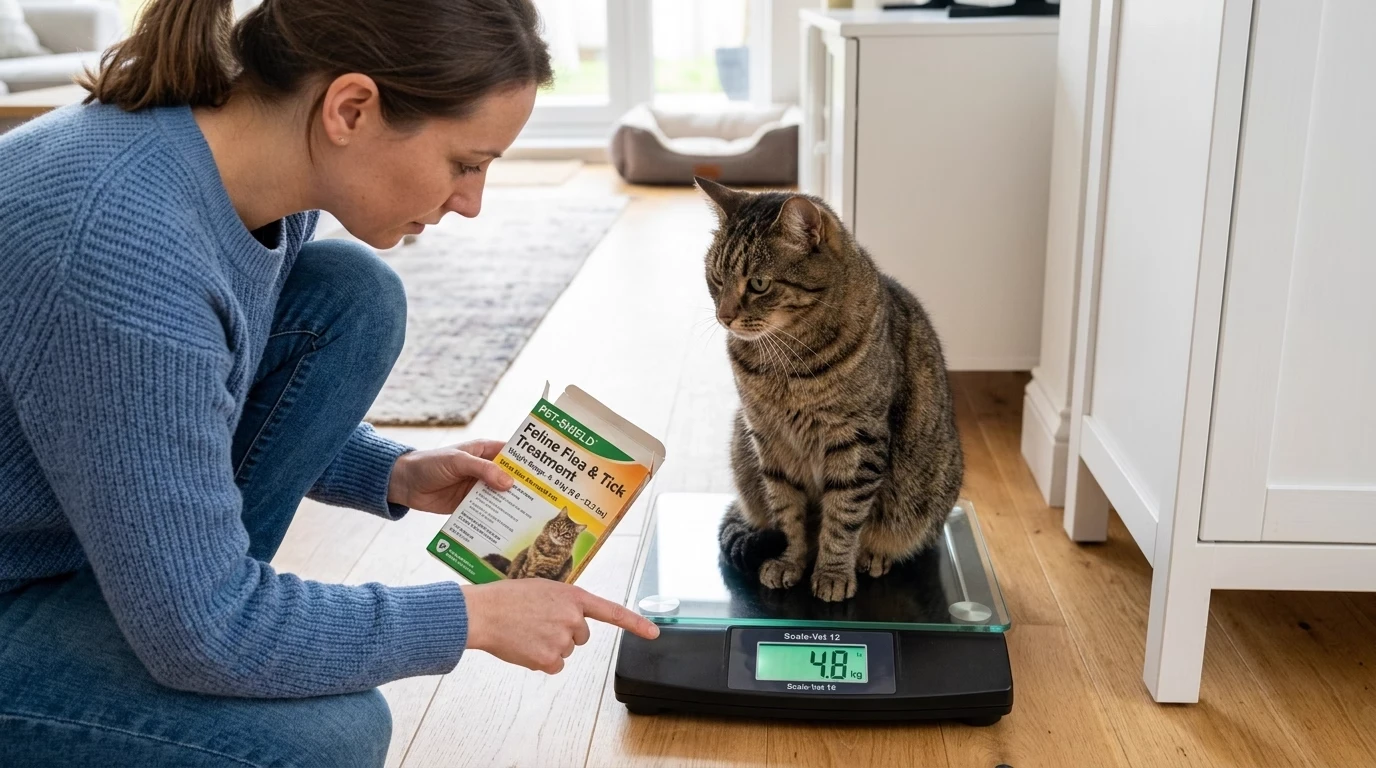
Weight range. Products are dosed by weight. Weigh your cat on a home scale or at the vet, and choose the matching size. A product for a larger cat on a small cat is an overdose risk.
Age and health. Many products have minimum ages and weights, and some aren't recommended for kittens below a certain age, for pregnant or nursing cats, or for cats with certain illnesses. Tell your vet about her health history and any other medications.
Active ingredient. Ask your vet about the ingredient and why they prefer it. Some ingredients are in different classes with different safety profiles.
Prescription or over the counter. Prescription products usually come from your vet. Over-the-counter products still need careful label reading. Buy from a vet or a reputable retailer, since counterfeit or relabeled products exist.
Registration. In the US, topical flea products are regulated by the EPA and oral flea products by the FDA. Look for a registration number or approval on the label.
Known warnings. In 2018 the FDA issued a notice about a class of oral and topical flea products called isoxazolines, noting reports of neurologic adverse events such as muscle tremors, ataxia, and seizures in some dogs and cats. Most pets tolerate them, and the products were not withdrawn, but the labels now carry warnings. If your cat has a history of seizures or neurologic problems, tell your vet before choosing a product.
Why "natural" isn't automatically safe
Cats are sensitive to many essential oils and plant-derived products. Tea tree oil, citrus oils, peppermint, and others can cause drooling, tremors, weakness, or liver trouble when applied to a cat or diffused around one. Home recipes involving vinegar, lemon spray, or garlic aren't reliable for flea control, and some are harmful. "Natural" and "organic" are marketing words, not safety standards. If you want a lower-chemical approach, talk to your vet about what is realistic.
A practical decision framework
Does your cat have a health condition, take medication, or is she a kitten or pregnant? Ask your vet first. This narrows the options a great deal.
Do you also need heartworm or intestinal worm protection? A combination product may be efficient, if your vet recommends it for her.
Does she tolerate being handled and having a liquid applied? If she doesn't, ask about oral options.
Are there small children, other pets, or a dog in the house? Consider contact risks. A dog with a permethrin product is a hazard to the cat, so check every product in the home.
How often can you give it reliably? A schedule you can keep matters more than a perfect product you forget.
Is there an active infestation? Your vet may combine a fast-acting product with a longer-lasting one, plus cleaning.
How to apply a topical correctly
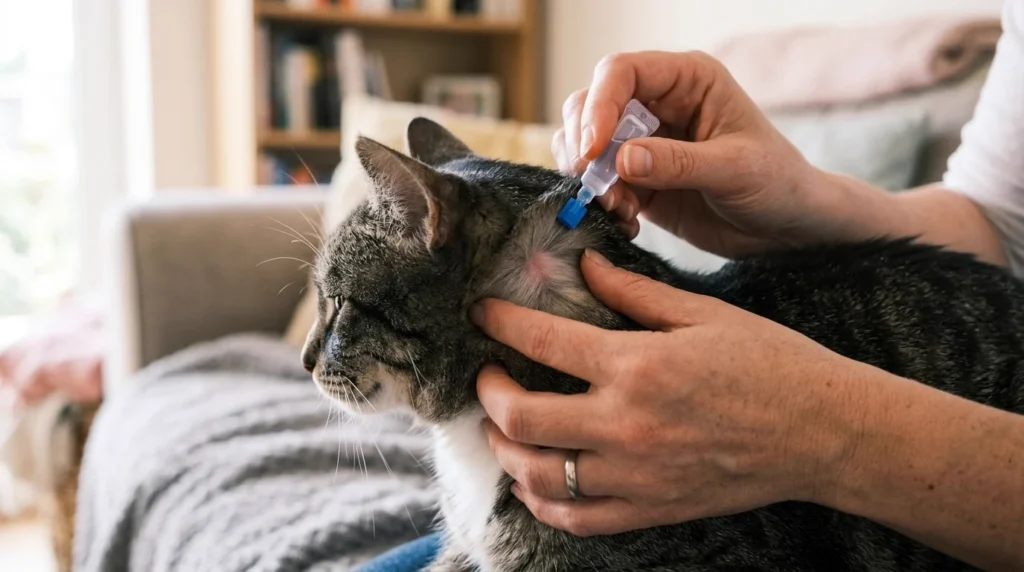
Follow the label exactly. Part the fur at the base of the neck, so the liquid reaches the skin, and apply to the spot the label says.
Keep the cat from licking the spot, and keep other pets from grooming her until dry.
Don't bathe her or let her get wet for the period the label specifies.
Wash your hands afterward.
Never split a dose between cats. Each cat needs her own correctly sized dose.
Mark the date on a calendar so the next dose is on time.
Treating the home
Most fleas, in egg, larva, and pupa form, are in the environment and not on the cat, so treating only the cat leaves the cycle running. Pair a product that kills adult fleas on your pets with household cleaning.
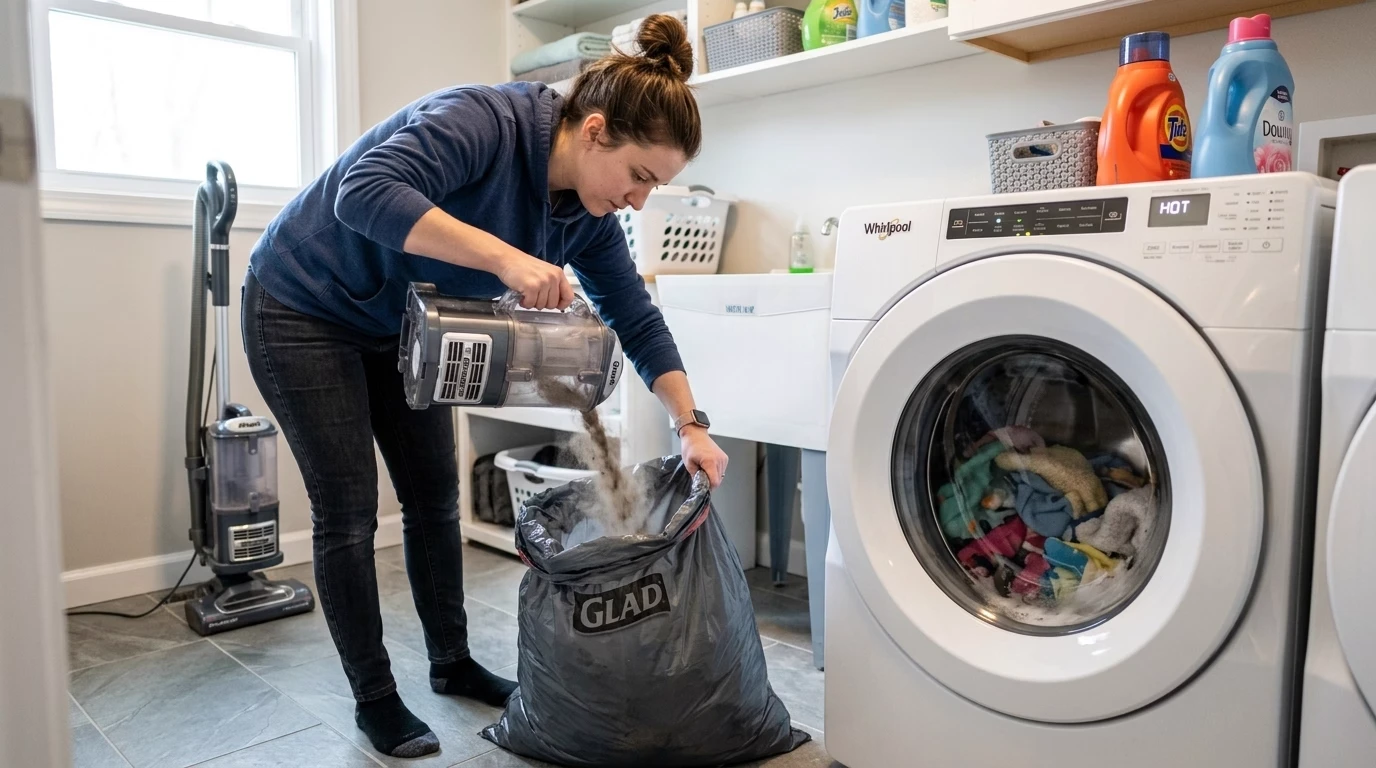
Wash bedding and soft furnishings on a hot cycle where the fabric allows.
Vacuum floors, carpets, furniture, and floor edges often, and throw away the contents outside the home.
Treat every pet in the household at the same time.
Be careful with environmental sprays, foggers, and powders. Some contain ingredients that are dangerous to cats. If you use any, follow the label and keep the cat out of the room for the stated period, or ask your vet or a licensed pest professional about cat-safe options.
Because pupae hatch over weeks, expect to keep treating for several months. Vets commonly advise continuing for at least three months. Seeing a few fleas appear after treatment doesn't always mean the product failed. New fleas that emerge from cocoons usually die after contact with a treated animal, though it can take time. If you see many fleas after a few weeks, or the cat is still itchy, tell your vet.
Signs of a bad reaction
Contact your vet or a poison hotline at once if, after a flea product, your cat shows:
- Drooling or foaming at the mouth
- Twitching, tremors, or seizures
- Vomiting or diarrhea that is severe or doesn't stop
- Weakness, stumbling, or hiding
- Skin redness, hair loss, or sores at the application site
If a topical product was recently applied, your vet or the poison hotline may advise washing it off with a mild dish soap and warm water. Do this only if they say so, and bring the product packaging with you to the vet.
Do indoor cats need year-round treatment?
Many vets and the Companion Animal Parasite Council recommend year-round flea prevention because fleas can survive indoors and a single exposure can start an infestation. Your vet may tailor the advice to your region and your cat's risk.
When to see a vet
If you find fleas on a kitten, a small or elderly cat, or a sick cat, since heavy flea burdens can cause anemia
If your cat has pale gums, weakness, or skin sores
If she reacts badly to a product
If fleas continue after several weeks of correct treatment
Before treating a pregnant or nursing cat
Frequently Asked Questions
Can I use a flea collar from the grocery store?
Only if the label says it's for cats, fits her weight and age, and your vet agrees. Some cheap collars aren't effective, and some contain ingredients that irritate cats.
Is it safe to use my dog's flea treatment on a smaller dose?
No. Dog products are not designed for cats, and a reduced dose doesn't make them safe.
Do I need to treat the house if the cat has fleas?
Yes. Most of the flea population lives off the animal.
Related reading
References
Companion Animal Parasite Council, flea control recommendations (capcvet.org)
FDA, animal health alert on isoxazoline flea and tick products (fda.gov). Check the current wording.
ASPCA Animal Poison Control, permethrin toxicity in cats (aspca.org)
Cornell Feline Health Center, fleas and flea control (vet.cornell.edu)
EPA, pet product safety information for flea and tick products (epa.gov)
Indoor Cat Playground Ideas: Vertical Routes for Small Spaces