Most cat owners assume their pet is fine alone all day. But a poor indoor cat routine is one of the biggest reasons indoor cats develop boredom, stress, and behavior problems. If your cat is home while you’re at work, what happens during those hours matters more than you think.
Cats may sleep 12–16 hours a day, but the remaining time is critical. Without structure, an indoor cat doesn’t “relax” — she disengages. Over time, that turns into weight gain, destructive behavior, overgrooming, and those 3am energy explosions.
A solid indoor cat routine fixes that. Not with complexity, but with rhythm.
Why an Indoor Cat Routine Matters (Especially for Working Owners)
Outdoor cats create their own schedule. They explore, hunt, react to stimuli, and naturally cycle through activity and rest.
Indoor cats don’t have that.
If you don’t create a routine, your cat will invent one — and it usually won’t match your lifestyle.
Cats are crepuscular, meaning they’re most active at dawn and dusk. A proper indoor cat schedule for working owners uses that to your advantage, aligning activity with the times you’re actually home.
Indoor Cat Routine for Working Owners (Step-by-Step Schedule)
This isn’t a rigid timetable. It’s a repeatable structure your cat can rely on.
Morning Routine (Before You Leave)
1. Feed a measured breakfast
Free-feeding kills motivation. A structured meal creates anticipation and gives your cat a reason to engage with the day.
It also acts as a daily health check. A cat skipping food is an early warning signal — and you’ll miss that completely if food is always available.
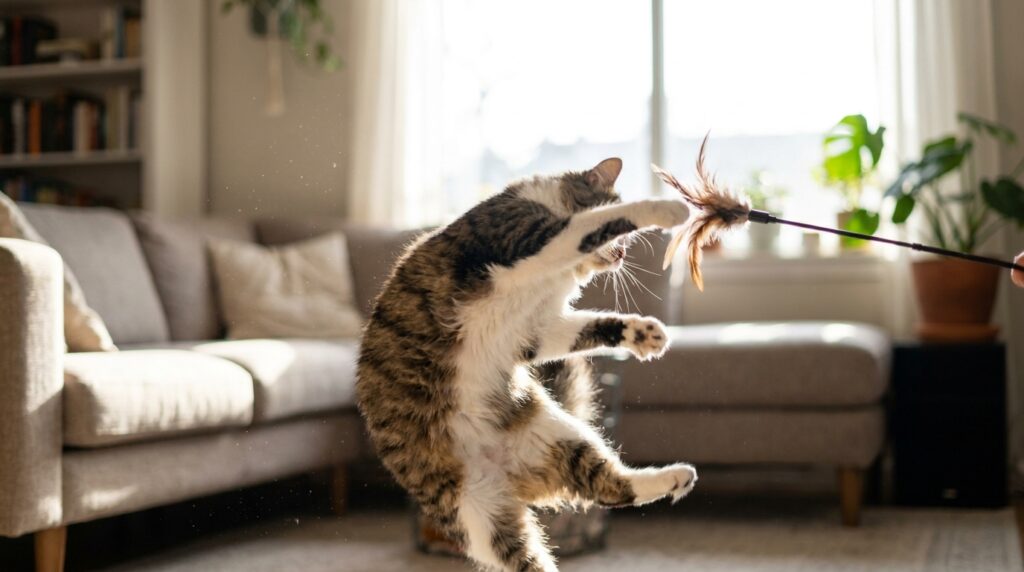
2. 10 minutes of interactive play
This is where most owners fail.
If you skip this, your entire routine weakens.
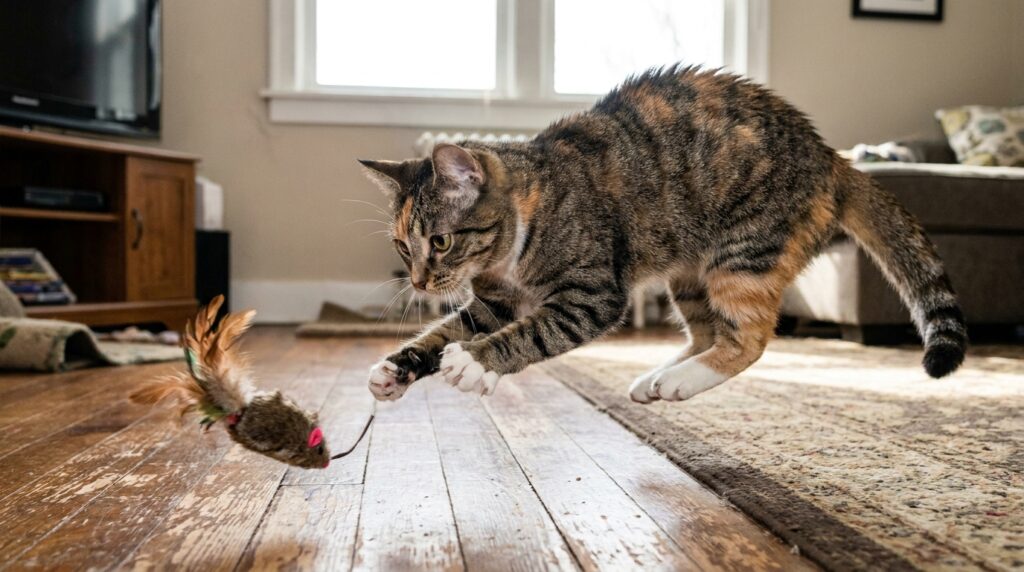
Use wand toys, laser pointers, or anything that triggers chase behavior. This satisfies your cat’s hunting instinct and burns early energy.
End the session properly:
- Let your cat “catch” the toy
- Follow with food or a small treat
This completes the hunt → catch → eat cycle their brain expects.
3. Set up simple enrichment before leaving
This takes 2 minutes but defines your cat’s entire day.
- Leave a puzzle feeder with kibble
- Rotate toys (don’t leave everything out)
- Place a box, paper bag, or new object
Small environmental changes create curiosity — and curiosity fights boredom.
What Your Cat Does While You’re at Work (And Why It Matters)
This is the part most owners ignore — and it’s where problems start.
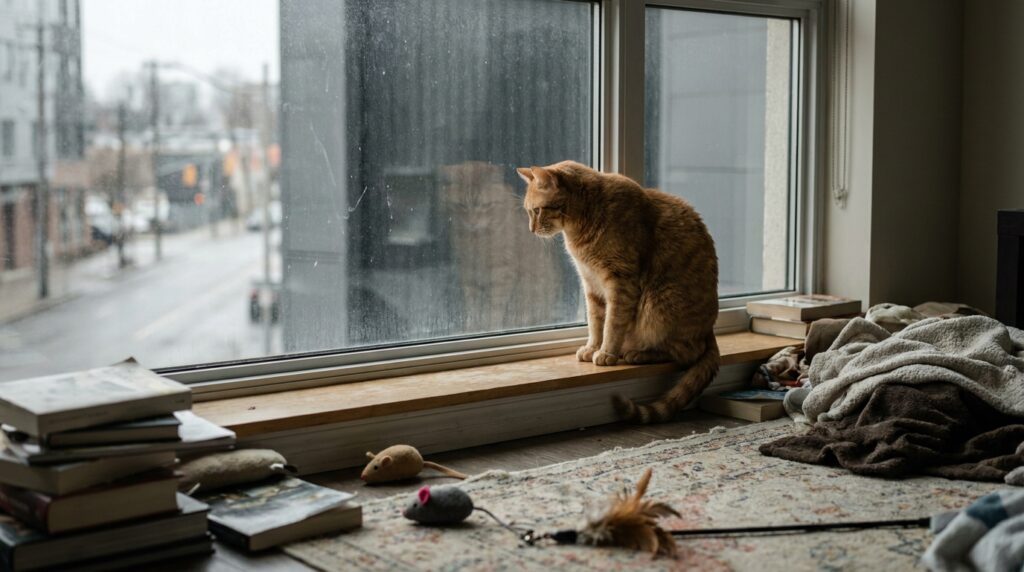
A cat with no stimulation doesn’t just sleep peacefully. She cycles between:
- Light sleep
- Alert boredom
- Frustration
That’s where behaviors like overeating, scratching furniture, or excessive vocalizing come from.
If you want to keep your indoor cat happy while at work, you need to break that monotony.
Midday Routine (While You’re Away)
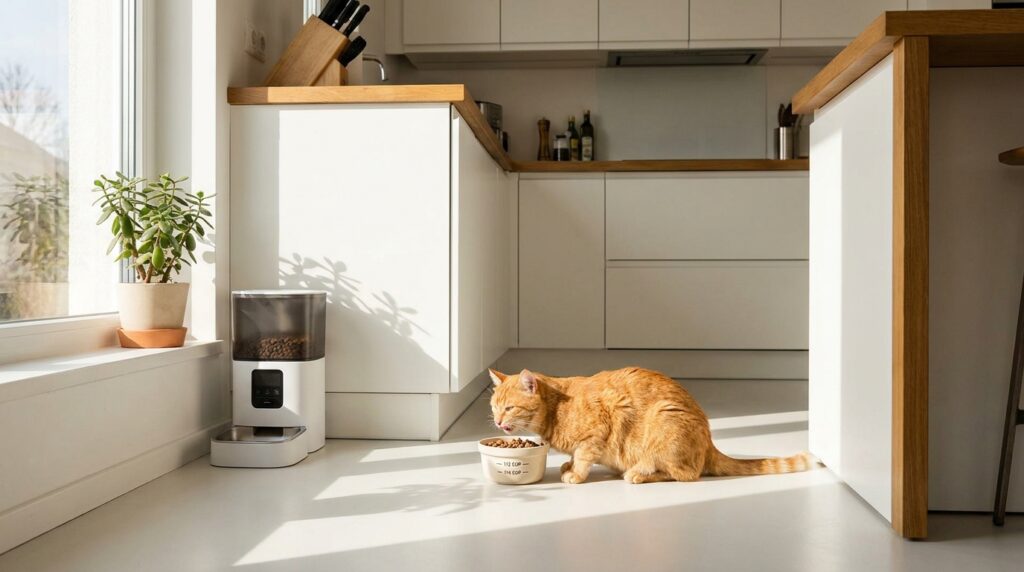
1. Use an automatic feeder
Not as a substitute for care — as a timing tool.
A midday meal:
- Breaks up long inactive periods
- Encourages movement
- Creates a predictable rhythm
2. Passive entertainment matters more than you think
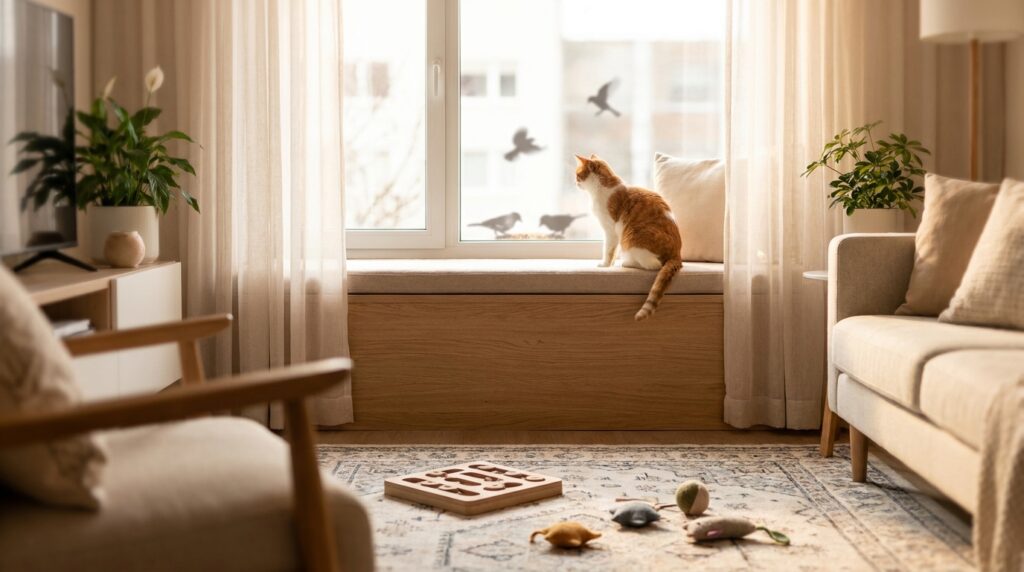
To entertain your indoor cat during the day, focus on low-effort stimulation:
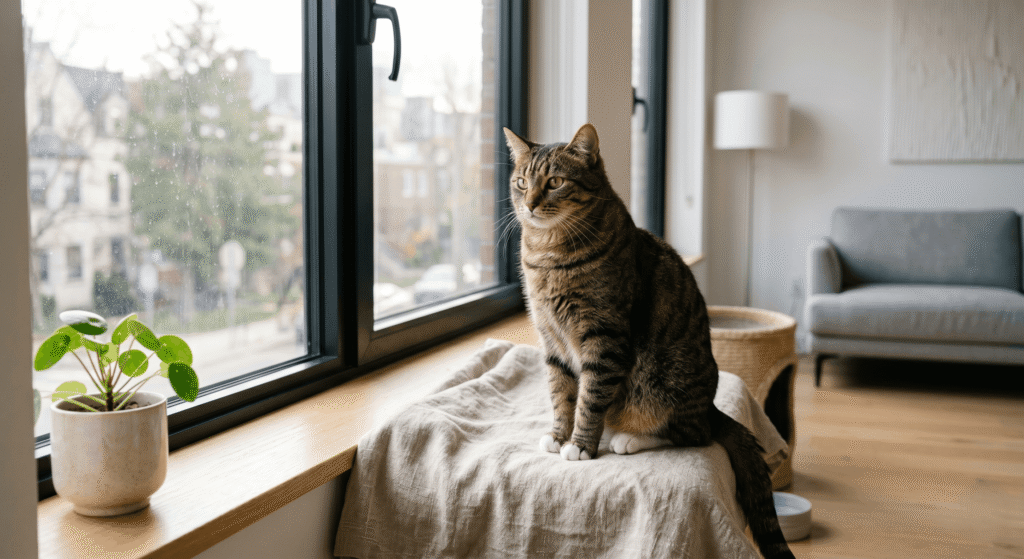
- Window perch with outdoor view
- Bird activity outside (natural enrichment)
- Rotating objects (boxes, textures, smells)
You’re not trying to fully occupy your cat. You’re trying to prevent mental stagnation.
Evening Routine (When You Get Home)
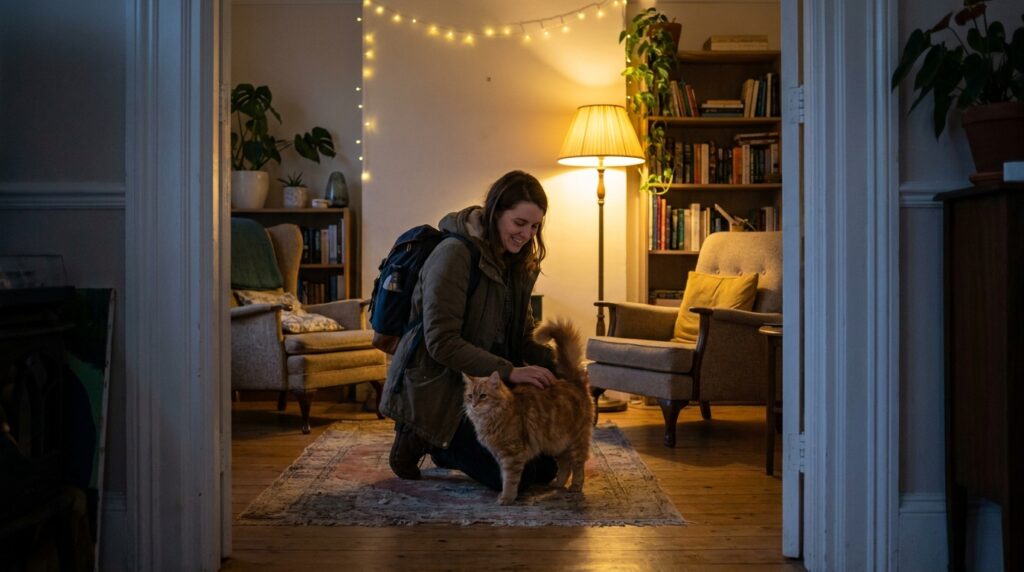
This is the anchor of your entire indoor cat routine.
1. Don’t ignore the greeting
Your cat has been alone for hours.
Even if she seems indifferent, she notices your return. Give her focused attention — no phone, no distractions.
This reinforces security and social bonding.
2. Feed the main meal
Evening feeding works best because:
- It aligns with natural hunting patterns
- It satisfies built-up energy
- It prepares your cat to settle later
Wet food is ideal here due to hydration and overall health benefits.
3. 15–20 minutes of active play
This is non-negotiable.
If your cat is running at night, it’s because this step is missing.
Use high-energy play:
- Wand toys
- Chasing games
- Fast movement across rooms
End with food or a treat again to complete the behavioral cycle.
Night Routine
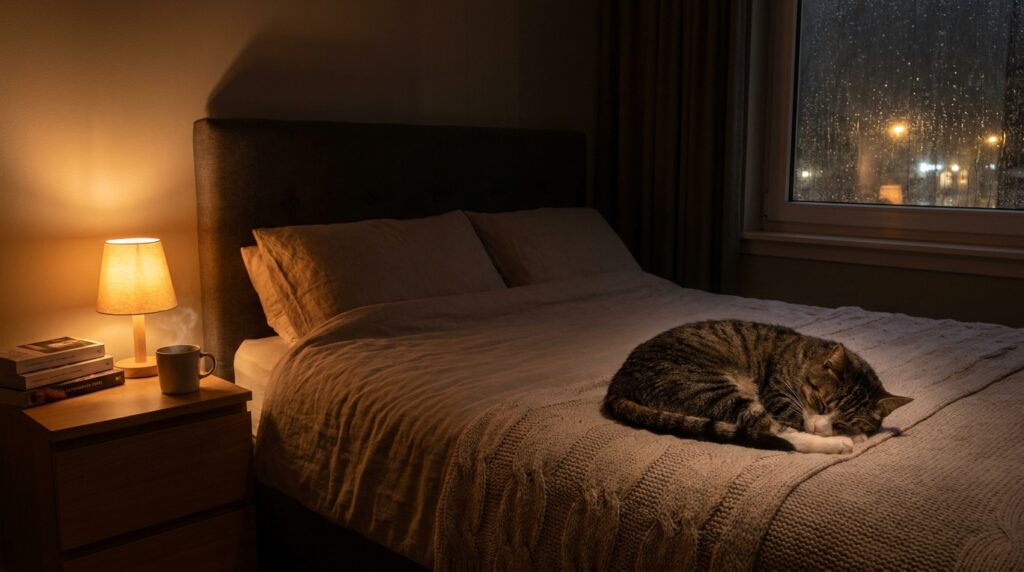
1. Let your cat settle near you
Closing your bedroom door often increases vocalization and stress.
Most cats prefer proximity — not constant interaction, just presence.
2. Optional wind-down activity
Some cats need a final calming action:
- Lick mat with wet food
- Small puzzle feeder
This helps transition into sleep mode.
How to Keep an Indoor Cat Happy While You’re at Work
Your routine will fail without the right environment.
This is where most people underestimate the problem.
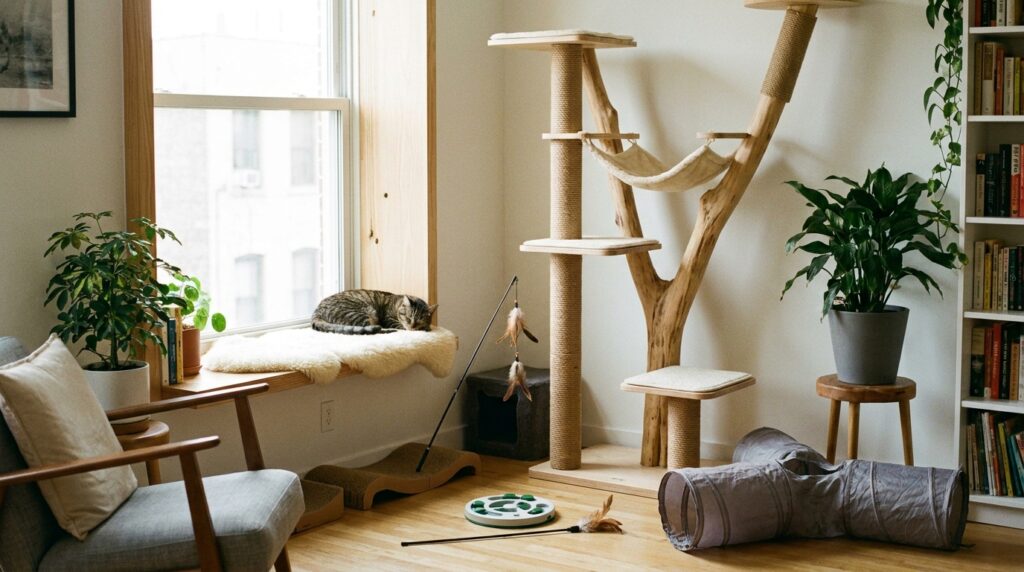
1. Window access (non-negotiable)
A window perch provides hours of stimulation. Movement outside replaces the need for constant human interaction.
2. Vertical space
Cats feel safer when elevated. A cat stuck at floor level experiences low-level stress constantly.
3. Separate food and water locations
Many cats drink more when water is away from food. A fountain improves this further.
4. Multiple litter boxes
One per cat, plus one extra. This prevents stress-related avoidance behaviors.
Signs Your Indoor Cat Routine Is Working
Yoyou’ll see results fast if you did this right, not just kind of right
- Your cat sleeps through the night. finally.
- Energy spikes go down, a bit more steady
- Meal times become predictable, like clockwork
- Less destructive, less attention-seeking vibe
- More consistent litter box routines
If these things dont really get better, the problem is usually the same , over and over
Not enough interactive play
Before getting anything new, just add 10 minutes to playtime each day then check again
The Real Fix for Indoor Cat Boredom
Most “indoor cat boredom solutions” kinda miss the point, it’s usually not the stuff, but what your cat is actually doing, you know. They try to throw toys at it but boredom doesn’t really get solved that way. You dont fix the behavior problem with objects, not really.
Toys might distract for a bit, but structure, that’s what matters.
So your cat doesn’t need yet another random item, she needs a routine, more or less like this, and yeah it sounds simple but it works:
- Predictable activity, like same general times
- Controlled feeding, not constant chaos
- A daily hunting simulation, with real stalking and pouncing, not just chasing a string once
That’s what your indoor cat routine should deliver, if you want the boredom to fade instead of coming back again later.
Final Thought
Cats get in sync with your schedule faster than you might believe.
You don’t need to be perfect though , you just need that steady habit thing.
Indoor cats don’t seem to “struggle” simply because they’re inside. More like, they struggle because nobody ever set up their day so it actually fits.
Change the structure, and the rest sorta falls into place, pretty easily after that.