This post contains affiliate links. We may earn a commission at no extra cost to you if you purchase through these links.
Quick answer: cats stare for a handful of specific reasons — affection, waiting for something (usually food), reading your body language, or occasionally a medical issue if it’s new and combined with other symptoms. A slow blink back almost always means the first one. A hard, unblinking stare from across the room means something else entirely, and I’ll get into which is which.
The stare that started this whole post
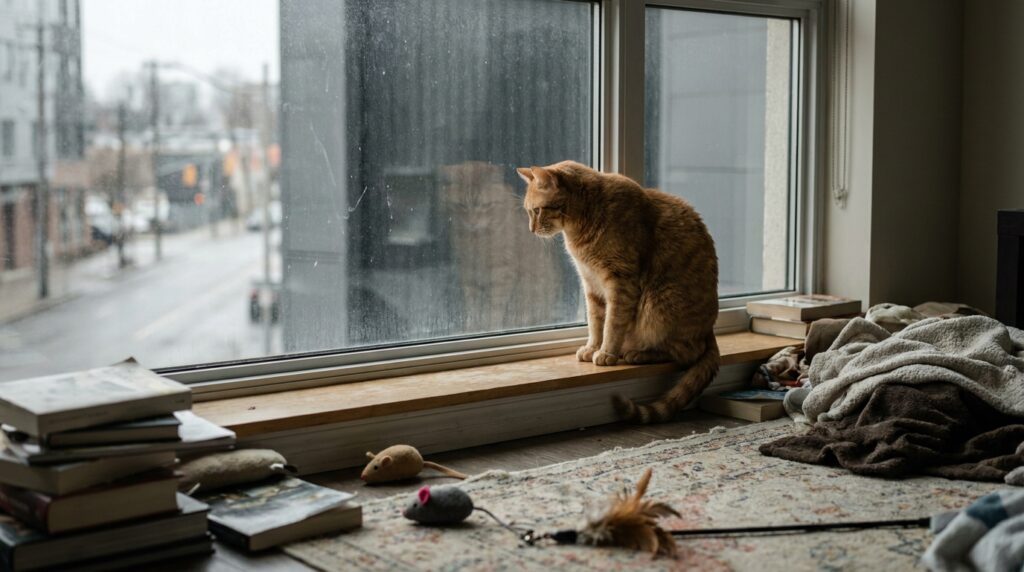
Miso does this thing where I’ll be at my desk, completely ignoring her, and I’ll look up to find her already staring — not blinking, not moving, just watching. It used to unsettle me a little, honestly. Cats have that reputation for being unreadable, and a fixed stare from an animal that can’t just tell you what it wants feels loaded with meaning it probably doesn’t have.
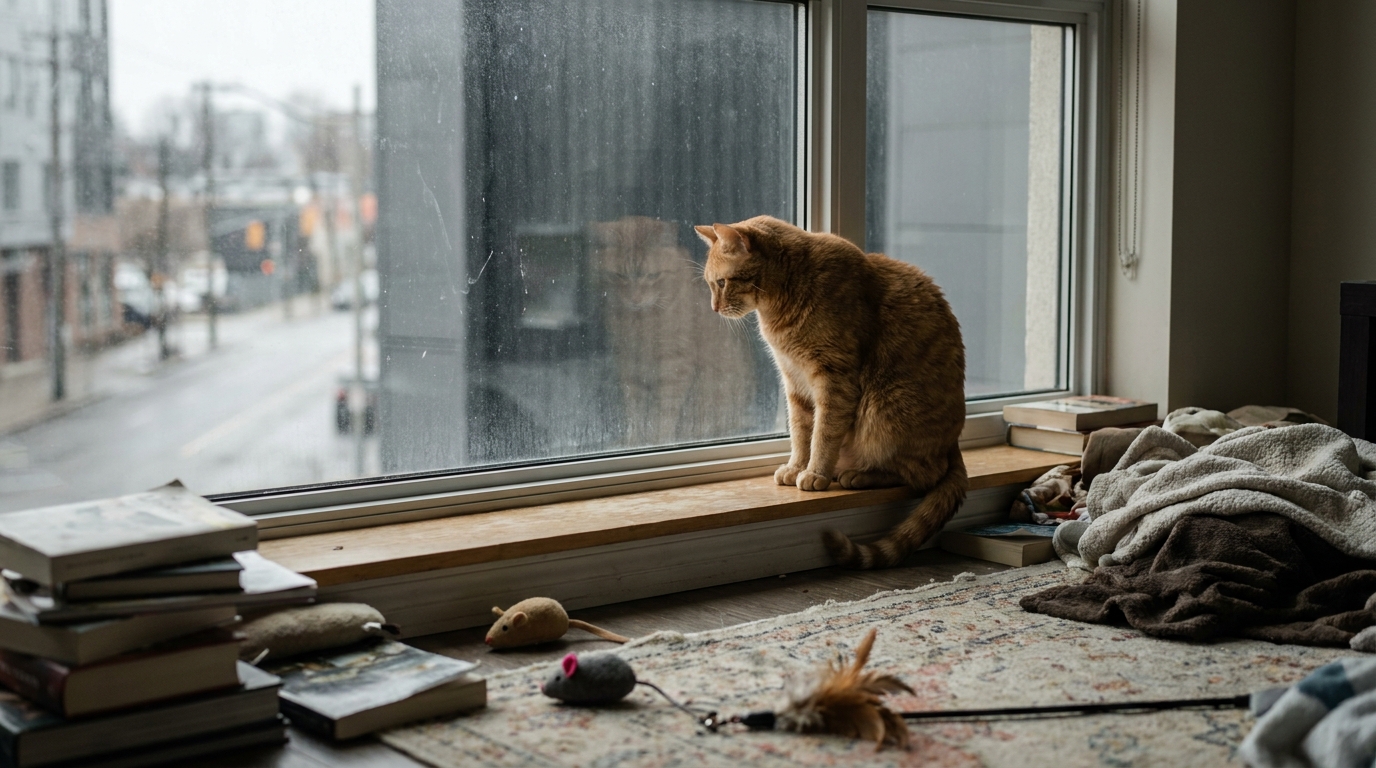
Miso demonstrating the classic, intense, unblinking watch from her favorite windowsill spot.
Turns out most of it does mean something. Just not what people assume. Scratching, meowing, and fixed staring are all common ways our feline friends express their needs. If you’re also dealing with destructive behaviors, check out our guide on signs of boredom in indoor cats to understand what these behaviors mean.
In this guide, we’ll cover:
- The affectionate stare (and the slow blink)
- The “I want something” stare
- The alert or defensive stare
- When staring is new or paired with other changes
- What to actually do about it
- FAQ
The affectionate stare — and how to tell it apart
This is the one most owners are actually dealing with, even if it doesn’t feel that way in the moment. A relaxed cat staring at you with soft eyes, slow blinking, maybe with their body loose and tail still, is doing the closest thing a cat has to saying they trust you.
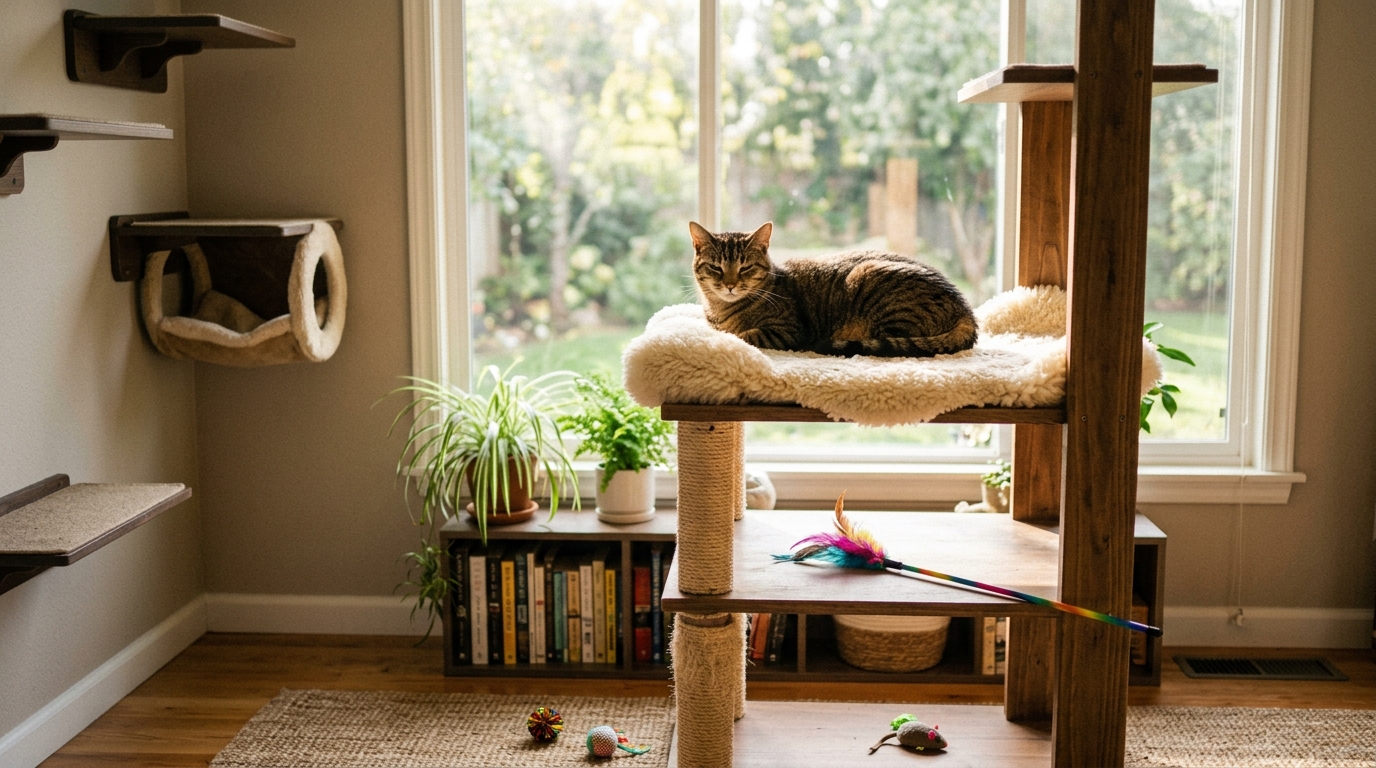
A relaxed body, loose whiskers, and soft eyes are the hallmark signs of an affectionate stare.
The slow blink specifically is worth knowing. Half-close your eyes at your cat, slowly, the way you would if you were sleepy. Cats read this as a deliberate signal — closing your eyes around a predator (which, biologically, you sort of are to them) is a vulnerability move. Understanding cat body language is key to building a strong relationship with your feline. Cats that trust you will often blink back. Beans does this every single morning before breakfast, and it’s the one behavior of his that never stops being a nice moment to have with an animal that mostly ignores me otherwise.
How to tell it’s this one: ears forward and relaxed, tail still or gently moving, whiskers loose rather than pinned forward, body not tensed.
The “I want something” stare
This is the other common one, and it’s less romantic than the first. Cats learn fast that staring at a human tends to produce results — food, attention, a door being opened. It’s a learned behavior, not an emotional one, and it usually comes with a supporting cast: sitting near the food bowl, pacing, occasional meowing, following you room to room.
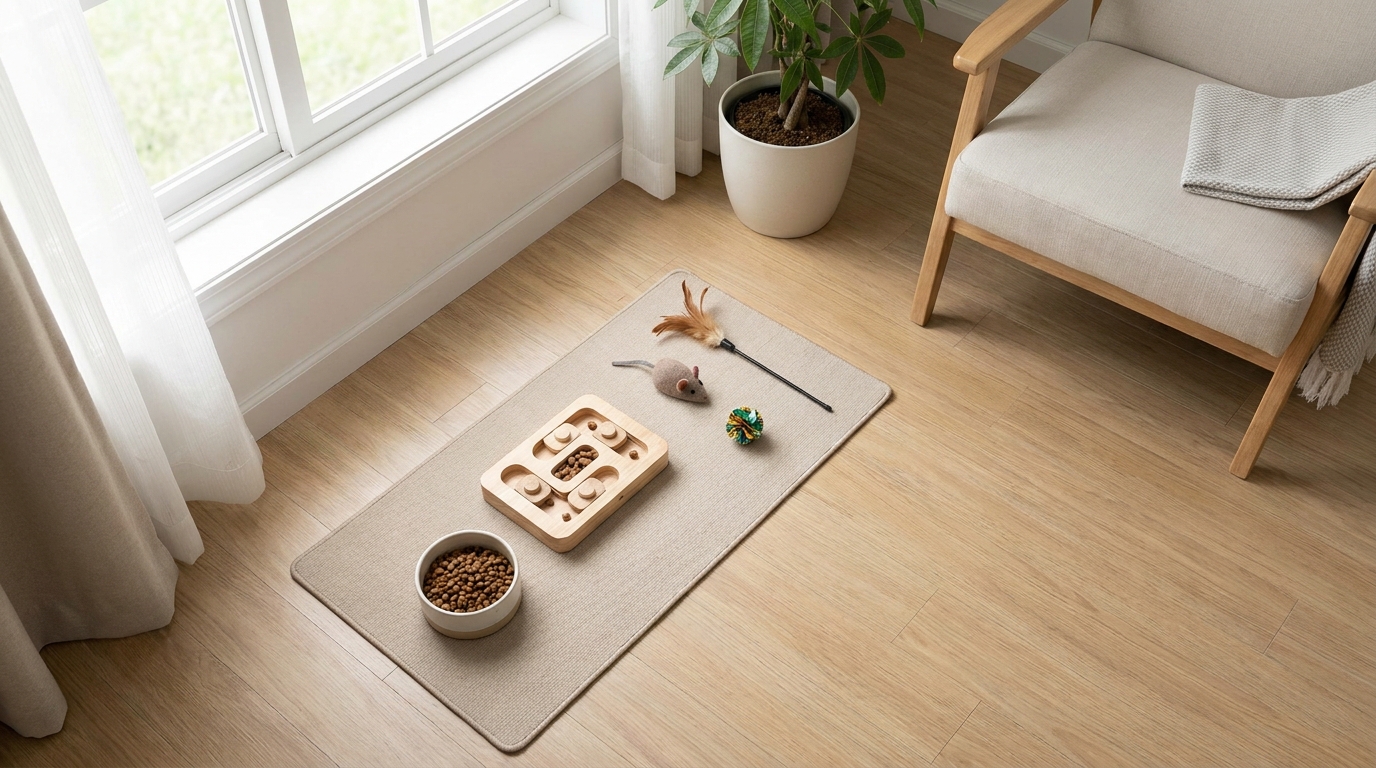
The classic “feed me” stare: direct, persistent, and usually happening right near their food bowl.
If your cat starts this one right around their usual mealtime, that’s not a coincidence. Cats track routines better than most owners give them credit for, and a hard stare at 5:45pm when dinner is normally 6pm isn’t philosophical. It’s a request. To manage this behavior, establishing a structured indoor cat daily schedule can help keep your cat on a predictable timeline.
If you’re dealing with early morning staring (like the dreaded 4:00am wake-up call), an automatic feeder is an absolute lifesaver. It detaches you from the food delivery process, so your cat stops staring at you to make breakfast appear.
Alternatively, keeping them occupied with a puzzle feeder can turn mealtime into a stimulating game, slowing down their eating and satisfying their natural hunting instincts. Check out our picks for interactive automatic cat toys for more ways to keep them entertained.
The alert or defensive stare
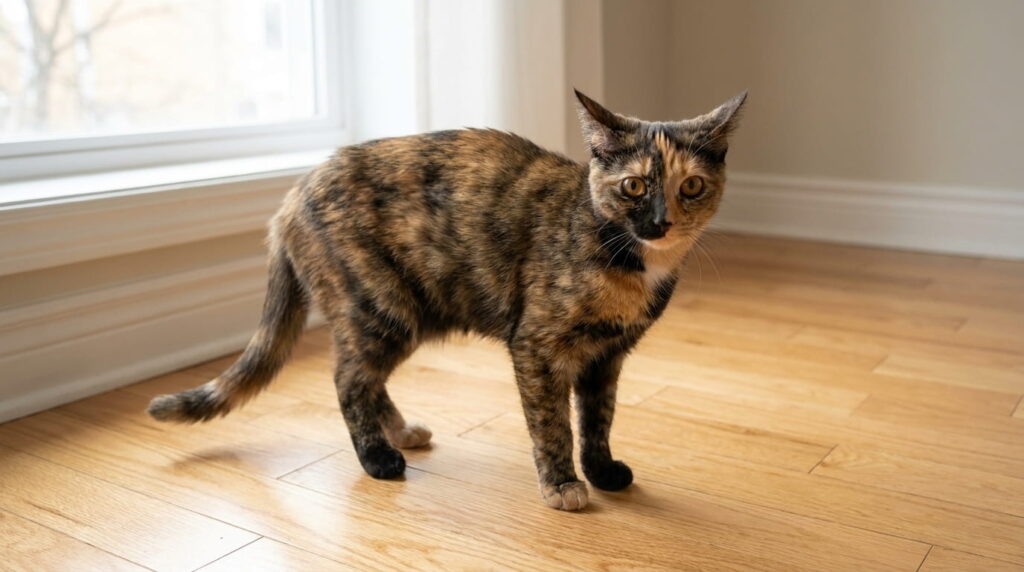
This is the one people mean when they say a cat’s stare feels “off.” Dilated pupils, a stiff or crouched body, ears flattened or rotated back, tail low or puffed — this is a cat that’s assessing a threat, not bonding with you. It shows up most often between cats in a multi-cat household, but it can happen toward a person too, usually after a startling movement or an unfamiliar sound.
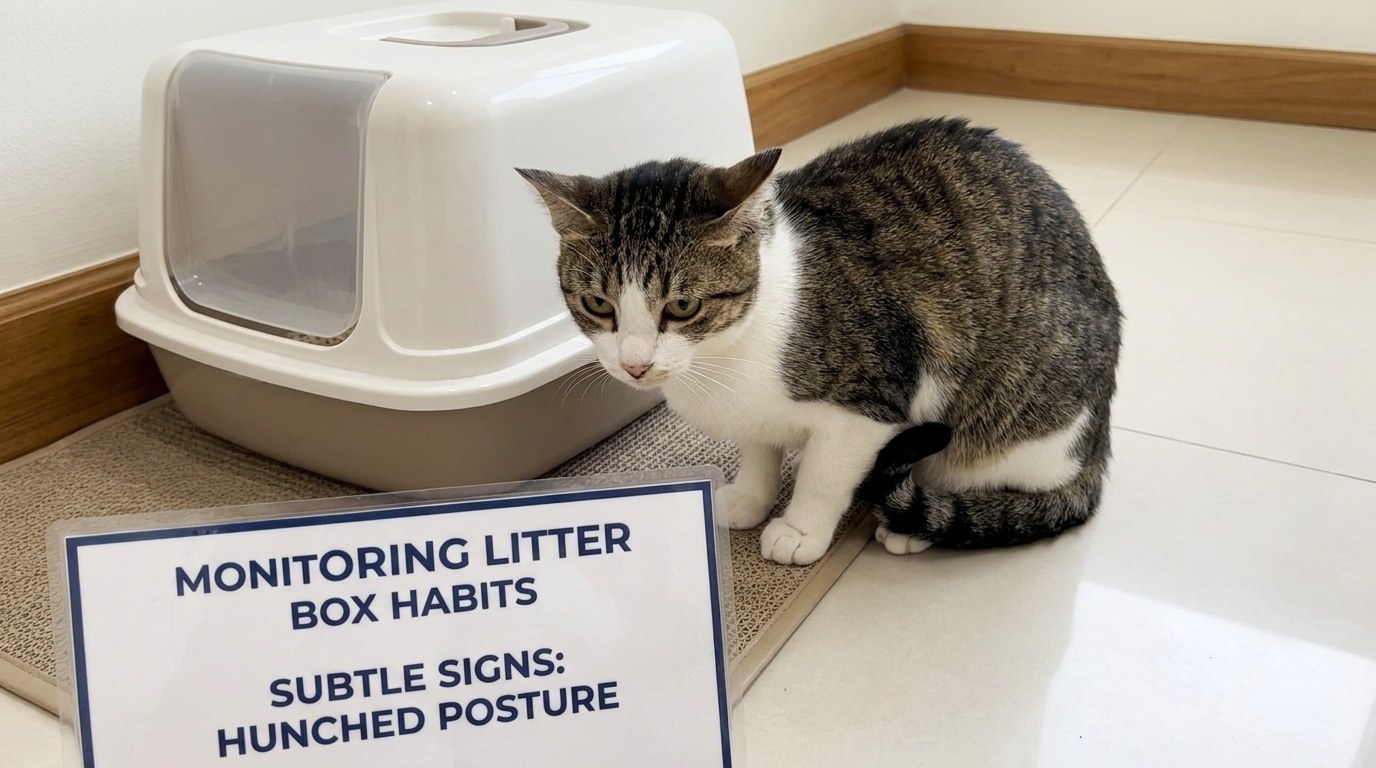
Stiff body posture and tense alert whiskers signal that the cat is in a defensive or threat-assessing state.
The fix here isn’t to stare back — that reads as a challenge to a cat in this state, the same way it would to most animals. According to the Humane Society, direct eye contact is perceived as confrontational by anxious felines. Look away, move slowly, and give them space to de-escalate on their own terms. If your cat is frequently tense or showing anxiety, check out our guide on why your cat is bored at night to see if nighttime energy or environmental stress is contributing to their anxiety.
For high-energy cats, redirection is key. Using simple interactive wand toys can burn off that nervous energy safely.
When the staring is new — and paired with other changes
Most staring is completely normal. Occasionally it isn’t. If a cat suddenly starts staring at walls, corners, or empty space — not at you, at nothing — and it’s a new behavior, especially in an older cat, it’s worth mentioning at their next vet visit. On its own it’s rarely urgent. Paired with disorientation, changes in appetite, or altered sleep patterns, it can point toward cognitive or neurological changes that are worth ruling out.
This isn’t meant to be alarming — the vast majority of cat staring is affection or hunger, full stop. It’s just the one exception worth knowing about so you’re not missing something real.
What to actually do about it
- If it’s the affectionate stare: slow blink back. It costs nothing and it’s one of the more genuine ways to communicate with a cat on their terms.
- If it’s the “I want something” stare: decide whether you’re actually going to feed on demand or hold the line on your schedule — cats that get rewarded for the stare will keep doing it, which isn’t a problem unless it’s happening at 4am.
- If it’s the alert stare: give space rather than direct engagement.
- If it’s new, sudden, and paired with other symptoms: that’s the one to bring up with your vet rather than wait out.
FAQ
Is it rude to stare back at my cat?
No — a relaxed return stare with slow blinking is read as friendly. A hard, unblinking stare held too long can read as a challenge, especially to an anxious cat.
Why does my cat stare at me while I eat?
Almost always food-motivated. Cats associate you eating with food being nearby and available, whether or not they’ve ever actually gotten any of yours.
Why does my cat stare at me and then run away?
Common in cats that are curious but not fully confident — they’re gathering information from a safe distance rather than approaching directly.
Do cats stare at their reflection or at nothing?
Occasionally, and it’s usually harmless curiosity or investigating a sound/movement you didn’t notice. Frequent staring at nothing, especially if new, is the one pattern worth mentioning to a vet.
Does your cat have a specific stare you’ve learned to read — the “feed me” one, the “I love you” one, something else entirely? Curious what other owners have picked up on.