Most cat owners notice something is off before they can name it. The furniture gets scratched. The yowling starts at 2am. A patch of fur disappears from behind the shoulder blade. You Google it, land on a list of “10 signs of bored indoor cat,” skim it in thirty seconds, and close the tab without knowing what to actually do.
Here is what those articles miss: not all boredom signs are equal. Some are mild and easy to fix. Some have escalated into compulsive territory and need more than a toy rotation. And some are not boredom at all — they are medical symptoms that happen to look like boredom, and treating them as behavioral will make things worse.
This guide walks through each sign of bored indoor cat behavior in real detail — what it looks like, why it happens, and what it’s actually telling you.
Also Read: Why Is My Indoor Cat Bored at Night? The Real Reasons Explained
Why Indoor Cats Get Bored in the First Place
Before the signs make sense, the cause has to be clear.
In the wild, a cat spends most of her waking hours hunting, patrolling territory, climbing, and navigating a landscape that changes every day. Your home does not do that. The layout is fixed. The smells are familiar. The prey does not move. A cat who gets no new stimulation essentially lives the same Tuesday on repeat, indefinitely.
Being inside drastically limits opportunities for natural cat behaviors like stalking, climbing, exploring, and hunting. In the wild, cats spend their days searching for food and surveying territory. Indoor life removes those behaviors if owners are not intentional about providing them.
The result is an animal with intact instincts and nowhere to direct them. Boredom in cats is not a personality flaw. It is a mismatch between biology and environment.
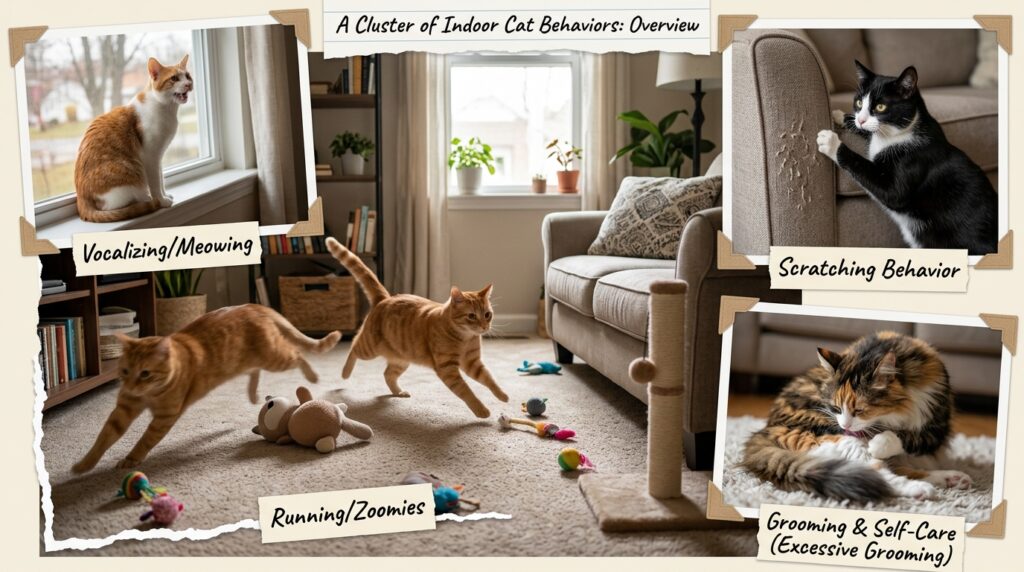
The Signs: What They Look Like and What They Mean
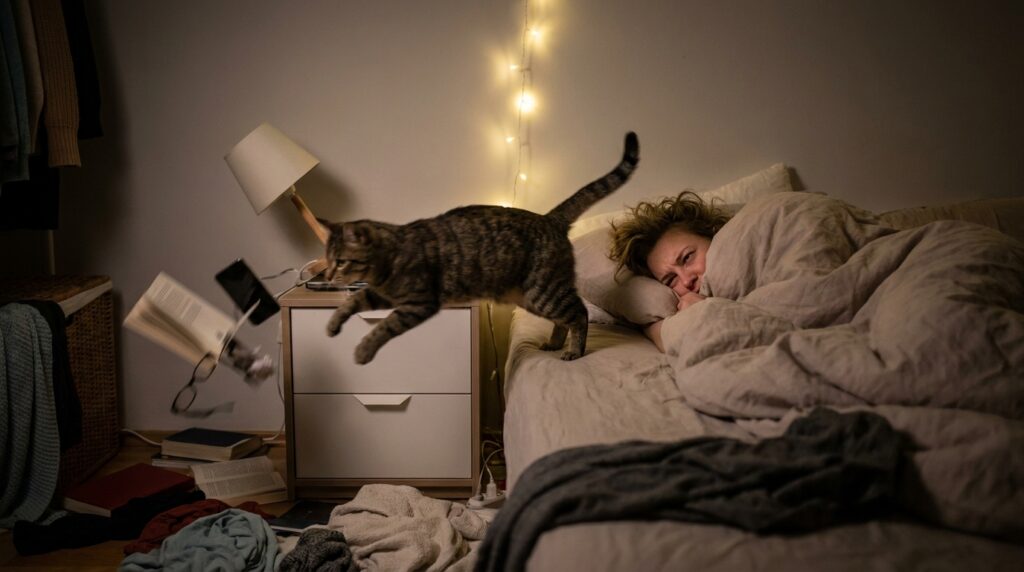
1. Nighttime Zoomies and Restlessness
What it looks like: Your cat runs full speed through the flat at 11pm, 1am, or 4am for no visible reason. She leaps at walls, skids across floors, and generally behaves like something is chasing her. Then she stops and sits down, completely calm.
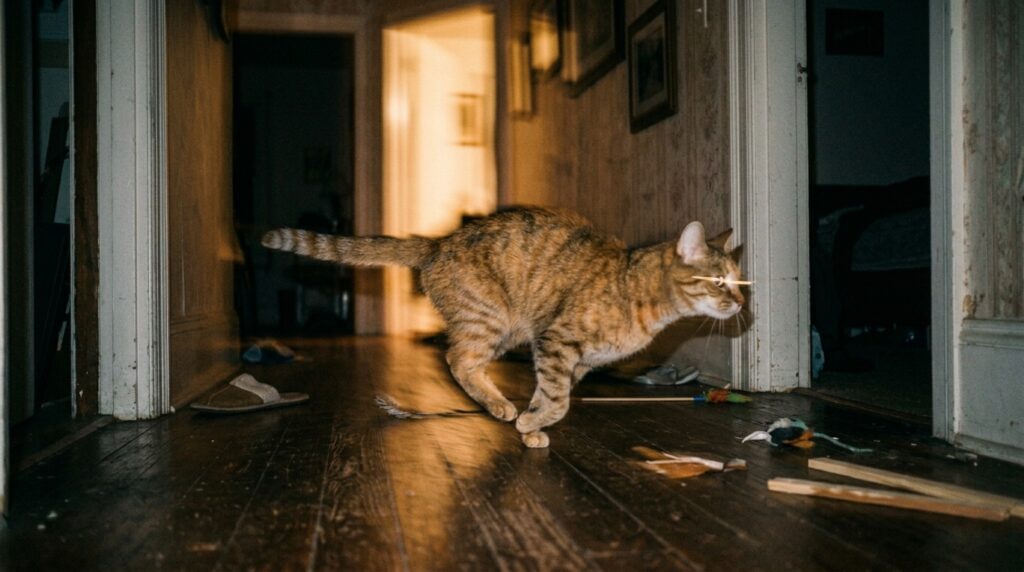
What it means: Cats are crepuscular, meaning their biological activity peaks at dawn and dusk. An indoor cat who was understimulated during the day has stored energy that has to go somewhere. The zoomies are that energy releasing — in one burst, usually when you want to sleep, because that is when the house finally gets quiet and her prey-tracking instincts switch on.
When to look further: Zoomies in young and middle-aged cats are almost always behavioral. In cats over eight, sudden onset of nighttime restlessness can indicate hyperthyroidism, cognitive dysfunction, or pain. If your senior cat has started doing this without a history of it, get a blood panel before assuming boredom.
Boredom likelihood: High in young cats. Moderate in seniors — rule out medical causes first.
2. Excessive Vocalization — Especially at Night
What it looks like: Your cat meows more than usual — persistently, at odd hours, sometimes with a tone that sounds almost conversational or urgent. She may follow you between rooms doing it.
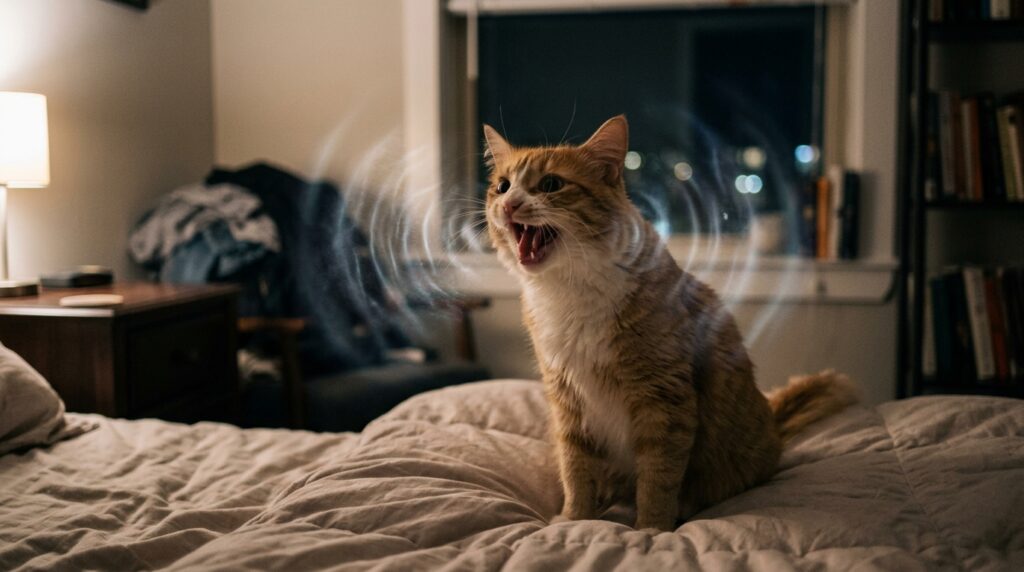
What it means: Cats don’t often vocalize to each other in adulthood, so this is directed at you. A bored cat that feels a lack of stimulation learns that you will pay attention and maybe play if she meows constantly. It is an effective strategy from her point of view. You rewarded it the first time you got out of bed.
When to look further: Excessive meowing that is new, sudden, or louder than usual in an older cat is a known sign of cognitive decline, hyperthyroidism, or pain. Cats in pain often vocalize at night because there are fewer distractions. If your cat is over ten and this is new behavior, do not assume boredom.
Boredom likelihood: High in adults. Always investigate in seniors.
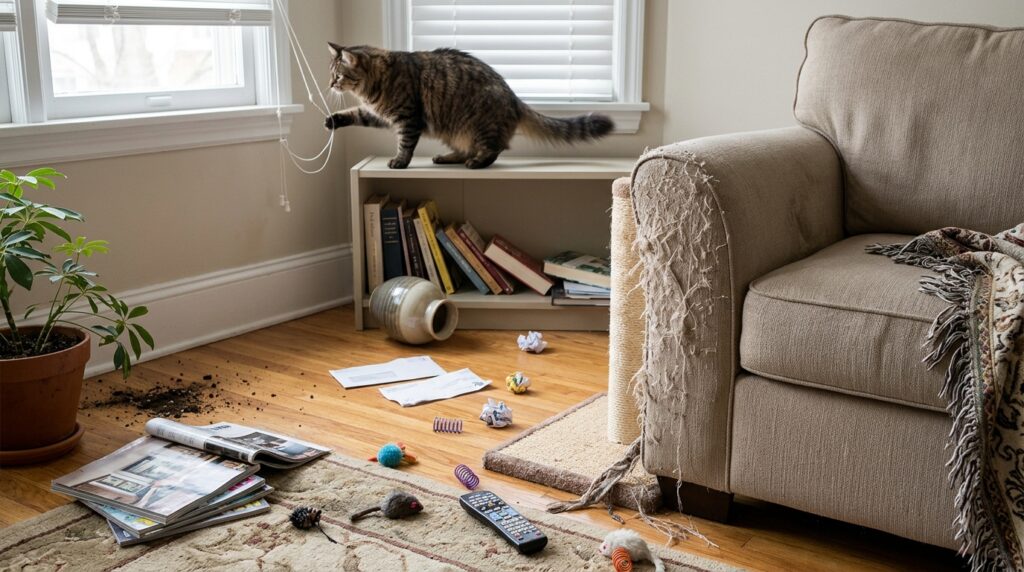
3. Destructive Scratching and Knocking Things Over
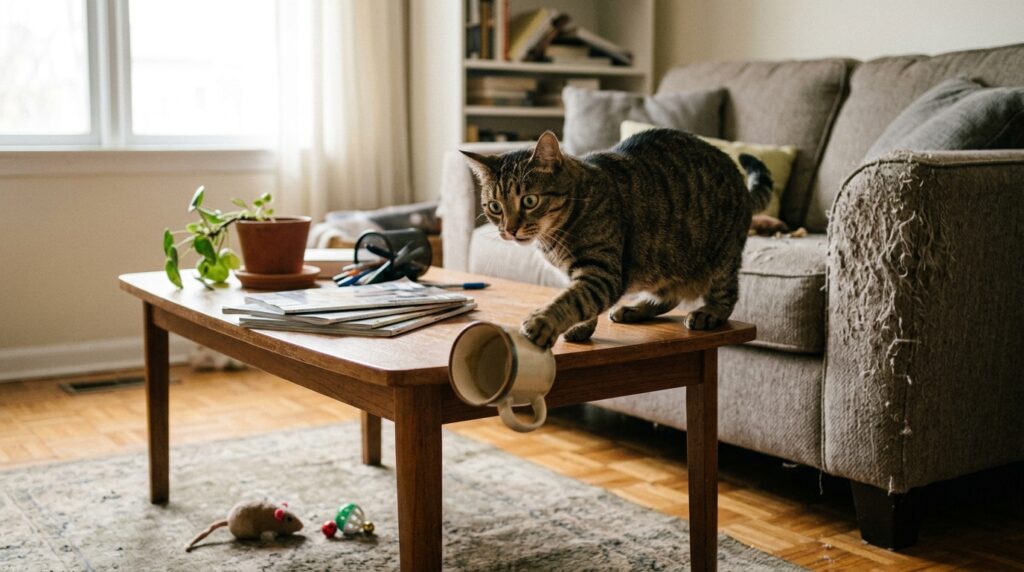
What it looks like: She scratches the sofa armrest, the corner of the rug, the door frame. She climbs the bookshelf and pushes objects off the edge. She comes back to the same forbidden spots repeatedly even after being redirected.
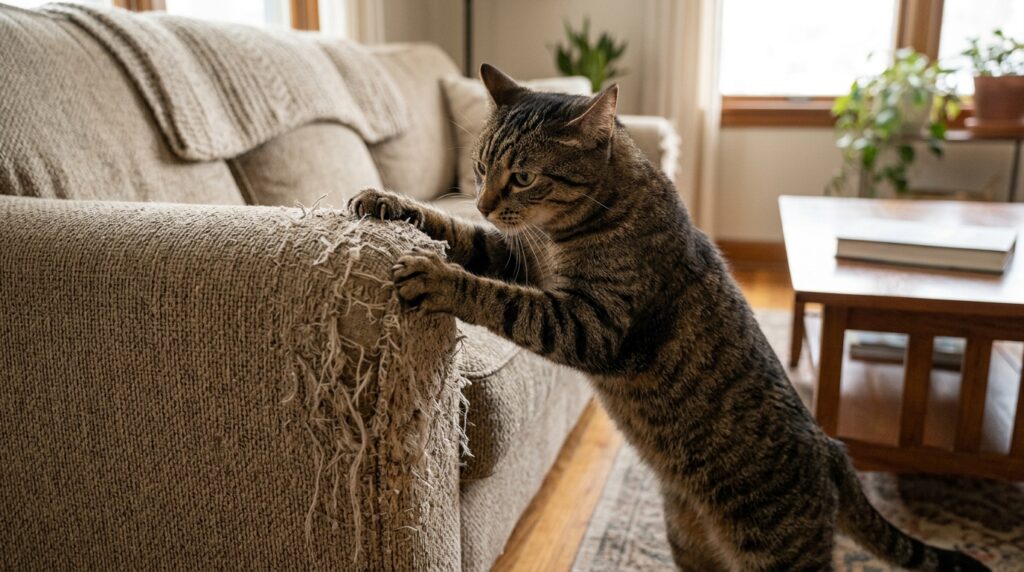
What it means: Scratching is a natural behavior — cats scratch to mark territory, maintain claw condition, and stretch their back muscles. But a bored cat scratches more, in more locations, and often in places she knows will get a reaction from you. The attention — even negative attention — is the point.
Knocking things over is the same mechanism. Bored cats will scratch the furniture and rug, and if you tell them not to go somewhere, they return there to get your attention. If this doesn’t work, they get more dramatic and start knocking items off shelves or running around maniacally to get a reaction.
When to look further: New destructive behavior in a previously calm cat can also signal anxiety from a change in routine or environment — a new pet, a moved house, a change in your work schedule. Rule out obvious stressors before treating it as pure boredom.
Boredom likelihood: High.
4. Overgrooming — Bald Patches and Thinning Fur
What it looks like: You notice a patch of thinned fur or full baldness, usually on the belly, inner thighs, flanks, or the top of the back legs. Your cat licks or chews at these areas repeatedly when she thinks you’re not watching — or openly in front of you.
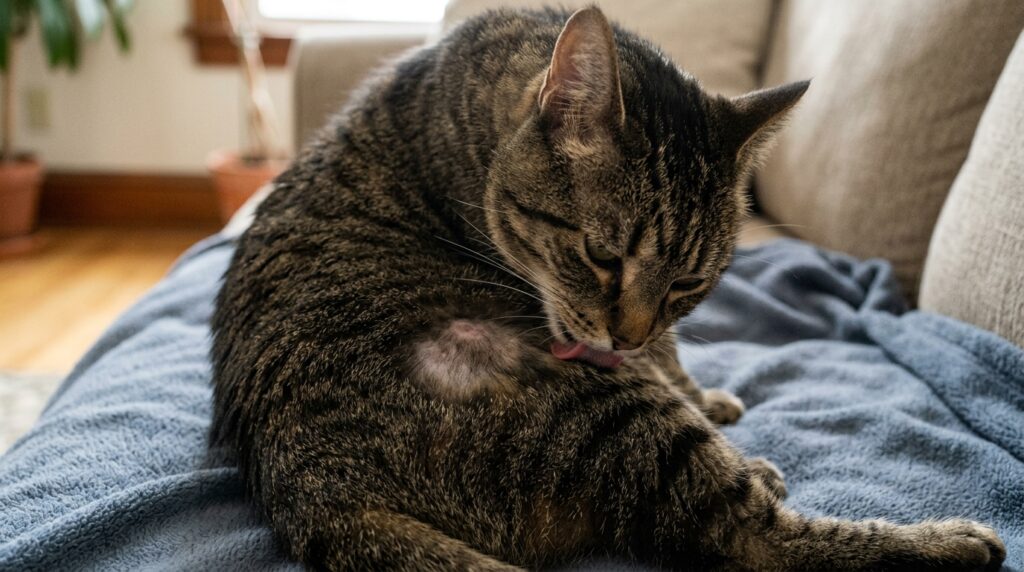
What it means: Overgrooming arises from feelings of stress, frustration, and boredom. Cats groom to self-soothe. When there is no external outlet for anxiety or restlessness, repetitive grooming becomes the release. It starts as excessive grooming and can progress to hair removal and skin irritation.
This one requires a vet visit, full stop. In a study of 21 cats referred to a veterinary behaviorist for overgrooming, medical causes were identified in 76% of cases. Only two cases were confirmed as purely behavioral. Overgrooming can be caused by skin allergies, parasites, pain, and a long list of other conditions that look identical to boredom-driven grooming on the surface.
If you see bald patches, book a vet appointment before trying enrichment changes. You could be treating boredom when the real issue is a food allergy or a parasite she can’t get to. The enrichment changes are still worth making — but the vet check comes first.
Boredom likelihood: Possible, but medical causes are more common. Vet check required.
5. Attention-Seeking Behavior — The Clingy Phase
What it looks like: Your cat follows you from room to room. She sits on your laptop, your book, your hands. She paws at you when you stop touching her. She vocalises every time you leave a room and is immediately in your face when you return.

What it means: Boredom often presents as social hunger. If your cat spent the day alone with nothing to do, she has a deficit of interaction that she needs to fill once you’re home. Attention-seeking behaviors like pawing, lap climbing, excessive following, or sitting on keyboards may indicate that your cat is bored and craving interaction.
The difference between a normally affectionate cat and a bored, clingy cat is usually intensity and timing. A normally affectionate cat wants attention on her schedule. A bored cat follows you relentlessly because she has had nothing else all day and you are now the most interesting thing in the room.
When to look further: A cat who has suddenly become very clingy after being independent may be unwell or anxious rather than bored. Illness and pain sometimes drive cats toward their owners. If the clinginess came on quickly without a change in routine, a vet check is worth it.
Boredom likelihood: High, especially in solo indoor cats with long days alone.
6. Aggression Toward You or Other Pets
What it looks like: Your cat ambushes your ankles when you walk past. She attacks the other cat or dog without obvious provocation. She bites or scratches during play that she initiated. She hides and then leaps out at you in the hallway.
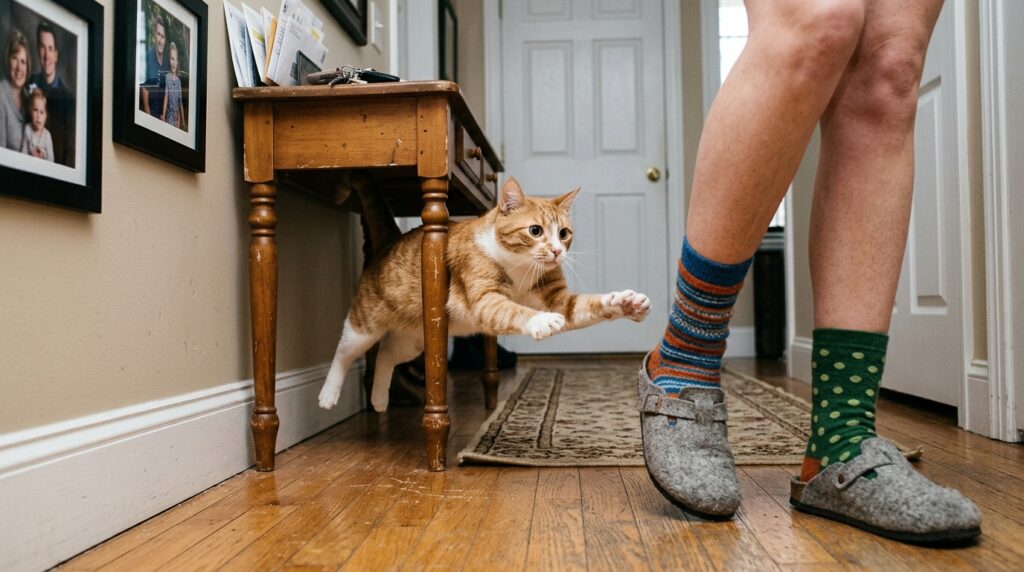
What it means: This is called play aggression, and it is one of the clearest signs of boredom in younger cats. Aggression or irritability — such as chasing other pets, pouncing on humans, or biting ankles — can be signs of boredom, often showing up as play aggression.
Your cat is running a hunt sequence and you are the available target. It is not hostility. It is an incomplete instinct looking for an outlet. If your cat has another pet in the house, she may pick fights not out of genuine conflict but because that is the most stimulating interaction available.
When to look further: True inter-cat aggression — sustained attacks, hissing, full-contact fighting — is different from play aggression and needs to be assessed separately. Aggression that escalates rather than resolves, or that comes with other behavior changes, warrants a vet visit to rule out pain or illness.
Boredom likelihood: High for play aggression in young cats. Mixed for sustained aggression.
7. Pica — Chewing and Eating Non-Food Items
What it looks like: Your cat chews plastic bags, wool blankets, rubber bands, electrical cords, shoelaces, or cardboard. She may only chew them or she may actually swallow pieces.
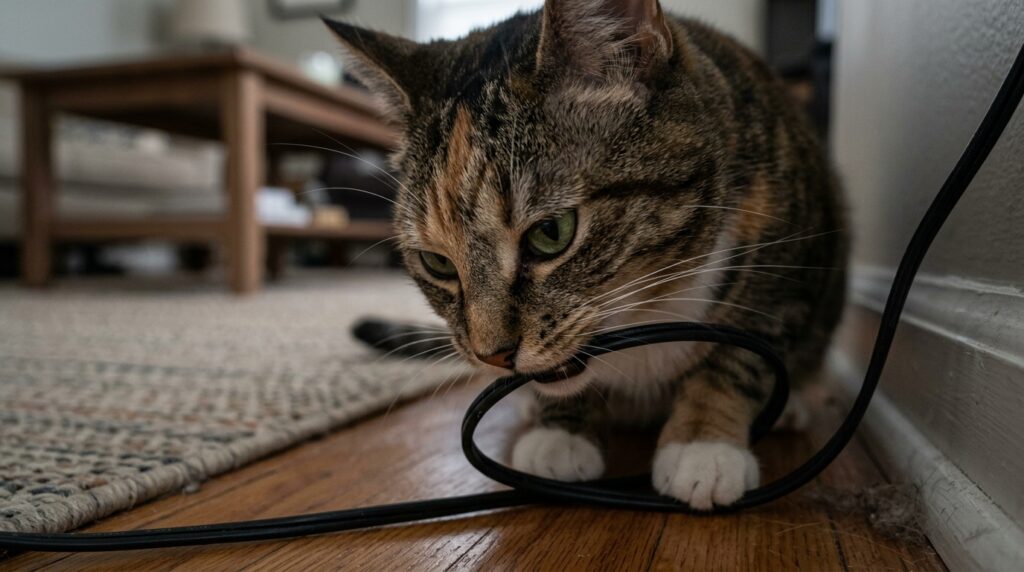
What it means: Behavioral factors are thought to play a role in the development of pica. Stress, anxiety, boredom, or obsession can lead the cat to start chewing inappropriate items as a coping mechanism. This behavior can then become compulsive over time.
This is one of the more serious signs because it escalates. A bored cat who chews a shoelace occasionally is different from a cat who has developed a compulsive loop around ingesting fabric — but one often becomes the other if the underlying cause isn’t addressed.
This always needs a vet check. Pica can also be caused by nutritional deficiencies, anemia, early weaning issues, and several medical conditions. String-like objects are particularly dangerous as they can cause the intestines to bunch up or tear. If your cat swallows anything, treat it as urgent.
Boredom likelihood: Possible, but always rule out medical causes. High danger if items are swallowed.
8. Excessive Sleeping Beyond Normal Hours
What it looks like: Your cat sleeps nearly all day and night, shows no interest in play even when you initiate it, and lies belly-up for long stretches looking vacant.
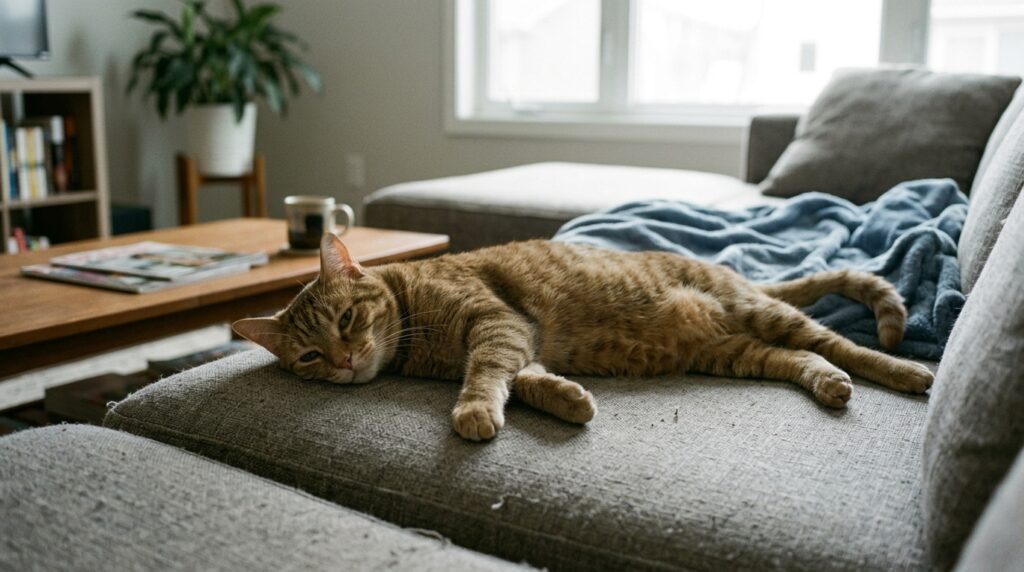
What it means: Cats sleep a lot by nature — typically 12 to 16 hours per day. But a cat who sleeps significantly beyond that and shows no interest in the environment or play when stimulated is exhibiting a different pattern. Cats sleep to pass the time when they lack stimulation. Excessive inactivity or a lack of curiosity may signal boredom.
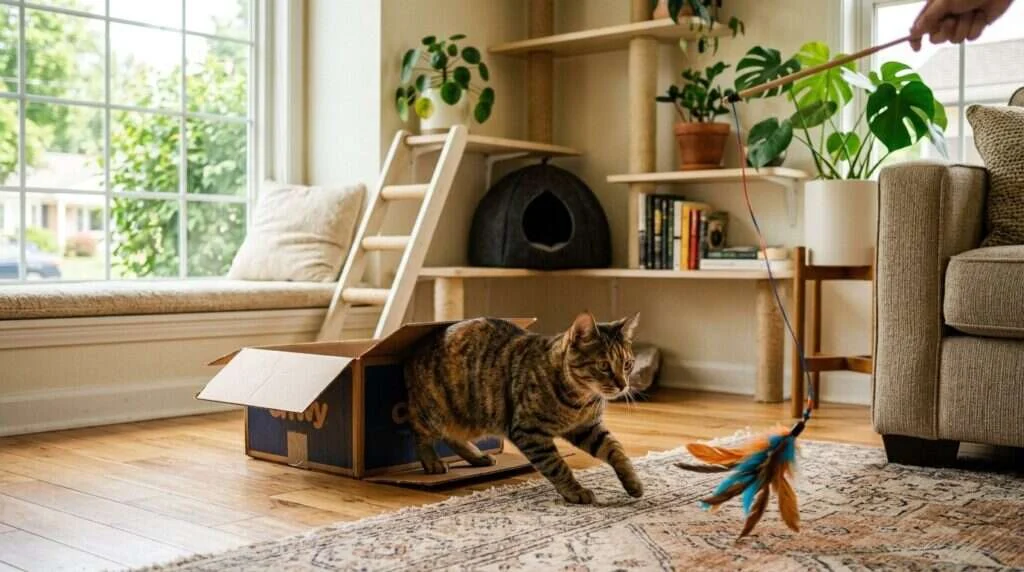
The key distinction: a bored cat will usually show interest if you actively engage her. She may not seek it, but if you bring a wand toy in front of her, she responds. A cat who is unwell often does not respond even when you try.
When to look further: Lethargy that does not respond to stimulation, or that is accompanied by changes in appetite, water intake, or litter box use, is a medical signal. Do not assume a lethargic cat is just bored.
Boredom likelihood: Moderate. Medical causes are common with severe lethargy.
Boredom vs Illness: The Table That Saves You a Misdiagnosis
This is the gap in most competitor articles. They list signs without telling you when you’re looking at behavior and when you’re looking at a health issue wearing the same costume.
| Sign | More Likely Boredom If | More Likely Medical If |
|---|---|---|
| Nighttime zoomies | Young/adult cat, no other changes | Senior cat, new behavior, disoriented |
| Excessive meowing | Responds when you engage | Persistent, won’t settle, cat is over 8 |
| Overgrooming / bald patches | Mild, belly or thigh area | Any area, doesn’t respond to enrichment |
| Destructive scratching | Seeks your attention, stops briefly | New cat in new home, high anxiety |
| Lethargy | Responds to wand toy | Unresponsive to stimulation, appetite changes |
| Pica | Occasional chewing only | Ingesting items, vomiting, weight changes |
| Clinginess | Solo cat, long days alone | Sudden onset in previously independent cat |
Use this table as a starting point, not a diagnosis. When in doubt, see your vet before adjusting enrichment. You can do both at the same time, but you should not treat enrichment as a substitute for a health check when medical signs are present.
What Happens If You Ignore the Signs
Boredom that goes unaddressed does not stay mild. It escalates through stages:
Stage 1 — Mild: Restlessness, occasional attention-seeking, slight increase in vocalisation. Easy to reverse with enrichment changes.
Stage 2 — Moderate: Persistent attention-seeking, furniture destruction, play aggression, nighttime disruption. Takes two to four weeks of consistent enrichment to shift.
Stage 3 — Compulsive: Overgrooming, pica, repetitive behaviors that continue even when the environment improves. At this stage the behavior has become self-reinforcing and may need veterinary behaviorist input alongside enrichment.
Most cats stay at Stage 1 or 2. The goal is to intervene before Stage 3 sets in, which is much harder to reverse.
Quick Reference: Boredom Signs by Severity
| Boredom Sign | Severity | First Step |
|---|---|---|
| Nighttime zoomies | Low | Evening play session before bed |
| Excessive meowing | Low–Moderate | Increase daytime enrichment, ignore at night |
| Attention-seeking / clinginess | Low | Add morning play + rotate toys |
| Destructive scratching | Moderate | Scratching post near affected furniture + play |
| Play aggression / ankle ambush | Moderate | Wand toy sessions twice daily |
| Overgrooming / bald patches | High | Vet check first, then enrichment |
| Pica | High | Vet check immediately |
| Lethargy | Variable | Vet check if unresponsive to play |
[Internal Link: How to Keep Your Indoor Cat Entertained While at Work]
FAQs
How can I tell if my cat is bored or sick?
The clearest test: actively try to engage your cat with a wand toy or crinkle ball. A bored cat almost always responds — she may not seek play, but she will engage when stimulated. A cat who is unwell typically does not respond even when you make the effort. If your cat shows no interest in anything and is sleeping more than usual, that is a medical signal rather than a boredom one.
Is restless cat at night always boredom?
Not always. In young adult cats, nighttime restlessness is usually stored energy from an understimulated day. In cats over eight, it can indicate hyperthyroidism, cognitive changes, or pain — all of which can look identical to crepuscular energy bursts. Age matters when you’re reading the sign.
Can bored cat behavior become permanent?
Mild boredom behaviors reverse easily with enrichment changes. But boredom that goes unaddressed for months can become compulsive. Overgrooming and pica in particular can develop into self-reinforcing loops that persist even after the environment improves. Intervening early is significantly easier than reversing a compulsive habit.
My cat knocks things off shelves — is that boredom?
Usually yes, and it is deliberate. Your cat has learned that knocking objects over gets an immediate response from you. The behavior escalates from curiosity into a reliable attention-seeking strategy. The fix is to stop reacting to it (hard, but necessary) and redirect the energy through structured play sessions instead.
Should I get a second cat to fix boredom?
It can help significantly for young solo cats. Two cats entertain each other, burn daytime energy through play, and tend to sleep more soundly at night. But the introduction needs to be done slowly — a rushed introduction can create territorial conflict that is harder to fix than one bored cat. Consider a second cat only after addressing the environment first.
Conclusion
Boredom in indoor cats is not one thing. It is a spectrum that runs from mild nighttime restlessness all the way to compulsive overgrooming — and every sign along that spectrum tells you something specific about where your cat is and what she needs.
The biggest mistake owners make is treating all signs the same way: buy a new toy, hope for the best. The second biggest mistake is missing the medical signals hiding behind behavioral ones.
Know which sign you’re looking at. Know when to enrich and when to call the vet. And start earlier than you think you need to, because Stage 1 boredom is a genuinely easy fix — and Stage 3 is not.