Key Takeaways & Quick Navigation
- ✔️ Environment First: 90% of indoor cat behavioral issues stem from poor vertical territory and flat layouts.
- ✔️ 70% Wet Food Rule: Prevent chronic dehydration, kidney disease, and weight gain with proper moisture intake.
- ✔️ The Hunt-Eat-Sleep Cycle: Daily 15-minute evening play sessions stop midnight meowing and anxiety.
- ✔️ The N+1 Litter Box Formula: Eliminate house-soiling with proper box placement and litter choices.
Keeping your cat indoors is one of the single best decisions you can make for their safety. Veterinary data from the American Veterinary Medical Association (AVMA) consistently shows that indoor cats live significantly longer than outdoor cats — suffering far fewer trauma accidents, zero predator encounters, and minimal exposure to infectious outdoor diseases. That part is well established.
But here’s what that same data doesn’t say out loud: a cat can live 15–20 years in chronic boredom, creeping obesity, and low-grade stress if their home environment is badly set up. A human house is not a natural habitat for a solitary predator. It’s a box. And if you don’t deliberately build stimulation, structure, and vertical territory into that box, behavioral and medical problems follow — predictably, not randomly. If you are starting fresh, make sure to check out our Complete Indoor Cat Starter Kit and our breakdown of 10 Mistakes First-Time Cat Owners Make.
This guide covers everything: environment, diet, behavior, grooming, health, and product selection. No fluff. If you’re looking for a real indoor cat care system that actually works, read through once, audit your current setup, and fix what’s broken.
Indoor Cat Basics: What Most Owners Get Wrong
Cats are obligate carnivores and solitary hunters. Every physiological system in their body is optimized for a specific natural cycle: stalk, chase, kill, eat, groom, sleep. When that cycle breaks down — because there’s nothing to stalk and dry food simply sits in a bowl all day — their mental health and physical condition start to deteriorate.
The most common mistake in indoor cat care is treating cats like passive, low-maintenance pets. They aren’t. They are small apex predators living inside your living room, and they require an environment that respects their natural instincts. Understanding the real cost of owning an indoor cat helps ensure you can budget properly for essential enrichment equipment.
An indoor cat’s entire daily reality is defined by three factors: available vertical space, quality of sensory stimulation, and how core resources are distributed around the home. Get those wrong and you’ll see aggression, overeating, chronic anxiety, furniture destruction, and litter box avoidance. These aren’t personality flaws; they are the predictable outputs of a broken setup.
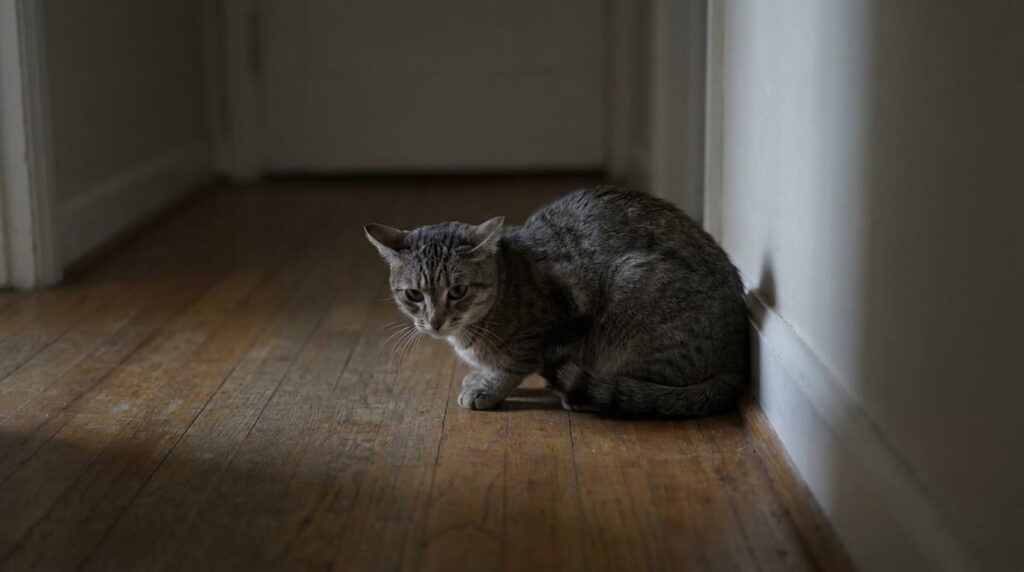
⚠️ Early Warning Signs Your Setup Needs Work
- Ambushing & Biting: Attacking ankles or pouncing from behind furniture during quiet hours.
- Furniture Destruction: Repeatedly shredding couch corners despite verbal redirection.
- Extreme Lethargy: Sleeping 18+ hours daily (not resting, but completely disengaged from the home).
- Sudden Petting Aggression: Swatting or nipping after only a few seconds of affection.
- Litter Box Avoidance: Urinating or defecating right beside the tray (see our guide on why cats pee next to the litter box).
- Vocal Distress: Persistent, loud meowing at 3 AM.
If two or more of those apply to your cat right now, the problem isn’t the cat. The problem is the environment. Fix the setup first, then reassess behavior.
Indoor Cat Environment Setup: The “Catification” Approach
If your home is flat, visually static, and offers nowhere for a cat to climb or survey their domain — your cat is living in sensory deprivation. According to environmental standards from the AAFP Cat Friendly Homes Initiative, physical environment design is paramount to feline health.
1. Vertical Territory
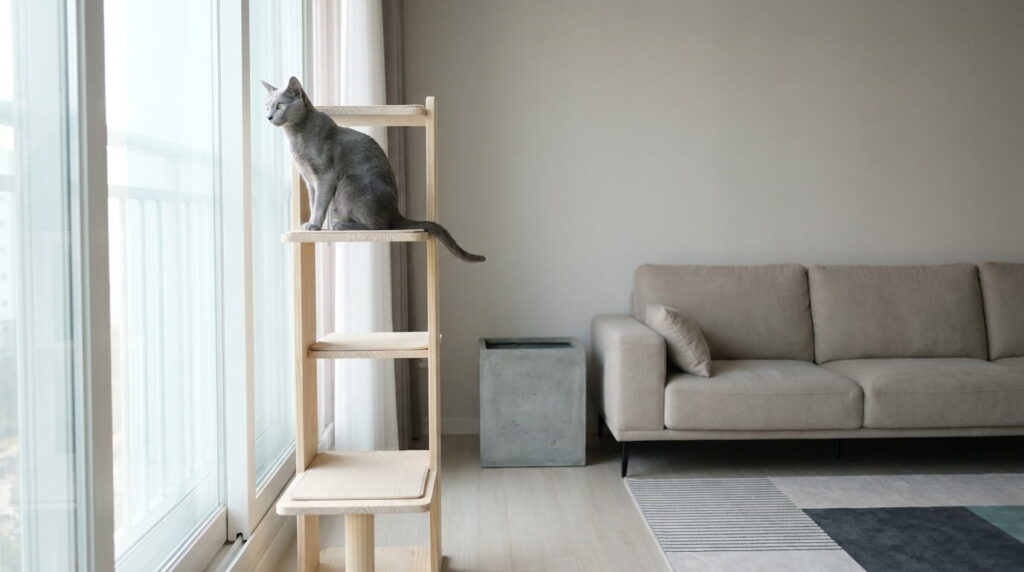
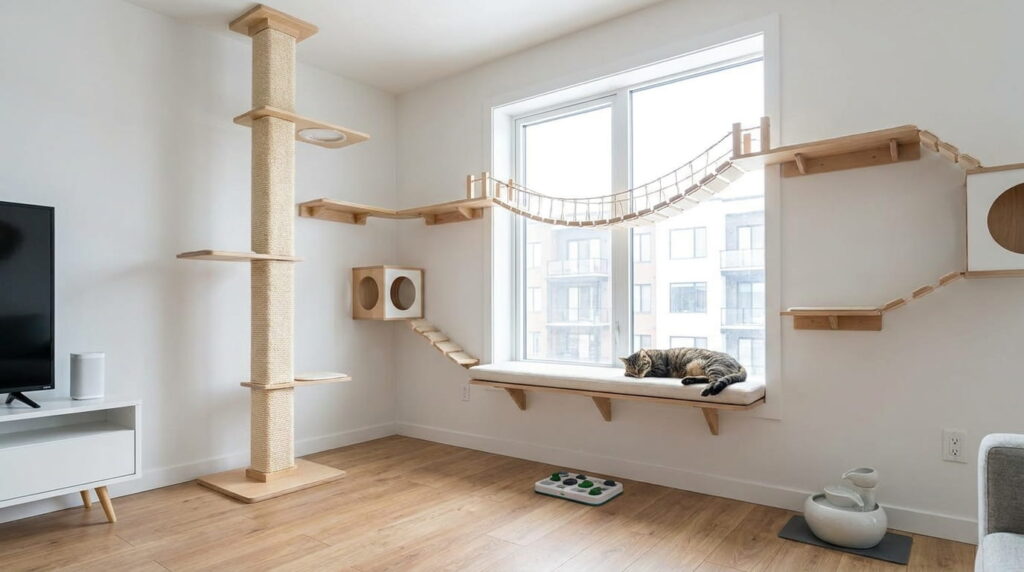
Cats feel safest when elevated. This isn’t a preference — it’s hardwired evolutionary biology. A cat with no vertical escape route feels ground-bound and vulnerable. To choose the right tree for tight living spaces, read our hands-on review of the best cat tree for small apartments.
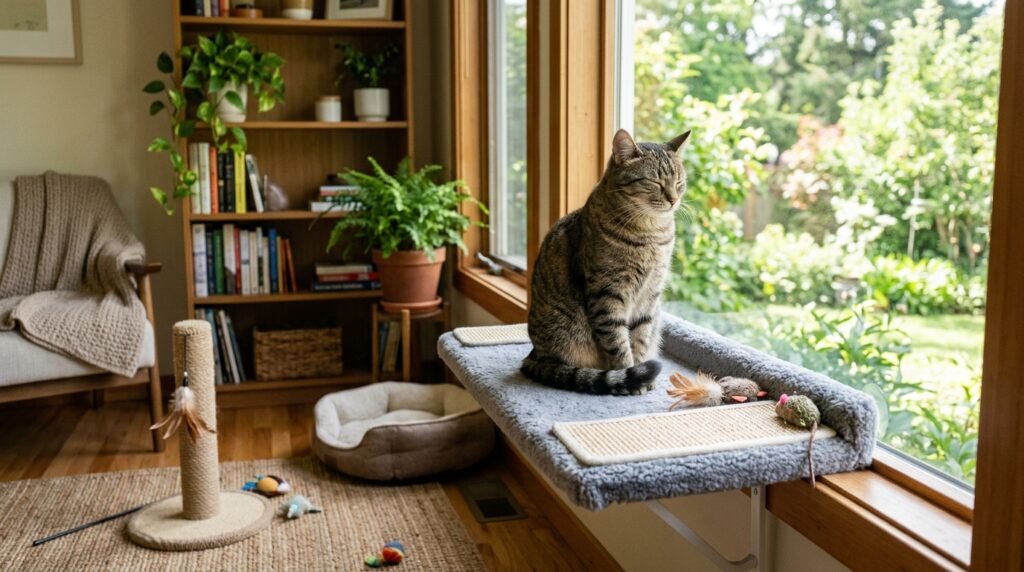
At minimum, every indoor cat needs a sturdy, high cat tree (5–6 feet), at least one dedicated window perch, and ideally wall-mounted cat shelves. If you’re deciding between furniture types, check our comparison guide on cat window perch vs cat tree to optimize small spaces.
2. Scratching Infrastructure
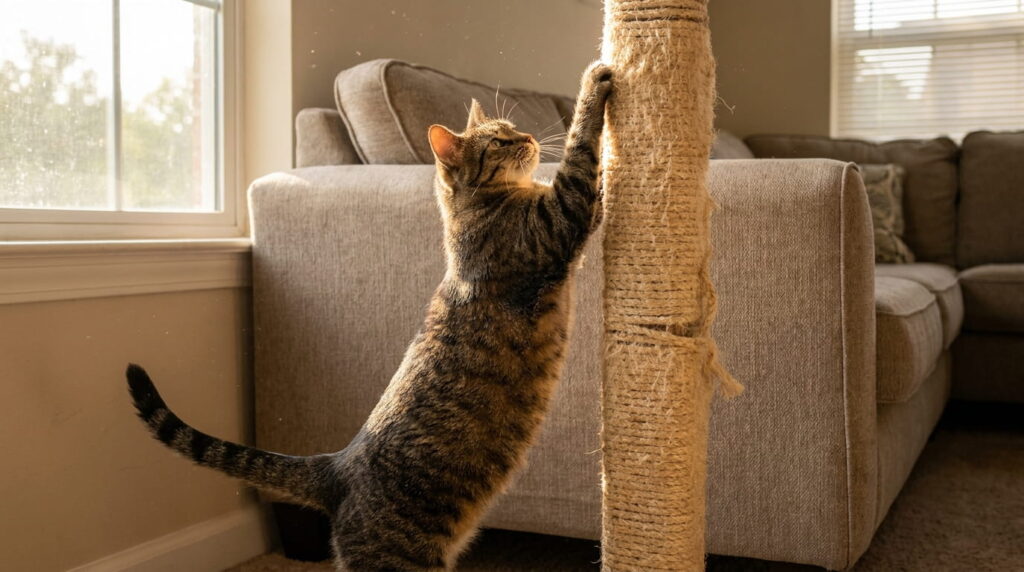
Scratching is not bad behavior. It is essential claw maintenance, scent-marking via paw pads, and a full-body spinal stretch. You cannot stop a cat from scratching; you can only decide where they do it. Learn more in our guide on how to stop your cat from scratching furniture.
You need a minimum of 2–3 scratching posts around the home: at least one tall vertical sisal post (minimum 32 inches tall so your cat can fully extend), and one horizontal cardboard scratcher. Read our detailed testing of vertical vs. horizontal scratchers and check out the best cat scratching post tested for 30 days. For cats that struggle with severe scratching, read our honest analysis on soft nail caps for cats.
3. Window Stimulation & Sightlines
A window overlooking greenery or a bird feeder is nature’s television for indoor cats. Placing a perch by a sunny window provides hours of daily visual engagement, preventing severe boredom. If your cat shows continuous disinterest, review the signs of a bored indoor cat and learn how to keep your cat entertained while you are at work.
4. Safe Zones and Hiding Furniture
Cats require total autonomy over their social interactions. Covered felt beds, under-couch tunnels, and dedicated quiet nooks provide emotional safety. For nervous felines, explore our recommendations for the best hiding spots and hideaway furniture for anxious cats, as well as our review on whether heated cat beds are actually worth it.
The Best Daily Routine for an Indoor Cat
Cats thrive on consistent daily structure. Random feeding schedules, unpredictable play sessions, and chaotic human activity cause elevated cortisol levels. For a complete blueprint, read our full article on the indoor cat daily schedule for cats home alone all day and our breakdown on how to mentally stimulate indoor cats.
| Time Window | Activity Routine | Biological Purpose |
|---|---|---|
| Morning (7:00 – 8:00 AM) | 5–10 min interactive wand play → Breakfast meal | Simulates morning hunt; establishes routine. |
| Midday (12:00 – 4:00 PM) | Passive enrichment (window perch, treat puzzle) | Prevents midday anxiety while owners work. |
| Evening (7:00 – 8:30 PM) | 15–20 min intense wand play → Main wet food meal | Drains energy reserve; mirrors natural evening hunting peak. |
| Night (10:00 PM – 6:00 AM) | Rest & quiet sleep period | Enforces solid overnight sleep; stops night meowing. |
The evening play-then-feed sequence is critical. A cat that exhausts predatory energy chasing a teaser toy, catches the prey, and eats a satisfying meal will naturally enter the grooming and deep sleep phases. If your cat wakes you up at night, read why your indoor cat is bored at night and why indoor cats get so bored.
Indoor Cat Diet: Stop Guessing, Start Controlling
Most indoor cats are overfed, under-hydrated, and consuming excess carbohydrates. Because kibble is convenient, pet parents frequently fall into the free-feeding trap. But feline digestive physiology requires protein and moisture.
The Hydration Problem
Cats evolved as desert predators, deriving up to 80% of their daily hydration directly from prey items. They possess a low thirst drive and rarely drink enough standing bowl water to offset a dry kibble diet. To understand the full breakdown, read our analysis on wet food vs. dry food for indoor cats.
Chronic low-level dehydration leads to concentrated urine, painful urinary crystals, FLUTD, and kidney decline. See our specialized resource on feline kidney disease diet management and our recommendations for the best wet food for cats with kidney disease.
Why Wet Food Matters & Core Diet Rules
A wet-food dominant diet naturally supports kidney function, flushes the urinary tract, and simplifies weight management. Learn how to feed properly with our guide on how much to feed an indoor cat by weight. When assessing ingredients, consult our guide on how to read a cat food label and read our expert analysis on whether grain-free cat food is actually better.
- Minimum 70% Wet Food: Crucial for urinary tract health and hydration.
- 2–3 Scheduled Meals: Eliminate free-feeding kibble bowls completely.
- Life-Stage Specific Formulas: See our dedicated guides for kitten nutrition in the first year and senior cat nutrition after age 10.
- Manage Special Dietary Needs: Learn how to handle cat food allergies vs intolerances and manage multiple cats on different prescription food. If your cat begs constantly, investigate why your indoor cat is always hungry.
Hydration & Portion Control Equipment
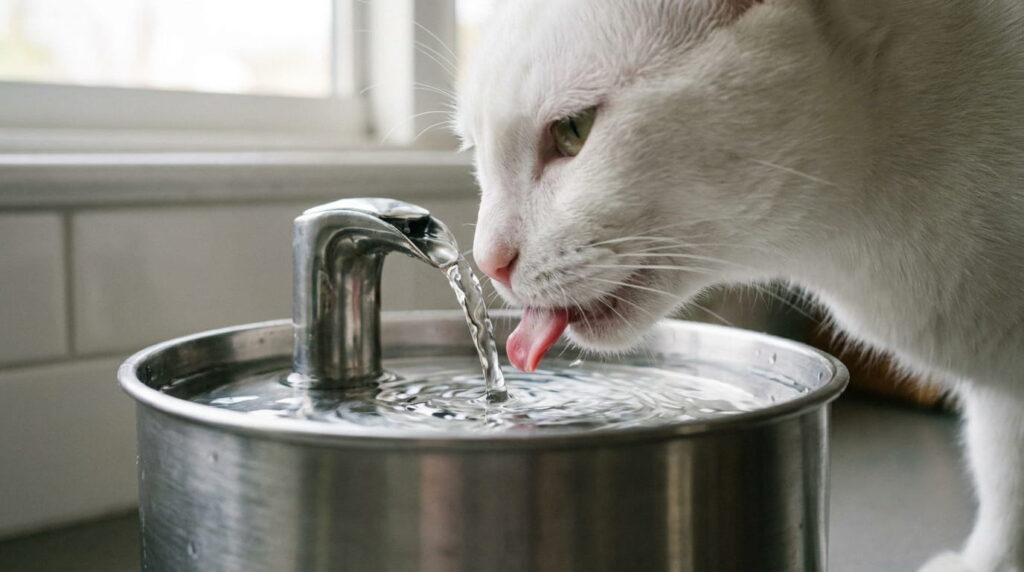
Cats naturally prefer running water away from their food station. Read our comparison of cat water fountain vs regular bowl and see our review of the best cat water fountain for indoor cats. To keep meals automated and controlled, read our 30-day review of the best automatic cat feeder for portion control.
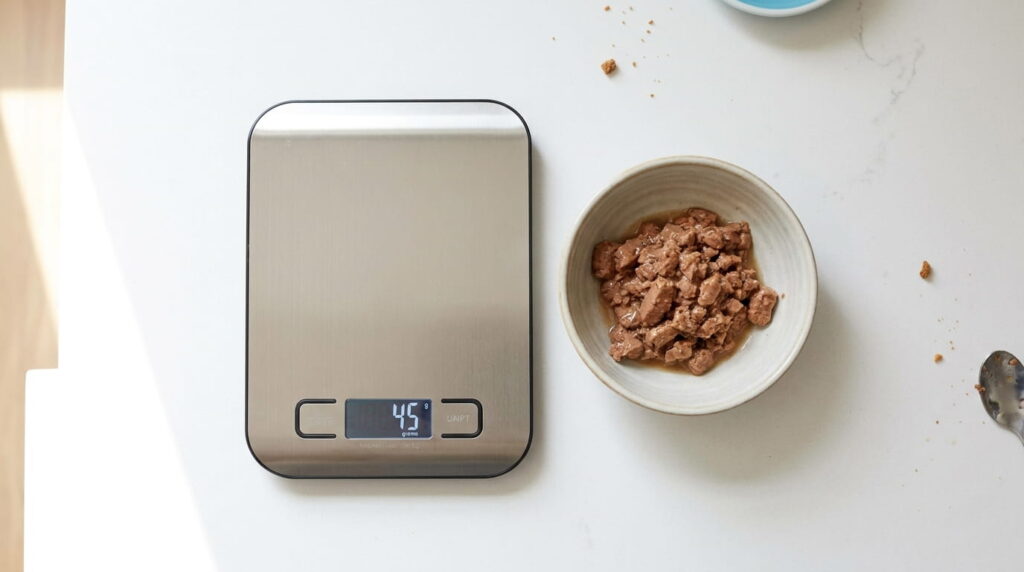
If your cat is carrying extra weight, select low-calorie cat treats for weight management. If you notice unexpected drop in body mass, consult our diagnostic guide: 6 reasons your indoor cat is losing weight.
🐾 Free Resource: Indoor Cat Calorie & Portion Cheat Sheet
Unsure how many calories your indoor cat needs based on age, weight, and activity level? Use our quick formula table to calculate exact portion sizes.
Calculate Your Cat’s Daily Calories →Indoor Cat Behavior Problems (and How to Actually Fix Them)
Every behavioral problem is a reaction to an unmet environmental or biological need. Fix the root cause and the undesirable behavior disappears.
1. Aggression & Play Cycles
Redirect play aggression by establishing daily wand toy sessions. Check out our tested roundups of the best cat toys for indoor cats in 2026 and the best puzzle feeders for indoor cats. If your cat struggles with feeding bowls, read about whisker fatigue in cats. For physical boundary issues, see our guides on how to stop your cat from knocking things off counters and why your cat stares at you.

2. Litter Box Setup & Troubleshooting
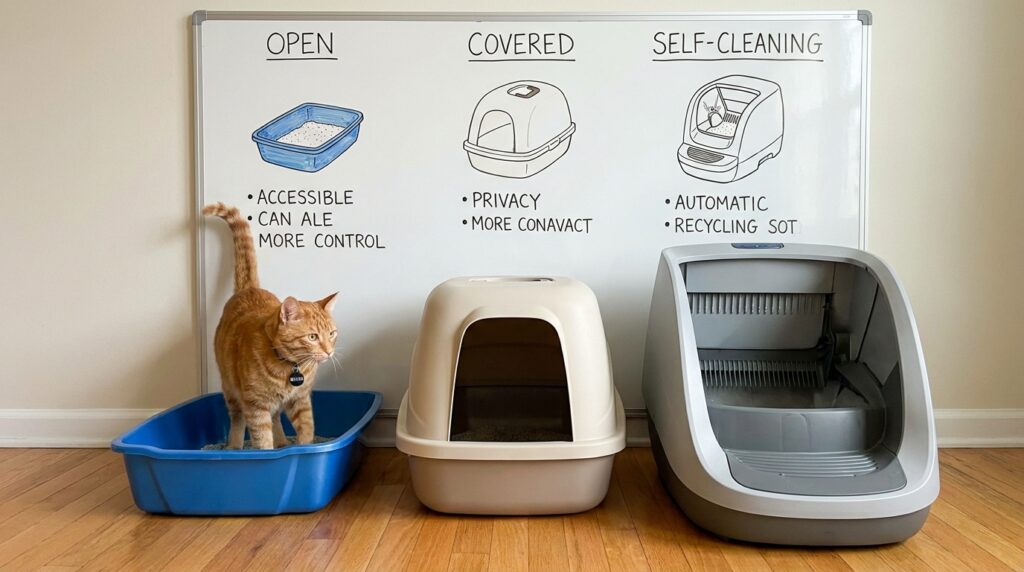
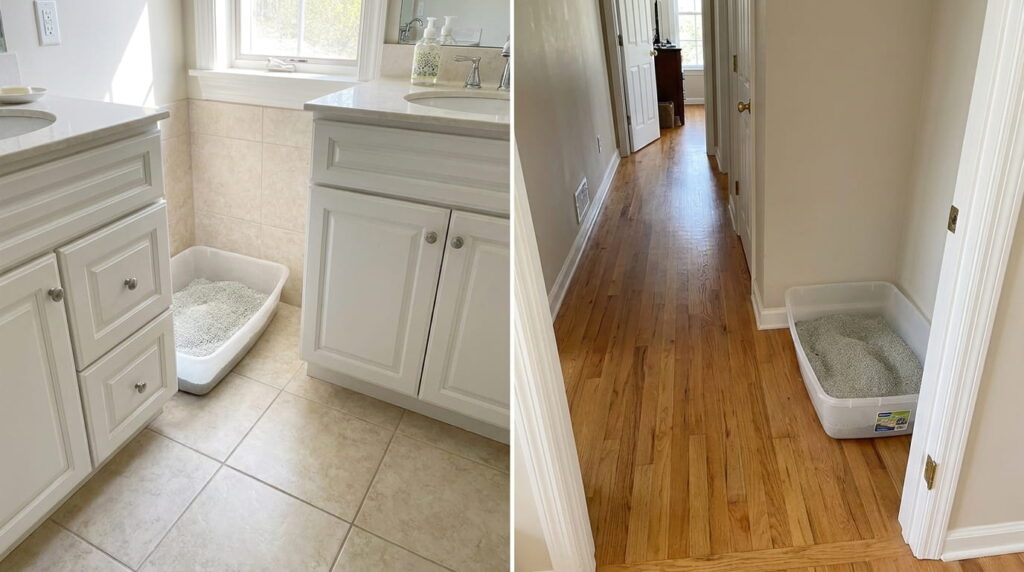
Litter box issues are the #1 reason indoor cats are surrendered. Prevent problems by adhering to the N+1 rule (1 box per cat plus 1 extra). Read our step-by-step guides on how to litter train a kitten and how to choose the right litter box type.
For apartment dwellers, review best litter box placement in a small apartment and how many litter boxes you need for 2 cats. Compare options in clumping vs non-clumping vs crystal litter and automatic litter box vs manual. To control home smells, read our testing on the best cat litter for odor control.
🚨 Emergency Medical Warning: Feline Urinary Blockage
If your cat is straining in the litter box, crying while attempting to urinate, or producing little to no urine — this is a life-threatening medical emergency. Urethral blockages can cause acute kidney failure or bladder rupture within 24 to 48 hours. Transport your cat to an emergency veterinarian immediately. For non-emergency symptoms, review our guide on indoor cat urinary problems.
3. Multi-Cat Household Management & Stress
Adding new feline family members requires patience. Follow our step-by-step tutorial on introducing a second cat to a one-cat household. Understand behavioral shifts by reading about spaying and neutering behavioral changes. If stress leads to self-harm, review our diagnostic guide on cat overgrooming and bald spots.
Indoor Cat Grooming & Health: Preventive Care That Extends Lifespan
Indoor cats shed year-round due to artificial light and climate control. Consistent coat maintenance is required to prevent digestive blockages. Check out our 30-day trial of the best cat brushes for shedding and read our cat hairballs frequency guide.

Dental Care & Medical Prevention
Over 70% of cats over age 3 suffer from periodontal disease. Dental bacteria can enter the bloodstream and damage kidneys and heart valves. Read our expert guide on dental care for cats.
- Annual Vet Checkups & Preventive Schedule: Review the indoor cat vaccination and vet visit schedule.
- Parasite Control: Parasites enter homes on shoes and clothing. Learn what is necessary in our guide on parasite prevention for indoor cats.
- Pain Detection: Cats mask illness instinctively. Read how to tell if your cat is in pain and consult The Complete Indoor Cat Health & Wellness Guide.
- Plant Safety: Check our guide on safe indoor plants for cats, compare cat grass vs houseplants, and cross-reference with the ASPCA Toxic Plants List. Read our guide on kitten-proofing vs cat-proofing.
- Travel & Vet Visits: Lower stress using the best cat carrier for anxious cats or the best cat backpack or stroller for apartment cats.
Senior Indoor Cat Care
As cats age past 10 years, joint stiffness and cognitive shifts occur. Transition to lower-entry litter boxes, provide heated sleeping spots, and adjust mobility access.
Final Checklist: Audit Your Indoor Cat Setup
Run through this quick environmental audit to ensure your home setup meets your cat’s biological requirements:
| Care Category | Essential Setup Item | Status Check |
|---|---|---|
| Environment | Vertical tree (5+ ft) + Window perch + 32″ Sisal post | |
| Routine | 15-min evening wand play session before dinner | |
| Diet | 70%+ high-protein wet food + Measured calorie portions | |
| Hydration | Stainless steel water fountain placed away from food bowl | |
| Litter Box | N+1 open litter boxes + Unscented clumping litter | |
| Health & Safety | Annual vet checkup + Monthly flea/parasite prevention |
The Bottom Line
Indoor cat care is a complete system, not a single checklist item. Diet, environment, routine, and health work interdependently. Let one slip and you’ll notice symptoms emerge elsewhere — in behavioral aggression, sudden weight gain, or unexpected vet bills.
The good news is that the fundamentals are straightforward. Most cats with chronic behavioral issues are missing just three core elements: structured daily play, a wet food-dominant diet, and vertical territory. Fix those three factors and your cat will thrive.
Ready to Give Your Indoor Cat the Best Life Possible?
Explore our curated collection of tested buyer guides, feeding calculators, and setup tutorials designed specifically for indoor feline wellness.
Frequently Asked Questions
How much wet food should I feed my indoor cat per day?
An average 10 lb indoor cat requires approximately 180–220 calories per day. High-quality wet food typically provides 25–35 calories per ounce, equaling roughly 5–8 ounces daily split across 2–3 scheduled meals. Check out our detailed breakdown in how much to feed an indoor cat.
Is it cruel to keep a cat indoors?
No — provided the indoor space is enriched properly. Indoor cats with adequate vertical territory, window access, daily play, and proper nutrition live significantly longer than outdoor cats without exposure to cars, predators, or contagious diseases.
How do I stop my indoor cat from being bored?
Daily interactive wand play is essential. Additionally, rotate toys weekly, introduce puzzle feeders, provide window perches, and maintain a predictable daily routine. Read how to mentally stimulate indoor cats for more strategies.
What are common signs of stress in indoor cats?
Overgrooming, hiding, reduced appetite, litter box avoidance, sudden aggression, and excessive vocalization. If symptoms appear abruptly, consult a veterinarian immediately to rule out medical issues such as urinary tract infections or blockage.
Do indoor cats need annual vaccines and flea prevention?
Yes. Core vaccines protect against airborne viruses and pathogens tracked inside on clothing or shoes. Parasites such as fleas and mosquitoes also enter homes easily. Read our guide on indoor cat vaccination schedules and indoor cat flea prevention.