Six reasons your indoor cat is losing weight, in order of how often I’ve seen them:
- They’re eating less than you think — and you’d never know
- Dental pain is making every meal uncomfortable
- Something in their environment changed and they’re stressed
- Hyperthyroidism — most common in cats over 7, eating more but getting thinner
- Kidney disease — weight loss often appears before other symptoms
- Diabetes — weight loss alongside noticeably increased thirst
The first three you can investigate yourself today. The last three need bloodwork. Here’s how to tell which one you’re dealing with.
The obvious one most owners miss
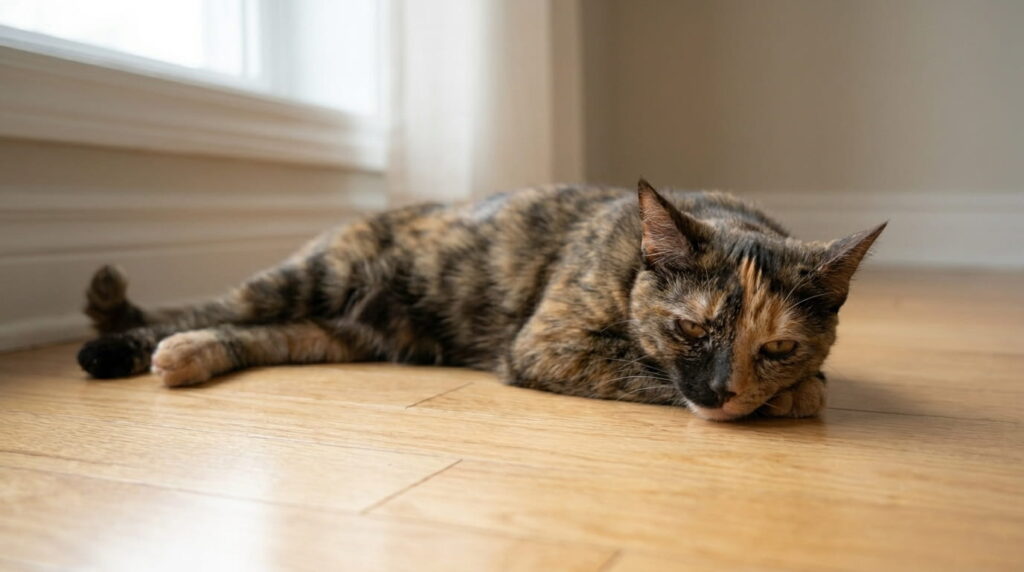
Fig lost weight for six weeks before I figured out what was happening.
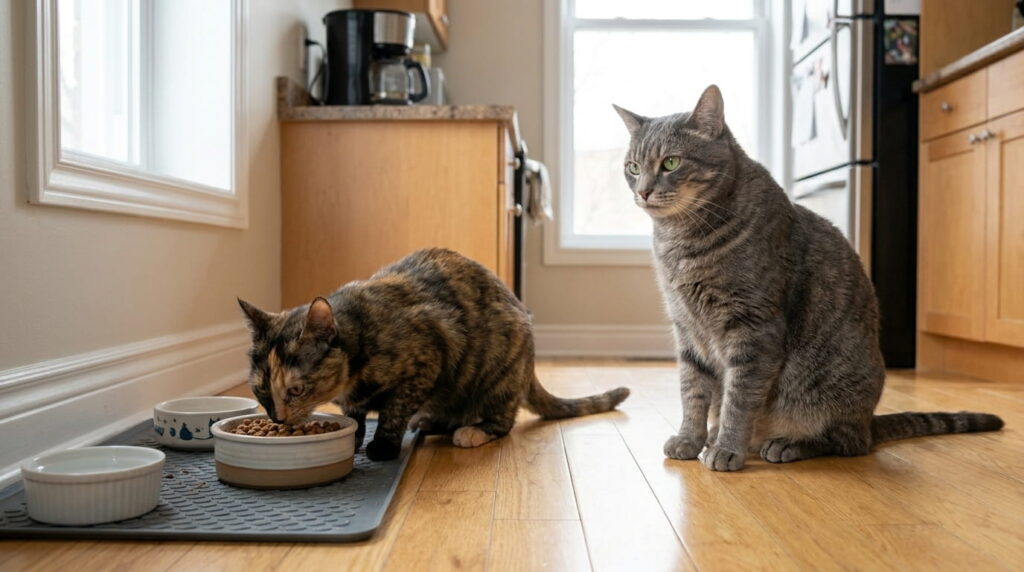
She was eating. I’d watch her walk to the bowl, spend time at it, walk away. I assumed she was fine. What I didn’t know — because I wasn’t measuring — was that she was eating about half of what she normally did. The bowl looked the same because I kept topping it up.
The cause was Beans. He’d started hovering near her feeding spot. Not aggressive, just present. And Fig, being the most conflict-averse cat I’ve ever owned, was cutting meals short rather than deal with him.
Six weeks of that adds up. When I finally picked her up properly, I could feel her spine more than I should have been able to.
I moved their feeding spots to opposite ends of the kitchen. Within three weeks she was back to normal weight.
The obvious one most owners miss is this: your cat is not eating as much as you think. Before you consider any medical cause, spend three days measuring exactly what goes in and what comes back uneaten.
How to tell if your cat is losing weight before it becomes obvious
Mild weight loss may be noticeable when petting your cat or during routine weighing. The problem is most owners don’t weigh their cats between vet appointments.
The bathroom scale method works fine. Weigh yourself, then pick up your cat and weigh again. The difference is your cat’s weight. Write it down with the date.
Do this every week for a month. A single number tells you nothing. A trend tells you everything — whether things are stable, improving, or getting worse.
If your cat has lost more than 10% of their body weight without explanation, it’s time for a vet visit. On a 5kg cat that’s 500g — less than most people would notice casually.
Reason 1 — They’re not eating as much as you think

This is the one I keep coming back to because it’s so easy to miss and so easy to fix.
Do you have another cat or dog in the house? Additional pets in your home could be eating your cat’s food or obstructing your cat’s access to their food bowl. I watched Beans and Fig at the same bowl for weeks and thought everything was normal. It wasn’t. Fig was being subtly pressured out of her meals by a cat who wasn’t even being aggressive — just nearby.
Other things that cause this quietly:
You changed food brands and the calorie content is different. A cup of one food and a cup of another are rarely the same calories. If you switched brands recently and your cat’s weight dropped, check the calorie comparison on the packaging.
The bowl is in a high-traffic spot. Some cats won’t eat comfortably near a doorway, near their litter box, or anywhere they feel exposed. Moving a bowl two metres can change everything.
You free-feed dry food. This makes it nearly impossible to track actual consumption. If you’re free-feeding and your cat is losing weight, switching to measured twice-daily meals for two weeks will tell you immediately whether intake is the issue.
What to do: Separate feeding stations if you have multiple pets. Measured meals. Watch who eats what for three days. This takes no equipment and costs nothing.
Reason 2 — Dental pain
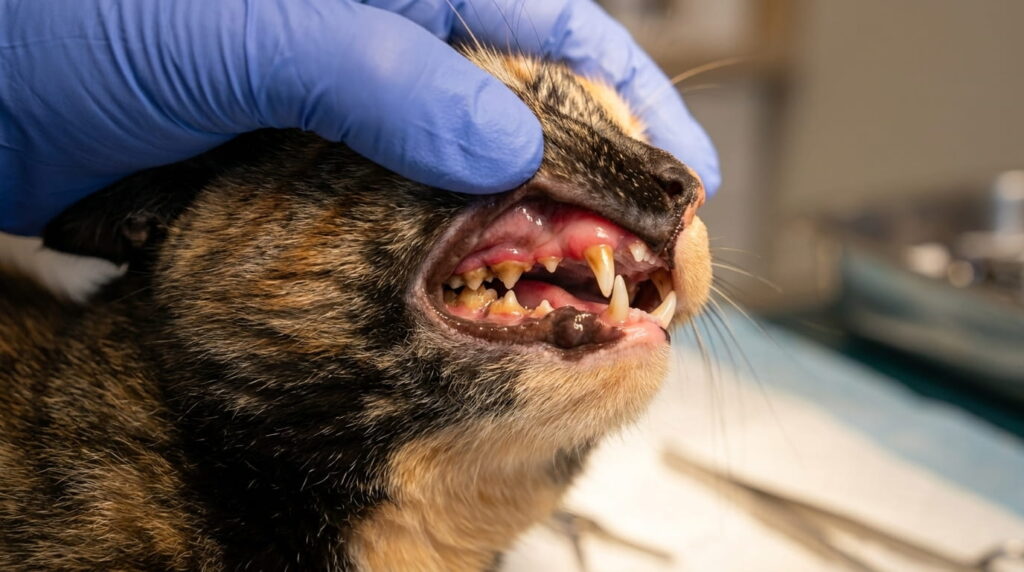
Dental disease — painful teeth or gums may lead to decreased food intake.
The thing about dental pain in cats is that they hide it well. Your cat isn’t going to stop eating entirely — they’ll just eat less at each sitting, drop food from the mouth occasionally, or quietly switch their preference from dry to wet because wet hurts less to chew.
Over weeks, slightly less food per meal becomes noticeable weight loss.
Signs worth checking today: open your cat’s mouth gently and look. Red or swollen gums are abnormal. Visible brown tartar buildup at the gum line is common but not fine. If your cat resists having their mouth touched more than usual, that resistance itself is a signal.
Bad breath that’s gotten worse recently is another one. Not just “cat breath” — a sudden change in how bad it is often means something is happening in the mouth.
Dental disease in cats is genuinely common. It doesn’t resolve without treatment, and a cat in ongoing mouth pain eats less every single day.
What to do: Vet check. A dental exam takes minutes. If there’s disease, a dental cleaning under anaesthetic usually resolves the pain completely and eating returns to normal.
Reason 3 — Stress
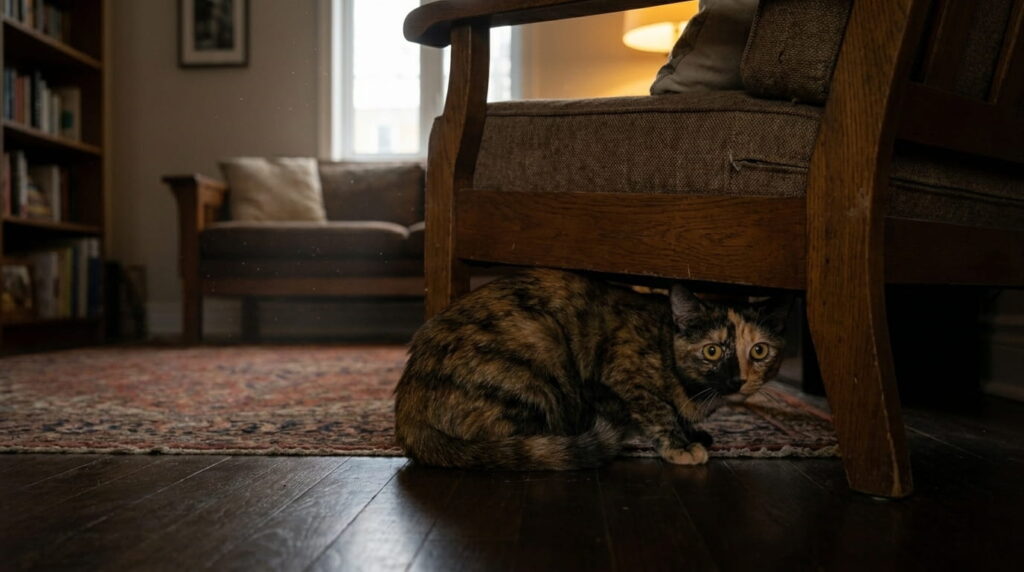
Stress, changes in household routine, or competition for food in multi-cat homes can also contribute to weight loss in cats.
Indoor cats have a controlled environment, which means when something in that environment changes, they can’t escape it the way an outdoor cat could. A new person in the house, building work nearby, a change in your schedule, a new pet — any of these can reduce appetite.
Stress-related weight loss usually comes with other signs: more hiding than usual, reduced grooming, or a change in how your cat interacts with you. If your cat’s behaviour changed around the same time their weight started dropping, that timeline is worth paying attention to.
Gradual weight loss with normal behaviour might wait for a regular veterinary visit, but rapid weight loss — noticeable within days — requires urgent care.
What to do: Think about what changed in the weeks before you first noticed the weight loss. The cause is usually in that timeline.
Reason 4 — Hyperthyroidism
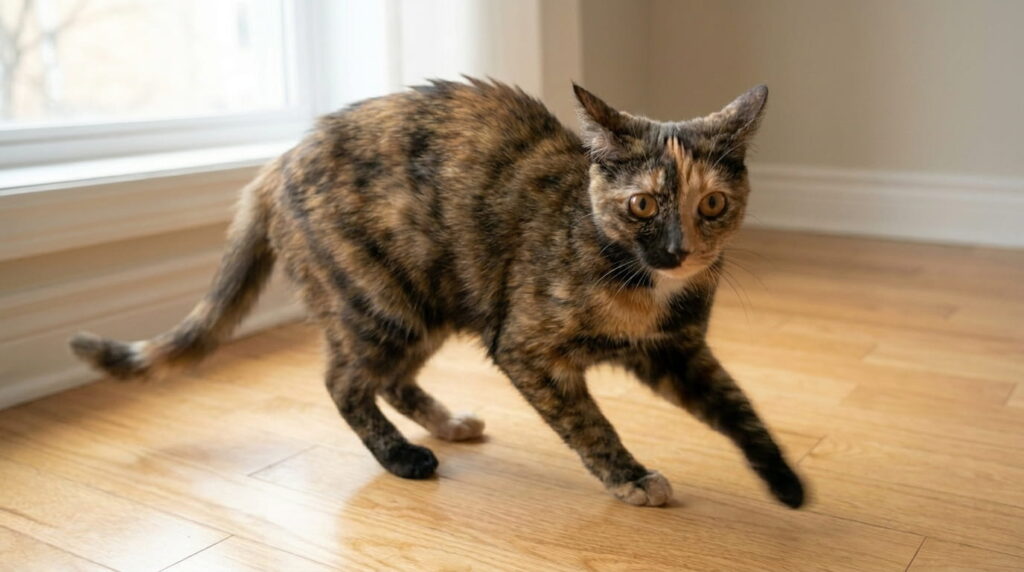
Here’s where it gets counterintuitive.
In a hyperthyroid cat, their metabolism goes into overdrive — they lose weight, are ravenously hungry all the time, have a very high heart rate, and often meow at night and have trouble sleeping.
If your cat is eating more than usual and still losing weight, this is the first thing your vet will check. The thyroid is producing too much hormone, the metabolism is running too fast, and the body can’t keep up with calories no matter how much the cat eats.
Middle-aged and senior cats can be at risk for hyperthyroidism. It’s rare in cats under 7. In cats over 10, it’s one of the more common diagnoses.
The good news is it responds well to treatment. Treatment of hyperthyroidism involves controlling the thyroid gland, either with medicine, special food, or inpatient radioactive iodine treatment. Most cats do well on daily medication once the diagnosis is confirmed.
What to do: If your cat is over 7, eating noticeably more than usual but losing weight, book a vet appointment this week. A blood panel confirms or rules it out.
Reason 5 — Kidney disease
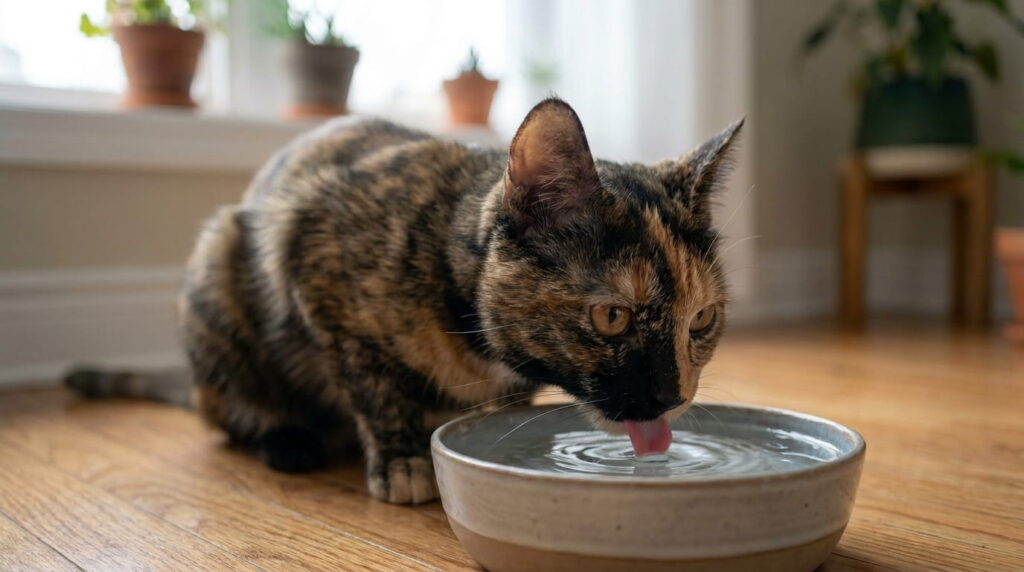
Kidney disease causes loss of muscle mass in cats with declining kidney function. What makes this one harder to catch is that weight loss often appears before the more obvious symptoms — increased water intake, more frequent urination, vomiting — that most owners associate with kidney problems.
By the time a cat is obviously drinking more, kidney disease has usually been progressing for a while. Weight loss that appears first, with no obvious cause, is worth investigating specifically for kidney values.
I’ve written a separate article on kidney-supportive nutrition for cats with CKD — if that’s what your vet finds, that’s the next place to look.
What to do: Annual bloodwork from age 7 catches kidney changes early. If your cat is older and losing weight with no clear cause, ask your vet specifically to check kidney function alongside the standard panel.
Reason 6 — Diabetes
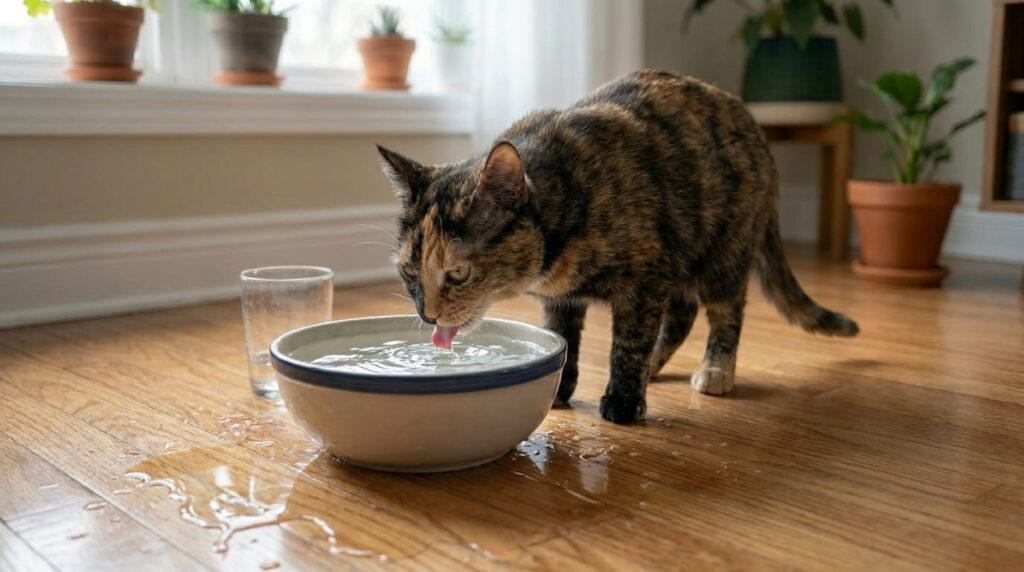
Diabetes in cats is very common and requires immediate veterinary care and ongoing treatment. In addition to unexplained weight loss, diabetic cats typically drink an abnormally large amount of water and urinate large volumes as well.
The combination that signals diabetes specifically: weight loss plus dramatically increased thirst plus increased urination. If all three are happening together, don’t wait for a routine appointment.
A cat with obesity is estimated to be approximately three times more likely to develop diabetes than a cat with a healthy body condition. Previously overweight cats who have started losing weight unexpectedly are worth checking.
Diabetes in cats is manageable — insulin injections, dietary changes, regular monitoring. Caught and treated early, many cats live normal lives. Left untreated, it deteriorates.
What to do: Vet appointment promptly. Bloodwork and a urine test will confirm it.
When to go today rather than next week
Go the same day if weight loss comes with any of these: complete refusal to eat for more than 24 hours, breathing difficulties, collapse, or extreme low energy. Cats showing yellowing of the gums, eyes, or skin need immediate veterinary attention.
If a cat doesn’t eat for as little as two to three consecutive days, whether due to stress, underlying illness, or changes to diet or environment, they can develop a life-threatening form of liver disease known as hepatic lipidosis. This happens faster in cats than most owners expect. A cat that’s stopped eating is not something to monitor over a few days at home.
Gradual weight loss in a cat who is otherwise eating, behaving normally, and not showing any of the above — that warrants a vet visit within the week, not an emergency dash, but not a wait-and-see either.
One thing I’d do before any vet appointment
Weigh your cat and write it down today. Then weigh again in 7 days. Bring both numbers to the appointment.
“I think she’s lost weight” is harder for a vet to work with than “she was 4.2kg on April 8th and she’s 3.9kg today.” A number and a direction — that’s what helps narrow down a cause quickly.
Also note: when you first noticed the change, whether appetite has changed, whether water intake seems different, and whether anything in their environment changed in the weeks before. That history, combined with the weight data, gives your vet a real starting point.
Frequently asked questions
My cat is losing weight but eating normally — what does that mean?
Eating normally while losing weight points toward a metabolic cause — most commonly hyperthyroidism or diabetes. Both involve the body being unable to use calories properly despite adequate intake. Get bloodwork done.
How fast is too fast for weight loss in cats?
Rapid weight loss — noticeable within days — requires urgent care. Gradual loss over weeks is concerning but not an emergency. Any loss of more than 10% of body weight without explanation warrants a vet visit regardless of the speed.
Can stress alone cause significant weight loss in cats?
Yes, over time. A stressed cat that consistently cuts meals short will lose weight noticeably over 4-6 weeks. The fix is usually environmental — identify what changed and address it.
My indoor cat is old and losing weight. Is this just normal ageing?
Some muscle loss does occur with age, but weight loss should never be assumed to be normal without ruling out treatable causes first. Hyperthyroidism, kidney disease, and dental disease are all common in older cats and all treatable to varying degrees. An annual blood panel from age 7 is the most useful thing you can do.