Best Cat Brushes for Shedding aren’t all the same — and most don’t do what you think they do. I learned that the slow way.
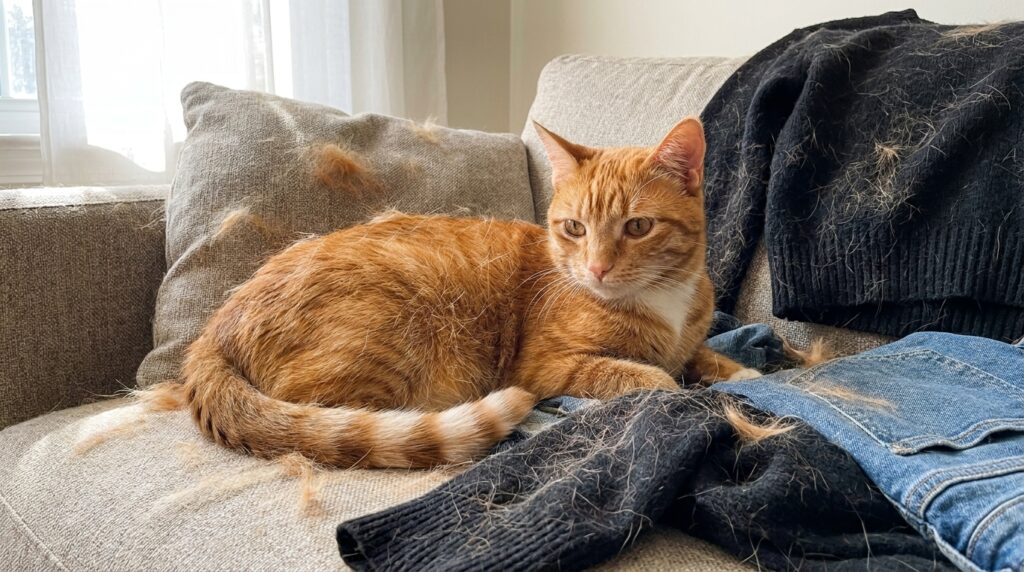
Beans sheds. A lot. For the first year I just accepted it — cat hair on everything, regular hairballs, and a lint roller that never left the front door.
Then I stopped guessing and started tracking.
I measured how much fur each brush removed per session, how often hairballs happened each week, and how well Beans tolerated each tool. Over 30 days, testing three different brushes under the same conditions, one clearly outperformed the rest — and one actually made things worse.
If you’re dealing with constant shedding or frequent hairballs, the brush you use matters more than you think. Here’s what actually worked — and what didn’t.
Quick picks:
- Best overall: FURminator deShedding Tool for Cats (~$35)
- Best for sensitive cats: Hertzko Self-Cleaning Slicker Brush (~$20)
- Skip: The cheap Amazon rubber brush I won’t name — it pulled coat and Beans walked away every time
| Brush | Fur collected per session | Hairballs per week (before/after) | Beans’ tolerance | Price |
|---|---|---|---|---|
| FURminator | 28g average | 3 → 1 | Tolerates — not enthusiastic | ~$35 |
| Hertzko Slicker | 18g average | 3 → 2 | Actively enjoyed | ~$20 |
| Cheap rubber brush | 9g average | 3 → 4 | Walked away consistently | ~$8 |
Why I started tracking this
Three hairballs in one week from a 2-year-old cat is too many. Beans is young, healthy, and indoor-only — indoor cats groom more than outdoor ones because they’re bored, which means more hair ingested, which means more hairballs.
The solution isn’t complicated: remove loose coat before he grooms it off himself. But the brush has to actually work, and Beans has to tolerate it. A brush he walks away from is useless regardless of the reviews.
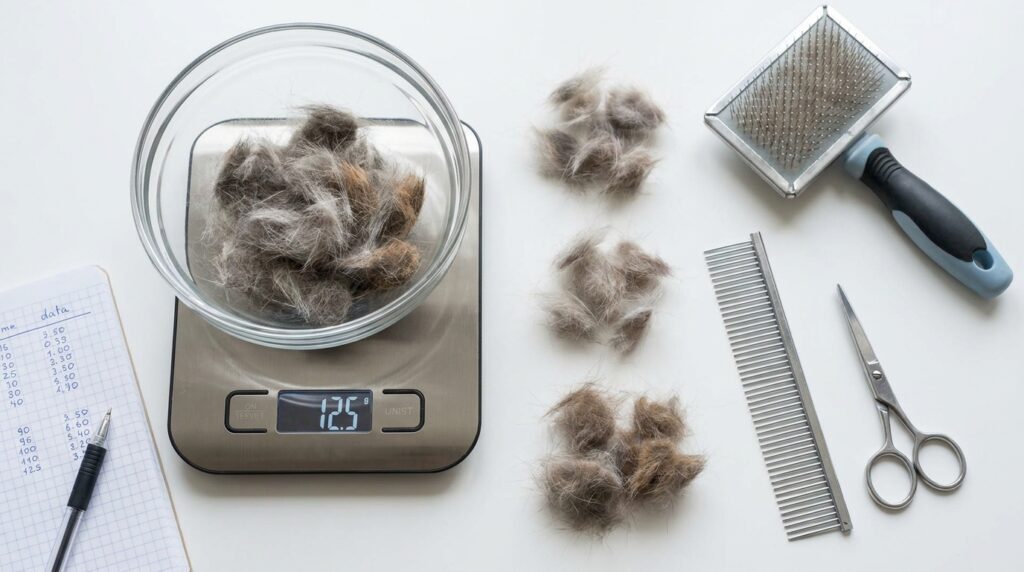
I tested three brushes over 30 days. Same session length each time — five minutes, same time of day, same starting conditions. I weighed the fur collected on a kitchen scale. I counted hairball incidents weekly.
The FURminator — the one I kept
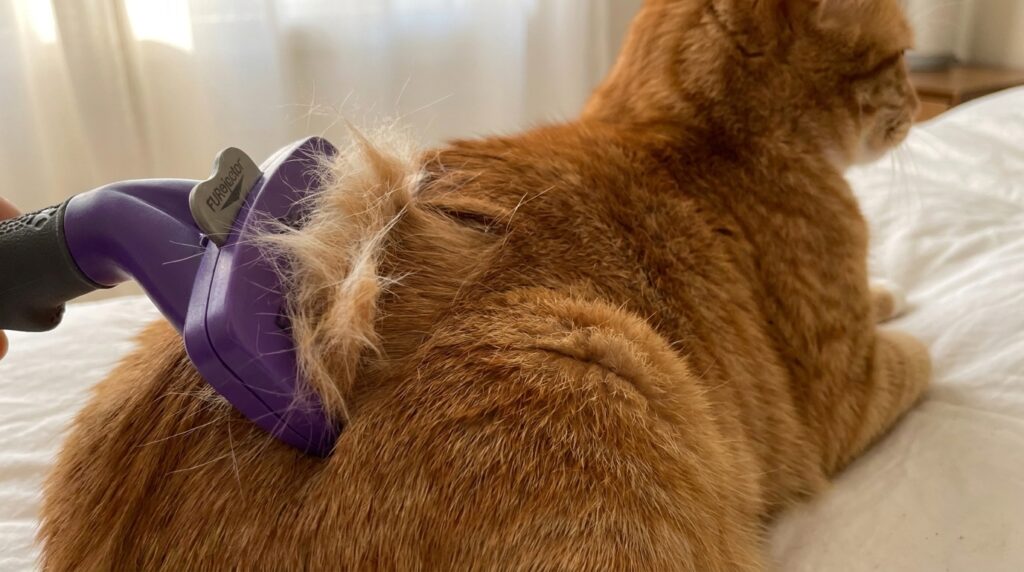
The FURminator is the best-known deshedding tool on the market and after 30 days I understand why. It collected an average of 28g of loose fur per session — nearly three times what the rubber brush managed.
The hairball frequency dropped from three incidents per week to one within the first fortnight. By week four, two weeks in a row with no hairball at all.
What I like: The results are measurable and visible. The ejector button clears collected fur off the blade quickly. It reaches the undercoat in a way slicker brushes don’t.
What I don’t like: Beans tolerates it rather than enjoying it. He’ll sit still for about three minutes before getting fidgety. That’s enough time to do his back and sides — I do his belly in a separate shorter session on a good day.
Used too aggressively or too frequently it can irritate skin. Two to three times per week maximum. Never on a day when his coat is already looking thin from recent shedding.
Best for: Heavy shedders. Indoor cats with hairball problems. Owners who want measurable results.
Not for: Very sensitive cats or cats who are already skittish about being handled. The pressure required to reach the undercoat can feel intense to a nervous cat.
Hertzko Self-Cleaning Slicker Brush
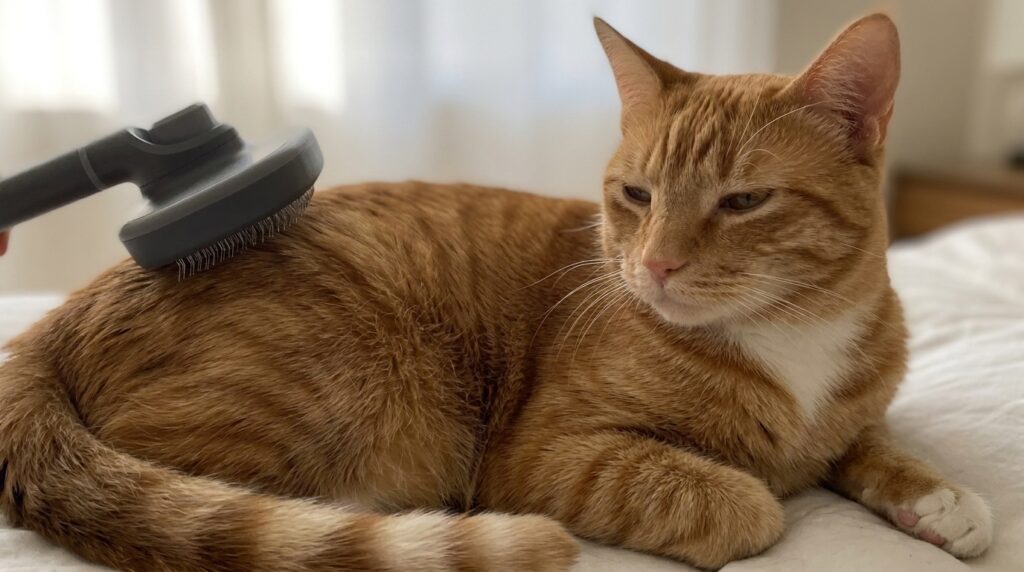
This Hertzko Self-Cleaning Slicker Brush is the one Beans actually likes. He leans into it. He’ll stay still for a full five minutes and sometimes longer.
It collected 18g per session on average — less than the FURminator but considerably more than the rubber brush. And because Beans tolerates it without any resistance, I can use it more frequently — five times a week versus three — which means the weekly fur removal total is competitive.
The self-cleaning button retracts the bristles so collected hair falls off easily. That alone makes it worth the price difference over cheap slicker brushes.
What I like: Beans genuinely enjoys it. I can use it more often because there’s no tolerance battle. The self-cleaning mechanism actually works.
What I don’t like: It doesn’t reach the undercoat the way the FURminator does. For a heavy shedder it’s maintenance rather than intervention.
Best for: Sensitive cats. Cats who resist the FURminator. Daily grooming maintenance between deeper deshedding sessions.
Not for: Cats with serious shedding problems who need undercoat removal. As a standalone tool for a heavy shedder it won’t be enough.
The cheap rubber brush — why it made things worse
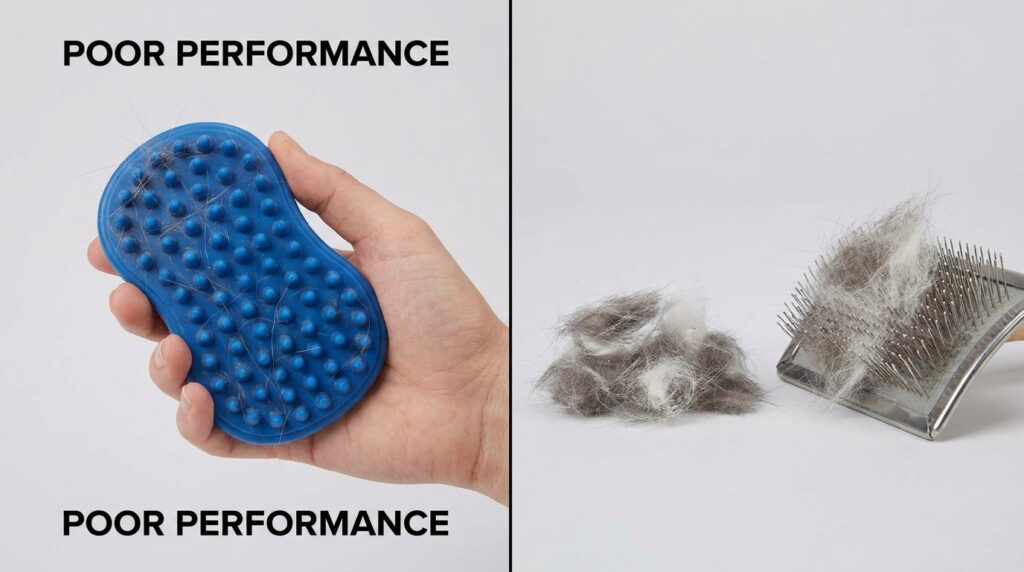
I’m not naming it specifically because there are dozens of identical versions. You’ve seen them — flexible rubber paddle with raised nubs, usually under $10, lots of 4-star reviews from people who’ve owned it for two weeks.
It collected 9g per session. Barely more than running my hand over Beans’ coat. More importantly — hairballs went from three per week to four. I think what happened is that the rubber nubs stimulated grooming behaviour without actually removing much loose fur, so Beans groomed more after sessions, ingesting what the brush missed.
I returned it at day 12. Life’s too short.
Best for: Nothing I can recommend.
What I learned from 30 days of tracking
The brush matters less than frequency. Even the FURminator only works if you use it consistently. One thorough session per week is less effective than three moderate sessions.
Session length matters too. Five focused minutes is more effective than fifteen where the cat is trying to escape for the last ten. Stop while Beans is still willing. The next session will be easier.
Time of day is underrated. Beans is most tolerant immediately after a meal — full and slightly sleepy. Trying to brush him when he’s in play mode is pointless. Find your cat’s cooperative window and use it.
According to Cornell Feline Health Center guidance on hairballs, regular grooming is one of the most effective prevention strategies — more effective than hairball treats or petroleum-based gels. The brush is the intervention. Everything else is supplementary.
My current routine
Monday, Wednesday, Friday: FURminator — five minutes, back and sides.
Tuesday, Thursday: Hertzko slicker — full body, longer session if Beans is cooperative.
Weekend: whichever he seems happier with that day.
Hairballs since week three of this routine: two in six weeks. Down from three per week before I started tracking.
If shedding is becoming a bigger problem than just fur on furniture — more hairballs, changes in weight, or constant grooming — it’s usually connected to something deeper than the brush alone. I’ve broken that down in detail in The Complete Indoor Cat Health & Wellness Guide (2026), including how diet, hydration, and activity affect coat health.

Frequently asked questions
How often should I brush an indoor cat?
Three to five times per week for a moderate shedder. Daily for heavy shedders or long-haired cats. The more frequently you brush, the less loose fur your cat ingests during self-grooming.
Can brushing reduce hairballs?
Yes — this is the most direct intervention available. Hairball gels and treats help hair pass through the digestive system, but removing it before ingestion is more effective. Regular brushing reduced Beans’ hairballs by roughly 65% over 30 days.
My cat hates being brushed. What do I do?
Start with very short sessions — 30 seconds — and pair them with a treat immediately after. Build tolerance slowly over two to three weeks. The Hertzko slicker is generally better accepted than the FURminator by resistant cats because the pressure is lighter.
When is shedding abnormal and needs a vet?
Patchy fur loss, bald spots, excessive scratching, or skin irritation under the coat are all reasons to see a vet. Normal shedding is all-over loose fur. Clumps coming out or visible skin patches are not normal shedding.