If you’re wondering why is my indoor cat losing weight, the answer is rarely just one thing — and it’s not always obvious.
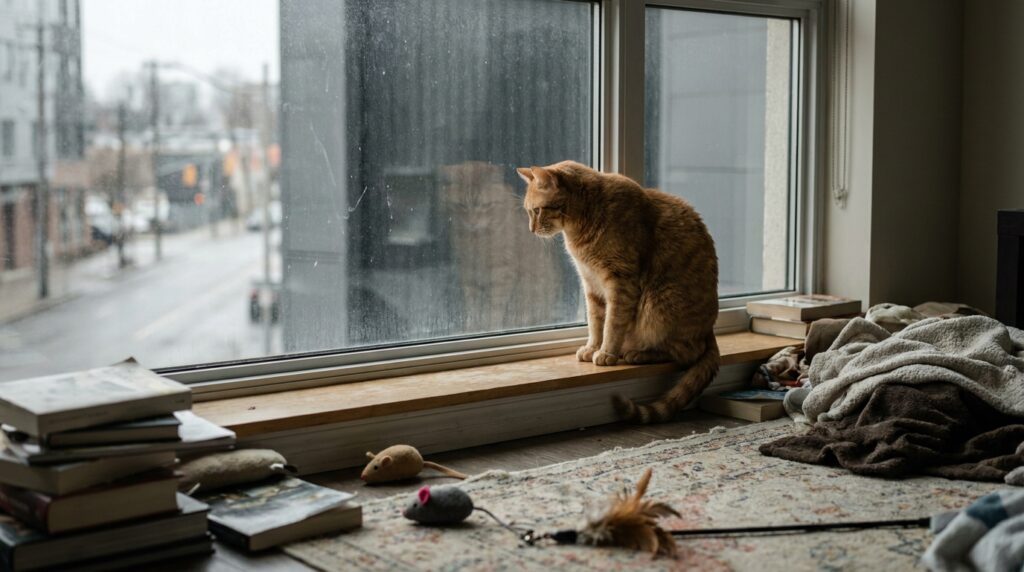
When I first noticed Miso looking slightly thinner, she was still eating, still behaving normally, and nothing felt urgent. That’s exactly why weight loss in indoor cats gets missed early — it’s subtle, gradual, and easy to explain away.
Here are the six most common causes I’ve seen — starting with the ones owners overlook most often
- They’re not eating as much as you think
- Dental pain is making eating difficult
- Stress from a change in their environment
- Hyperthyroidism — especially in cats over 7
- Kidney disease — particularly in older cats
- Diabetes — weight loss despite eating normally
Numbers 4, 5, and 6 require a vet visit. Numbers 1, 2, and 3 might too, but you can check for them yourself first. Here’s how.
Why indoor cats in particular
Indoor cats are easier to monitor than outdoor ones — you see every meal, every litter visit, every nap. That’s actually useful. Weight loss that would go unnoticed in an outdoor cat for weeks gets spotted faster indoors.
The flip side is that indoor cats have fewer ways to self-regulate. They can’t go outside to eat grass when their stomach hurts. They can’t avoid a stressful housemate by leaving the house. Their environment is fully controlled by you — which means when something goes wrong, it’s often something in their environment.
Even small amounts of weight loss in a cat can be significant — even just half a pound. If you’ve noticed your cat looks thinner, trust that observation. Don’t wait for it to become obvious.
Reason 1 — They’re not eating as much as you think
This is the most common cause I’ve seen, and the easiest to miss.
If you free-feed — leaving dry food out all day — you may not notice when consumption drops. The bowl looks the same because it’s always topped up. Your cat ate half as much yesterday as the day before and you’d never know.
Start measuring. Weigh out food at each meal. Note what comes back uneaten. A week of data tells you more than six weeks of casual observation.
Do you have another cat or dog in the house? Additional pets in your home could be eating your cat’s food or obstructing your cat’s access to their food bowl. PetMD I’ve seen this cause noticeable weight loss in a cat over 4-6 weeks — the owner assumed both cats were eating from the shared bowl and had no idea one was being blocked.
What to do: Separate feeding stations. Measured meals twice daily. Watch who eats what for three days.
Reason 2 — Dental pain
Cats have a strong survival instinct and often will continue to eat despite having problems with their teeth or gums. However, dental pain will naturally cause a drop in eating behaviour.
This is the sneaky one. Your cat isn’t refusing food — they’re just eating less at each meal because it hurts. Over weeks, that adds up to noticeable weight loss.
Signs to look for: food dropping from the mouth while eating, favouring one side, pawing at the face, bad breath that’s gotten worse, or a previously kibble-eating cat suddenly preferring wet food.
Dental disease is extremely common in cats. Up to 80% of adult cats show signs of dental disease. Zigly It’s not a rare condition — it’s almost the norm in cats over 5 years old.
What to do: Open your cat’s mouth gently and look. Red gums, visible tartar, or any reluctance to have their mouth touched warrants a vet appointment. Dental disease doesn’t resolve on its own.
Reason 3 — Stress
Cats that experience stress may eat less and soon begin losing weight. It doesn’t take much to stress a cat. Changing your work schedule, adding a new person or pet to your home, loud noises, too few litter boxes in a multi-cat household, and other factors may raise your pet’s anxiety level.
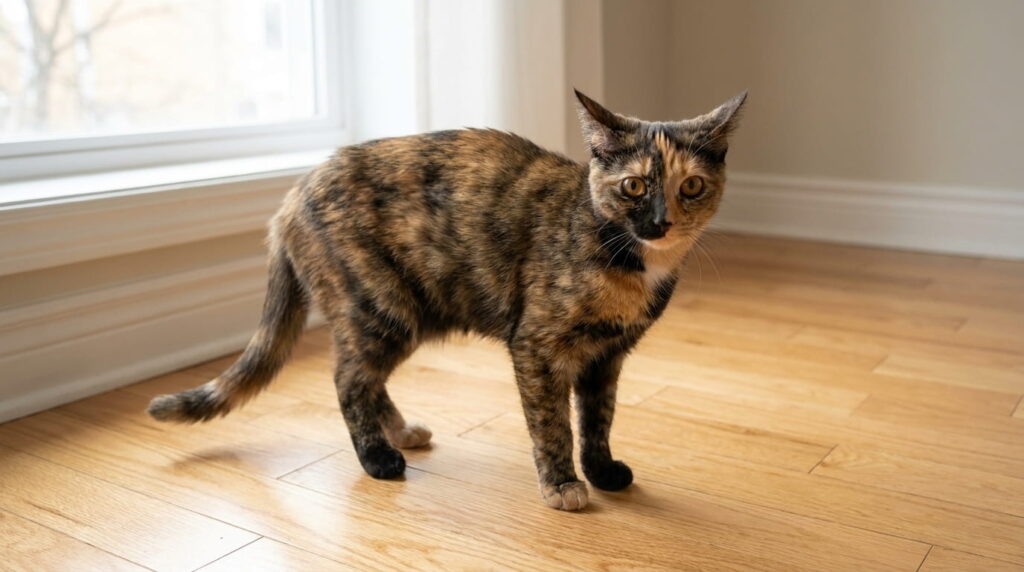
Fig — my rescue tortoiseshell — lost noticeable weight in her first two months here. She was eating, but not enough. Every mealtime was tense because she was still nervous about the other cats. Once I moved her to a separate feeding space and gave her a consistent routine, her weight stabilised within three weeks.
Stress-related weight loss is often accompanied by other signs: hiding more than usual, reduced grooming, or increased aggression. If your cat’s behaviour has changed alongside their weight, stress is worth considering before assuming a medical cause.
What to do: Identify what changed before the weight loss started. New pet, new person, building work nearby, a change in your schedule — the timeline usually reveals the trigger.
Reason 4 — Hyperthyroidism
Hyperthyroidism is more common in cats that are over seven years old. It’s a condition where the thyroid gland becomes enlarged and starts to produce too much thyroid hormone. Weight loss is a very common sign, alongside an increased appetite, as well as increased thirst and urination. Purina
This is the one that catches owners off guard: your cat is eating more than usual and still losing weight. If that’s what you’re seeing, hyperthyroidism is the most likely explanation and you need bloodwork.
The good news is it’s very treatable. Medication, diet, or in some cases radioactive iodine treatment can manage it effectively. Caught early, hyperthyroid cats do well for years.
What to do: If your cat is over 7, eating more but losing weight, book a vet appointment this week — not next month. Bloodwork will confirm or rule it out quickly.
Reason 5 — Kidney disease
Kidney disease causes loss of muscle mass in cats with declining kidney function. Weight loss is often one of the earlier visible signs, before an owner might notice increased water intake or litter box changes.
Kidney disease is particularly common in indoor cats. The prevalence of CKD increases with age, being estimated at 20-50% in cats over 10 years of age. MDPI
I’ve written a separate article specifically on kidney-supportive nutrition for cats with CKD — if kidney disease is confirmed, start there.
What to do: Annual bloodwork from age 7 detects kidney changes early. If your cat is older and losing weight, ask your vet specifically to check kidney values.
Reason 6 — Diabetes
Diabetes in cats is very common and requires immediate veterinary care and ongoing treatment. In addition to unexplained weight loss, diabetic cats typically drink an abnormally large amount of water and urinate large volumes as well. PetMD
The tell with diabetes is the combination: weight loss plus dramatically increased thirst and urination. If all three are happening, don’t wait. Diabetes is manageable with insulin and diet changes, but unmanaged it deteriorates quickly.
What to do: Vet appointment immediately. Bloodwork and urine test will diagnose it.
When to go to the vet today rather than next week
If your cat has lost more than 10% of their body weight without explanation — that’s roughly half a pound on a 5lb cat — go now rather than monitor.
Also go immediately if weight loss is accompanied by vomiting, diarrhoea, complete food refusal, hiding, or lethargy. These combinations suggest something more urgent than a dietary adjustment.
Weight loss on its own, appearing gradually, in a cat who is otherwise behaving normally — that warrants a vet visit within the week but isn’t an emergency.
When in doubt, call your vet’s practice and describe what you’re seeing. They’ll tell you how urgently they want to see your cat.
One thing I’d do first, before the vet visit
Weigh your cat and write it down. Get on bathroom scales yourself, then pick up your cat and weigh again. The difference is your cat’s weight.
Do this the same day every week for a month. A single weight reading tells you almost nothing. A trend over four weeks tells you whether things are getting worse, stable, or improving.
That data is also genuinely useful to your vet — far more useful than “I think she’s lost weight.” A number, and a date, and a direction of change is what helps them narrow down the cause quickly.