
Finding the best wet food for cats with kidney disease is often the first and most critical step after a diagnosis. When my cat, Miso, was diagnosed with early-stage CKD at age 10, the first thing my vet discussed wasn’t medication—it was phosphorus. Managing a cat kidney disease diet requires a shift toward low phosphorus cat food and higher moisture intake to reduce the workload on the kidneys.
After months of comparing labels, trying different brands, and watching what Miso actually ate versus what she left in the bowl, here’s what I’d buy again:
- Best overall: Weruva Cats in the Kitchen (low phosphorus, high moisture, Miso accepted it within a day)
- Best budget option: Purina Pro Plan Vital Systems Tuna Entree
- Best prescription option: Daves kidney care (if your vet has recommended prescription food)
- Skip: Most supermarket “senior” wet foods — they’re marketed for aging cats but phosphorus levels are rarely controlled
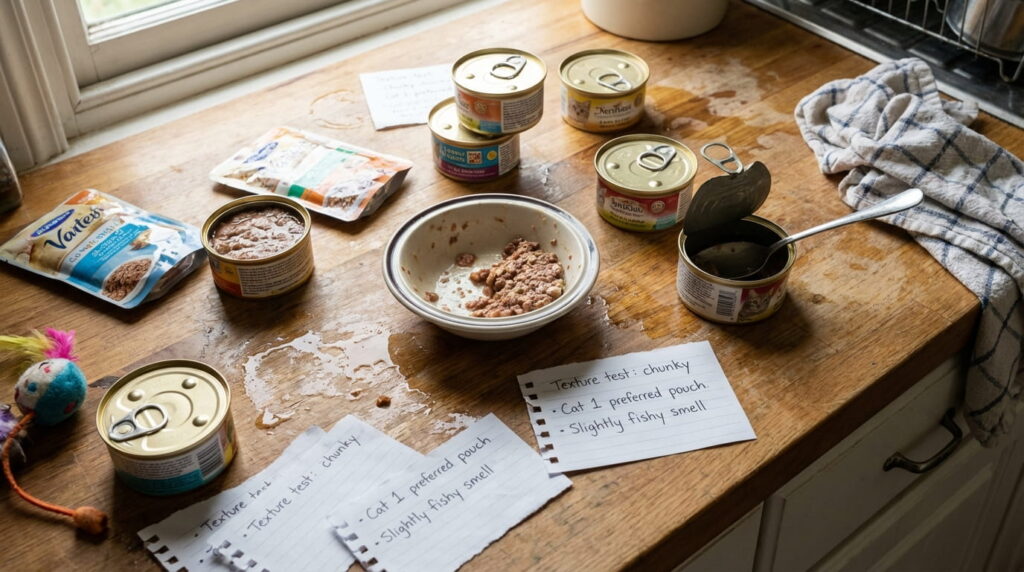
Comparison table
| Food | Phosphorus level | Moisture | Price/can | Verdict |
|---|---|---|---|---|
| Weruva Cats in the Kitchen | Low | 82% | ~$1.80 | Best overall |
| Purina Pro Plan Vital Systems | Low-moderate | 78% | ~$1.20 | Best budget |
| Daves Kidney Care | Controlled | 75% | ~$2.50 | Best prescription |
| Royal Canin Renal | Controlled | 76% | ~$2.80 | Strong alternative |
| Generic supermarket senior | Unknown | 70-75% | ~$0.80 | Avoid |
Why phosphorus matters more than anything else
As kidney disease progresses, a cat’s kidneys become less efficient at removing phosphorus from the bloodstream. Over time, elevated phosphorus levels are associated with worsening kidney function, nausea, reduced appetite, and muscle loss. Weruva
This is the number that matters. Not protein, not calories — phosphorus first. Most standard cat foods, including premium ones, don’t publish their phosphorus levels on the label. You have to look them up or call the manufacturer.
The reason wet food matters: wet and canned foods naturally provide more moisture than dry food, helping cats take in extra fluids without needing to drink more water. Weruva For a cat whose kidneys are already working harder than they should, that extra moisture reduces the workload significantly.
What I feed Miso and why
Miso gets Weruva Cats in the Kitchen twice daily. I switched her from a premium dry food at her vet’s recommendation after her first kidney panel came back showing early-stage CKD.
The switch wasn’t instant. She turned her nose up at the first two flavours I tried — the tuna one sat untouched for 20 minutes before I gave up. The chicken and salmon variety she ate immediately.
Three months on, her follow-up bloodwork showed stable kidney values. Her vet was pleased. I’m not saying the food fixed anything — kidney disease doesn’t reverse — but stable is the goal, and we got there.
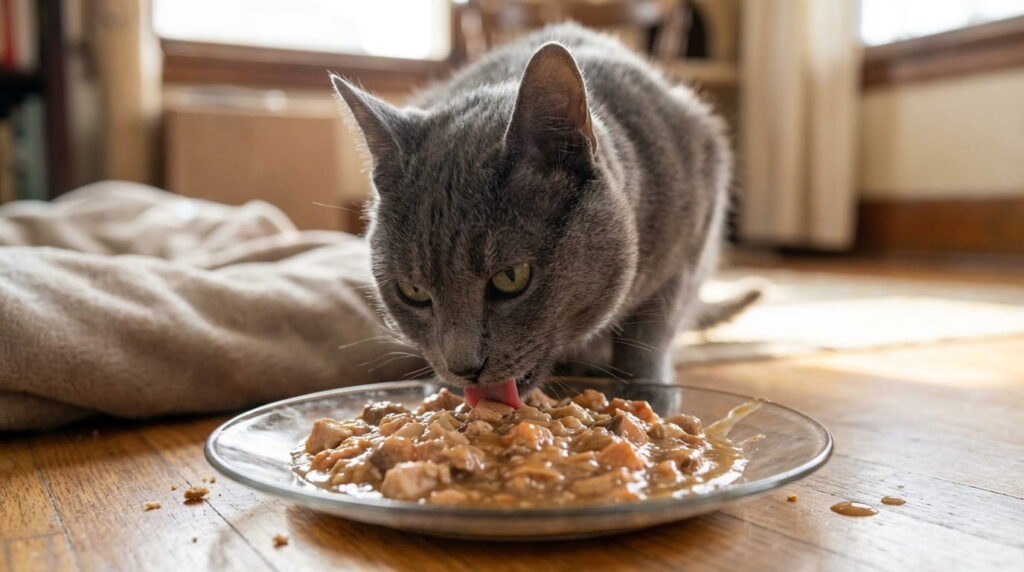
What I like about Weruva: The phosphorus content is published and verifiable. The moisture content is among the highest I’ve found in a non-prescription food. The ingredient list is short and readable.
What I don’t like: It’s more expensive than most wet foods. And the pouches are fiddlier to open than cans — a small thing that gets annoying at 7am.
Best for: Cats with early to mid-stage kidney disease who will accept a new food. Owners who want a non-prescription option with verified low phosphorus.
Not for: Cats in advanced kidney disease — those cats need prescription food formulated specifically for their stage. Talk to your vet before choosing any food for a cat with confirmed CKD.
Purina Pro Plan Vital Systems
This is the budget option I’d actually recommend. Purina Pro Plan Vital Systems Tuna Entree is a non-prescription wet food supporting kidney, immune, brain, and digestive health.
It’s not as low in phosphorus as Weruva, but it’s considerably lower than standard wet foods and it’s widely available. Most cats accept it readily — the tuna flavour has a strong smell that even picky eaters respond to.
What I like: Widely available in UK supermarkets and online. Noticeably cheaper than Weruva. Most cats eat it without the transition fussiness that comes with some kidney diets.
What I don’t like: Phosphorus data isn’t always easy to find on UK packaging — you may need to contact Purina directly.
Best for: Budget-conscious owners. Cats who have been prescribed a lower-phosphorus diet but won’t accept prescription food.
Not for: Cats with confirmed moderate to severe CKD — the phosphorus reduction here is helpful but not at the level of a prescription renal diet.
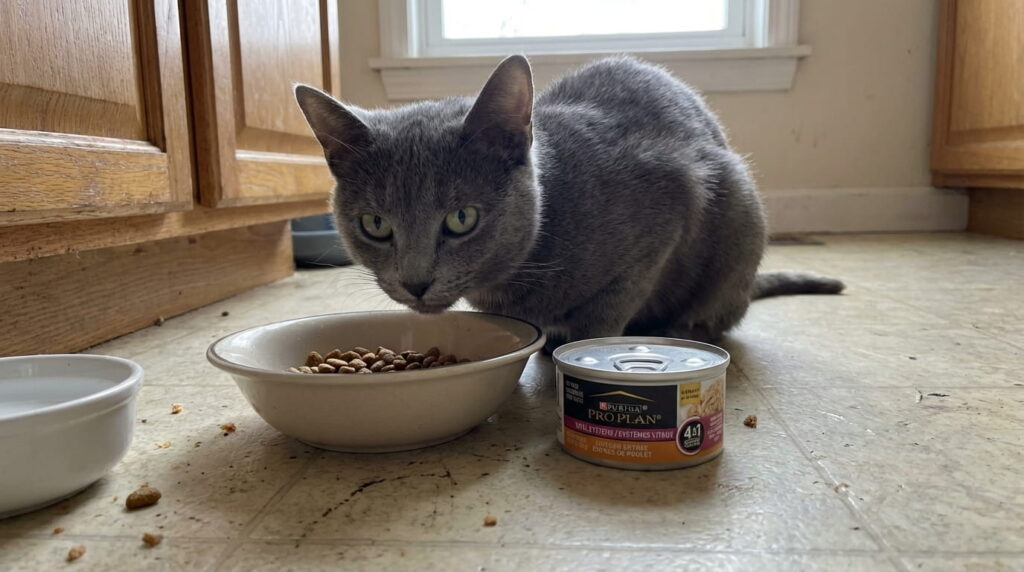
Daves Kidney Care
Daves Kidney Care offers vet-formulated options in wet and dry varieties with essential nutrients for kidney health.
This is the food your vet will likely recommend if Miso’s — or your cat’s — kidney values worsen. It requires a prescription in the UK, which means a vet visit, which means it’s not a decision you make independently. That’s the right arrangement.
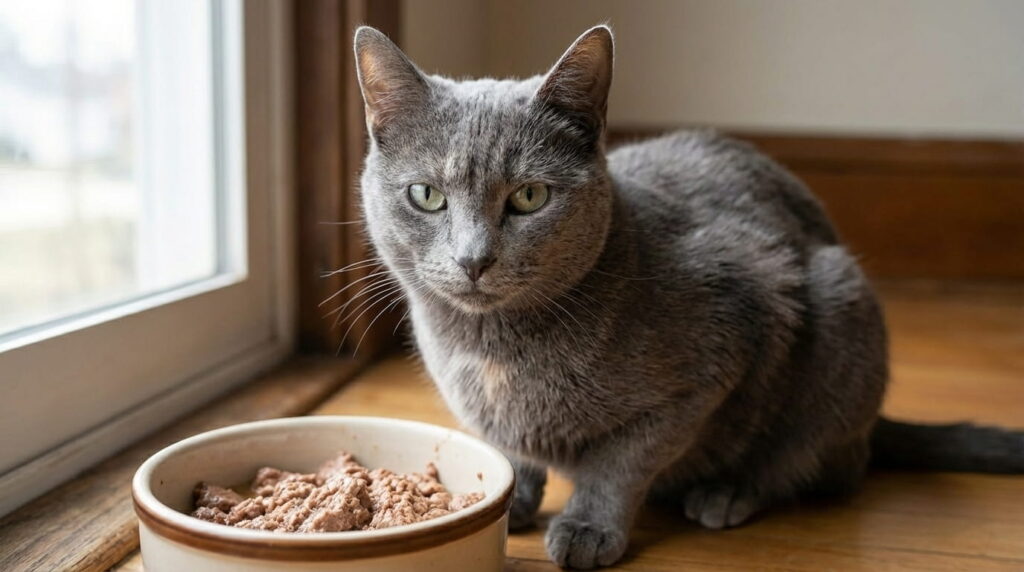
I won’t pretend Miso loves it. She eats it. Some cats genuinely refuse it. If your cat won’t touch prescription renal food, tell your vet — there are alternatives.
Best for: Cats with diagnosed CKD Stage 2 or above, as recommended by your vet.
Not for: Cats without a kidney diagnosis — this food has restricted protein levels that aren’t appropriate for healthy cats.
3 foods I’d avoid
Generic supermarket “senior” wet food: These are marketed at older cats but phosphorus is rarely restricted. “Senior” on the label means almost nothing specific about kidney support. Always check the phosphorus content before buying.
Dry food as the primary diet for a cat with kidney disease: wet and canned foods naturally provide more moisture than dry food, helping cats take in extra fluids. Weruva A cat with CKD on a primarily dry diet is fighting an uphill hydration battle every single day.
Anything with “by-products” as the primary protein source: Organ meats contain high phosphorus. The first ingredient should be a named meat — chicken, tuna, salmon — not “meat by-products” or “poultry derivatives.”
What my vet told me that I wish I’d known earlier
Kidney disease in cats is common. The prevalence of CKD increases with age, being estimated at 20-50% in cats over 10 years of age. MDPI That’s not a scare statistic — it’s a reason to start paying attention to kidney-supportive nutrition before there’s a diagnosis.
The three things she told me that I now apply to all my cats regardless of age:
More wet food. Less dry. A water fountain over a bowl. And annual bloodwork from age 7 onwards — not 10, not when symptoms appear. Seven.
The earlier you catch changes in kidney values, the more options you have.
Frequently asked questions
Can I feed kidney diet food to a healthy cat? No. Kidney diets restrict protein and phosphorus to levels that aren’t appropriate for healthy cats. Only feed kidney food to a cat with a confirmed kidney diagnosis and vet guidance.
How quickly should I switch to kidney-friendly food? Gradually, over 7-10 days. Mix increasing amounts of the new food into the old food. Sudden food changes cause digestive upset and food refusal — both counterproductive when you’re trying to get a sick cat to eat.
My cat won’t eat the kidney diet my vet prescribed. What do I do? Tell your vet. This is a common problem and there are solutions — different brands, different textures, appetite stimulants, warming the food slightly. Don’t quietly switch to non-prescription food without discussing it first.
How much wet food does a cat with kidney disease need daily? Ask your vet — it depends on your cat’s weight, stage of disease, and whether they’re also eating any dry food. As a general starting point, most adult cats need 200-300 calories daily, with wet food contributing the majority.