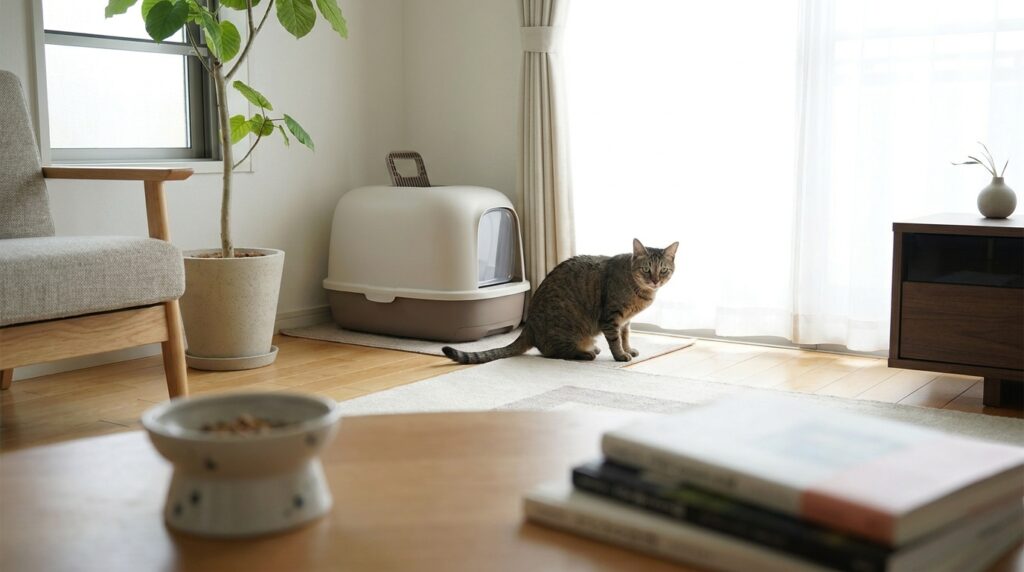
Cat urinary problems like straining in the litter box, blood in urine, or urinating outside the box are often treated as isolated medical issues. But in many indoor cats, these symptoms are linked to stress, not infection. If your vet ruled out bacteria and mentioned feline idiopathic cystitis, the real cause may not be in the bladder alone — it’s in your cat’s environment.
What Feline Idiopathic Cystitis Actually Is
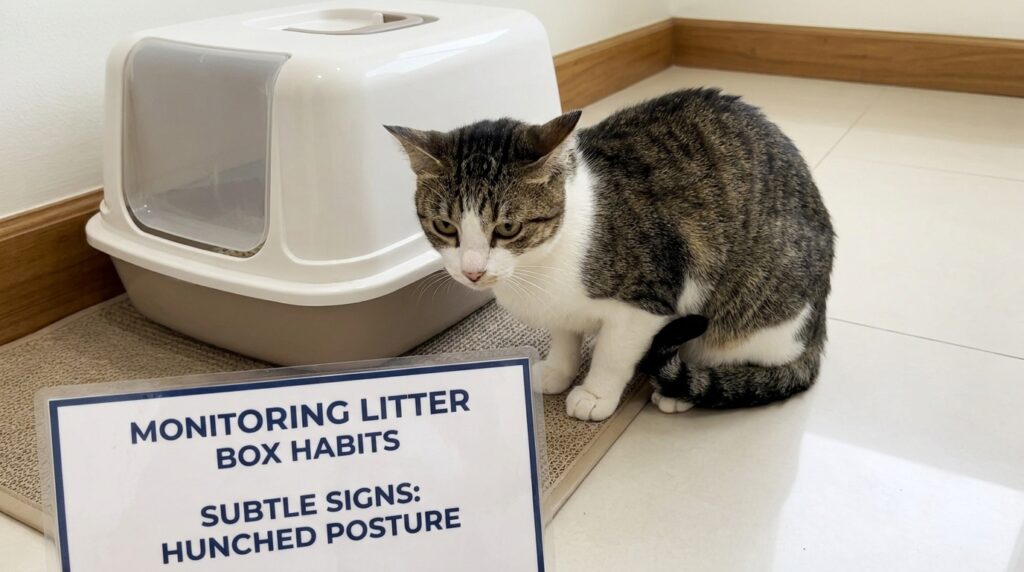
Feline lower urinary tract disease (FLUTD) is an umbrella term for a cluster of bladder and urinary symptoms in cats: pain while urinating, frequent trips to the litter box with little or no output, blood in the urine, urinating outside the box.
When vets rule out a bacterial infection, bladder stones, and blockage, what’s left is feline idiopathic cystitis (FIC). FIC accounts for roughly 55–65% of all lower urinary tract cases in cats.
For a long time, the assumption was that FIC had a dietary or anatomical cause. A 2011 study published in the Journal of the American Veterinary Medical Association changed that picture considerably. Researchers found that stress alone — without any dietary or anatomical factor — caused healthy cats to develop FIC symptoms. When the stressors were removed, the symptoms resolved.
The mechanism is similar to stress-related gut issues in people. Chronic stress activates the nervous system in ways that affect smooth muscle tissue throughout the body, including the bladder wall. In cats, this shows up as inflammation of the bladder lining that looks like a bacterial infection but tests negative for bacteria.
What Stresses an Indoor Cat
This is where it gets specific to indoor cats. The stressors that trigger FIC aren’t dramatic — they’re the ordinary conditions of a confined, under-stimulated life.
Lack of control over the environment. Cats need to feel like they can navigate their territory, hide when they want to, access high ground, and avoid threats. An apartment with limited vertical space, no hiding spots, and only one litter box puts a cat in a chronic low-grade state of vigilance.
Unpredictable schedules. Cats are more sensitive to routine disruption than most owners realize. A week of irregular feeding times, a new work schedule, houseguests, or construction noise outside is enough to push some cats over the edge.
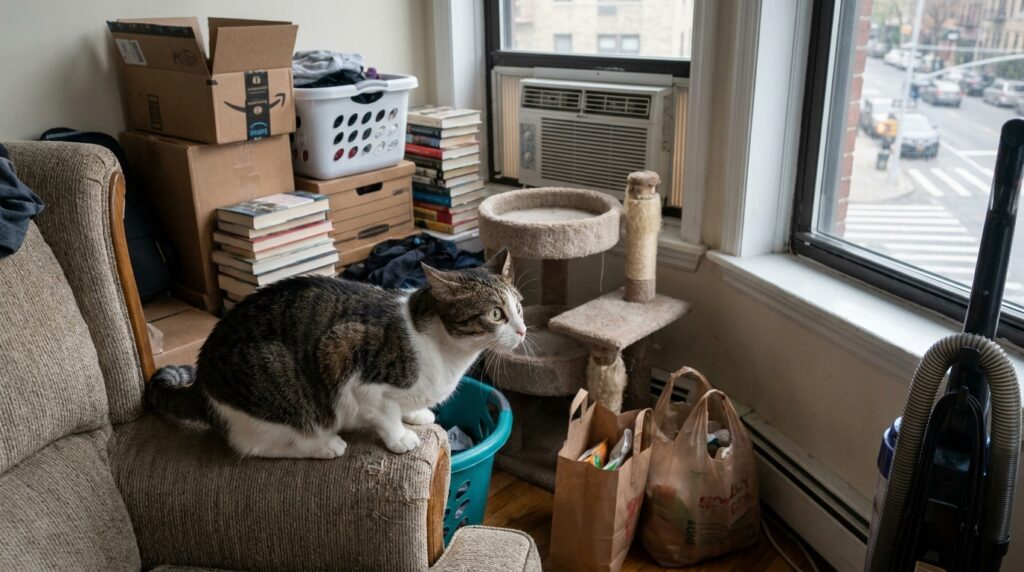
Insufficient hunting behavior. This sounds like a behavior issue, but it’s actually a neurological one. Cats are hardwired to hunt multiple times a day. An indoor cat who doesn’t get interactive play is carrying around unspent predatory energy constantly. That sustained arousal state is physiologically stressful.
Litter box problems. A dirty litter box, a litter box in a high-traffic area, or a covered box that traps smells can cause cats to hold their urine longer than they should. Holding urine is directly associated with FIC flares.
Multi-cat tension. Two cats who don’t get along but live in the same space are both stressed all the time, even if there’s no obvious fighting. Resource competition — for food, the litter box, the best sleeping spot, your attention — creates ongoing stress that’s invisible unless you know what to look for.
The Stress-Bladder Feedback Loop
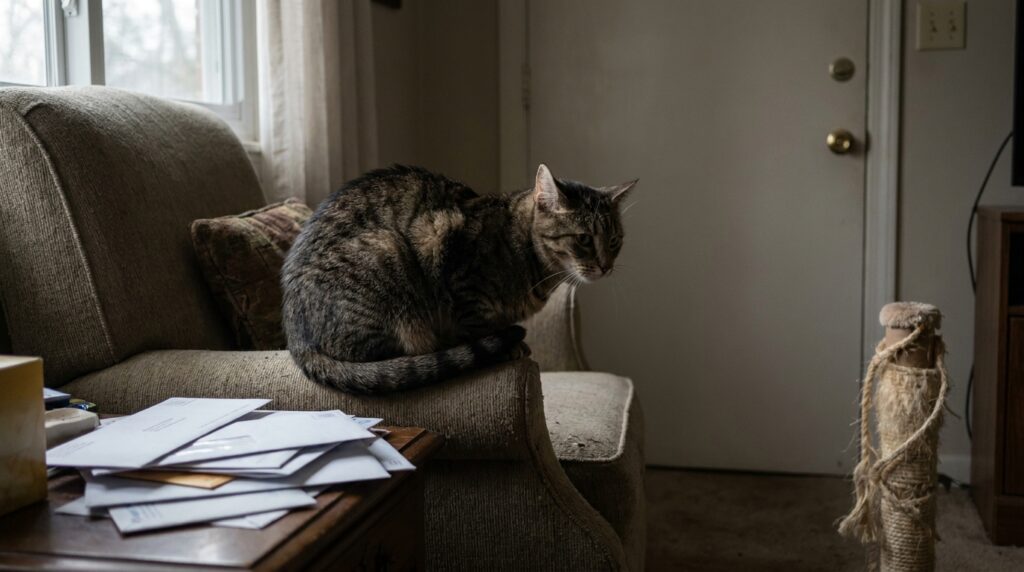
Here’s what makes FIC particularly frustrating: the pain of urination becomes its own stressor.
A cat who is stressed gets bladder inflammation. The inflammation hurts. The pain causes more stress. The stress causes more inflammation. The cycle continues until something breaks it.
This is why prescription urinary diets and increased water intake help but don’t solve the whole problem for many cats. They address the chemistry inside the bladder but not the conditions that inflamed it. The recurrence rate for FIC is high — estimates range from 40–65% within a year for cats whose environment doesn’t change.
What Actually Helps: The Environmental Side
Treating FIC long-term means treating the stress alongside the bladder. These aren’t suggestions for severe cases — they’re the baseline your indoor cat should have regardless.
More litter boxes, better placed.
The standard recommendation is one box per cat plus one extra. But placement matters as much as quantity. Litter boxes should be in quiet, low-traffic areas where your cat can use them without feeling trapped or exposed. Don’t put all the boxes in one room — spread them out. Clean them at least once a day. A cat who avoids her litter box because it’s dirty or in a stressful location is holding urine. That’s directly harmful.
Add water sources away from the food bowl.
Cats with FIC need to drink more water to dilute their urine and reduce bladder irritation. Many cats will dramatically increase their intake if you put a water bowl in a different room from their food, or switch to a fountain. The movement of water attracts them.
Twice-daily interactive play.
This is the part that gets skipped because it seems like enrichment rather than medicine. It isn’t. A 2016 study from Ohio State University found that increasing environmental enrichment — including interactive play — reduced the frequency of FIC episodes in cats with recurrent disease. Ten to fifteen minutes twice a day, with a wand toy that lets the cat actually run and jump. Not a laser pointer on the floor. Actual exertion.

Vertical space and hiding spots.
A cat who can get up high feels safer. A cat who has a covered spot to retreat to when overwhelmed isn’t running a stress response all day. These aren’t luxuries — they’re the basic environmental features that allow a cat to regulate her own nervous system.
Feliway or other pheromone diffusers.
These work for some cats and not others. The evidence is mixed, but for cats with recurrent FIC and no obvious environmental triggers, a pheromone diffuser is worth trying before moving to anti-anxiety medication. Start with one plugged in near the litter box area.
Consistent feeding schedule.
Same time, same location, same food. Predictability reduces the background noise of anxiety that cats carry when they can’t anticipate what’s coming.
When to Go Back to the Vet
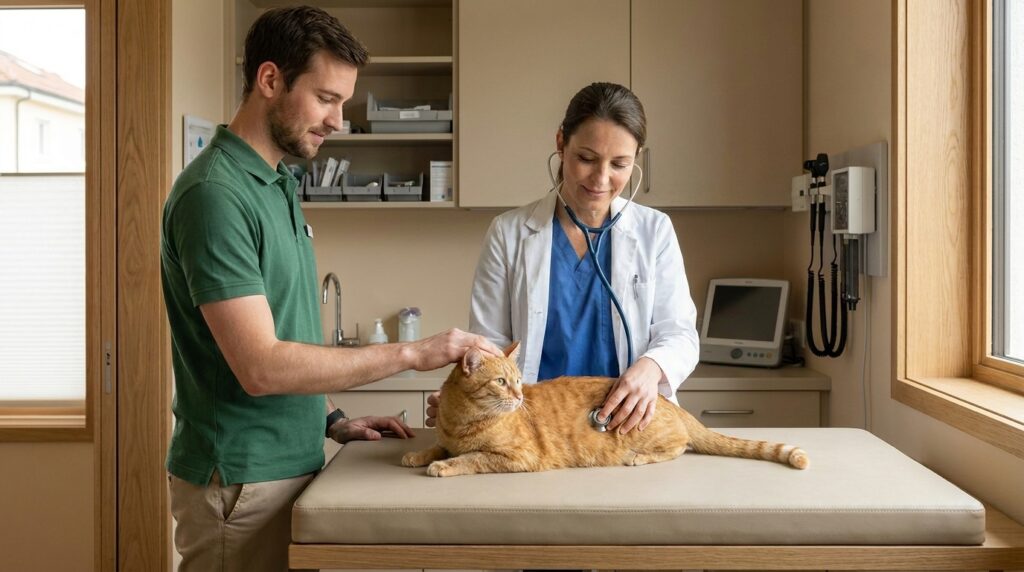
FIC is not life-threatening in most cases, but a complete urinary blockage is. Male cats are at significantly higher risk because their urethra is narrower.
If your male cat is visiting the litter box repeatedly, producing nothing, or crying out in pain, that is a veterinary emergency. A blocked cat can die within 24–48 hours.
Signs that warrant a vet visit (not necessarily emergency):
- Blood in the urine
- Straining without producing urine for more than a couple of hours
- Urinating only tiny amounts with visible effort
- Crying in the litter box
- Hiding and not eating alongside any of the above
For a female cat with FIC symptoms, the urgency is lower but the visit still matters — you need to rule out a bacterial infection before assuming it’s stress-related.
The Pattern Nobody Tells You About
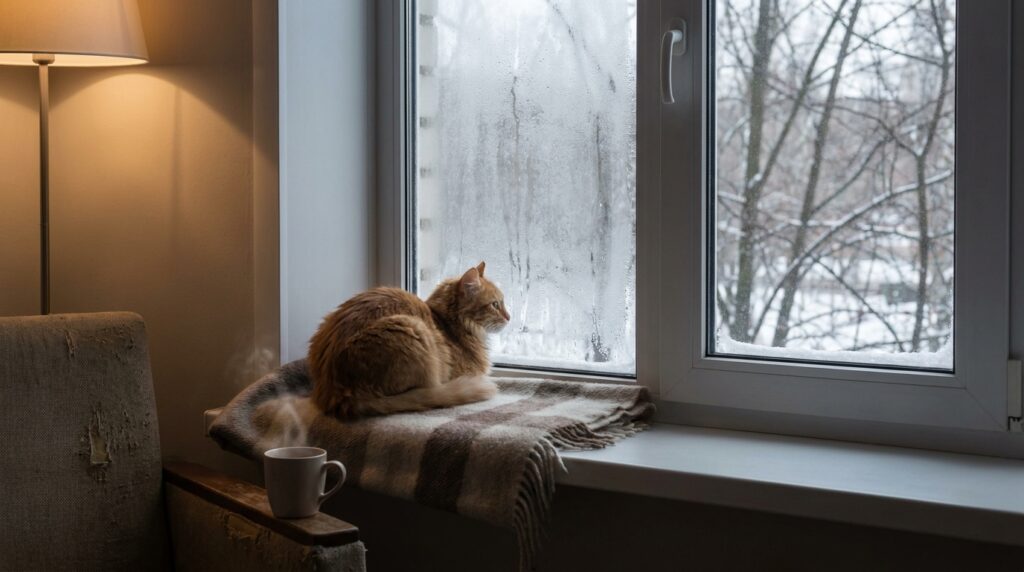
Most cats with recurrent FIC have the same history: first episode in winter, when the owner is home less, when routines shift, when windows are closed and the environment shrinks. Second episode after a move, a new baby, a new pet. Third episode after a period of irregular feeding.
The bladder is keeping score of your cat’s stress.
If your cat has had more than one FIC episode, ask yourself what changed in the weeks before each one. The answer is usually there. A change in the environment that created the stress is usually a change in the environment that can fix it.
Related articles:
- How Many Litter Boxes Does an Indoor Cat Need?
- Best Water Fountains for Cats (For Cats Who Don’t Drink Enough)
- Signs Your Indoor Cat Is Stressed (Beyond the Obvious)
This article was reviewed for accuracy against published veterinary research. If your cat is showing urinary symptoms, consult a veterinarian before making changes to treatment or diet.
Emma Hartley writes about indoor cat health at IndoorCatWell.com.