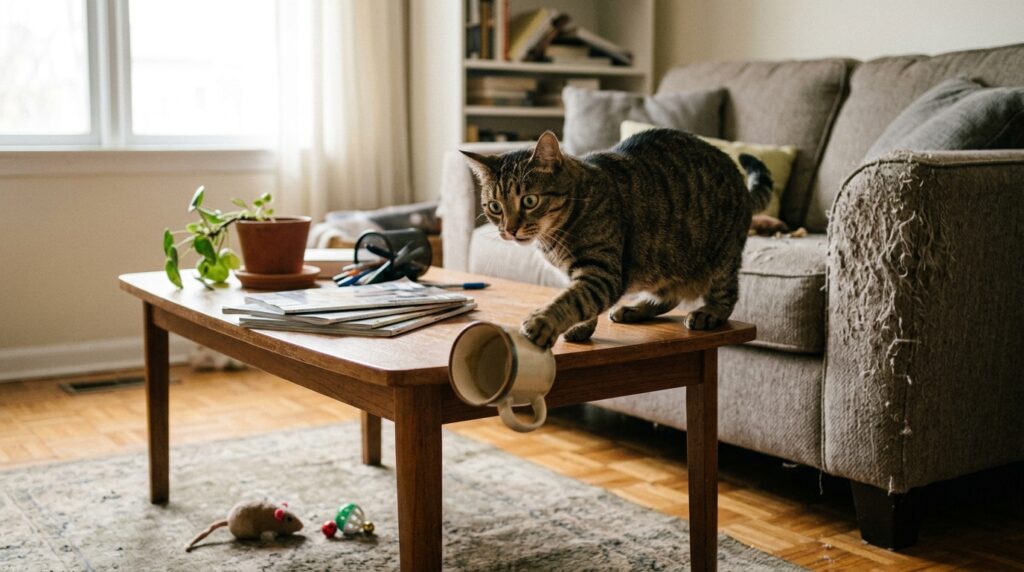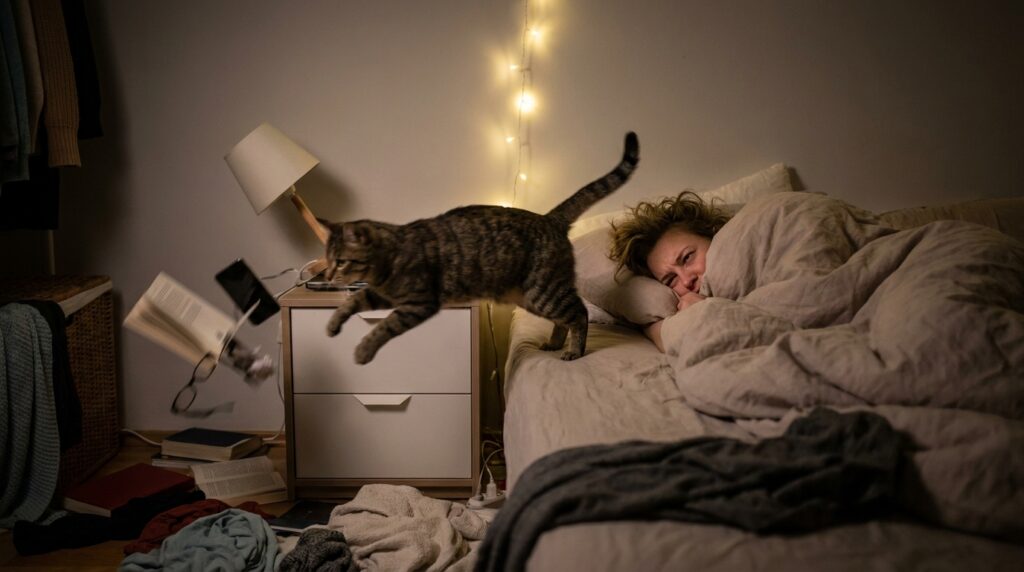
You’ve turned off the lights. You’re in bed. And then it starts the zoomies, the meowing, something getting knocked off a shelf. If you own an indoor cat, this is probably your Tuesday night.
Here’s the thing: your cat is not broken. She is not being difficult on purpose. She is doing exactly what cats are wired to do. The problem is that your home, your schedule, and her sleep debt have all collided in the worst possible way.
This guide covers why indoor cat bored at night, what actually drives that behavior, and what you can do to fix it, without resorting to earplugs or closing your bedroom door forever.
The First Thing to Understand: Cats Are Not Nocturnal
Most people assume their cat is nocturnal because she goes haywire after dark. That assumption is wrong, and it matters because the wrong assumption leads to the wrong fix.
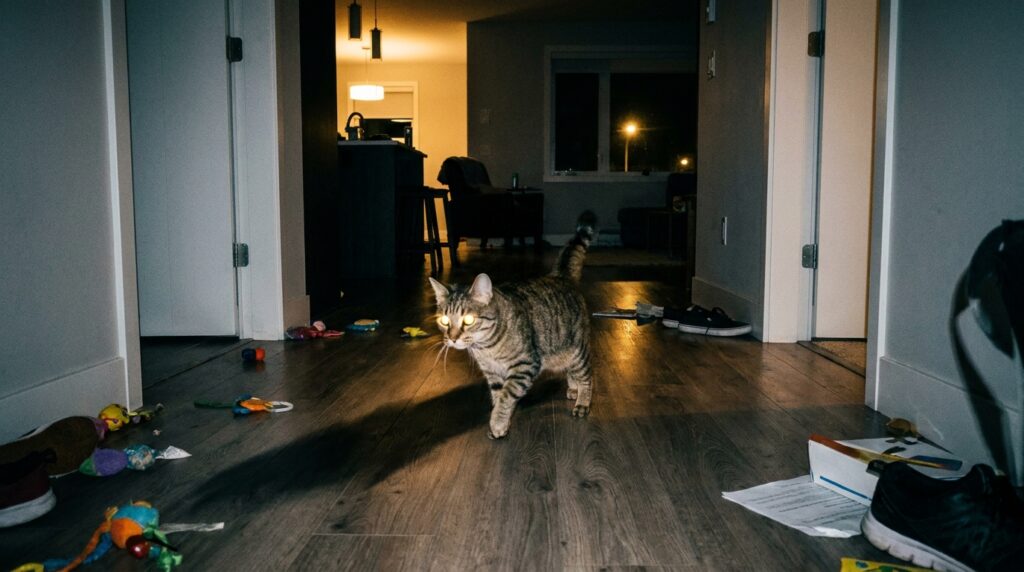
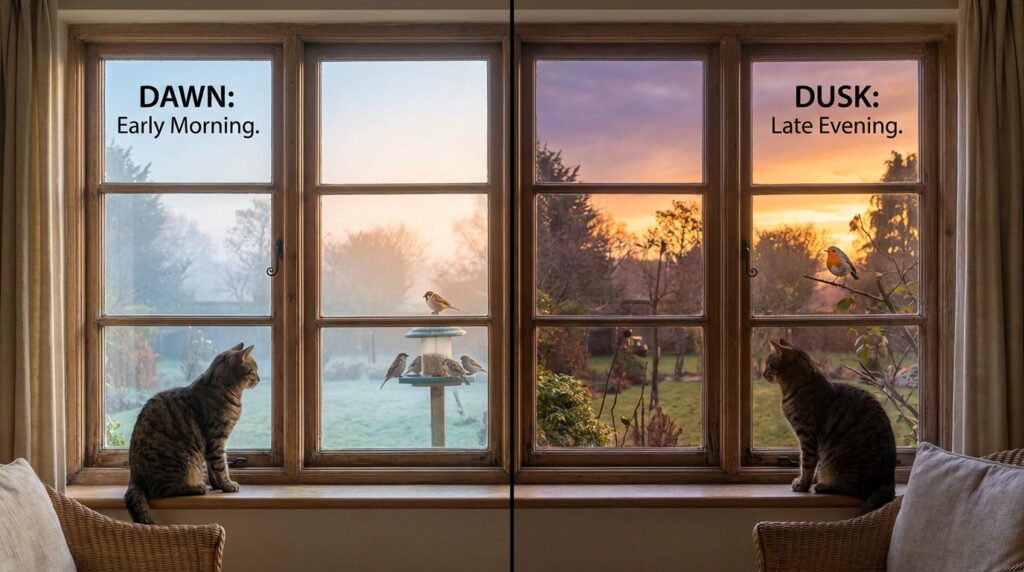
Cats are crepuscular, not nocturnal. They are naturally most active at dawn and dusk — the twilight hours on either side of night. They evolved this way because birds and mice are very active at dawn, and cats developed the ability to see in low-light conditions to take advantage of this.
So if your cat is losing her mind at 10pm or 5am, she is not being nocturnal. She is right on schedule. The problem is that her schedule doesn’t match yours.
Studies indicate that cat owners often get less than the recommended seven hours of sleep — a challenge that dog owners don’t seem to share. That stat alone tells you how common this is. You are not failing as a cat owner. You are dealing with biology.
Why Your Indoor Cat Specifically Gets Bored at Night
Outdoor cats get to burn off that crepuscular energy by actually hunting, patrolling territory, and exploring. Your indoor cat has a hallway and a couch.
That gap between instinct and environment is where boredom lives.
She Slept All Day While You Were Gone
Since many owners are out at work or school during the day, the cat may spend the daytime hours in rest and relaxation, especially if she is the only pet in the household. The cat’s day then begins when the owner arrives home.
This is the core loop. You leave. She naps. You come back. She has eight hours of stored energy and nowhere to put it. By the time you’re ready to sleep, she’s just getting started.
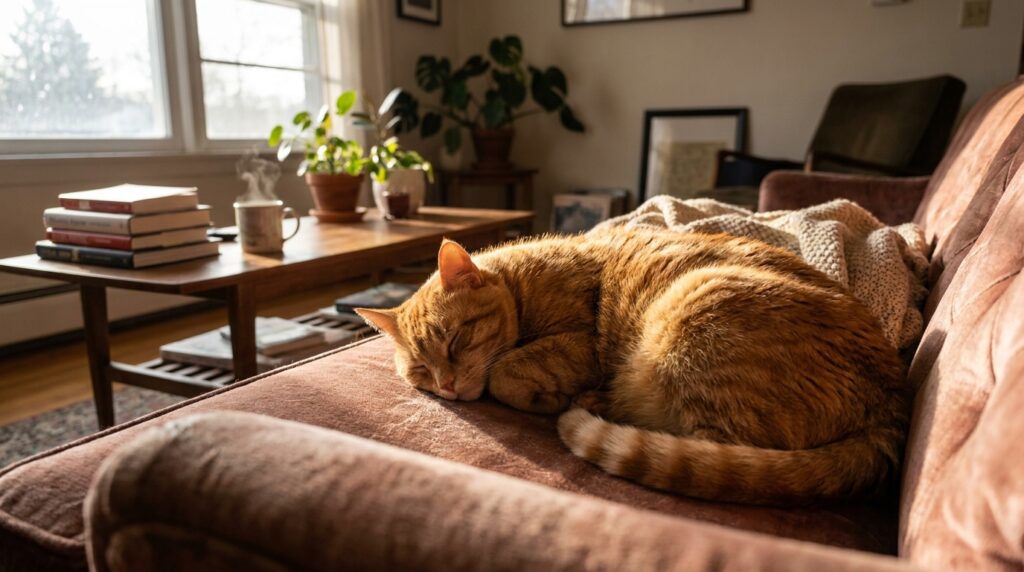
Domestic cats sleep when bored, so many cats will sleep through the night with their owners — because frankly, you are pretty boring when you are sleeping. The inverse is also true: a cat who slept all day because nothing stimulated her is not going to wind down at 10pm just because you want her to.
Her Hunting Drive Has No Outlet
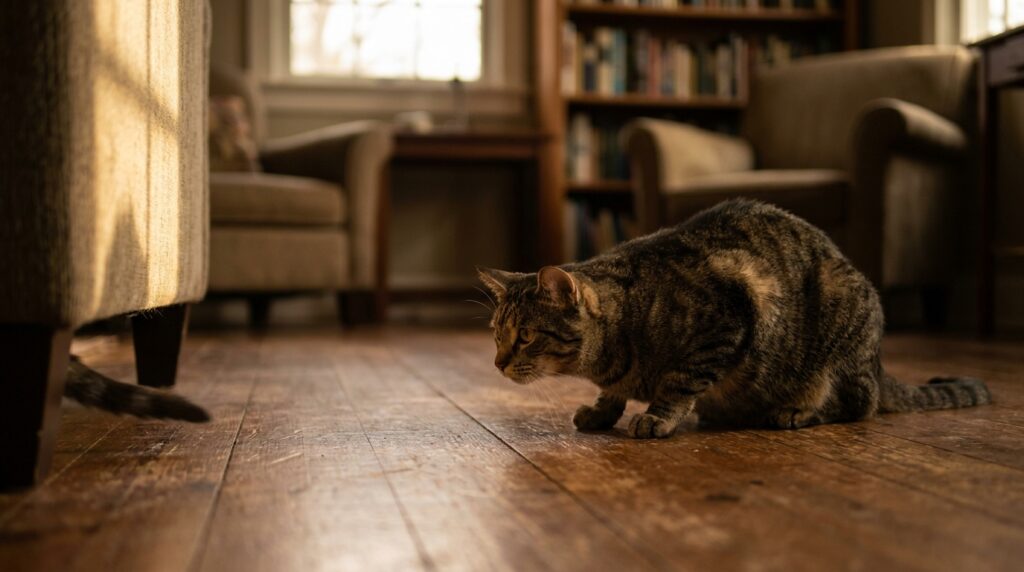
Even well-fed cats feel the pull to stalk, chase, and pounce. Cats that don’t get enough stimulation during the day may channel their pent-up energy into nighttime activity.
That means the toy she ignored all afternoon suddenly becomes fascinating at midnight. The cord on your blinds becomes prey. Your feet under the covers become a target. None of this is aggression. It is a cat running an unfinished hunt sequence in her head — and your bedroom is the only hunting ground available.
Boredom and Hunger Often Hit at the Same Time
Cats often wake in the night to feed, which fits with their natural instinct to hunt in the twilight hours. Free-feeding setups (a full bowl always available) can help some cats, but they can also lead to overeating. For cats on measured meals, hunger and boredom tend to peak together right around the time you want to sleep.
She Has Learned That Waking You Works
Many people reinforce boisterous nighttime activity without meaning to.
Every time you got up to feed her, play with her, or tell her to stop, you taught her that making noise at 3am gets results. She is not manipulating you. She is doing what has worked. The behavior was trained, even if unintentionally.
She Might Be Lonely
If your cat is alone for most of the day, she might be bored and looking for more interaction and attention. Cats are social animals: your cat may have extra energy or be waking you up for attention. This can be a form of social play.
Single indoor cats with no daytime enrichment carry that social deficit into the night. You’re awake. You’re there. You’re the only game in town.
Is This Normal, or Is Something Wrong?
Most nighttime restlessness in indoor cats is behavioural, not medical. But there are situations where it warrants a vet call.
Senior cats may be restless at night for different reasons. Changes in their sleep cycles, hearing loss, anxiety, or the onset of cognitive dysfunction can lead to vocalizing and increased wakefulness.
If your cat is older and this behavior is new, or if she seems disoriented and not just energetic, that is worth investigating. Hyperthyroidism is another common cause of sudden hyperactivity in older cats — it speeds up their metabolism and can disrupt sleep in ways that look like boredom or anxiety.
For young and middle-aged cats with no other symptoms, the cause is almost always environmental. Too much daytime sleep, not enough evening stimulation, reinforced attention-seeking behavior, or some combination of the three.
| Cat Age | Most Likely Cause of Night Restlessness |
|---|---|
| Kitten (under 1 year) | Excess energy, underdeveloped sleep schedule |
| Young adult (1–6 years) | Boredom, stored daytime energy, hunger |
| Middle age (7–10 years) | Routine disruption, insufficient play |
| Senior (11+ years) | Cognitive changes, pain, hyperthyroidism |
How to Fix Cat Nighttime Boredom (That Actually Works)
Here is where most articles give you a generic list. I’m going to give you the reasoning behind each fix, because if you understand why it works, you can adjust it for your specific cat.
1. Add a Play Session Before Bed — and Make It a Hunt
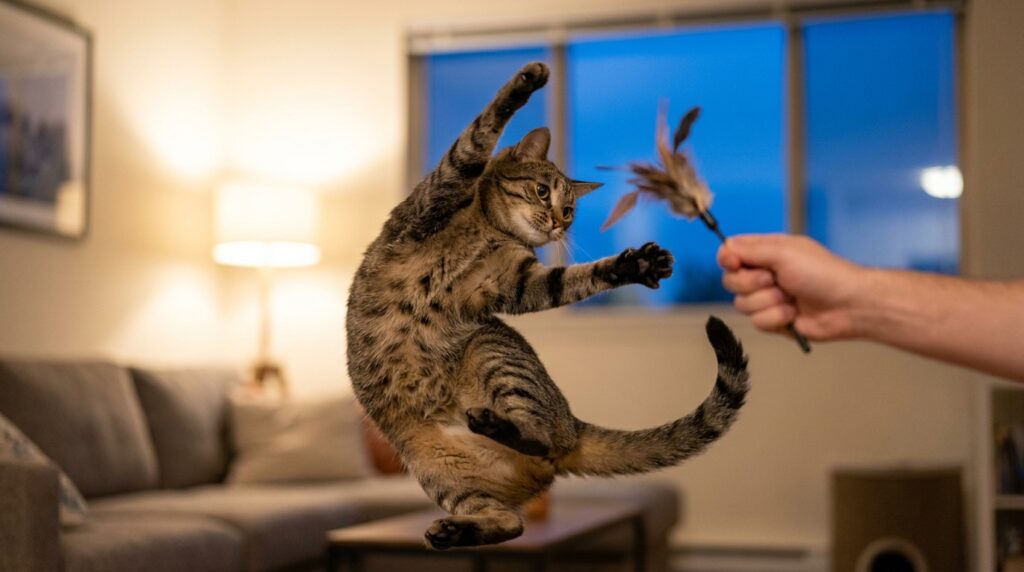
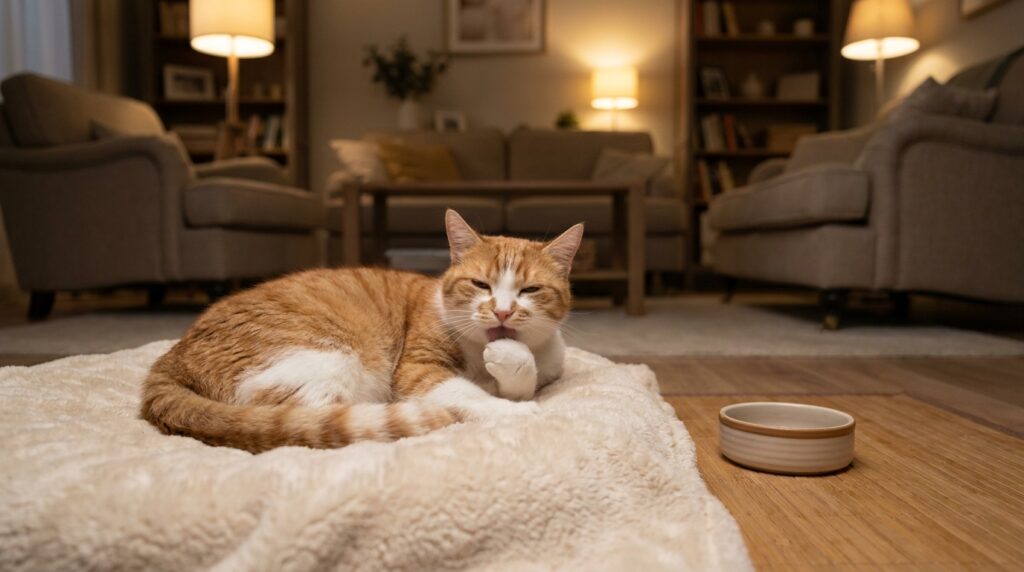
A ten-minute play session before bed is not just tiring your cat out. You are completing her hunt sequence. Cats feel most settled after a full stalk-chase-catch-eat-groom cycle.
Use a wand toy (like a feather on a string) for ten minutes. Let her catch it a few times. End the session by tossing a treat or piece of kibble across the floor so she can “catch” her prey. Then let her groom and settle.
This is the single most effective behavioral fix for nighttime boredom — more effective than any toy left out for her to ignore.
2. Feed the Biggest Meal After the Play Session
Timing matters. Feeding your cat their largest meal in the evening helps them feel full and relaxed. Cats naturally sleep after a big meal. Structure your feeding schedule so her main portion comes after the pre-bed play session. This mimics the hunt-catch-eat-sleep cycle she’s wired for.
If she’s on free-feed, consider switching to scheduled meals. It gives you more control over her energy windows and means she’ll actually be hungry enough to settle after eating.
3. Build More Daytime Stimulation Into Her Environment
The nighttime problem is partly a daytime problem. A cat who was mentally and physically active during the day needs less from the evening.
Daytime enrichment options that work for solo indoor cats:
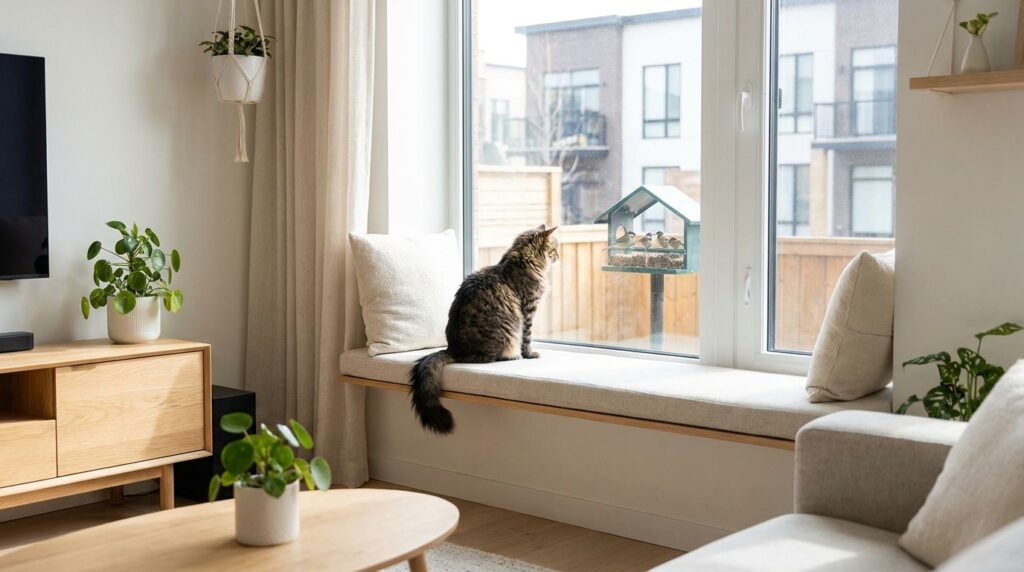
- A bird feeder outside a window she can access
- A puzzle feeder for at least one meal so she has to work for food
- Cardboard boxes and paper bags left out for exploration
- Rotating toy selection (new or rotated toys get more engagement than the same ones out daily)
- A cat tree or window perch at a height she hasn’t had before
None of these require you to be home. Most cost very little.
4. Stop Rewarding the Night Behaviour
This is the hardest one. If your cat has learned that yelling at 4am brings you out of bed, you have to break that association.
You cannot do it halfway. Responding sometimes and ignoring other times actually makes the behaviour worse — it teaches her that persistence pays off eventually. You need a full stop.
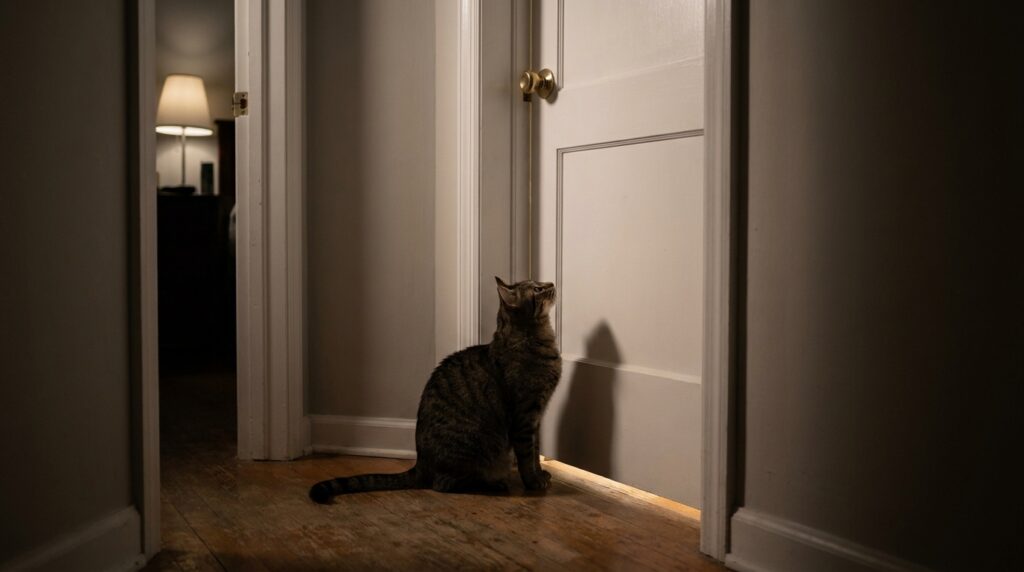
For a week or two, the nights will be worse before they get better. Keep the bedroom door closed if needed, use a white noise machine, and stay consistent. Avoid reinforcing disruptive behavior by responding to it. This is non-negotiable if you want the behavior to change.
5. Consider a Second Cat
If your cat is under five years old, home alone all day, and nothing else is working — a second cat is genuinely worth considering.
Two cats entertain each other during the day, burn off social and physical energy in play, and often sync their sleep cycles more closely with their owner’s. The introduction needs to be done pr
operly (slow, separate spaces, scent swapping before face-to-face contact), but it is one of the most reliable long-term fixes for a bored solo indoor cat.
6. Try a Puzzle Feeder or Slow Feeder at Night
Leave a puzzle feeder with a small portion of kibble for your cat to access in the evening. This gives her something to do that is not attacking your feet, satisfies the foraging instinct, and tires her brain without requiring you to be involved.
Licki mats with a small amount of wet food work well too, especially for cats who eat quickly and then go looking for more stimulation.
Common Mistakes Cat Owners Make
Punishing the Behaviour
Spraying water, shouting, or physically moving the cat are all forms of attention. They also cause stress without addressing the root cause. The cat does not learn “don’t do this.” She learns “I get a reaction when I do this.” Ignore the bad behaviour. Reward calm evening behaviour instead.
Buying More Toys and Leaving Them Out
A pile of toys left out all day stops being interesting within 48 hours. Cats engage with novelty. Rotating five toys beats leaving out fifteen. Wand toys used by you beat any self-play toy on the market, because they move unpredictably.
Assuming the Problem Will Resolve Itself
Kittens often grow out of some extreme night activity by age two or three. But boredom-driven behaviour in adult cats does not self-correct. Without environmental changes, it usually gets worse as the cat finds more creative ways to get stimulation.
Skipping the Vet Check for Senior Cats
If a cat who previously slept through the night suddenly starts vocalising after dark and she is over eight years old, get a blood panel done. Hyperthyroidism and early-stage kidney disease can both cause restlessness, and both are treatable if caught early.
FAQs
Why does my indoor cat go crazy at night but sleep all day?
Cats may sleep much more during the day while their humans are at work, waking up in the evening to play, socialise, and explore. If your cat has been alone and unstimulated all day, she has stored energy to burn. The solution is adding morning and daytime enrichment so the energy gets spent before you’re in bed.
Is it normal for cats to be active at 3am?
Midnight zoomies and early-morning wakeups can be normal, but persistent nighttime vocalising may need attention. Short bursts of energy at odd hours are part of crepuscular behaviour. Extended vocalising, especially in older cats, is worth a vet visit.
How do I get my cat to sleep at night?
The most reliable approach is a three-part routine: active play session in the evening using a wand toy, large meal immediately after, and then ignoring any attention-seeking behaviour at night. It takes consistency over one to two weeks. Feeding schedules and playtime can make a big difference to how closely your cat’s sleep schedule aligns with yours.
Does having two cats help with nighttime activity?
It can, especially for young cats under five who are home alone all day. Two cats play together, tire each other out, and meet each other’s social needs without relying entirely on you. A proper introduction is essential.
Can boredom at night mean my cat is unhappy?
Not necessarily. Nighttime restlessness is usually about instinct and stored energy, not distress. That said, a cat who is chronically under-stimulated may develop anxiety or compulsive behaviours over time. Regular play, mental enrichment, and social interaction all matter for long-term wellbeing.
Conclusion
Your indoor cat is bored at night because she is wired for dawn-and-dusk activity, she slept all day, and her environment gives her nothing to do with the energy she has stored up.
That’s fixable.
Start with the evening play session. Add one daytime enrichment change. Adjust her feeding timing. And stop getting out of bed when she yells.
Give it two weeks of consistency. Most cat owners who do this see a real difference.