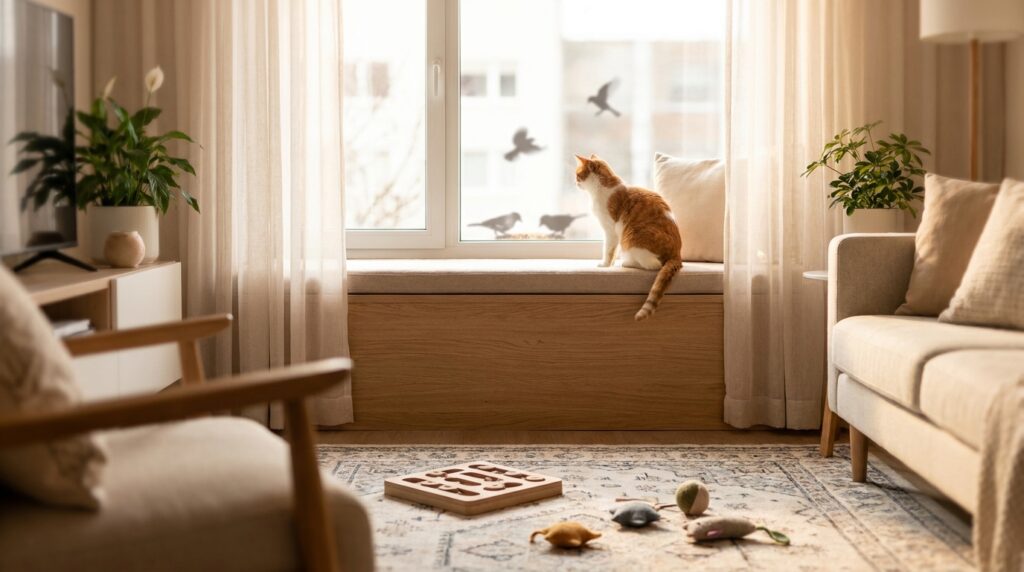
If you’re in a hurry: Four things actually matter for indoor cat health — water intake, protein quality, daily movement, and mental stimulation. Most cats are chronically dehydrated without their owners knowing. Most dry foods use plant protein to inflate the label number. Most indoor cats never complete a single hunting sequence in their lives. Fix these four things and you’ll spend less time at the vet. The rest of this guide explains how.
I didn’t plan to become obsessive about this. It started losing weight at 6. Not dramatically. Just a gradual change I noticed one day when I picked him up and his spine felt more prominent than it used to.
The vet found nothing specific. “Monitor him,” she said.
So I did. I started tracking what he ate, how much water he drank, how active he was. Over the next eight months I tested fountains, switched proteins, tried supplements, changed feeding schedules. My cat stabilized. Then improved.
That process taught me how much bad cat health advice exists on the internet — generic, recycled, untested. This guide is built on what I’ve actually observed, measured, and done with one real cat over three years. Not everything here will apply to your cat. But the framework will.

Why Indoor Cats Are a Different Problem
Outdoor cats solve most of their health issues without any help. They hunt — small meals throughout the day, constant activity getting them. They drink from varied sources. The environment keeps them stimulated.
Indoor cats have none of that. They rely entirely on what you provide.
The health problems that show up most often in indoor cats — obesity, urinary disease, anxiety, dental decay — almost all trace back to the same source: a predator’s biology running in an apartment body. Their caloric needs assume several hours of activity per day. Their kidneys assume prey-based moisture in food. Their brains assume a hunting sequence that never happens.
The fix isn’t complicated. But it does require understanding what you’re actually dealing with.
Water: The Problem You Probably Don’t Know You Have
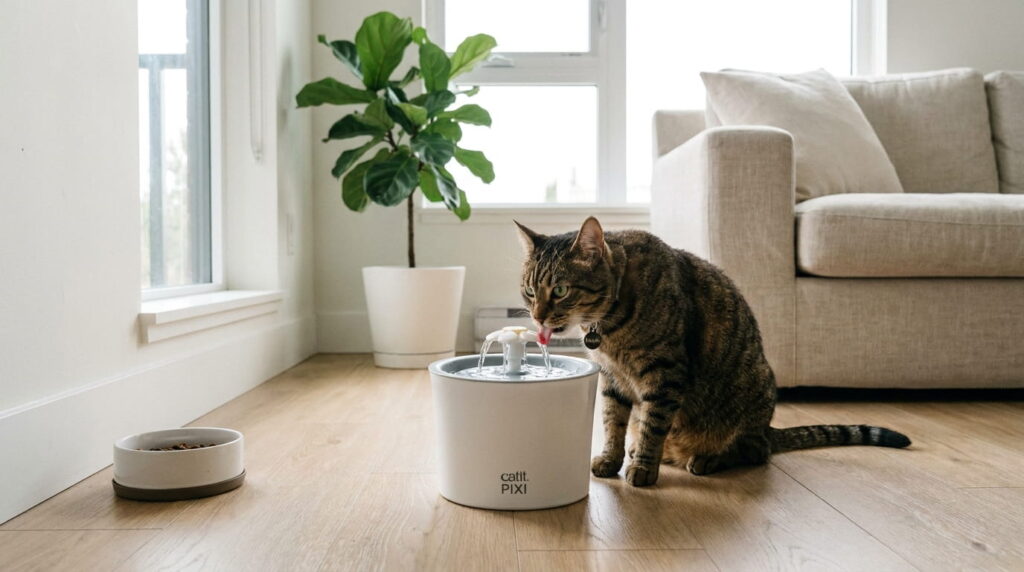
Cats evolved in desert environments. Their kidneys concentrate urine efficiently — they can survive on very little water. The problem is that “survive” and “thrive long-term” are not the same thing.
Cats fed dry food don’t drink enough. Their instincts say moisture comes from prey (wild prey is about 70% water), not from a bowl next to the food. Many cats will walk past a full clean water bowl without drinking.
This matters because chronic low-grade dehydration connects directly to kidney disease, urinary crystals, and bladder inflammation — the three most common expensive problems in indoor cats.
I tracked my cat’s daily water intake for 14 days with three different setups, measuring what went in versus what remained at the end of each day. The results were more dramatic than I expected.
- Standard ceramic bowl next to his food: roughly 40ml per day.
- Same bowl moved to the other side of the room, away from food: 65ml.
- Running fountain in a separate location entirely: 110ml.
Same cat. Same food. Different water setup. Nearly three times the intake.
The reason the location matters: cats are instinctively cautious about water near food. In the wild, prey can contaminate nearby water sources. Moving the bowl away from the food is free and takes 30 seconds. It’s probably the single highest-return thing you can do for a cat that doesn’t drink much.
The fountain question
Fountains work, but they need maintenance. The filters need changing more often than most brands admit. The pumps collect biofilm fast if you skip cleaning for a week. A neglected fountain is worse than a clean bowl. If you travel or tend to forget maintenance tasks, a clean bowl positioned away from the food will outperform a fountain you’re not keeping up with.
Best for: Cats with urinary issues, cats that rarely drink, any cat on primarily dry food.
Not for: Anyone who travels frequently without reliable pet care — fountains need attention.
Protein: What the Label Is Actually Telling You
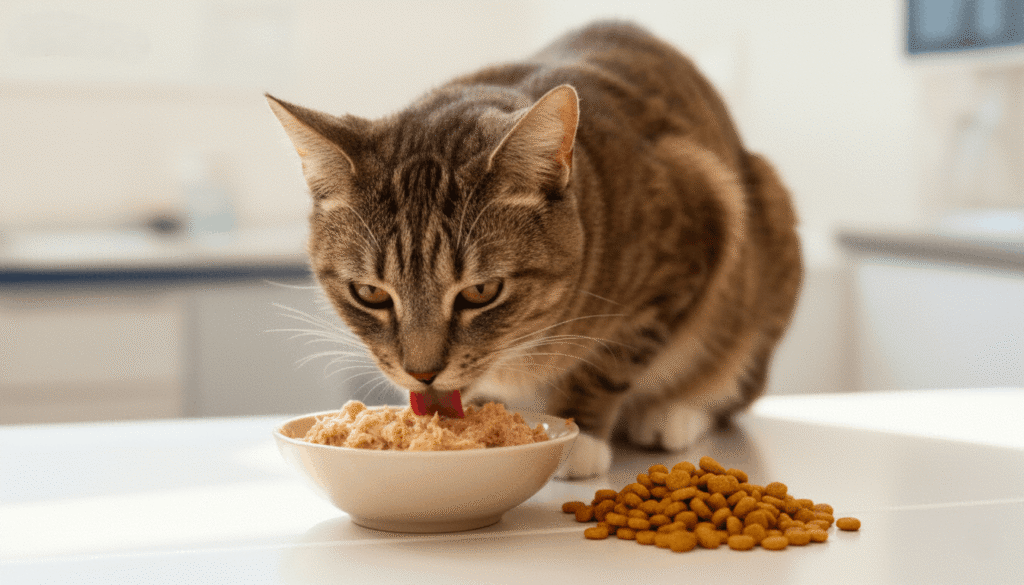
Cats are obligate carnivores. Not by preference — by biology. They can’t synthesize certain amino acids (taurine, arginine) the way other animals can. They have to get them from animal tissue.
Most dry cat food uses plant protein — corn gluten meal, pea protein, wheat — to inflate the protein percentage on the label. A food showing 32% protein might be delivering a third of that from sources a cat’s digestive system wasn’t built to process. The label number isn’t the whole story.
When I switched from a mid-range dry food to wet food with named meat in the first three ingredients — no plant proteins in the top five — his coat changed within six weeks. Less shedding, noticeably softer. I reverted for four weeks as a check. The change reversed. I’ve done this twice. The correlation is consistent enough that I stopped testing it.
Reading a label correctly:
- First ingredient: named meat. Chicken, turkey, rabbit, salmon — not “poultry by-product” or “animal digest”
- Watch the second and third ingredients — this is where plant proteins hide
- Moisture content matters: wet food is 75-80% moisture, dry food is around 8-10%
The kidney angle
Cats with early kidney disease need controlled phosphorus, not just high protein. High-phosphorus foods stress damaged kidneys. If your cat is over 7 or has any kidney markers showing in bloodwork, phosphorus content matters more than protein quantity. Generic “high protein is best” advice breaks down here.
Weight: The Problem That Sneaks Up
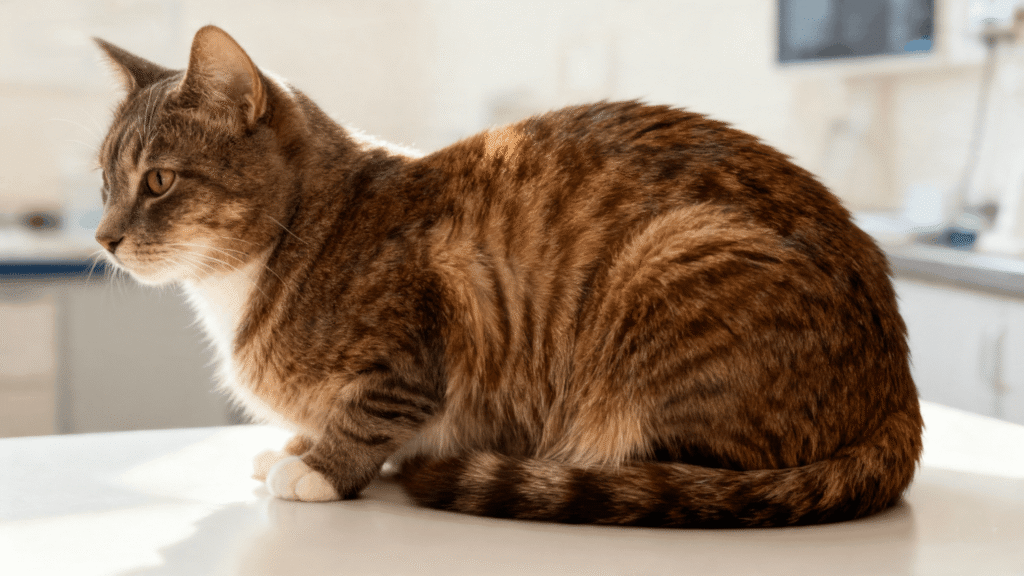
Indoor cats gain weight gradually and owners usually don’t notice until it’s significant — because you see your cat every day and don’t register small changes.
The rib test: run your fingers along your cat’s side without pressing hard. You should feel the ribs clearly but not see them. Can’t feel them at all? Likely overweight. Can see them without any pressure? Possibly underweight.
Most weight-loss advice for cats focuses on reducing food quantity. This approach often fails — hungry cats become anxious, beg constantly, and develop stress behaviors. Puzzle feeders work better. They slow eating, create activity, and provide mental engagement at the same time.
My cat used to inhale his food in under two minutes. With a puzzle feeder he spends 8-10 minutes on the same amount of food. He eats the same calories, weighs less, and is calmer. The difference is real.
Warning regarding rapid weight loss
Weight loss in cats needs to be slow. More than 1-2% of body weight per week risks hepatic lipidosis — a serious liver condition triggered when cats metabolize stored fat too quickly. If your cat needs to lose a significant amount, do it gradually and mention it to your vet. This isn’t one to rush.
Dental Health (The One Everyone Ignores)
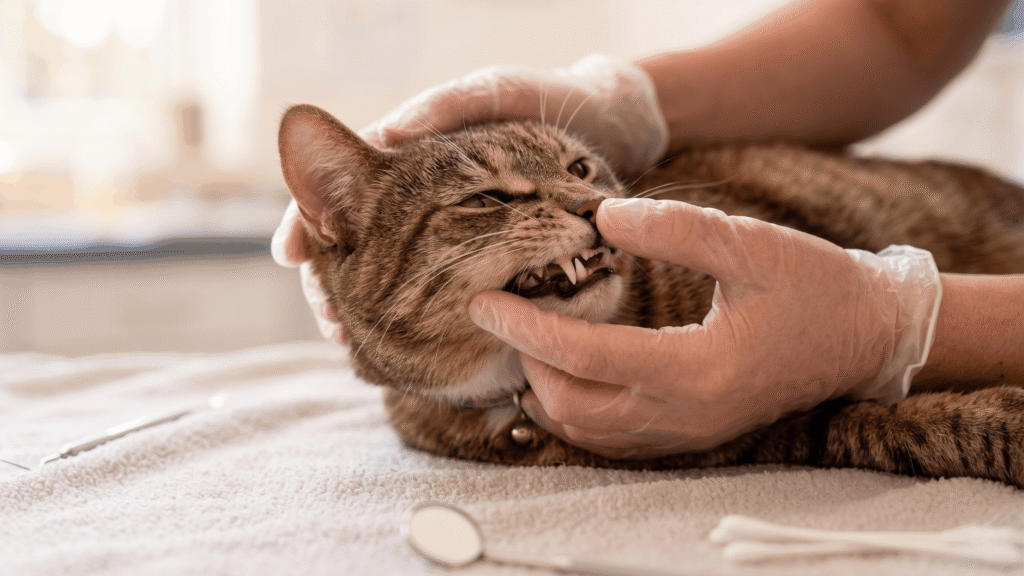
Dental disease affects somewhere around 70-80% of cats over age 3. Most owners have no idea because cats hide dental pain — they keep eating, just more carefully, often favoring one side of the mouth.
What to watch for: dropping food while eating, head tilting while chewing, reduced interest in hard food, breath that’s noticeably worse than usual, pawing at the mouth.
I won’t pretend I brush my cat’s teeth regularly. I don’t. What I do: dental chews three times a week, a water additive that reduces plaque, and annual dental exams. It’s not the gold standard but it’s what I can actually maintain, and a consistent imperfect routine beats a perfect one you abandon after two weeks.
If your cat will tolerate tooth brushing — start young and do it daily. It’s the most effective prevention available. The window to establish it is really the first year of life.
Mental Stimulation: Connected to Physical Health
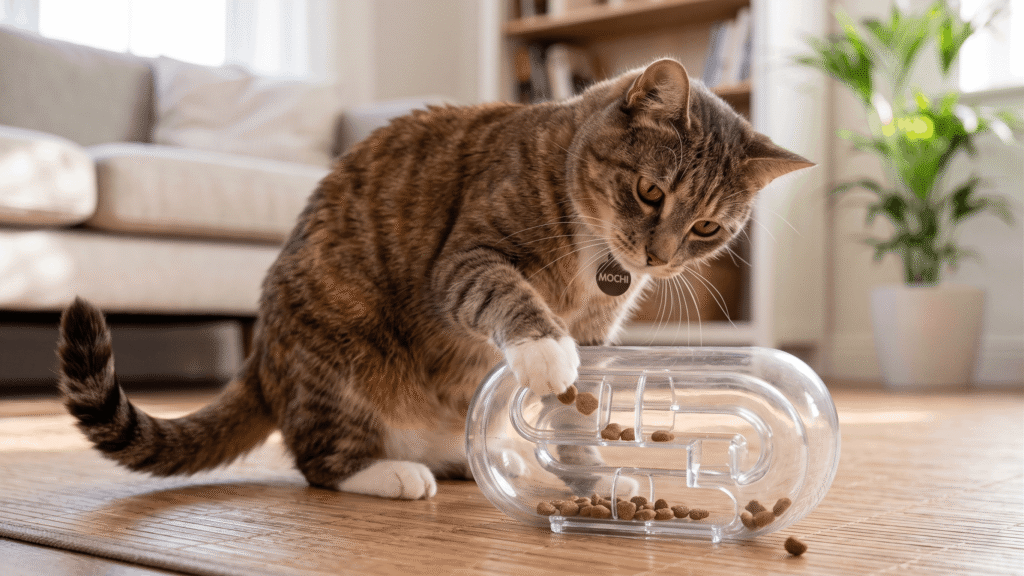
A bored indoor cat doesn’t just seem unhappy. Chronic stress and boredom suppress immune function, cause digestive issues, and drive compulsive behaviors like over-grooming or excessive vocalization.
Cats need to hunt. Not literally — but the hunting sequence (stalk, chase, pounce, catch) is hardwired and needs an outlet. A cat that never completes this sequence is carrying unresolved drive somewhere. It usually shows up in ways you don’t want.
What actually works: interactive play twice a day, 10-15 minutes per session. Wand toys are the most effective tool because you control the movement — unpredictable, reactive, mimicking prey. Toys left on the floor aren’t interesting. They’re already dead. A wand in your hand is alive.
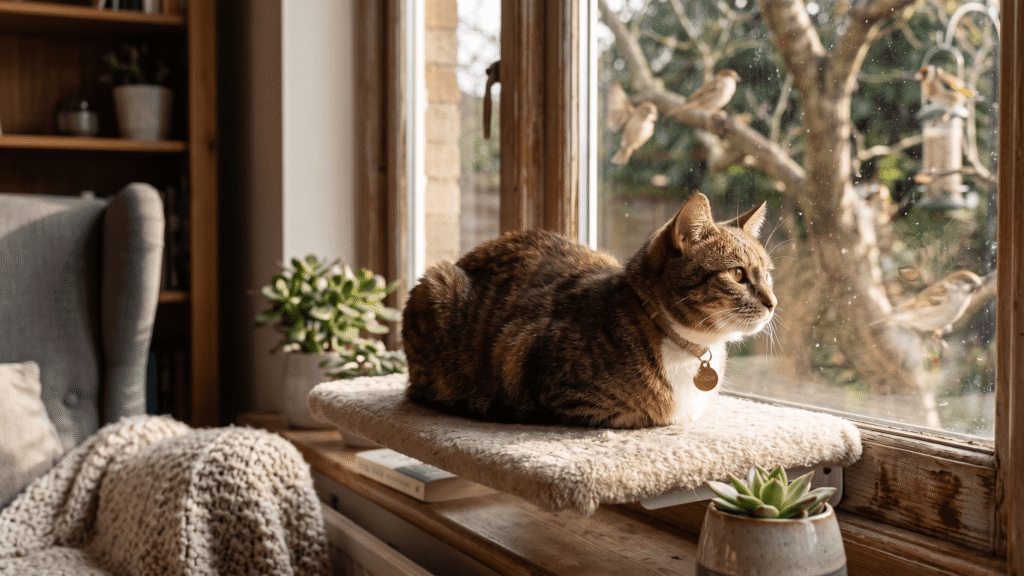
Window access matters more than most people realize. A bird feeder positioned outside a window your cat can see is genuinely enriching. It has a window seat overlooking the neighbor’s garden. On days when birds are active, he’s noticeably calmer for the rest of the afternoon. On quiet days, more restless.
Something I didn’t expect: Mental fatigue helps with weight. A cat that’s genuinely tired from play and mental engagement eats more slowly, rests more contentedly, and begs less between meals. The puzzle feeder plus two play sessions per day made more difference to it’s weight over six months than any food change I tried.
Supplements: What’s Actually Worth Buying
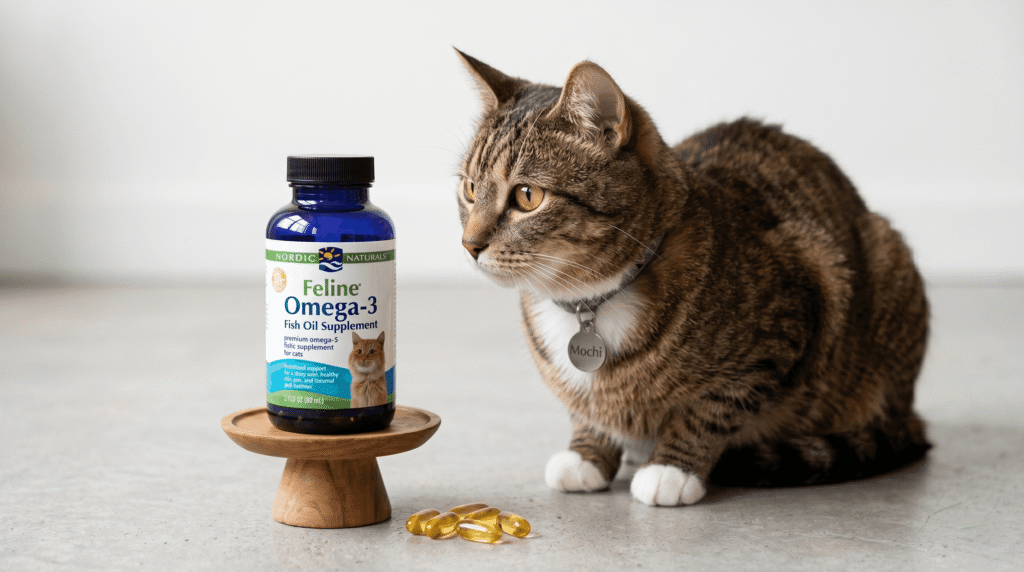
Most cat supplements are either unnecessary (good diet makes them redundant) or targeted at specific problems. Here’s what I’ve found worth the money:
- Omega-3 fatty acids: The one supplement I consider genuinely useful for most indoor cats. Supports coat, joint function, and has reasonable evidence for kidney support in older cats. Use fish oil formulated for cats specifically — human capsules have different dosing and some contain additives cats shouldn’t have.
- Probiotics: Worth trying if your cat has recurring digestive issues — loose stools, intermittent vomiting, inconsistent appetite. Not a daily necessity for a healthy cat with a good diet.
- Joint supplements (glucosamine/chondroitin): Not worth much under age 7. After that, worth considering, especially for larger breeds. Cats hide joint pain well. If your older cat seems reluctant to jump to spots they used to love, or seems stiff after sleeping, a joint supplement is a reasonable first step.
- Calming supplements: Work inconsistently at best. If your cat has genuine anxiety, a behavioral approach or vet consultation will get further than supplements.
Vet Care: What’s Worth Doing and When
Annual exams matter for indoor cats — not because they get sick more, but because they hide illness better. By the time you notice something’s wrong, it’s often been developing for months.
- Bloodwork timing: Standard wellness panels (CBC, chemistry) start making sense around age 7. Earlier if you have a breed with known health risks — Maine Coons and hypertrophic cardiomyopathy, Persians and kidney disease, Siamese and respiratory issues.
- Vaccines for indoor cats: Core vaccines (FVRCP, rabies) still apply. Rabies is legally required in most regions and occasionally relevant even indoors — bats get in more often than people think. FVRCP covers respiratory viruses your cat can be exposed to through clothing and shoes. FeLV is generally not necessary for a strictly indoor cat with no outdoor exposure.
Emergency Warning
When to go immediately: Male cat straining in the litter box (urinary blockage can be fatal within hours — this is not a wait-and-see situation), not eating for more than 24 hours, labored breathing, any sign of severe pain.
Age 7 and Beyond: What Changes
Cats are senior at 7 by veterinary convention, though many won’t show obvious changes until 10-12. The main shifts worth preparing for:
- Kidney function decreases. Not necessarily to disease levels, but the margin narrows. Hydration becomes more important, not less. Annual bloodwork can catch early kidney disease while it’s still manageable — before symptoms appear.
- Muscle mass drops. Older cats need higher quality protein, not less food. The instinct to reduce portions for a less active older cat often backfires — they need protein to maintain muscle they’re losing to age.
- Pain becomes more common and more hidden. Arthritis is widespread in older cats and consistently underdiagnosed because cats don’t show pain the way dogs do. If your older cat stops jumping to favorite spots, stops grooming hard-to-reach areas, or hesitates on stairs, mention it at the vet. There are now well-tolerated long-term pain management options.
My cat at 9 gets wet food twice daily (easier to eat, more moisture), a joint supplement, and a slightly lower fountain so he doesn’t have to stretch. Small adjustments. He’s doing well.
What I Actually Do Each Week
Not the perfect routine. The one I can maintain.
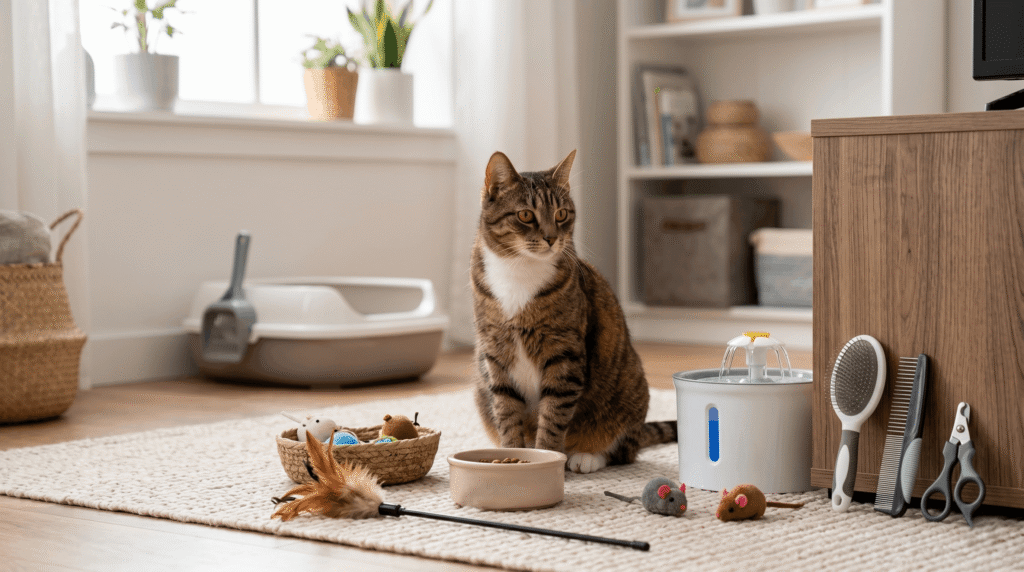
- Daily: Wet food twice a day. Fountain checked. One proper play session (10-15 minutes with a wand). Quick observation — eating normally? Litter box normal? Moving without stiffness?
- Weekly: Fountain filter checked. Puzzle feeder cleaned. Dental chew three times through the week.
- Monthly: Weight check, same scale, same time of day. Coat and skin check. Nails if needed.
- Every 6 months: Vet check. (I moved to twice yearly at age 8.)
- Annually: Full bloodwork panel.
The most useful thing I’ve learned across all of this is that the goal isn’t a protocol — it’s paying attention. A cat you’re actively watching is a cat whose problems you catch early. Early almost always means cheaper, faster, and less stressful for both of you.
Where to Go Next
These are the articles that go deeper on the topics covered here:
- The only cat water fountain I’d actually buy again — I tested 6 for 14 days — daily intake data, what I measured, what I’d do differently
- Best wet food for indoor cats with kidney disease — and 3 brands vets quietly avoid — label reading, kidney health specifics, what I switched to
- Your indoor cat is losing weight for one of these 6 reasons — most owners miss the obvious one — the diagnostic process I use when something seems off
About Emma Hartley
I have four indoor cats and I’ve been managing their health actively since 2021. Everything on this site comes from things I’ve personally tested or verified through Cornell Feline Health Center and ASPCA cat care guidelines. I update articles when I have new data worth adding — not on a schedule.