This post contains affiliate links. We may earn a commission at no extra cost to you if you purchase through these links.
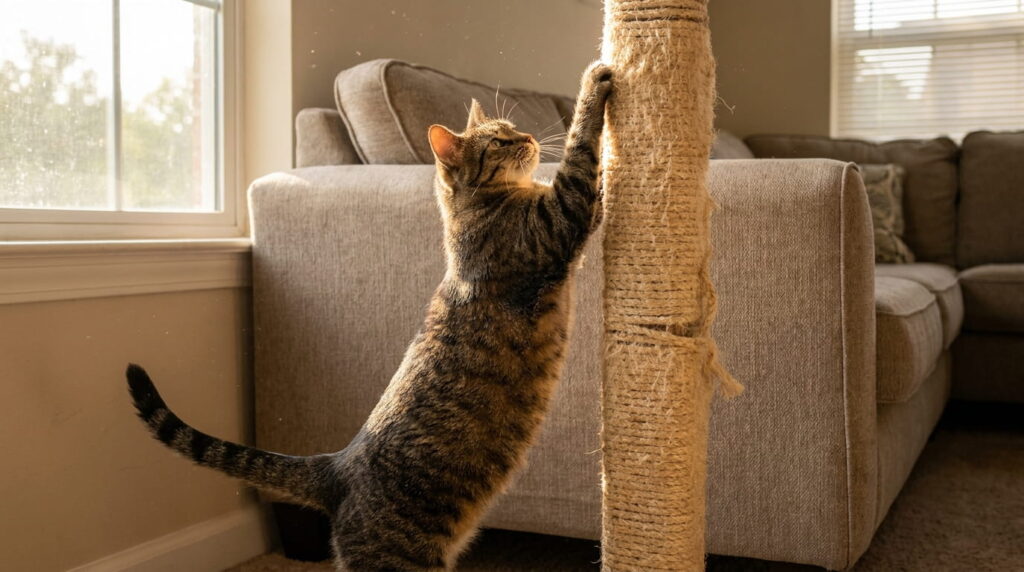
Quick answer: if your cat is shredding the couch, it’s not misbehaving — it’s telling you the post you have is wrong. After testing 4 scratching posts over 30 days, a tall sisal-wrapped post placed directly next to the furniture being scratched won every time. Height and stability mattered more than material or price.
The problem you’re probably dealing with
Beans went through my armchair like it owed him money. I bought three different “cat approved” scratchers before I figured out the actual issue: none of them were tall enough for him to get a full stretch, and all of them wobbled the first time he used them.
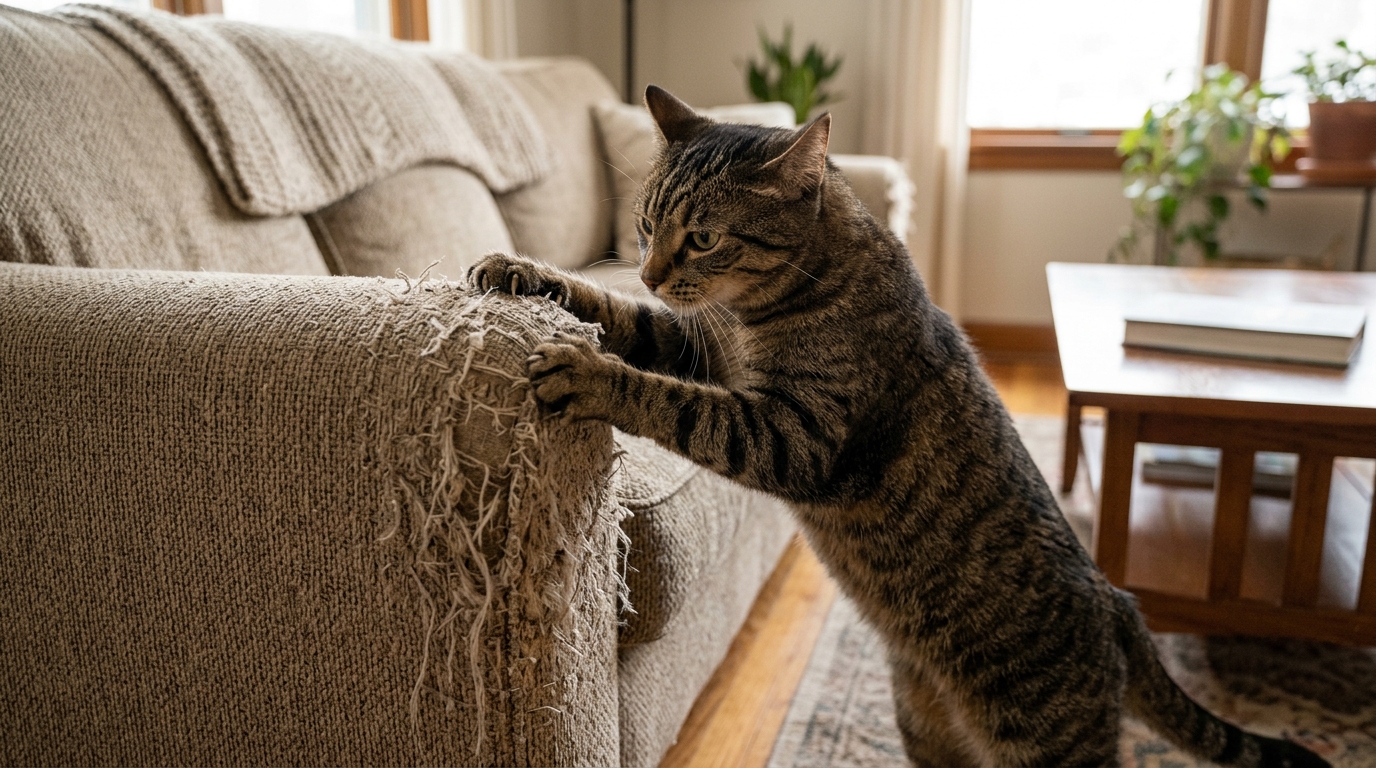
Beans demonstrating the classic (and expensive) couch-scratching problem.
Scratching is a natural, healthy behavior. According to the Cornell Feline Health Center, cats scratch to mark territory, stretch their muscles, and shed the outer layer of their claws. When they target furniture, it is often because our commercial scratching posts don’t meet their physical needs. For more details on understanding these sudden behavioral changes, see our guide on signs of boredom in indoor cats.
In this guide, we’ll cover:
- Why cats scratch (and why yours picked your couch)
- What I tested and how
- Comparison table
- Full reviews
- Placement — the part everyone gets wrong
- FAQ
Comparison table
| Post | Height | Material | Stability | Verdict |
|---|---|---|---|---|
| SmartCat Ultimate Scratching Post | 32″ | Sisal-wrapped | Excellent | Best overall (Winner) |
| Amazon Basics Cat Scratcher | 25″ | Rope | Fair — tipped once | Budget backup only |
| PetFusion Ultimate Cat Scratcher Lounge | Flat | Cardboard | N/A (Flat lounge) | Good second scratcher |
| Trixie Baza Scratching Post | 28″ | Rope | Good | Fine if height isn’t an issue |
What I actually tested
Four posts, one cat, 30 days each, same rule for all of them: place it where he’s already scratching, don’t force him toward it, just watch what happens.
Two of the four got ignored within a week. The rope-wrapped 25-inch post tipped over the first time he leaned into it — he never touched it again. That’s the whole test, really. A cat tries a post once. If it fails that test, it’s dead to them.
Full reviews
SmartCat Ultimate Scratching Post — Best Overall
This is the one Beans actually uses daily, three months later. 32 inches, weighted base, sisal wrap thick enough to survive real claws instead of the thin carpet-glue stuff some posts use.
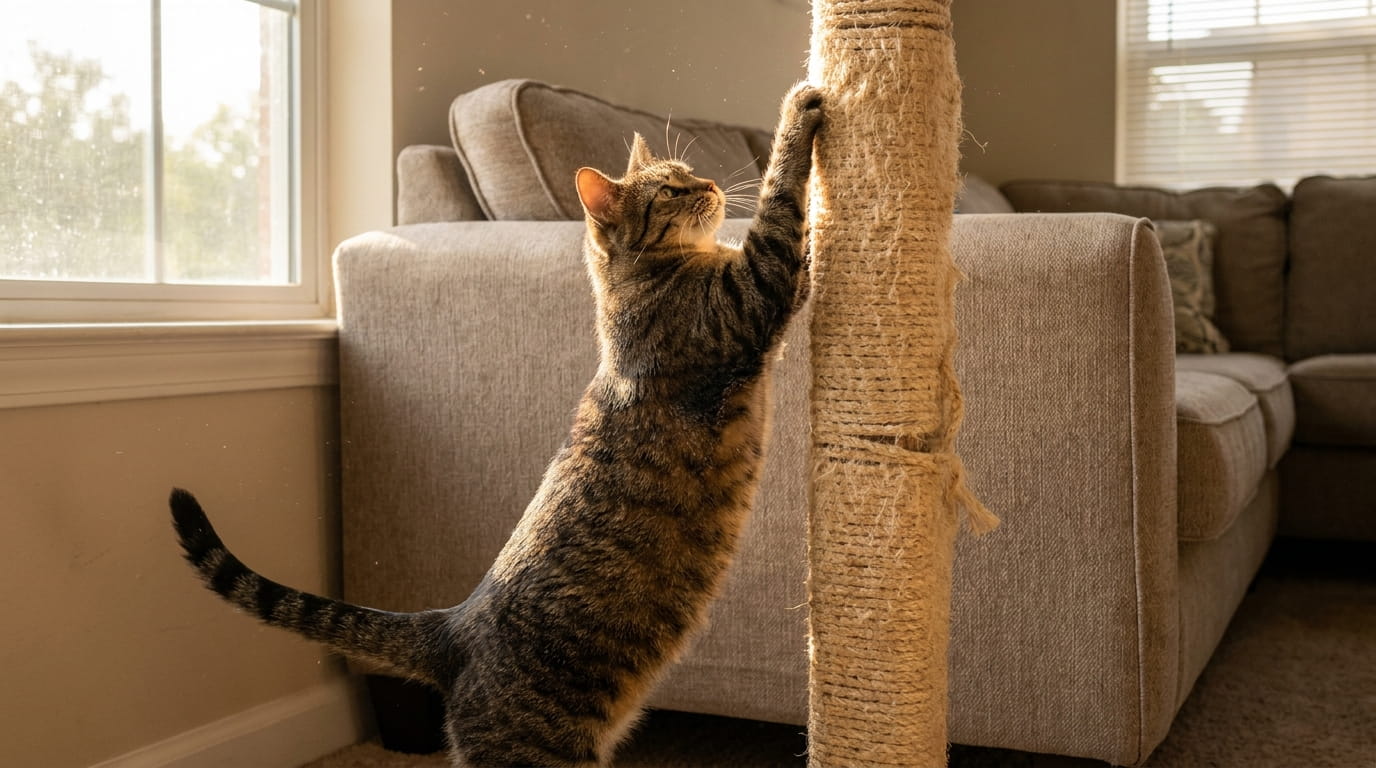
Beans demonstrating a perfect full-height vertical stretch on the SmartCat Ultimate.
What I like: it doesn’t move. Not a wobble, not a shift, even with his full body weight on it. The sisal held up — no fraying through to the cardboard underneath after 30 days, which is more than I can say for the Trixie.
What I don’t like: it’s not attractive. This is a beige tube in your living room, not a design piece. If you want something that matches your furniture, you’ll pay more elsewhere and probably get less stability for it.
Best for: cats actively destroying furniture right now.
Not for: anyone who cares more about how it looks than whether it works.
Amazon Basics Cat Scratcher — Budget Backup
At 25 inches, this budget option is too short for most adult cats to get a full stretch. While the base is reasonably wide, it lacks the weight needed for larger cats.

The Amazon Basics scratcher is a decent budget post, but prone to tipping for larger cats.
What I like: Extremely affordable and easy to assemble. It’s a fine backup post to keep in a secondary room.
What I don’t like: It tipped over once when Beans leaned in. Once a post tips, cats often lose trust in it and won’t go near it again.
PetFusion Ultimate Cat Scratcher Lounge — Best Cardboard / Second Scratcher
Unlike vertical posts, this is a horizontal curved cardboard scratcher and lounge. It’s double-walled, reversible, and doubles as an incredibly popular nap spot.
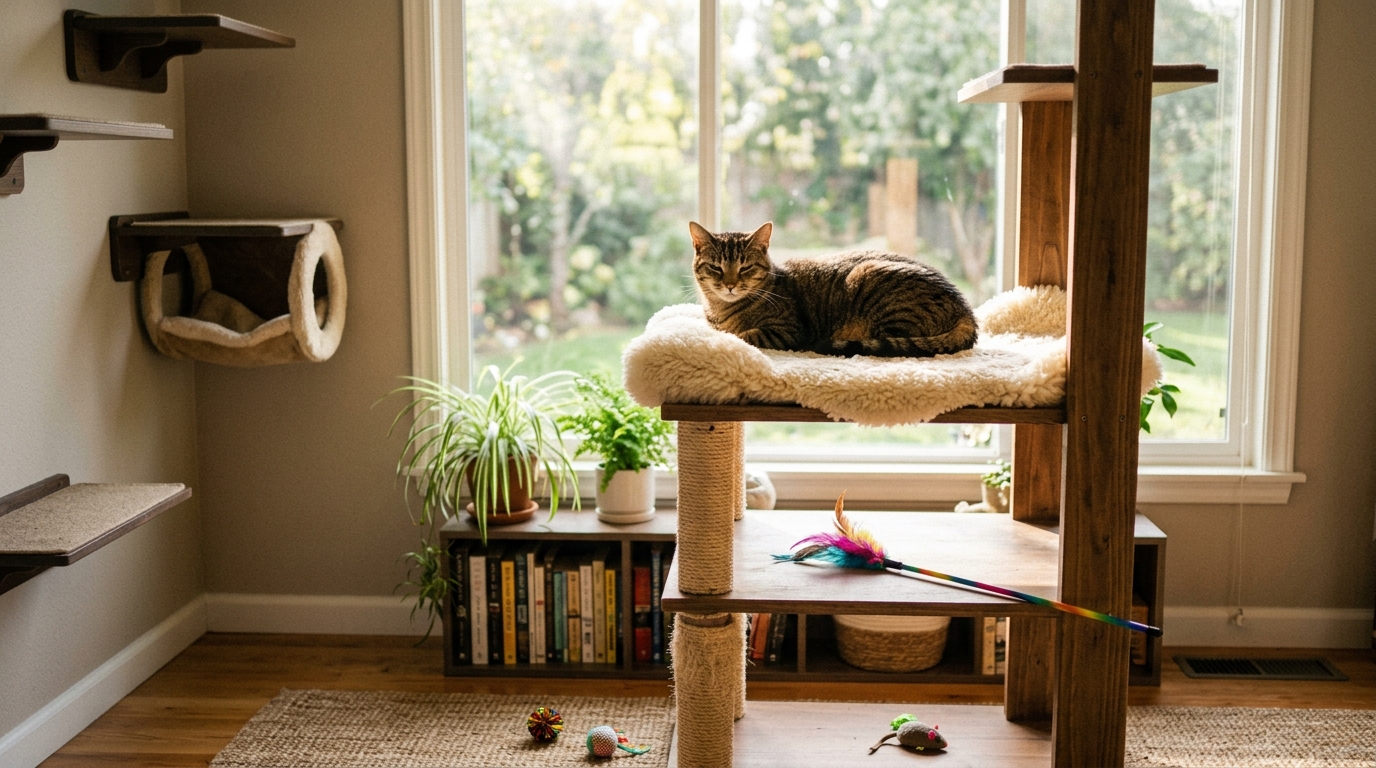
The PetFusion Lounge doubles as a horizontal scratcher and a cozy bed.
What I like: It satisfies horizontal scratching urges and has a premium, modern design. The cardboard is compressed tightly, so it doesn’t shed shreddings all over the carpet like cheap alternatives.
What I don’t like: It doesn’t replace a true tall vertical post for vertical scratchers, but makes the absolute best secondary scratcher.
Trixie Baza Scratching Post
This 28-inch post features a hammock top, making it part post and part cat bed. The scratching post itself is rope-wrapped, which does the job, but the rope frayed faster than sisal during our 30-day trial.
Placement — the part everyone gets wrong
Buying the right post and putting it in the wrong spot gets you the same result as not buying one. Cats scratch specific places for a reason: marking territory, stretching, maintaining their nails. Move the post to wherever they’re already scratching — right next to the couch, not across the room where it’s tidier. Once it’s established as “their” spot for a few weeks, you can inch it gradually to where you actually want it. For more tips on setting up an enriched living environment, read our complete indoor cat care guide.
If your cat is showing other destructive habits, they might be looking for more engagement. Check out our recommendations for interactive cat toys to help channel their energy productively.
FAQ
Will a scratching post stop my cat from scratching furniture entirely?
Mostly, if it’s placed correctly and is stable enough to trust. It won’t work overnight — expect a transition period of a week or two. To prevent scratching during the transition, the ASPCA recommends temporarily covering targeted furniture corners with double-sided sticky tape or aluminum foil.
Do cats prefer vertical or horizontal scratchers?
Depends on the cat. Beans is vertical-only. Miso, my other cat, uses a flat cardboard scratcher almost exclusively. Having one of each covers most cats.
How do I stop my cat from using the old spot on the couch?
Cover it temporarily with foil or double-sided tape — cats dislike both textures — while the new post earns trust in its spot next to it.
Does trimming nails reduce scratching?
It reduces damage, not the behavior itself. Cats still need to scratch even with short nails; it’s not just about the nails.