This post may contain affiliate links. If you buy through them I may earn a commission, at no extra cost to you.
A good indoor cat playground is less about gear and more about routes. Cats use height, hiding places, and a clear path between them. In a small home you gain far more by building upward than by buying a large floor-standing structure. This guide covers how to plan a route, which pieces to use, how to do it in a rental without drilling into walls, how to check that everything is stable, and how to include rest zones so the setup suits kittens, older cats, and cats that are not natural climbers.
Short answer
Plan a loop, not a pile. Give your cat two or three levels she can reach in easy steps, at least one perch with a view, a place to hide, and a place to rest that isn't in the middle of the action. Use a tension-pole tree, a sturdy bookcase, or properly anchored shelves instead of anything that wobbles. Test every piece with your own weight on it, and keep gaps small enough that your cat can clear them without a struggle.
In this guide:
Why vertical space matters to a cat
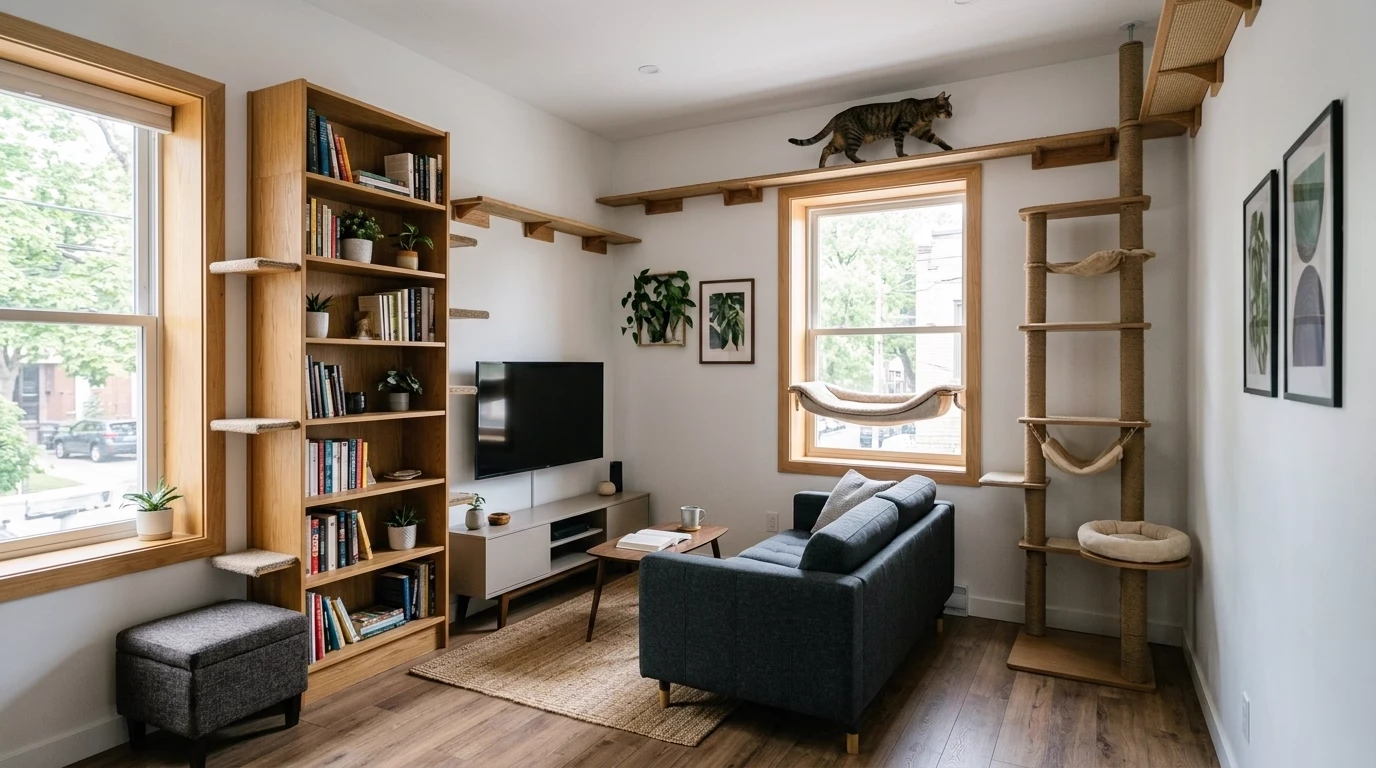
Cats are climbers and ambushers. Height lets a cat watch her surroundings, avoid conflict, and feel secure, and the main veterinary guidelines on feline environments list safe resting places and vertical space as part of a healthy home. In a multi-cat household, extra height and extra routes give cats a way to avoid each other instead of competing for the same spot.
Height isn't a cure-all. Some cats, especially seniors, kittens, heavy cats, and cats with joint problems, are cautious climbers and need low, wide steps. The best playground is the one your own cat uses.
Step 1: Watch your cat first
Spend a few days noticing how she already moves around the home.
Where does she sit when she wants to watch the room or the window?
Which furniture does she jump onto, and which does she ignore?
Does she hesitate before a jump, or avoid certain heights?
Where does she hide?
Does she play at floor level, or look up at things?
Take a rough measurement of the room, including ceiling height, window positions, and where the furniture is. A sketch on paper beats guessing. Note any hazards you'd need to deal with: a ceiling fan, hot appliances, fragile objects, a loose window screen, a cord.
Step 2: Design a route, not a tower
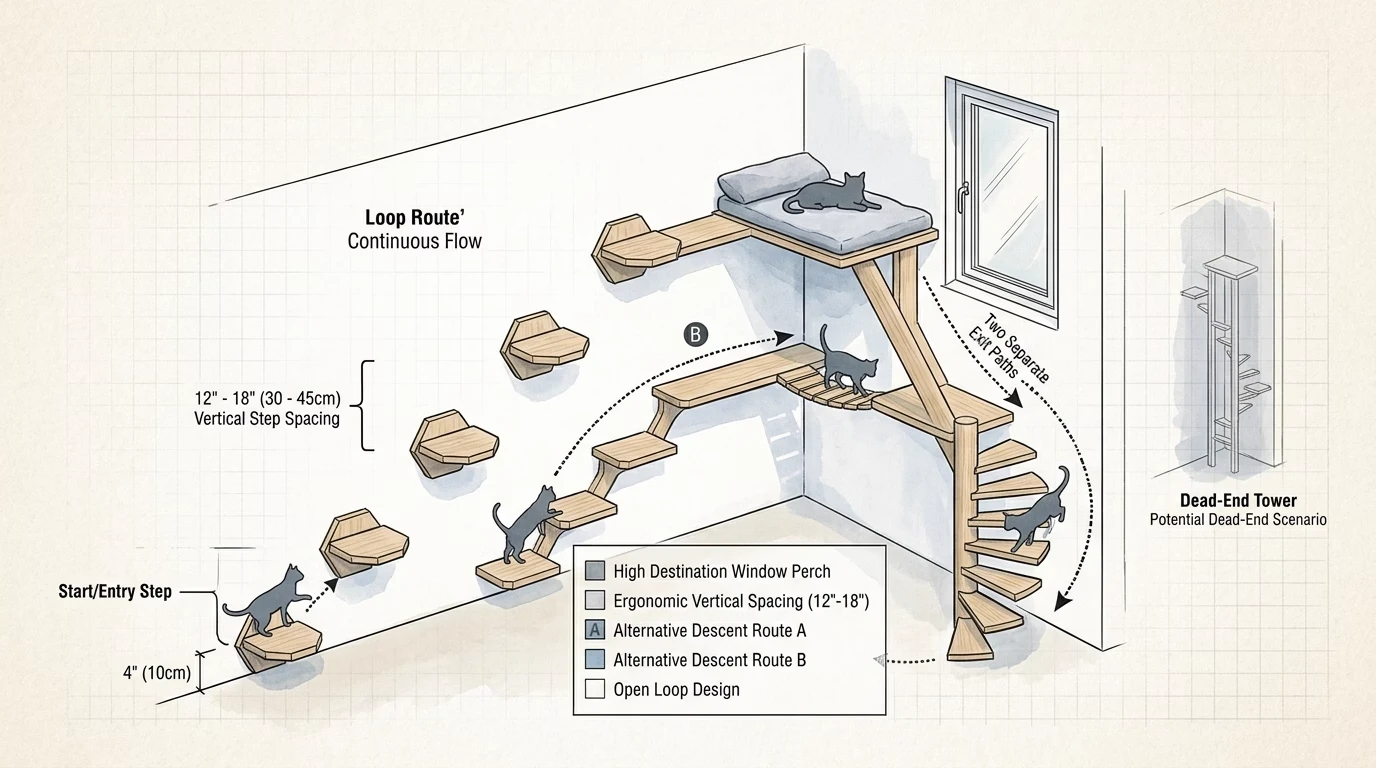
A route has an entry, a middle, and an exit.
Start low. Put a starter step near the floor, such as a stool, an ottoman, or a low shelf.
Space the steps to suit her. A practical guideline is to start with gaps your cat can clear easily, often around 12 to 18 inches between levels, and smaller for kittens, seniors, and cats with stiff joints. This is a rule of thumb, not a standard. If she hesitates, bring the step closer.
Give her a destination. A window perch, a high shelf with a bed, or the top of a bookcase with a view is a goal that rewards climbing.
Build a loop or give a second exit. A dead-end perch can feel like a trap, especially in a multi-cat home. If two cats can corner each other, add another way down.
Keep resources off the route. Don't put the litter box or food bowls in the middle of a climbing path, since a cat needs to be able to use them without being ambushed.
Pieces to use
Renter-safe layouts
Many leases ban drilling, and adhesive hooks aren't suitable for anything that carries a cat's weight. Options that avoid damage to walls:
A tension-pole tree held in place by pressure against the floor and the ceiling. Check that your ceiling can handle the pressure, and protect the ceiling surface with a pad if the manufacturer allows it.
Furniture as steps. Use a sturdy stool, a low bench, and a bookcase to build a staircase. Place heavy items against the wall so they can't slide.
A window seat made from furniture. A low, wide shelf or cabinet placed against a window gives a view without any mounting.
Over-door or over-furniture options. Some pet products hang over a door or a piece of furniture, but check the weight limit and whether the door stays functional.
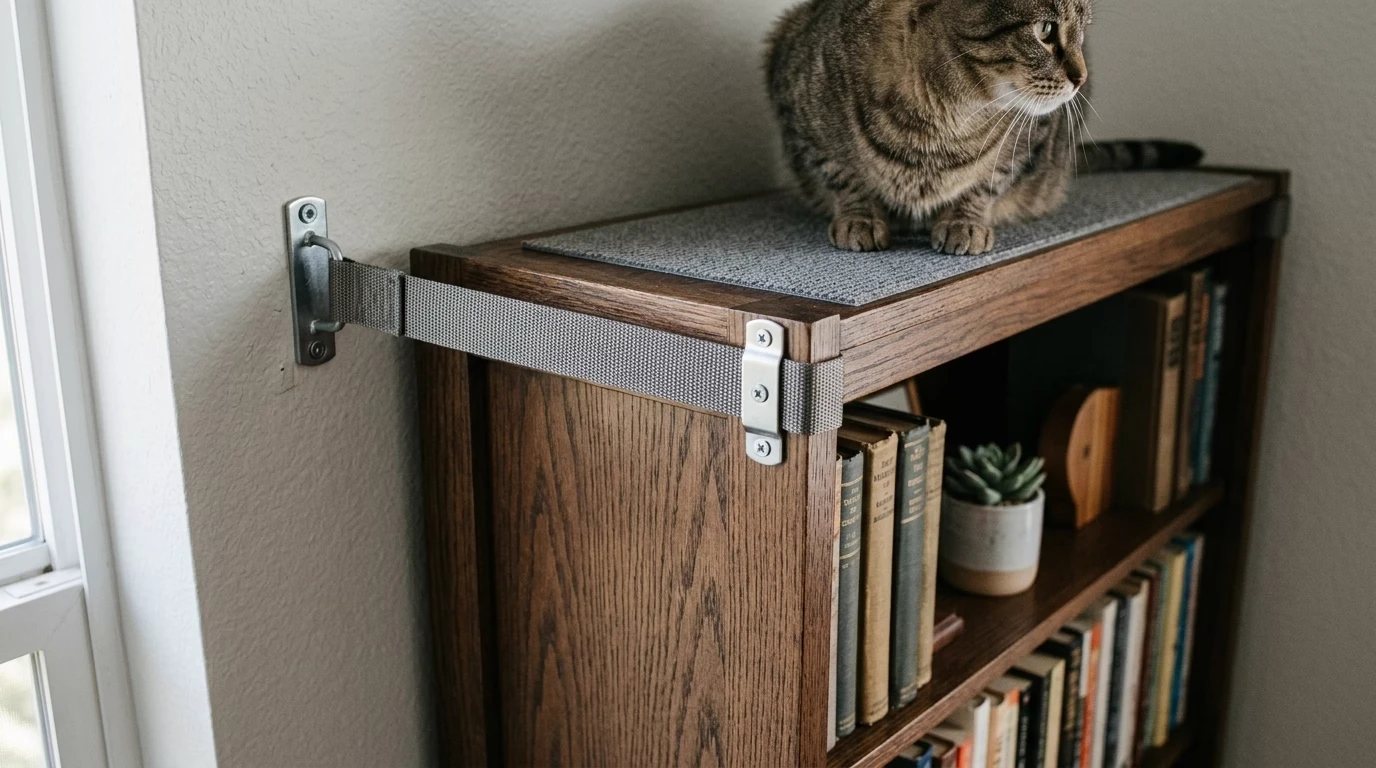
Strapping furniture to the wall. Anti-tip straps are a common way to secure bookcases. Ask your landlord, since some straps need a small screw hole.
If you're allowed to fix shelves to the wall, locate studs and use hardware rated for the load. Cats land with more force than their weight alone, so choose a rating well above your cat's weight. Get advice from a hardware professional if unsure.
Small-space layout ideas
These are starting sketches to adapt, not measured plans.
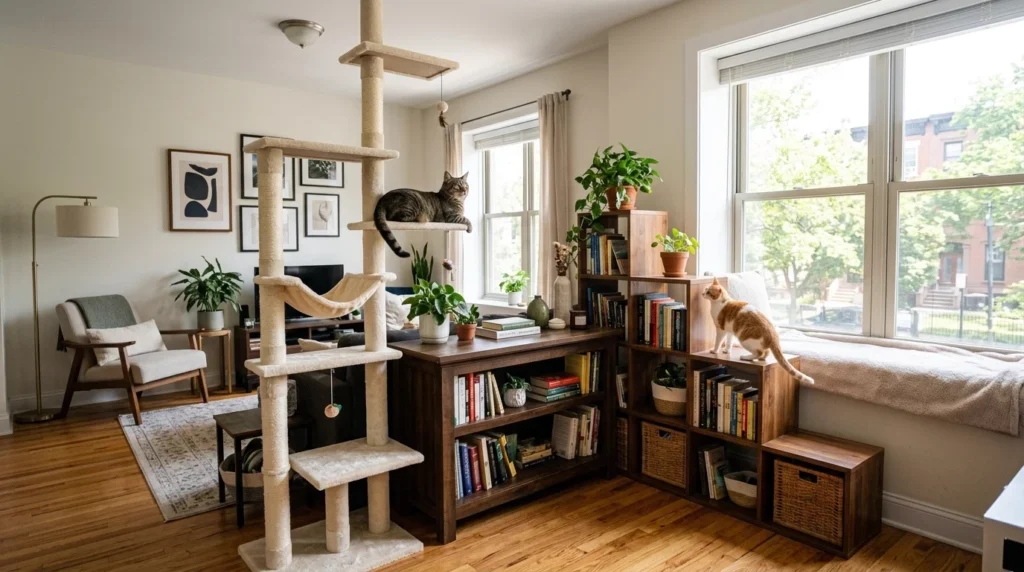
Studio apartment with one window. A window seat made from a low cabinet, a tension-pole tree in a corner, and a bookshelf as a stepping point. Put the resting bed on the high shelf farthest from the front door.
One-bedroom with a hallway. Use the hallway wall for a shelf route if the lease allows. If not, line up a bench, a bookcase, and a perch for a floor-to-height corridor.
Shared living room. Use the corner behind a sofa for a cat tree and keep the main walkways clear. A cat that has her own height won't need to use the dining table.
A room with a high ceiling. A tall cat tree or tension pole gives your cat a lot of vertical territory with a small floor footprint.
Step 3: Stability and safety checks
Check before you let your cat use it, and again every few weeks.
Push and shake every piece. Nothing should rock, slide, or creak.
Test with weight. Lean on a step, or place a bag of known weight on a shelf, before trusting it with a cat.
Anchor tall items. Bookcases, tall trees, and tall scratching posts need a wall strap or a wide, heavy base.
Check the surface. Shelves and steps need grip. A thin carpet, sisal pad, or non-slip mat helps. Slick wood, glass, or metal can send a cat sliding.
Look at the landing zone. Remove sharp or fragile objects from the floor around the base.
Check hazards near the route. Ceiling fans, hot lamps, open windows with weak screens, and cords are common problems. Window screens in particular fail, so use pet-proof screens or keep windows secured.
Inspect hardware. Tighten bolts and check the pole threads on tension trees. Replace frayed sisal.
Watch the cat's weight. A large cat needs stronger gear and wider platforms. Choose products rated above her weight.
Don't leave a kitten unsupervised on high platforms until you've seen how she handles the gaps.
Step 4: Rest zones
A playground without rest places gets used less. Cats sleep many hours a day and want somewhere calm.
Put a soft bed on a high perch away from foot traffic.
Give seniors and heavy cats a low, wide, easy-to-enter bed that doesn't need a jump.
Provide a covered hideaway, such as a box or a cube, for stress relief.
Place at least one resting spot in a warm, sunny position if you can do so safely.
In multi-cat homes, offer more beds than cats, spread out.
Making it a playground and not just furniture
Climbing structures become more interesting with activity built in.
Hide a few treats or kibble on different levels so she explores it.
Use a wand toy to lure her up and down the route.
Add a puzzle feeder at a mid-level, and count the food toward her daily calories.
Rotate toys, and move a box or tunnel every week or two so the area feels new.
Put a bird feeder outside the window if you can. Many cats like watching wildlife, although some become frustrated if they can't reach it. Watch for signs of stress.
Add a scratching post at the base and near a sleeping spot, since cats often stretch and scratch after waking.
Adapting for different cats
Kittens. Use low platforms and short steps. Kittens are fearless and can misjudge jumps, so avoid high drops.
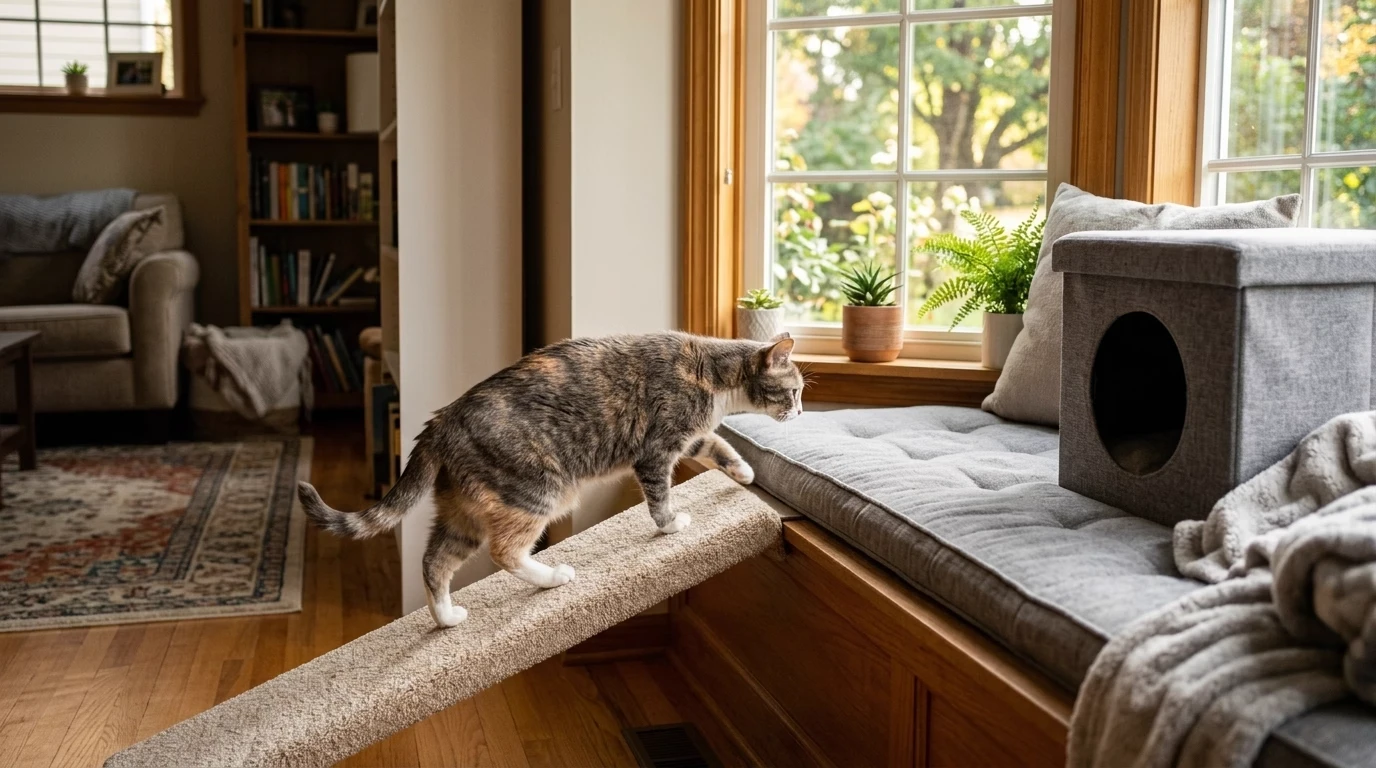
Seniors and arthritic cats. Use ramps, pet steps, and low beds. If your cat stops using her usual perches, ask your vet whether pain may be the reason.
Heavy cats. Choose wide platforms and trees rated for more weight. A small perch that suits a light cat can be dangerous for a heavy one.
Shy cats. Offer enclosed spaces and a route that leads to hiding spots, not just open perches.
Multi-cat homes. Add more routes, more levels, and separate resting spots. Watch the interactions. If one cat guards a key perch, add another.
Mistakes to avoid
Buying a big tree for a small room and blocking the walking space.
Putting a perch next to a window with a loose screen.
Relying on suction cups or adhesive hooks for load-bearing.
Making gaps too wide for an older cat.
Placing everything at the same height.
Skipping an anchor on tall furniture.
Assuming she will use it right away. Cats take time with new things. Don't force her onto it.
When to talk to your vet
If your cat suddenly stops jumping, hesitates at heights she used to manage, or seems stiff, mention it to your vet. Reduced jumping in a cat that used to climb can be a sign of pain, and it's easy to mistake for aging or laziness.
Frequently Asked Questions
How high should I build?
As high as your cat is comfortable with, with safe steps. Many cats like a high perch, but the best height is one she can reach and leave easily.
Will my cat damage the walls or furniture?
Scratching is normal. Provide posts and cover the areas you want to protect. See our guide to deterrents.
How many levels does a cat need?
There's no fixed number. Two or three reachable levels suit many homes.
Related reading
References
AAFP and ISFM, Feline Environmental Needs Guidelines (catvets.com)
International Cat Care, environment and enrichment resources (icatcare.org)
Manufacturer weight ratings for any product you name
Indoor Cat Repellents: What Works and What Can Harm Cats