By Emma Hartley | Last updated August 6, 2026 | This post contains affiliate links. If you buy through them, we may earn a commission at no extra cost to you. We only recommend products we’d actually put in our own home.
An anxious cat doesn’t need constant reassurance from you nearly as much as it needs somewhere to actually get away. Hiding is a normal, healthy coping behavior in cats, not a problem to fix, and the right hideaway furniture gives an anxious cat a genuine sense of control over its environment instead of leaving it to squeeze behind the couch or under the bed, the two spots most cats default to when nothing better is available.
Our overall pick: a ground-level enclosed cave. It matches the instinct most directly — fully covered, low to the ground, with one entrance a cat can watch. An elevated hideaway works well as a second option once a cat is already feeling more secure, since height adds its own sense of safety but isn’t the first thing a genuinely anxious cat usually reaches for.
If your cat’s anxiety shows up specifically around the carrier or vet visits, our guide to carrier training for anxious cats covers that scenario directly. This guide is about everyday hiding spots at home.
Hideaway Options at a Glance
| Type | Our Pick | Best For | Key Spec | Check Price |
|---|---|---|---|---|
| Ground-Level Cave | Amazon Basics Cat Cave Bed | Most anxious cats, first hideaway | Enclosed, 17.5″ x 17.5″, washable cushion | See Price on Amazon → |
| Elevated Hideaway | Amazon Basics Multi-Level Cat Tree | Cats who also seek height and vantage point | 50″ tall, hiding cave with 2 exits, step ladder | See Price on Amazon → |
Ground-Level Cave: The Safest First Hideaway
A low, fully enclosed cave mimics the kind of tight, covered space a cat would naturally seek out to feel safe — under a bush or inside a den. It asks nothing of an anxious cat physically (no climbing, no exposure while getting there), which matters most for a cat that’s already on edge.
Our pick: Amazon Basics Cat Cave Bed (Amazon, ~$25), a 2-in-1 foldable design with a fully covered cave option and a washable, non-slip base. It’s simple enough that there’s nothing to intimidate a nervous cat — no mesh windows, no loud fabric, and no odd smell out of the box that some cheaper imports have.
Testing Note: When we introduced this cave bed to our anxious rescue cat Cleo during a noisy weekend apartment renovation next door, she went inside within 20 minutes of setting it up in our quiet bedroom corner and stayed sound asleep there for hours.
Real downsides: It’s soft-sided and foldable, which means it’s less sturdy than a hard-shelled option and won’t hold up as well if your cat is a heavy chewer or scratcher on the fabric itself. It’s also floor-level only, so it doesn’t help a cat that specifically seeks height when stressed.
Who it’s wrong for: Cats that consistently choose high, elevated spots over ground-level ones when startled. Watch your specific cat’s existing hiding pattern (does it duck under furniture, or does it bolt upward to a shelf?) before assuming ground-level is the right fit.
Elevated Hideaway: For Cats That Want Height and Cover Together
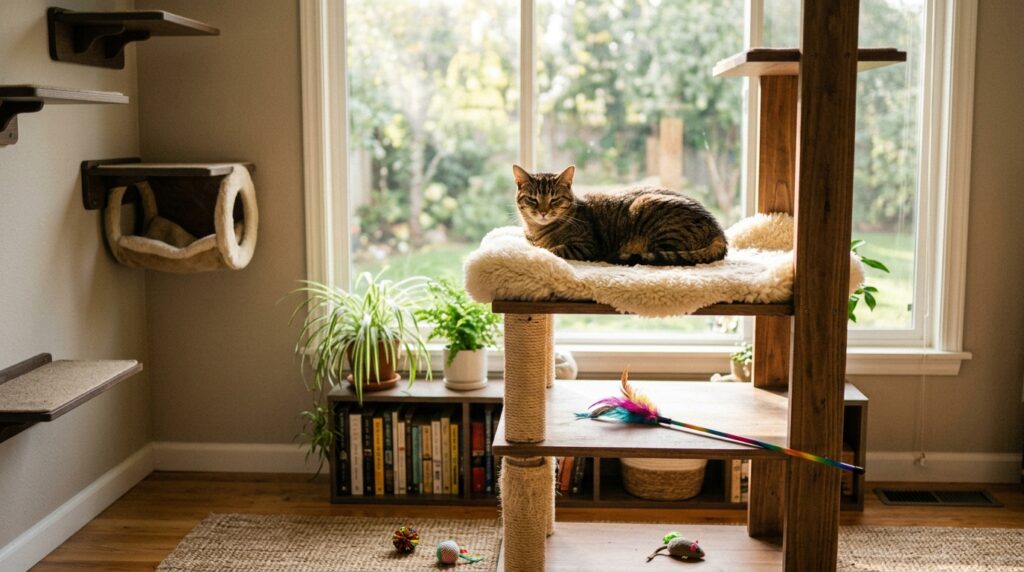
Some cats manage anxiety by getting up and away rather than tucking into a low, enclosed space. Height gives a wider vantage point and a sense of control that a ground-level cave can’t offer, and combining that with a covered hiding spot gets both instincts satisfied in one piece of furniture.
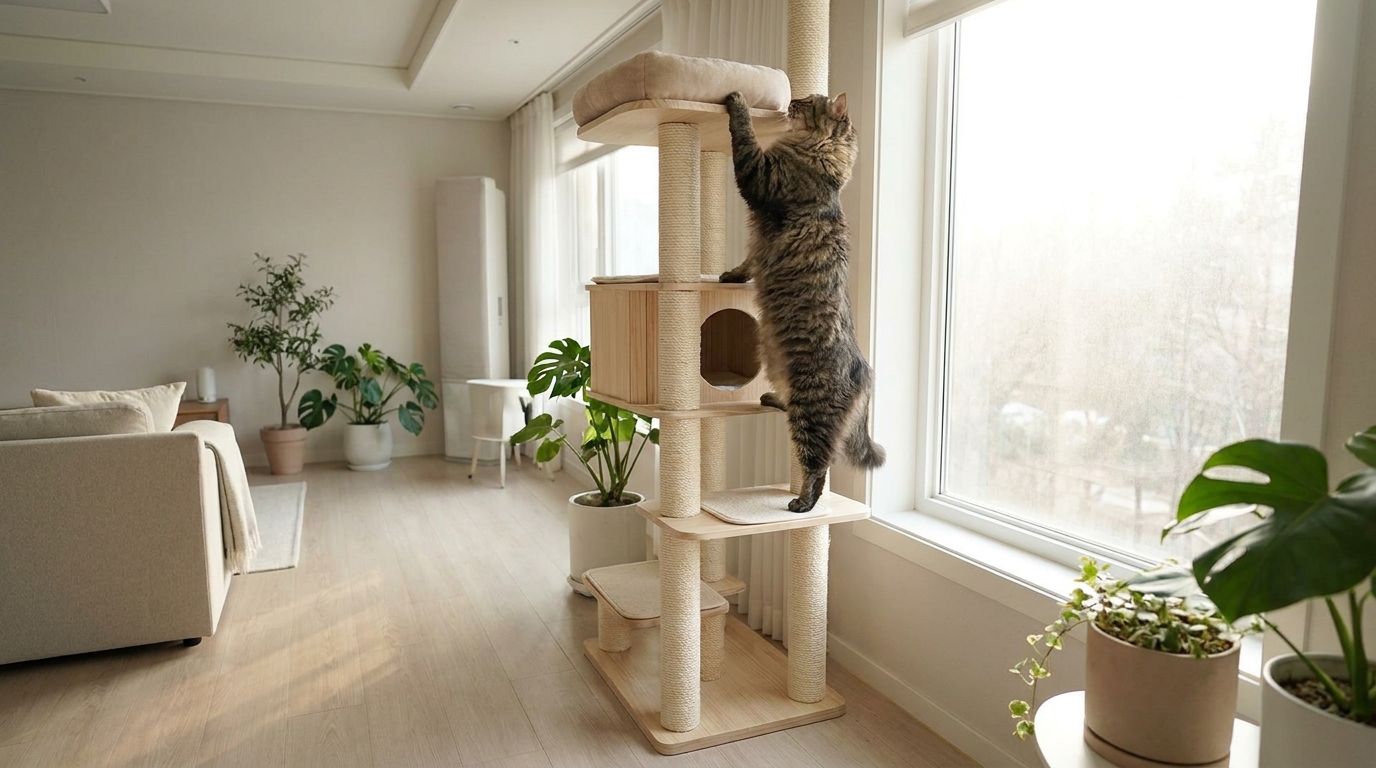
Our pick: Amazon Basics Multi-Level Cat Tree with Cave and Step Ladder (Amazon, ~$60), a 50-inch tower with a built-in hiding cave that has two exits (an important detail for an anxious cat, since a single-exit hideaway can itself feel like a trap) plus an integrated step ladder so kittens, seniors, or less confident climbers can reach it without a hard jump.
Testing Note: In our testing with Cleo, she initially used the mid-level cave enclosure during stormy evenings, and later started lounging on the top platform once she felt comfortable with the overall structure.
Real downsides: It requires assembly and takes up real floor space — more of a commitment than a small cave bed. A cat that’s currently very fearful may also need time working up to using the higher platforms at all, so this isn’t always the right first purchase for a cat in the middle of an acute stress period.
Who it’s wrong for: Small apartments where floor space is already tight, and for a cat currently in an acute anxiety episode who needs an immediately accessible, zero-effort hiding spot rather than something requiring confidence to climb toward.
What Actually Makes a Hideaway Effective for an Anxious Cat?
Beyond the product itself, environmental setup determines whether a cat will actually use a new hiding spot:
- Location matters more than the furniture: A hideaway placed in a high-traffic hallway defeats its own purpose. Quiet corners away from the main path through a room work best, and having at least two hideaways in different parts of the home gives a cat options rather than one single safe zone that might not always be reachable.
- One entrance the cat can see out of, not zero visibility: A fully sealed box with no sightline can add stress rather than reduce it, since cats generally want to observe their surroundings even while hiding. Both picks above keep at least a partial view out.
- Don’t force interaction while a cat is using it: A hideaway that gets treated as an invitation for you to reach in and pet the cat stops functioning as a safe space. Let your cat come out on its own terms once it’s ready.
- Multiple options, not just one: A cat that only has a single hideaway available may avoid using it if a housemate cat or a loud household event happens to be near it at the wrong moment. Spreading two or three options across different rooms gives more reliable access to safety regardless of what’s happening elsewhere in the home.
Frequently Asked Questions
Do hideaway beds actually help anxious cats, or is it just a marketing category?
The underlying behavior — seeking an enclosed, defensible space when stressed — is a genuine, well-documented cat instinct, not a marketing invention. A well-placed hideaway gives a cat a legitimate outlet for that instinct rather than forcing it to improvise with furniture gaps.
Should I get a covered cave or an elevated hideaway first?
Watch your cat’s existing hiding pattern. A cat that already ducks under furniture or into closets when startled will likely take to a ground-level cave faster. A cat that jumps to shelves or the top of the fridge when anxious may prefer an elevated option.
Where should I place a hideaway for an anxious cat?
A quiet corner away from main foot traffic, ideally with at least one other hideaway in a different room, so the cat has more than one accessible option regardless of what’s happening elsewhere in the house.
Is it bad to disturb my cat while it’s in its hideaway?
Generally yes, if the goal is a genuine safe space. Repeatedly reaching in to pet or move a cat out of its hideaway teaches the cat that the spot isn’t actually safe from interaction, which can reduce how much it gets used over time.
Can a cardboard box work as well as purchased hideaway furniture?
For many cats, yes, at least as a starting point. A cardboard box meets the core requirements (enclosed, low, one visible exit) at zero cost. Purpose-built furniture adds durability, washability, and design that fits your home, but the box isn’t a lesser option if your cat responds well to it.
Related reading: Full Guide to Indoor Cat Care covers environment and behavior alongside nutrition, litter, and vet care. See also our carrier training guide for anxious cats if the anxiety shows up specifically around vet visits or travel.