By Emma Hartley | Last updated July 30, 2026
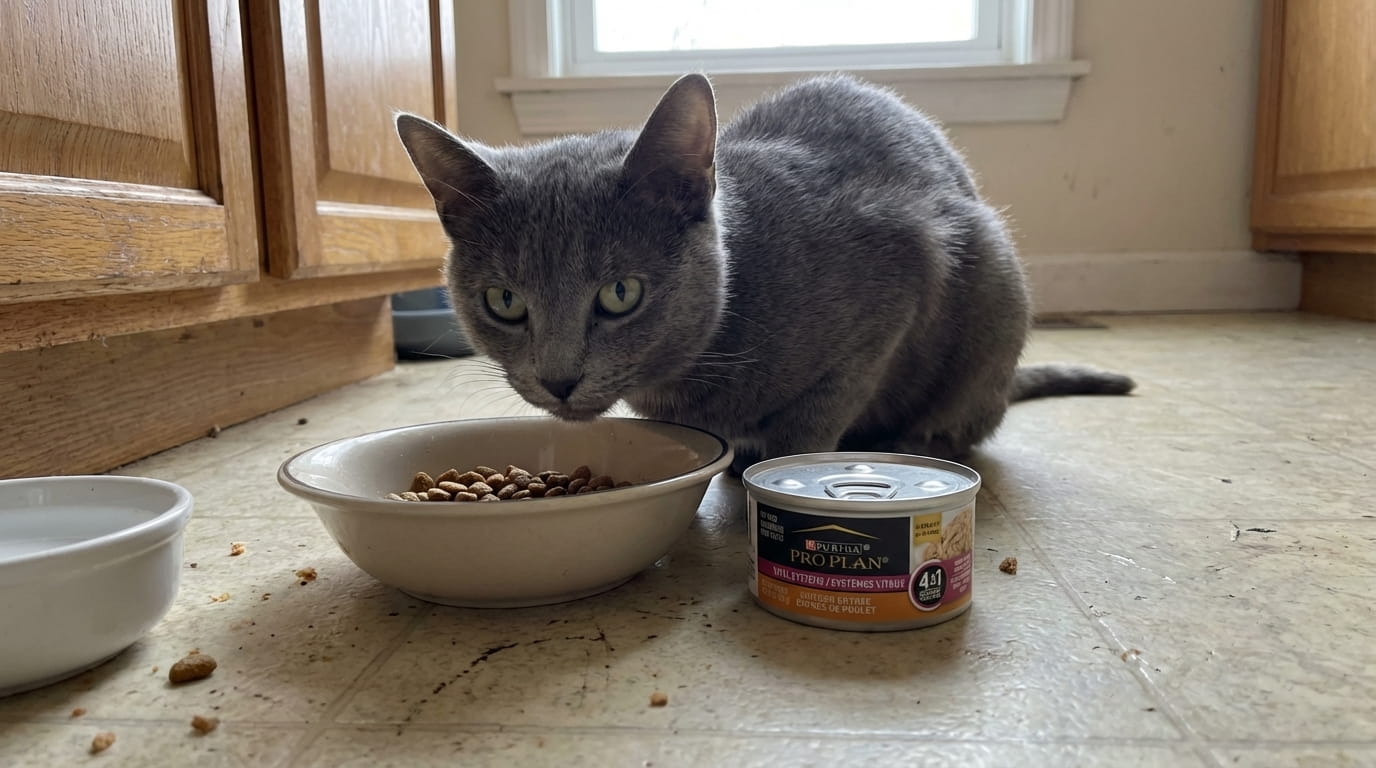
Whisker fatigue in cats isn’t a formally recognized veterinary diagnosis, but the behavior it describes — a cat hesitating at a narrow food bowl, pawing food out onto the floor, or seeming reluctant to eat from a deep dish — is real and commonly reported. The disagreement isn’t about whether cats respond to bowl shape. It’s about whether “fatigue” and “sensory overload” are the right explanation, or whether pet brands adopted a convenient-sounding term for a simpler problem: some cats just prefer a wider bowl.
Quick answer: The behavior is real and easy to observe. The specific mechanism (“whisker fatigue,” implying pain or sensory overstimulation) isn’t backed by peer-reviewed research. Treat it as a plausible but unproven explanation, not settled science, and judge by your own cat’s behavior rather than the marketing term.
What Is Whisker Fatigue in Cats?
The term describes a proposed sensitivity reaction: a cat’s whiskers, which are packed with nerve endings and used to sense space and objects, supposedly become overstimulated when repeatedly brushing against the sides of a narrow or deep bowl during eating. The theory holds that this triggers mild stress or discomfort, leading a cat to avoid the bowl, paw food out to eat off a flat surface instead, or eat less than it normally would.
It’s a term that shows up almost exclusively in pet product marketing, particularly for wide, shallow “whisker-friendly” bowls — which is part of why some veterinarians and researchers, including those at Cornell Feline Health Center, are skeptical of it as a real clinical condition.
Is Whisker Fatigue an Actual Veterinary Diagnosis?
No. It doesn’t appear in veterinary behavior or dermatology literature as a recognized condition, and no peer-reviewed study has established that whisker contact with a bowl causes measurable stress or pain in cats. That absence of research doesn’t prove the underlying idea is false — it means the specific “fatigue” framing is unproven, not disproven. The honest answer is that nobody has rigorously tested it either way.
Why Do Some Cats Avoid Narrow or Deep Bowls?
There are several plausible explanations that don’t require whisker sensitivity at all:
- Simple food access. A deep, narrow bowl makes it physically harder to reach food at the bottom, especially for cats with a shorter snout or flatter face.
- Vision. Cats have a blind spot directly in front of their nose. A tall-sided bowl can make it harder to see food clearly while eating, which some cats respond to by pawing food out onto a flat surface where it’s easier to track. Understanding how cats perceive their environment is part of broader indoor cat enrichment.
- Preference and habit — not unlike a person who prefers eating off a plate rather than out of a deep bowl, without any physical reason behind it.
- Bowl instability. A lightweight bowl that slides or tips while a cat eats can create the same avoidance behavior. Our water fountain vs. bowl comparison covers similar stability considerations for water dishes.
Any of these produce the exact behavior “whisker fatigue” claims to explain, which is part of why it’s hard to isolate whisker sensitivity as the actual cause just from watching a cat hesitate at a bowl.
Does Bowl Shape Actually Affect How Much a Cat Eats?
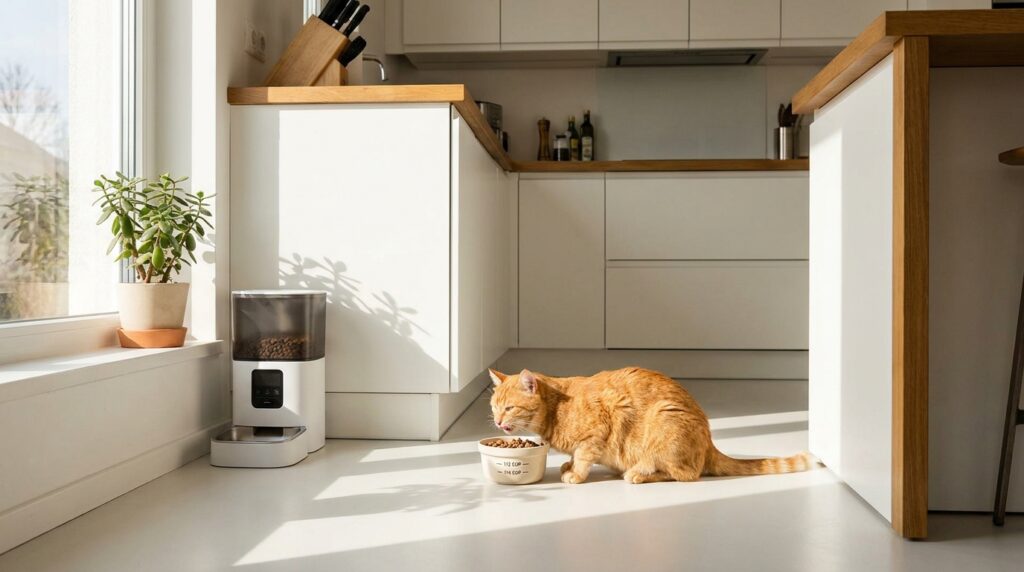
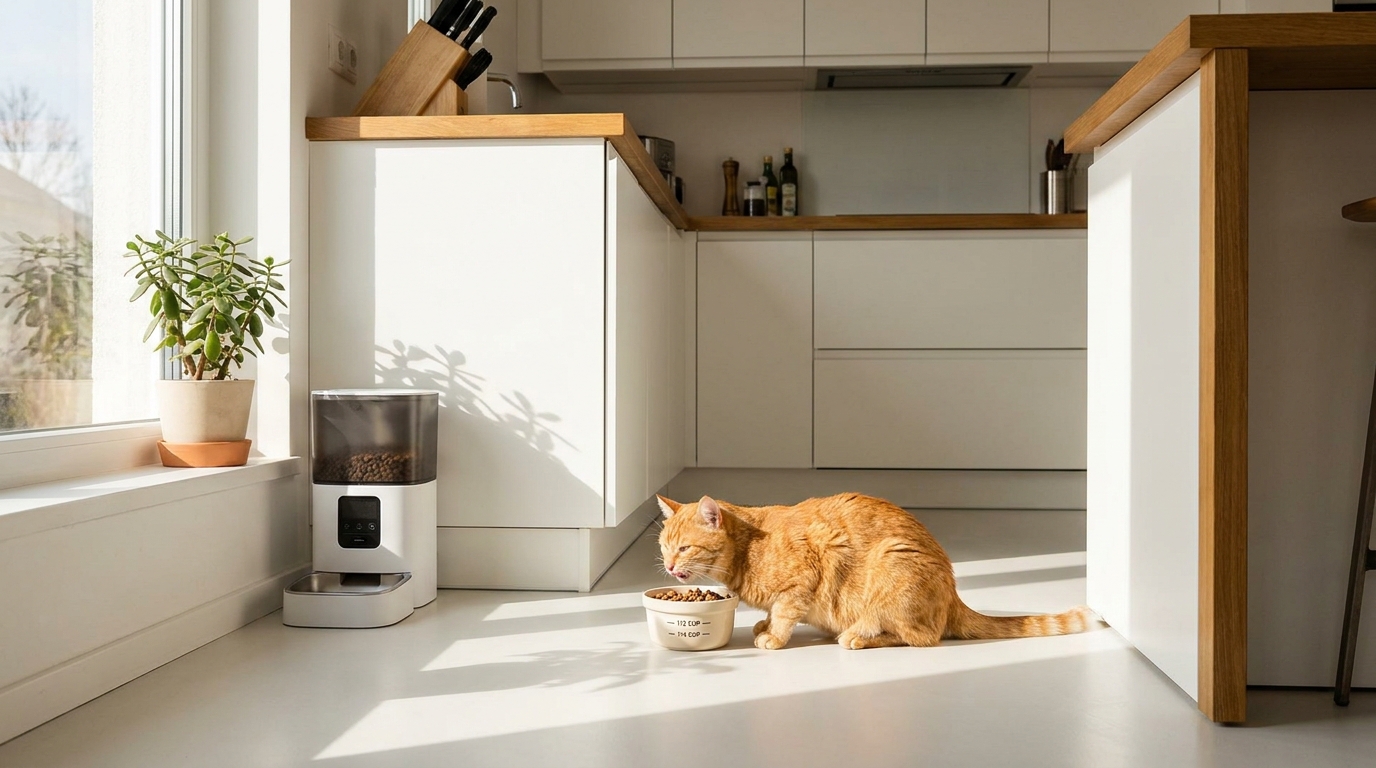
Possibly, but the evidence is anecdotal rather than measured in controlled studies. Plenty of owners report cats eating more consistently — or stopping the “paw food out and eat off the floor” habit — after switching to a wider, shallower dish. That’s a real, observable outcome. What’s missing is a controlled study isolating bowl shape as the specific variable and whisker contact as the specific mechanism.
If your cat’s eating patterns concern you, calculating their actual daily calorie needs by weight is a more reliable starting point than assuming the bowl is the problem.
Should You Switch to a Wide, Shallow Bowl?
There’s very little downside to trying it. A wide, shallow ceramic or stainless steel bowl is inexpensive, easy to find, and if your cat’s eating behavior improves, you’ve solved the problem regardless of whether “whisker fatigue” was the accurate explanation.
Watch for these behaviors as your practical signal:
- Pawing food out of the bowl before eating it
- Hesitating or approaching the bowl repeatedly before eating
- Eating better from a flat plate or saucer than from a bowl
- Leaving food near the bottom or edges of a deep bowl uneaten
If you see two or more of these consistently, a wider bowl is a reasonable, low-cost thing to try. For product recommendations on bowls and feeding setups, see our Indoor Cat Starter Kit.
What to Look for in a Cat Bowl to Rule Out Whisker Issues
Shallow depth (under an inch and a half), a wide diameter that gives the whiskers room, and a heavy or non-slip base so the bowl doesn’t slide during eating. Ceramic and stainless steel are generally preferred over plastic, partly for easier cleaning and partly because plastic can develop micro-scratches that harbor bacteria and cause chin acne in some cats — a separate issue sometimes confused with whisker-related avoidance.
Frequently Asked Questions
Is whisker fatigue a real medical condition?
It’s not a formally recognized veterinary diagnosis, and no peer-reviewed research has confirmed the specific mechanism. The avoidance behavior it describes is real and commonly observed, but the “whisker fatigue” explanation for why it happens is unproven rather than established.
What are the symptoms people associate with whisker fatigue?
Pawing food out of a bowl to eat off the floor, hesitating before eating, leaving food in a deep bowl uneaten, and appearing stressed or reluctant near narrow feeding dishes.
Do all cats need whisker-friendly bowls?
No. Many cats show no reaction to bowl shape at all. It’s worth trying a wider bowl only if your specific cat shows the avoidance behaviors described above.
What’s the difference between whisker fatigue and a medical eating problem?
Whisker fatigue, if it’s a real factor at all, shows up as bowl-specific avoidance with normal appetite. A genuine medical eating problem usually comes with other signs: weight loss, lethargy, vomiting, or reduced appetite regardless of bowl type. If your cat’s appetite has changed recently, read our guide on why your cat might always seem hungry or check whether they’re showing signs of pain.
Is a flat plate better than a bowl for cats?
For cats showing bowl-avoidance behavior, a flat plate or wide, shallow saucer often resolves the issue. The tradeoff is that flat plates make wet food harder to keep contained and can dry out faster.
First-hand Experience
After observing our domestic shorthair constantly scoop her kibble out of her deep stainless steel bowl onto the floor mat before eating, we swapped her dish for a wide, shallow ceramic saucer. Within 48 hours, the floor-scooping habit stopped completely — whether it was relieving whisker contact or simply giving her better visibility, the shallow dish resolved the friction instantly.
Related reading: Full Guide to Indoor Cat Care covers feeding setup alongside litter, vet care, environment, and behavior. See also Indoor Cat Starter Kit for specific bowl and feeding product recommendations, and best automatic feeders for portion control.