By Emma Hartley | Last updated July 30, 2026
If you’ve been asking why is my cat always hungry, the answer usually falls into one of three categories: a genuine medical condition increasing appetite, a portion or calorie mismatch that leaves the cat actually under-fed, or a learned behavior where begging has worked in the past and gets repeated. Age matters too — a sudden increase in appetite in a cat over eight or nine years old is more likely to have a medical cause than the same behavior in a two-year-old.
Quick answer: If the increased hunger is sudden and paired with weight loss, it’s more likely medical — hyperthyroidism and diabetes are the two most common causes in middle-aged and senior cats. If it’s a long-standing pattern with stable weight, it’s more likely behavioral or a genuine calorie shortfall from underfeeding.

Is My Cat Actually Underfed, or Just Acting Hungry?
Start here before assuming anything more serious — it’s the most common and most fixable explanation. Many feeding charts on cat food bags underestimate needs for active cats or overestimate for sedentary ones, and free-fed dry food in particular makes it easy to lose track of actual portions over time.
Calculate an actual calorie target based on your cat’s weight and activity level rather than eyeballing it. Our indoor cat feeding calculator guide walks through the vet-standard RER formula and includes a ready-made calorie chart by weight. If your cat is at a healthy weight and eating close to that calculated amount already, genuine underfeeding is less likely, and it’s worth looking at the other categories below.
Medical Conditions That Cause Increased Appetite in Cats
Hyperthyroidism is the most common medical cause of a sudden appetite increase in cats over eight years old. An overactive thyroid speeds up metabolism dramatically, so the cat eats more but often loses weight anyway. Other signs include increased thirst, vomiting, a fast heart rate, and a coat that looks unkempt despite normal grooming habits. The Cornell Feline Health Center estimates this condition affects approximately 10% of cats over age 10.
Diabetes mellitus also increases appetite while often causing weight loss, since the body can’t properly use glucose from food for energy. Increased thirst and urination usually accompany the appetite change, and overweight cats are at meaningfully higher risk.
Intestinal parasites, more common in cats with outdoor access or cats recently adopted from a shelter, can also drive increased hunger since the parasites compete for nutrients from the food the cat eats.
Malabsorption or pancreatic issues are less common but can cause a cat to eat normally or more than normal while still losing weight. If your cat is losing weight for no obvious reason, our guide on indoor cat weight loss covers the six most common causes.
The common thread across genuine medical causes: increased appetite paired with weight loss, not weight gain, and usually at least one other symptom (increased thirst, vomiting, coat changes, lethargy).
Could Your Cat’s Hunger Be Behavioral Instead of Medical?
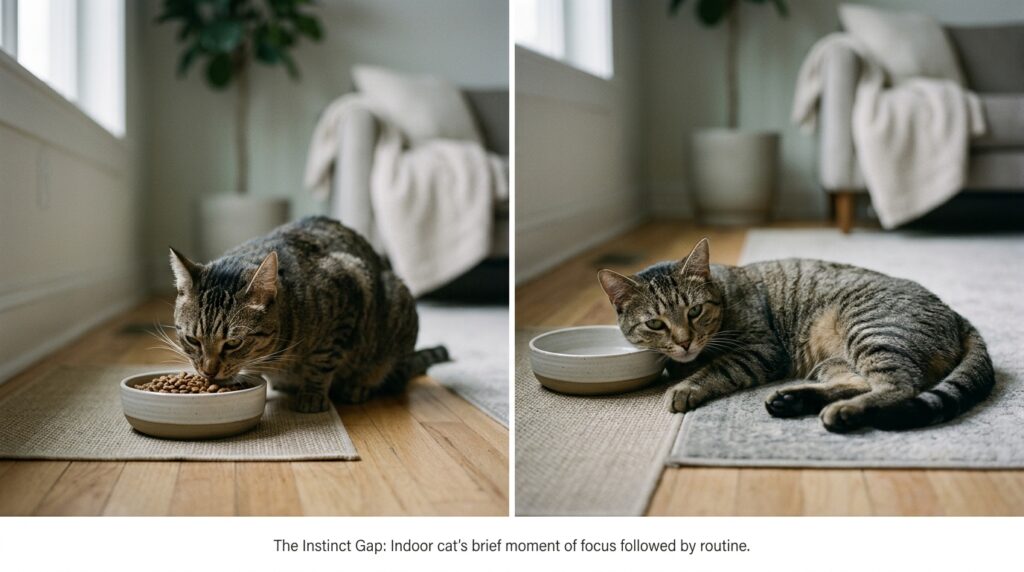
Yes, and it’s genuinely common. Cats learn fast that vocalizing, pacing near the food bowl, or following a person into the kitchen gets a response — especially if it’s worked even occasionally in the past. This isn’t a character flaw; it’s a learned pattern that gets reinforced any time begging is followed by food, even inconsistently.
Boredom plays a role too. A cat with limited environmental enrichment and not much play sometimes directs energy toward food-seeking behavior because it’s the most reliable source of stimulation. Our signs of a bored indoor cat guide helps distinguish boredom-driven behaviors from genuine hunger signals.
How to Tell Medical Hunger from Behavioral Hunger
Weight trend is the clearest signal available without a vet visit. Weigh your cat monthly using the same method each time.
| Signal | More Likely Medical | More Likely Behavioral |
|---|---|---|
| Weight trend | Losing weight | Stable |
| Onset | Sudden change | Long-standing pattern |
| Age | Over 8 years | Any age, often younger |
| Other symptoms | Increased thirst, vomiting, coat changes | None beyond hunger |
| Timing | Constant, not tied to routine | Tied to specific triggers |
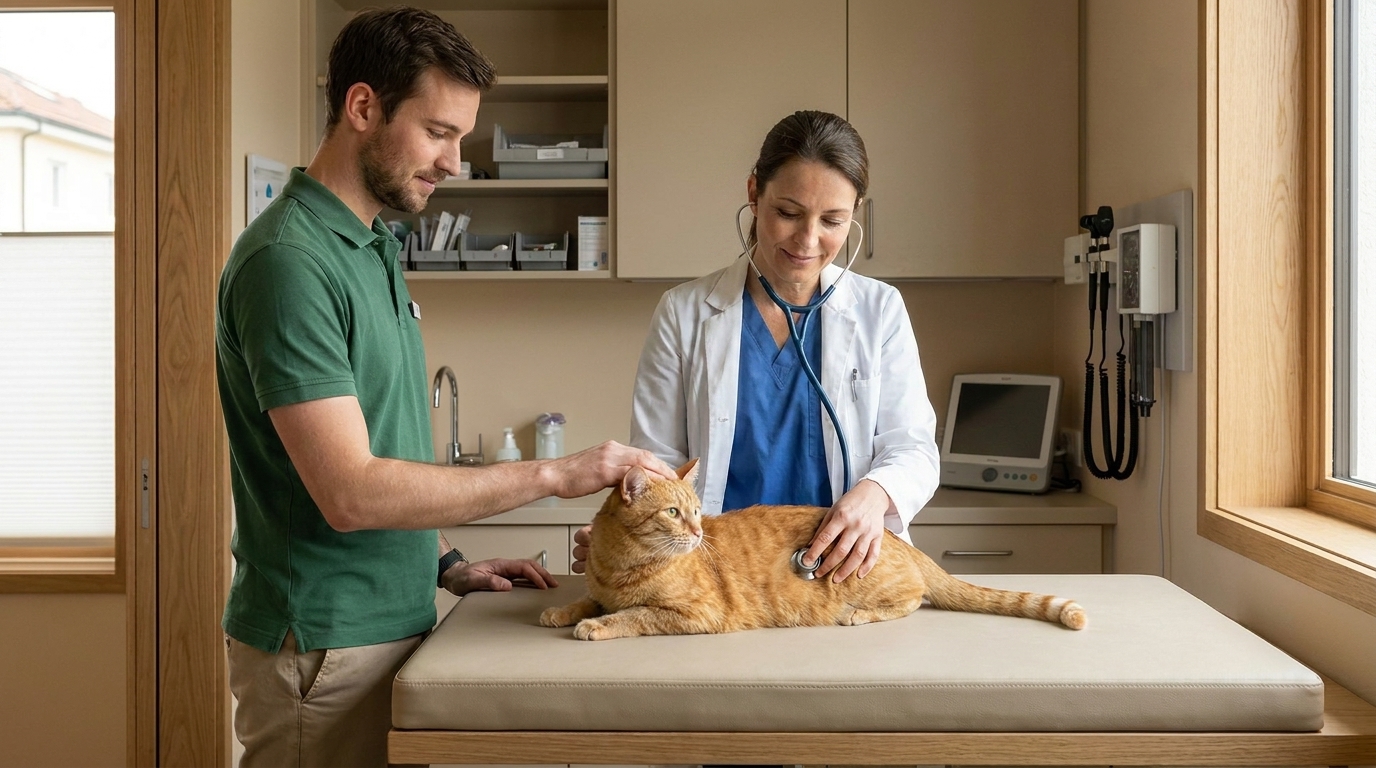
If your cat shows more signals from the medical column — especially any combination of sudden onset, weight loss, and age over eight — a vet visit is the right next step. Learning to recognize signs your cat may be in pain can also help you catch medical issues early.
How to Manage Behavioral Begging Without Ignoring Genuine Hunger
Rule out underfeeding first using an actual calorie calculation. Once you’re confident the portion is appropriate:
- Feed on a consistent schedule rather than free-feeding — an indoor cat daily routine helps establish predictable feeding times
- Don’t respond to begging with food, even occasionally, since intermittent reinforcement is actually more persistent than consistent reinforcement
- Add environmental enrichment: puzzle feeders that slow eating and add mental stimulation, more scheduled play sessions, and vertical space like cat trees or window perches
- If weight loss is a goal, reduce portions gradually (roughly 10 percent, reassessed after two to three weeks) rather than a sudden large cut

When to Take an Always-Hungry Cat to the Vet
Book a visit if you notice any of the following:
- Increased appetite paired with any weight loss, even if it seems minor
- Increased thirst or urination alongside increased hunger
- A cat over eight showing a new or sudden change in eating behavior
- Vomiting, diarrhea, or a change in coat quality alongside the appetite change
- Hunger that persists despite feeding an appropriate amount with no clear behavioral trigger
A basic senior wellness panel (bloodwork including thyroid levels and blood glucose) can identify or rule out the most common causes quickly. Our indoor cat vet visit schedule covers what routine blood panels typically include and how often to schedule them.
Frequently Asked Questions
Why does my indoor cat act hungry all the time even after eating?
The most common reasons are underfeeding relative to actual calorie needs, a learned begging habit reinforced by past feeding, or a medical condition like hyperthyroidism or diabetes — particularly in cats over eight.
Is it normal for older cats to eat more?
A gradual, mild increase can be normal, but a sudden or significant increase in an older cat — especially with any weight loss — warrants a vet check for hyperthyroidism and diabetes.
Can I fix a hungry cat by feeding more?
Only if the cat is genuinely underfed relative to its calculated calorie needs. If the current portion is already appropriate, feeding more usually just leads to weight gain.
Does hyperthyroidism always cause weight loss in cats?
Not always, but it’s the most common and telling sign alongside increased appetite. A cat eating more while losing weight, especially over age eight, is a clear pattern worth testing for.
Should I use a puzzle feeder for a cat that always seems hungry?
Yes, particularly if the hunger appears behavioral. Puzzle feeders slow eating, add mental stimulation, and can reduce food-seeking behavior driven by boredom.
First-hand Experience
When our 9-year-old foster cat Oliver suddenly became obsessed with food and started vocalizing near the pantry while noticeably dropping weight, a senior blood panel at the vet revealed early-stage hyperthyroidism. Starting him on daily medication stabilized his metabolic rate and brought his appetite back to normal within three weeks.
Related reading: Full Guide to Indoor Cat Care covers nutrition alongside litter, vet care, environment, and behavior. See also How Much to Feed an Indoor Cat for calculating an accurate daily calorie target, and Senior Cat Nutrition for what changes after age 10.