Affiliate disclosure: Some links in this post are affiliate links. If you buy through them, I earn a small commission at no extra cost to you. I only recommend products I’ve actually used with my own cats.
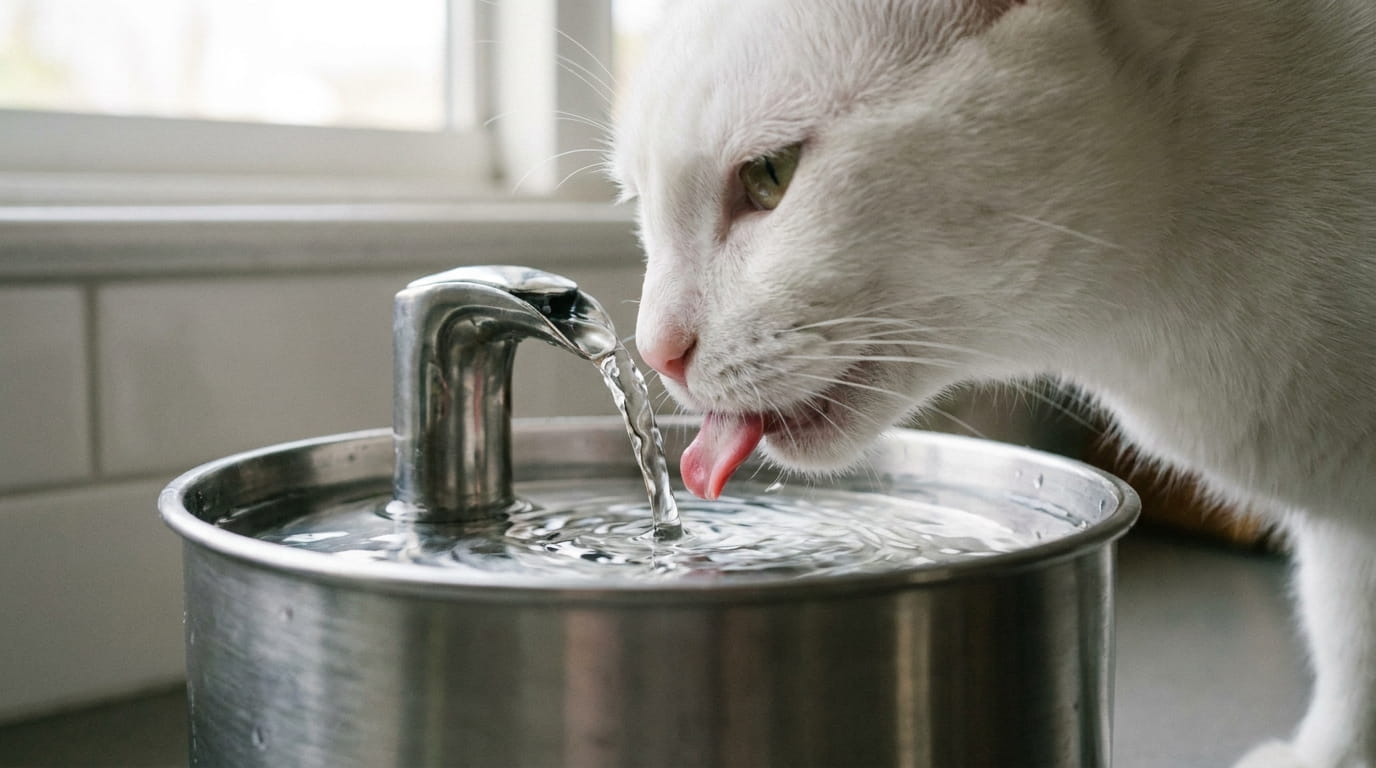
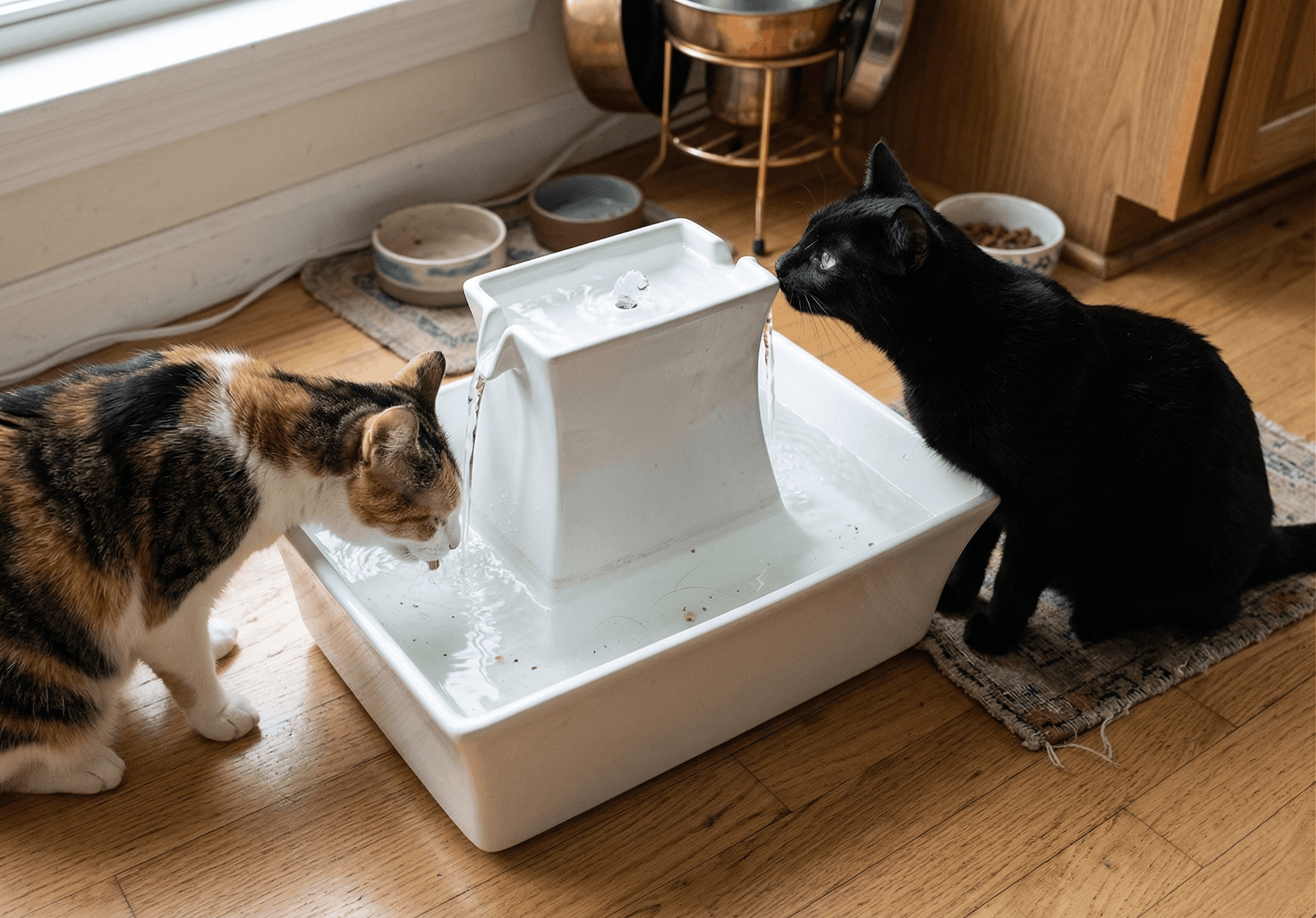
Yes, for most cats, but not because of anything magic about moving water. Cats are wired to avoid stagnant water in the wild, since standing water is more likely to be contaminated. A still bowl trips that same instinct even in an apartment where nothing has ever gone wrong with the tap water. A fountain’s circulation gets around that instinct. It doesn’t override thirst, it just removes a reason to ignore it.
I tested six fountains over two weeks with Beans, who is a textbook “drinks the bare minimum” cat, and the difference showed up fastest at 2 a.m., when I’d hear the pump running and know he’d wandered over instead of ignoring the bowl in the corner like he usually does. That’s obviously not a controlled study. But it lines up with what vets say about running water and thirst response in cats specifically.
What a fountain actually changes
A fountain increases the odds your cat drinks voluntarily, at the frequency their body actually needs, instead of the minimum they can get away with. For a cat that’s already a good drinker, the difference is marginal. For a cat that hovers near the bowl for two seconds and walks off, a fountain often gets meaningfully more water into them over a day.
It also matters more for cats eating a mostly-dry diet. I covered this in my wet food vs. dry food post, but the short version is that dry kibble supplies almost no water on its own, so a cat eating dry food is depending entirely on the bowl for hydration. A fountain closes some of that gap. It doesn’t fully replace what wet food does, but it helps.
What a fountain doesn’t fix
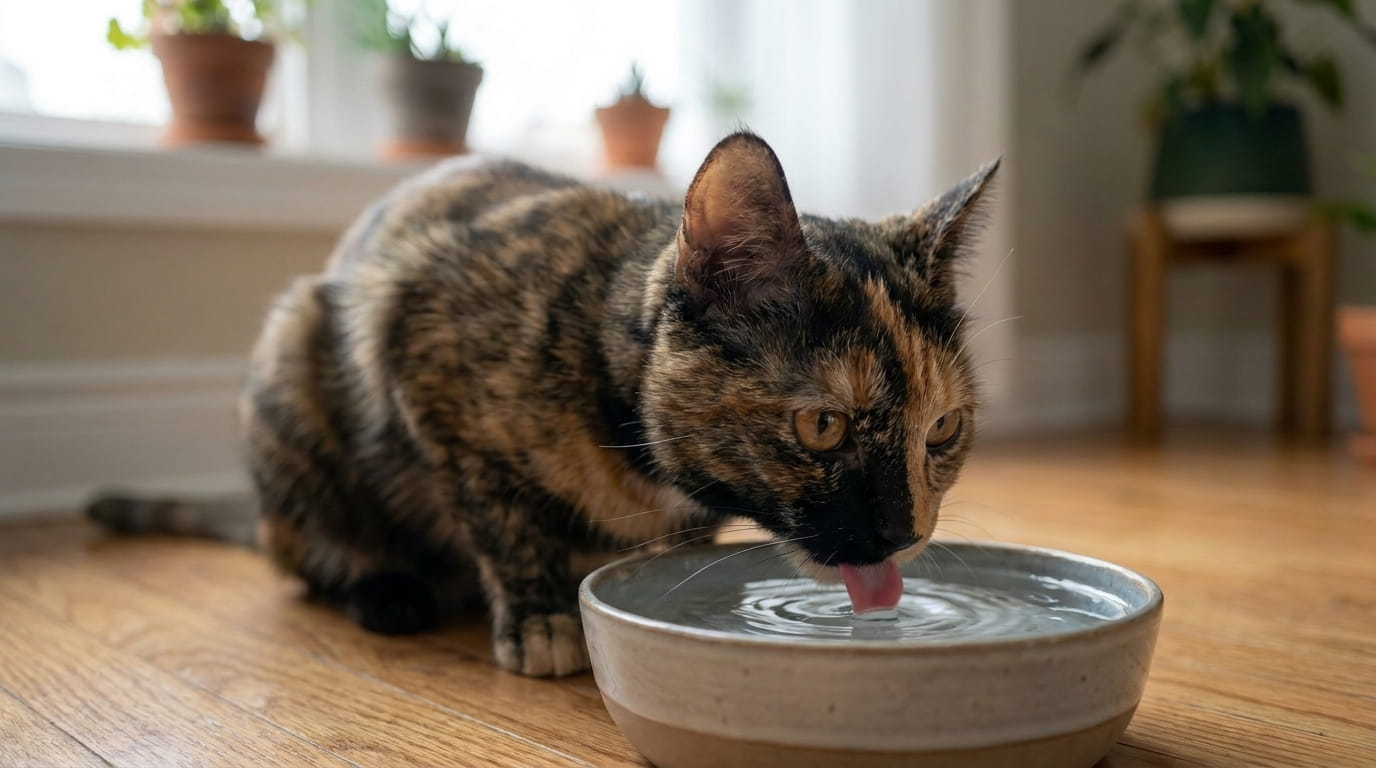
A fountain won’t fix a cat that’s dehydrated because of an underlying medical issue, and it won’t fix a bowl placement problem. Cats are picky about where the water is as much as how it moves. A bowl next to the litter box, right against a wall, or too close to the food dish will get avoided by plenty of cats regardless of whether it’s got a pump in it. Before assuming you need a fountain, try moving the bowl somewhere quiet and separate from food and litter for a week and see if that alone changes anything.
Ceramic and stainless steel fountains also aren’t automatically better because they cost more. What actually matters is how loud the pump is and how easy the filter is to clean weekly, because a fountain that gets neglected and starts smelling stagnant will get avoided just as fast as a dirty bowl would.
Ceramic vs. plastic vs. stainless steel
Plastic fountains are the cheapest and the most likely to develop a faint smell over time that cats notice before humans do. Cats can also react to plastic with chin acne in some cases, the same issue that shows up with plastic food bowls. Ceramic and stainless steel don’t hold odor the same way and are easier to keep genuinely clean, which matters more than the marketing about “premium materials” suggests. I go into the specific models I tested in my cat fountain review, including which one held up after two weeks of actual daily use instead of a one-time unboxing test.
Is it worth it if my cat already drinks fine?
Honestly, less critical. If your cat drinks regularly, uses the bowl without hesitation, and has clear urine and normal litter box habits, a fountain is a nice-to-have rather than a fix for a real problem. Where it earns its cost is with cats that are borderline dehydrated without anyone noticing, which is common enough that most vets will suggest trying one before assuming a cat “just doesn’t drink much” is a personality trait rather than a fixable habit.
Want to Optimize Your Cat’s Hydration?
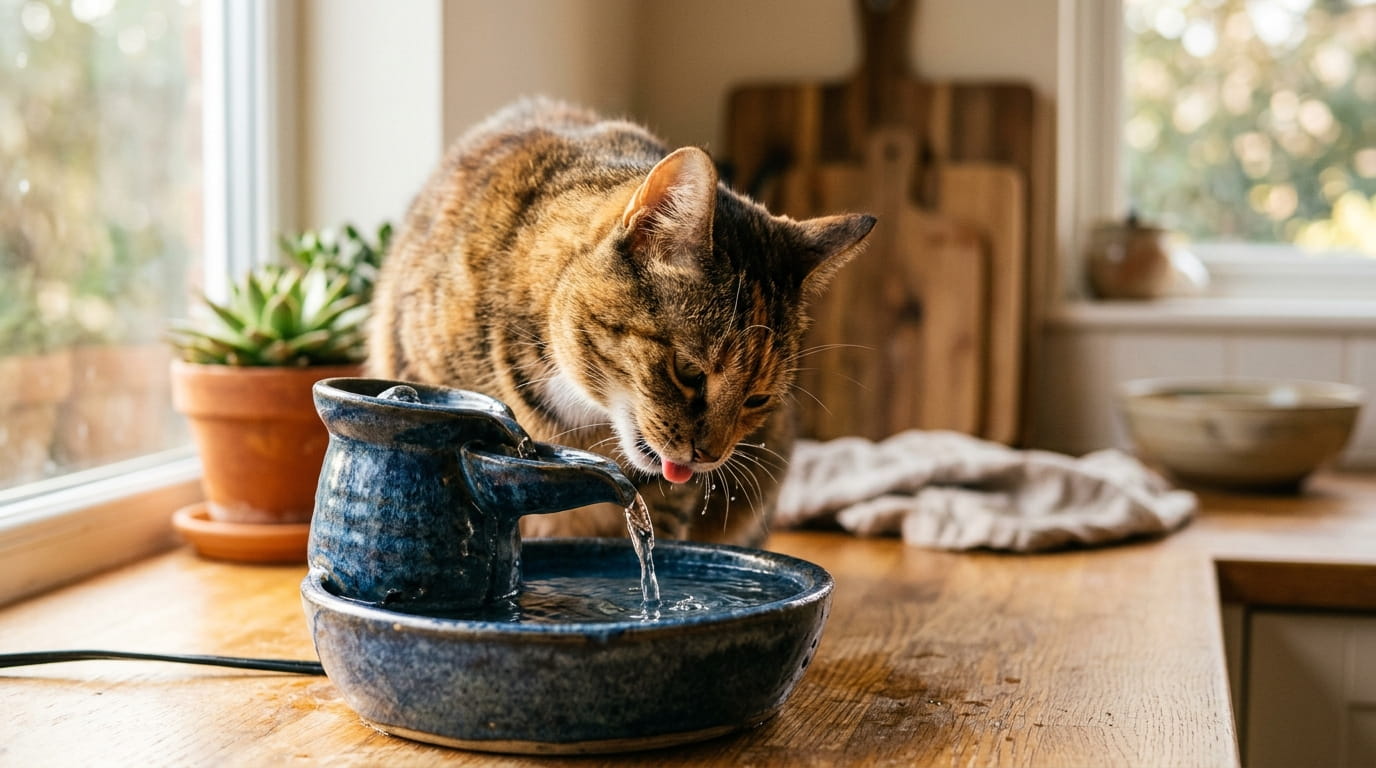
Fountains are great, but the food they eat is the most direct way to get water into their diet. Read my full breakdown of how switching between wet and dry food changes your cat’s hydration and health:
FAQ
Do cats really prefer running water over still water?
Most do, though not universally. It traces back to an instinct to avoid stagnant water, which running water doesn’t trigger the same way. Some cats show no preference either way.
How often do I need to clean a cat water fountain?
The reservoir should be wiped down weekly, and filters typically need replacing every 2-4 weeks depending on the brand and how many cats are drinking from it. A fountain that isn’t cleaned regularly can end up worse than a bowl, since biofilm builds up in the pump housing.
Can a fountain replace wet food for hydration?
No. A fountain increases voluntary water intake, but it doesn’t come close to the moisture content built into wet food. They solve overlapping but different parts of the same problem.
Why won’t my cat drink from the fountain I just bought?
Some cats need a few days to investigate a new object before trusting it. Keep the old bowl available during the transition instead of removing it immediately, and place the fountain where the old bowl used to sit.
Are quieter fountains better for cats?
Generally yes. A loud or vibrating pump can make some cats avoid the fountain entirely, especially ones that are already anxious. If your cat won’t approach it, check whether noise is the reason before assuming they simply dislike moving water.