Affiliate disclosure: Some links in this post are affiliate links. If you buy through them, I earn a small commission at no extra cost to you. I only recommend products I’ve actually used with my own cats.
If your cat never goes outside, wet food matters more than it does for a barn cat catching mice for exercise. The short version: dry food is fine nutritionally, but indoor cats move less, drink less water on their own, and are more prone to weight gain and urinary issues — and wet food helps with two of those three problems directly. It doesn’t help with the third. Neither food is “wrong.” They solve different problems.
I switched Beans to a 70/30 wet-to-dry split about a year ago, after a vet visit where his weight had crept up and his urine was more concentrated than she liked. It wasn’t dramatic. It was just: less kibble sitting out all day, more wet food at set times. Here’s what that actually changes, and what it doesn’t.
The water problem is the real one
Cats evolved from desert animals. Their thirst drive is weak compared to a dog’s, which means a cat eating only dry kibble (about 10% moisture) can go through an entire day mildly dehydrated and show no obvious signs of it. Wet food runs 70-80% moisture. A cat eating mostly wet food gets a meaningful chunk of its daily water from the food itself, without having to seek out the bowl.
This matters more for indoor cats specifically because indoor cats already move around less, drink less on their own initiative, and are statistically more prone to urinary tract issues and kidney disease later in life. Chronic mild dehydration doesn’t cause a crisis. It just makes the bladder work with more concentrated urine, day after day, for years. If you’ve read my post on indoor cat urinary problems, this is the mechanism underneath a lot of it.
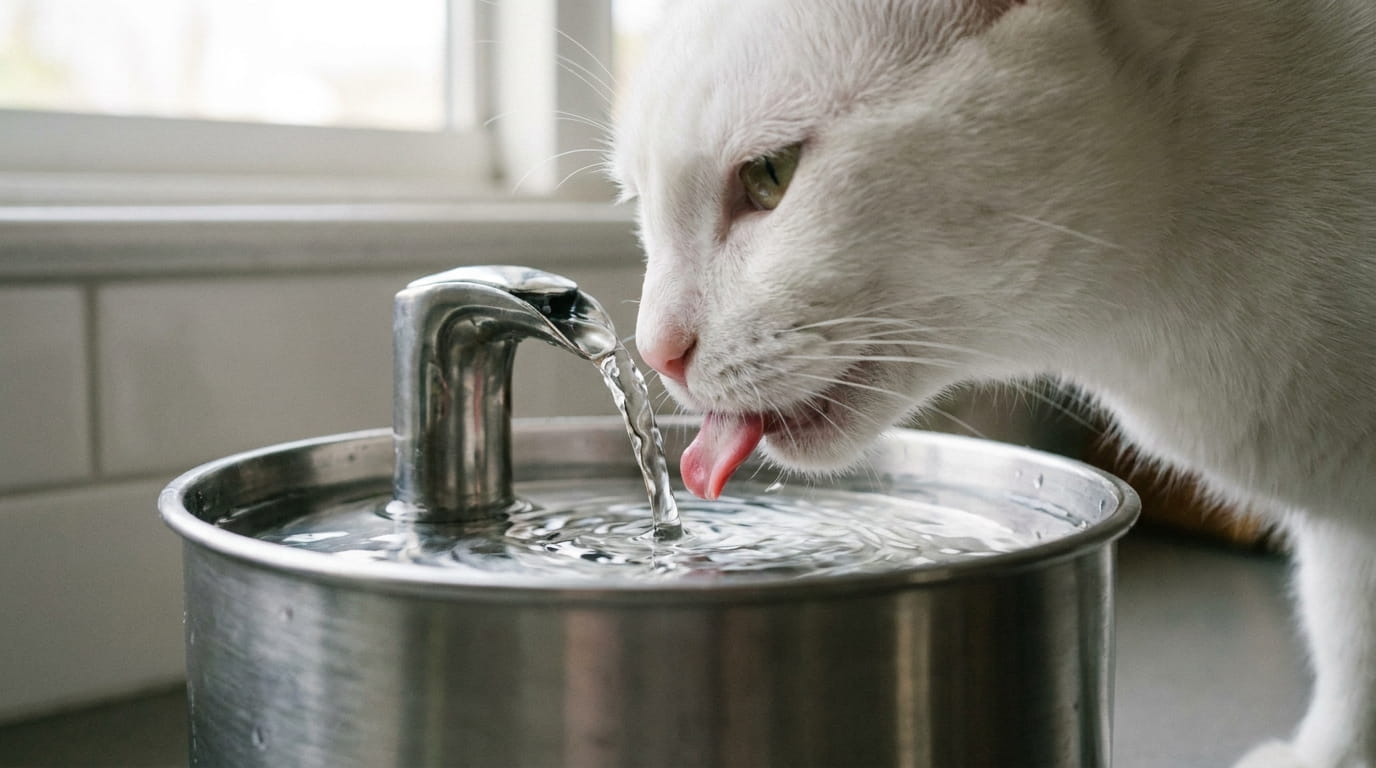
A cat water fountain helps too, since cats generally prefer moving water over a static bowl. But it’s a supplement to wet food, not a replacement for it. A fountain gets a cat to drink more water voluntarily. Wet food gets water into the cat regardless of whether it feels like drinking.
The weight problem is where dry food struggles
Dry kibble is calorie-dense and usually left out all day, which is exactly the setup that leads to overeating in a cat that isn’t burning calories chasing anything. Free-feeding dry food to an indoor cat is one of the most common causes of the slow, steady weight gain that owners don’t notice until a vet points it out.
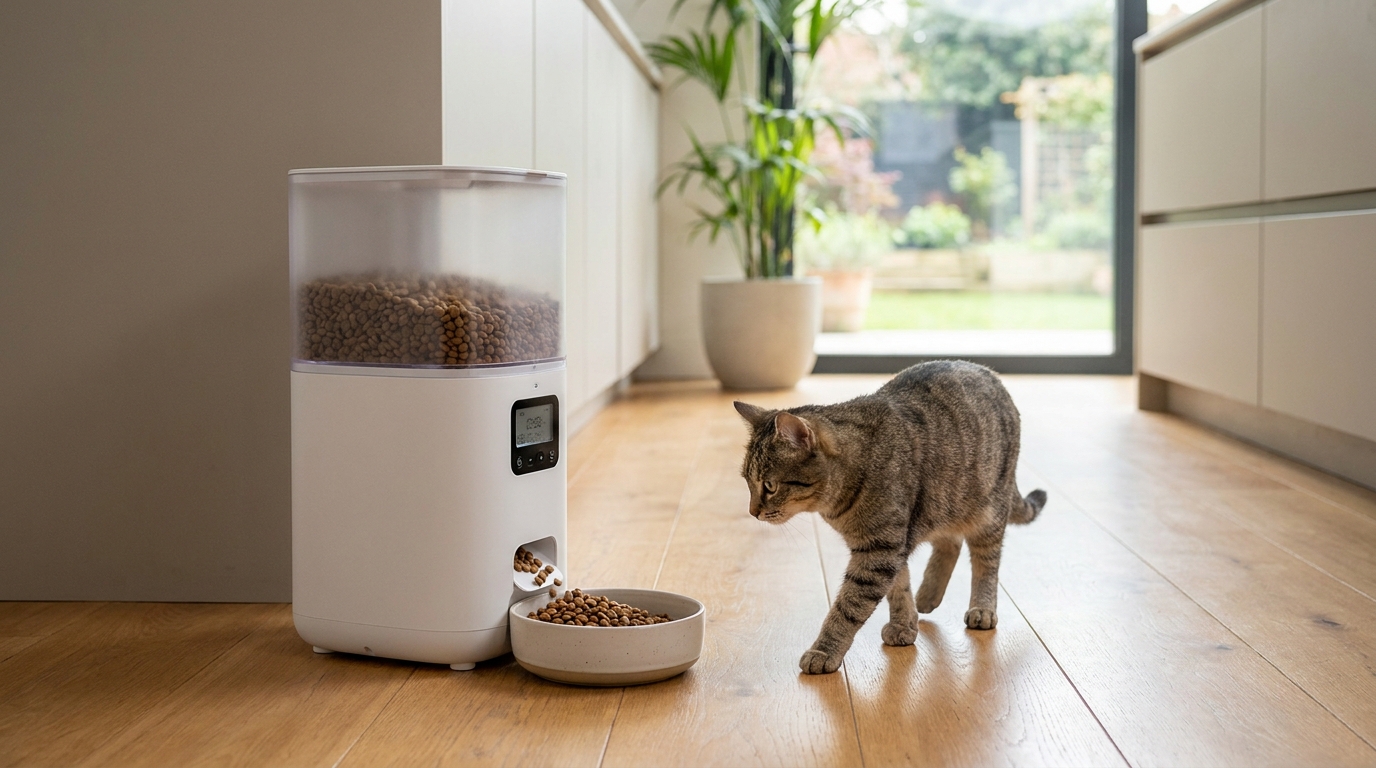
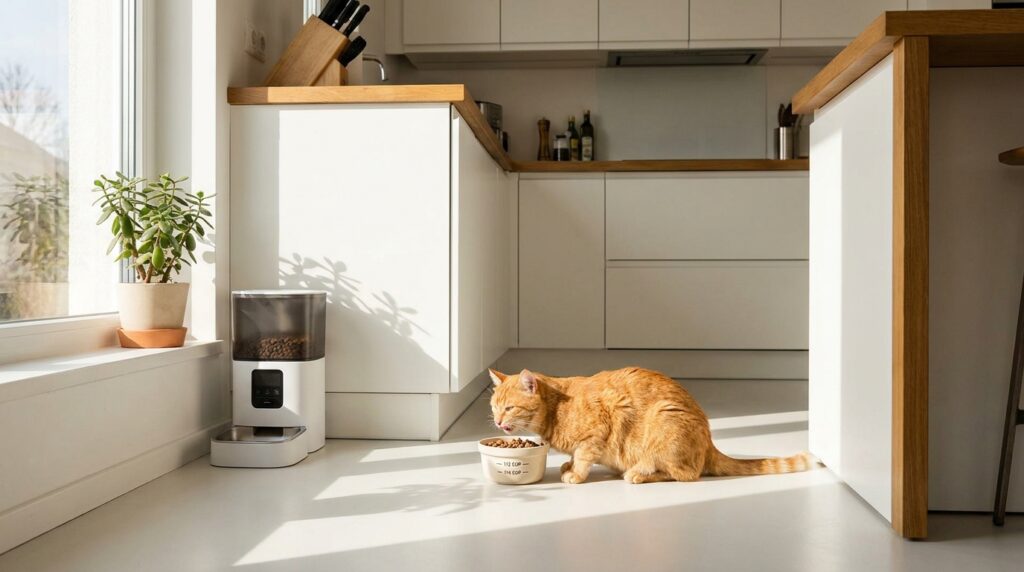
Keep your feeding schedules strict: scheduled meals rather than grazing. I’ve written about portion control with automatic feeders if grazing is the core issue rather than food type.
Where dry food actually wins
Dry food isn’t the villain here. It’s cheaper per calorie, it doesn’t spoil sitting out, and it’s genuinely better for dental health in cats that chew their kibble rather than swallowing it whole (some cats do neither — ask your vet if yours is actually getting a dental benefit from crunching or just inhaling it). For multi-cat households where you can’t supervise every meal, dry food left out overnight is more practical than wet food that goes bad in a few hours.
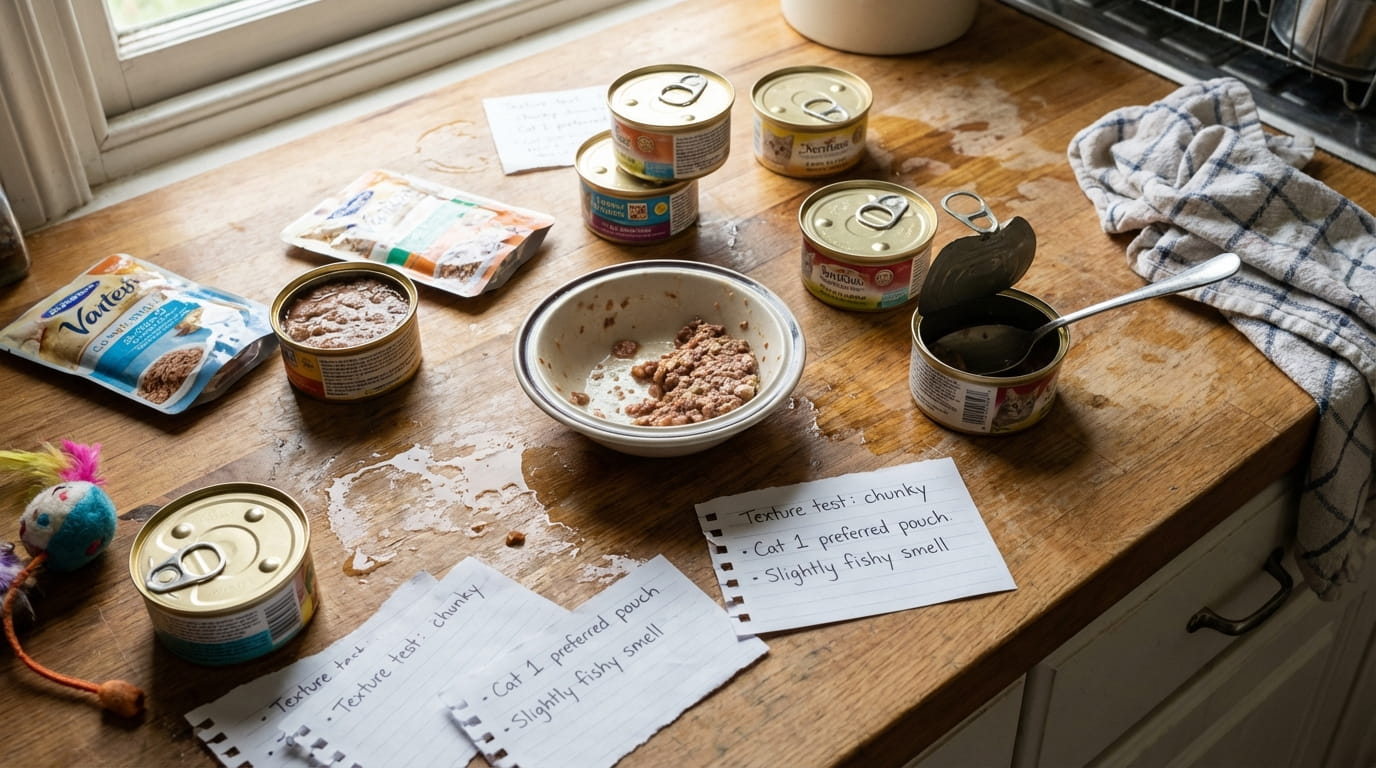
If cost is the deciding factor, dry food is meaningfully cheaper for a full-time diet. A mixed approach, wet food at scheduled meals with a modest amount of dry as a backup or treat, gets most of the hydration and weight-control benefit without the full cost of an all-wet diet.
What I’d actually do
If your cat is young, active, healthy weight, drinks water fine on their own, and you’re mostly asking out of curiosity: don’t overthink it. A quality dry food with occasional wet meals is a reasonable baseline.
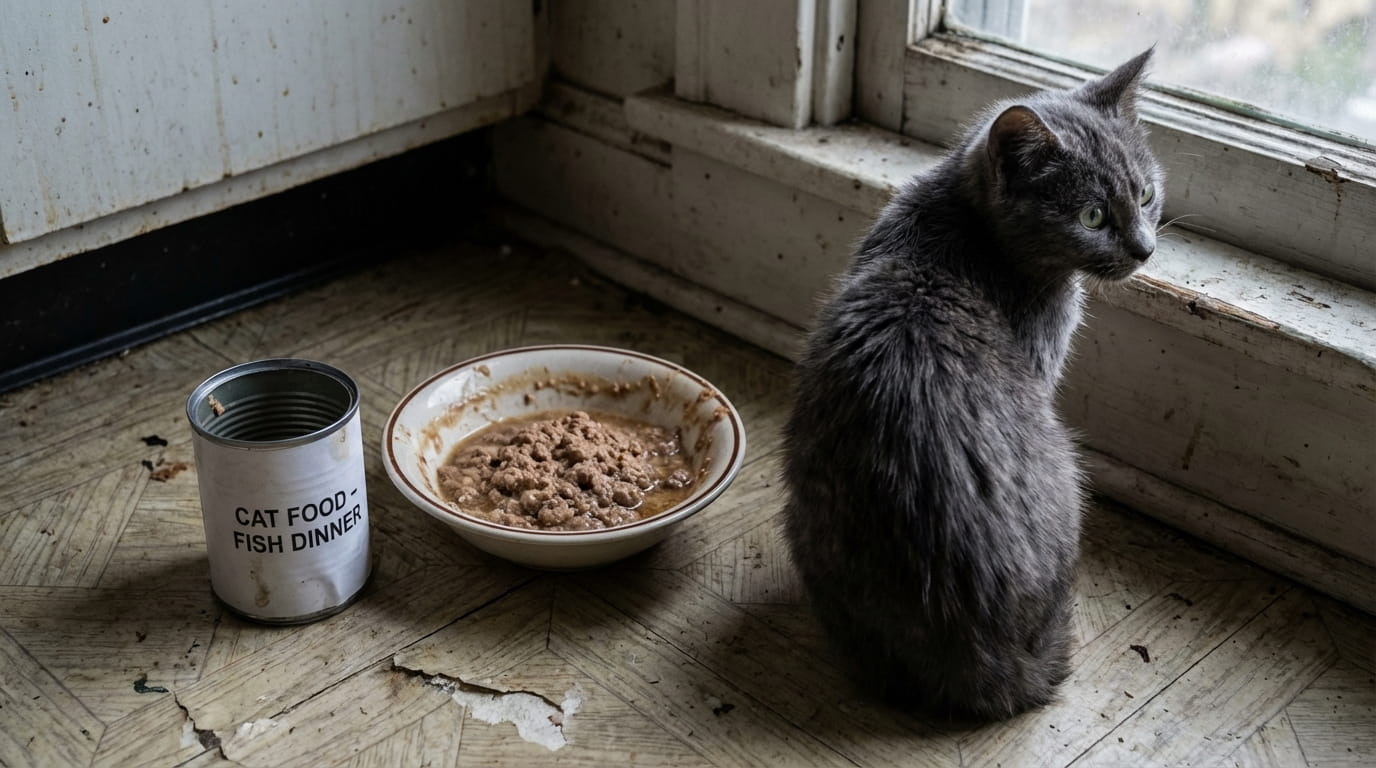
If your cat is overweight, has had a urinary issue before, is older, or barely touches the water bowl: shift the ratio toward wet. You don’t need to go 100%. Even a daily wet meal on top of dry food measurably increases water intake compared to dry alone.
Whatever you land on, the food matters less than the pattern. Free-fed dry all day is the setup most likely to cause problems. Scheduled meals, whatever the ratio, put you back in control of how much your cat actually eats.
Hydration is the Key to Urinary Health
If you’re shifting your cat to more wet food or want to make sure they’re getting enough water, the right tools can make all the difference. Check out my hands-on testing of the best ways to keep your indoor cat hydrated and healthy:
FAQ
Can I switch my cat from dry to wet food overnight?
No. Cats can develop feeding aversions or digestive upset from an abrupt switch. Mix increasing amounts of wet food into the dry over 7-10 days.
Is wet food or dry food better for urinary health?
Wet food is generally better for urinary health specifically, because the added moisture dilutes urine and encourages more frequent urination, which flushes the bladder more often.
Does dry food cause kidney disease in cats?
No single food type causes kidney disease. But chronic mild dehydration from an all-dry diet is considered a contributing stressor on cats that are already prone to kidney or urinary issues, particularly as they age.
How much wet food should an indoor cat eat per day?
This depends on the cat’s weight and the food’s calorie density, but a common starting point for a mixed diet is one 3-oz can per 5-6 lbs of body weight, adjusted based on how much dry food is also being fed. Check with your vet for your cat’s specific needs.
Will my cat refuse to switch food types?
Some will. Cats can imprint on a texture preference early in life, which is part of why introducing both wet and dry food while a cat is still young makes later transitions easier.