By Emma Hartley | Last updated July 30, 2026
An indoor-only cat has a meaningfully lower parasite exposure risk than a cat with outdoor access, but “lower” isn’t “zero.” Understanding indoor cat flea prevention and parasite control sits between two extremes: indoor cats don’t need every product on a clinic shelf, but skipping prevention entirely because a cat “never goes outside” ignores the real ways parasites enter fully indoor homes.
Quick answer: Fleas enter indoor homes via other pets, clothing, or screened windows. Year-round flea prevention is strongly recommended if you have dogs or live in a flea-dense region. Heartworm risk from indoor mosquitoes is lower but fatal if contracted. Intestinal parasite risk is lowest for indoor cats but can occur from ingested houseflies or mice.
Can Indoor-Only Cats Get Fleas?
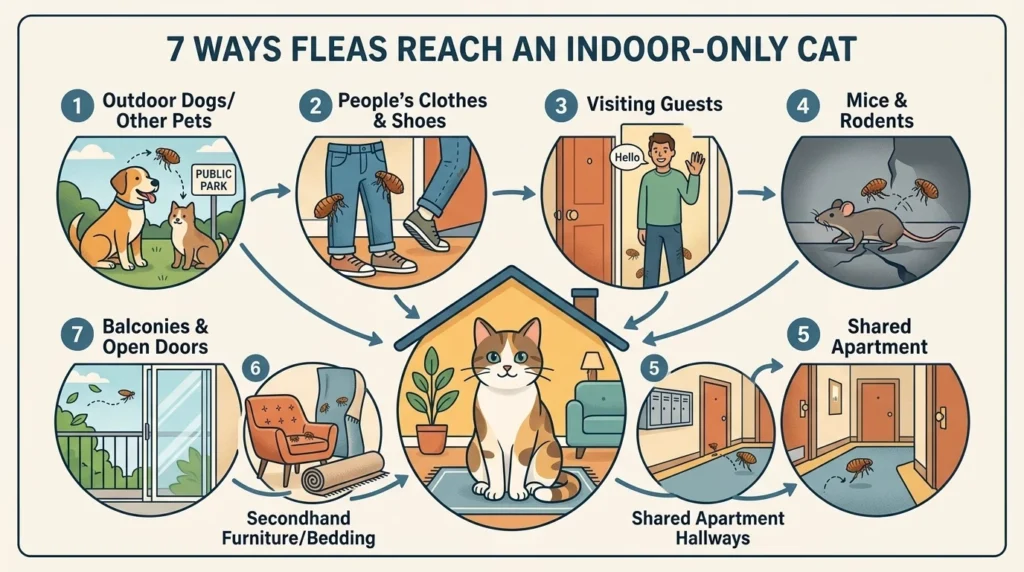
Yes, and fleas are the parasite risk most owners underestimate for strictly indoor cats. Fleas don’t need your cat to roam outdoors to infest your home. Common entry routes include:
- Other household pets: Dogs or indoor-outdoor cats bringing fleas inside after short garden visits.
- Human clothing and footwear: Fleas and flea eggs hitchhike on socks, pant cuffs, or shoes.
- Screens and balconies: Fleas jump through low window screens from passing wildlife or neighborhood pets.
- Rodents or pests: Mice entering walls or living spaces carry fleas and flea larvae.
A single female flea can lay up to 50 eggs per day. According to the Companion Animal Parasite Council (CAPC), indoor flea infestations often multiply rapidly in carpets and furniture before symptoms are noticed on the cat.
Does an Indoor-Only Cat Need Heartworm Prevention?
Heartworm disease is transmitted exclusively by mosquitoes. Because mosquitoes regularly enter homes through open doors or window screens, indoor cats remain at risk. The American Heartworm Society notes that up to 30% of cats diagnosed with heartworm disease are classified as strictly indoor-only pets.
Unlike dogs, there is no approved medical treatment to cure adult heartworms in cats. Feline heartworm infection can cause severe respiratory distress (Heartworm Associated Respiratory Disease) or sudden death, making monthly topical prevention valuable even in indoor environments.

What About Intestinal Parasites in Indoor Cats?
Intestinal parasites (roundworms, hookworms, tapeworms) are less common in indoor cats than outdoor hunters, but exposure still happens through:
- Ingesting houseflies or insects: Flies carry roundworm eggs.
- Catching indoor mice: Rodents act as intermediate hosts for tapeworms.
- Potting soil: Indoor houseplants or balcony soil can harbour microscopic parasite eggs.
- Prior shelter/foster history: Kittens often acquire roundworms from their mother before adoption.
For adopted pets, check our first month with a new cat guide for initial deworming protocols.
Evaluating Prevention Options: What Is Essential vs. Optional?
Not every indoor cat requires a heavy multi-parasite chemical regimen. Work with your vet based on your specific household risk profile:
| Risk Level | Household Situation | Recommended Prevention |
|---|---|---|
| High Risk | Indoor cat living with dogs or in warm/humid flea regions | Year-round broad-spectrum topical (Fleas + Heartworm + Worms) |
| Moderate Risk | Strictly indoor cat in apartment, no dogs, mild climate | Seasonal flea/heartworm topical or targeted summer coverage |
| Low Risk | High-rise studio apartment, no other pets, cold winter climate | Flea prevention as needed + annual fecal health screening |
Compare veterinary expenses and budgeting in our real cost of owning an indoor cat guide.

Best Practices for Applying Topical Flea & Parasite Prevention
If your vet recommends topical parasite treatments:
- Apply at the base of the skull: Part the fur at the back of the neck where the cat cannot lick it off during grooming.
- Never use dog flea products on cats: Permethrin in dog flea treatments is extremely toxic and fatal to cats.
- Avoid cheap grocery store flea collars: Many cause chemical burns or localized hair loss. Stick to vet-prescribed topicals.
- Treat all household pets simultaneously: Treating the cat while leaving a dog untreated allows fleas to continuously re-infest.
For more home safety tips, read our guide on cat-proofing your home environment.
Frequently Asked Questions
Do strictly indoor cats need flea medicine?
Yes, in many households. Fleas hitchhike inside on clothing, shoes, or dogs, establishing home infestations quickly.
Can indoor cats get heartworms from mosquitoes inside the house?
Yes. Up to 30% of heartworm-positive cats are indoor-only pets, as mosquitoes easily enter homes through doors and screens.
How do indoor cats get worms if they don’t go outside?
Indoor cats can contract worms by swallowing infected houseflies, catching indoor mice, or ingesting flea larvae during grooming.
Are dog flea treatments safe for cats?
NO. Dog flea medications often contain permethrin, which is toxic and lethal to cats. Always use products specifically formulated for felines.
How often should an indoor cat be dewormed?
Vets recommend annual or bi-annual fecal examinations during routine checkups, treating only if parasites are detected.
First-hand Experience
We used to skip flea prevention for our indoor tabby Penelope because we lived on the third floor of an apartment building. Last summer, after taking our neighbor’s dog for a walk in the courtyard, we inadvertently carried fleas inside on our socks. Within three weeks, Penelope was scratching constantly and we had to treat the entire apartment. Since then, we maintain a simple topical flea preventative from April through November with zero issues.
Related reading: Full Guide to Indoor Cat Care covers vet care alongside nutrition, litter, environment, and behavior. See also Indoor Cat Vaccination Schedule and Cost of Owning an Indoor Cat.