By Emma Hartley | Last updated July 28, 2026
A kitten proofing checklist and a cat-proofing checklist aren’t the same list with a few extra items. Kittens fit through smaller gaps, chew on things adult cats ignore, and don’t yet have the size or judgment to avoid obvious hazards. The differences that matter most are cords, small objects, open windows, and appliances. Most of it scales back once your cat is full-grown, usually around 12 months, but a few habits are worth keeping for life.
Quick answer: Kitten-proofing is more aggressive and temporary. Cat-proofing is lighter and permanent. A kitten needs cords fully blocked, every small object off the floor, screens on every window, and appliances closed between uses. An adult cat needs cords tidied, breakable items secured, and screens on windows they actually use, since most adult cats have learned what not to chew.
If you only have ten minutes before your kitten comes home, walk your floor at kitten height and remove anything smaller than a golf ball. That single pass prevents more emergency vet visits than any other item on this list.
Kitten-Proofing vs. Cat-Proofing at a Glance
| Risk Area | Kitten (under 1 year) | Adult Cat | Why It Changes |
|---|---|---|---|
| Cords | Fully block or conceal, every room | Tidy and out of the way | Kittens teethe and chew indiscriminately |
| Small objects | Clear the floor completely | Keep obvious hazards away | Kittens mouth-test everything they find |
| Windows | Screens on every window, no exceptions | Screens on regularly used windows | Kittens misjudge height and balance |
| Appliances | Close dryer, dishwasher, oven between uses | Same habit, lower supervision needed | Kittens seek out warm, enclosed spaces |
| Cabinets | Latch anything with chemicals or small parts | Latch chemical storage only | Kittens can wedge into gaps adult cats can’t |
What actually changes between kitten-proofing and cat-proofing?
Three things: size, mouthing behavior, and judgment. A kitten can fit through a gap an adult cat physically can’t, will chew or swallow things an adult cat has learned to leave alone, and hasn’t yet built the spatial awareness to avoid a fall or a closing door. Cat-proofing is mostly about tidiness. Kitten-proofing is about removing hazards entirely, because a kitten will find the one thing you missed.
Why are cords more dangerous for kittens than adult cats?
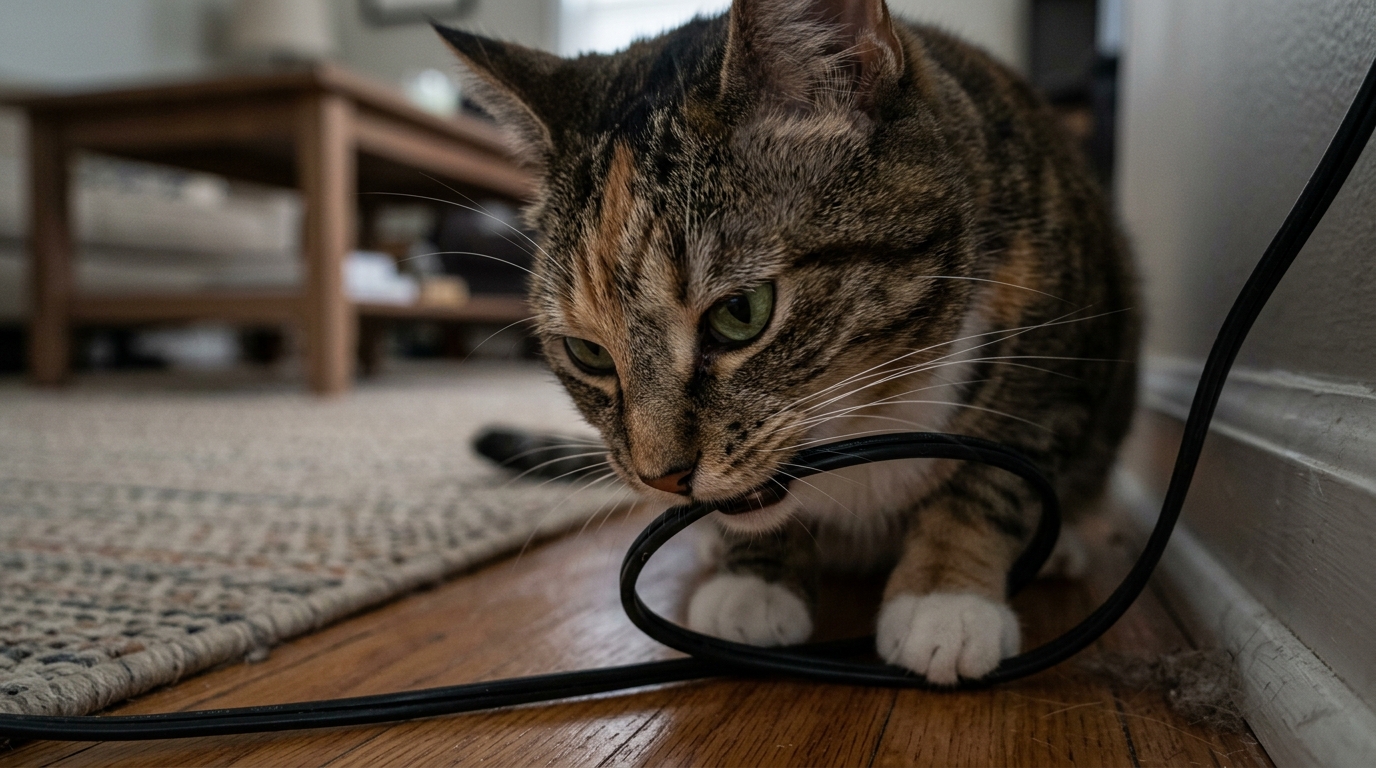
Kittens are still teething through roughly six months of age, and chewing on a cord during that window carries a real risk of electrical burns or a chewed-through live wire. Adult cats occasionally chew cords out of boredom or texture preference, but it’s far less common once teething ends.
For a kitten, cords need to be fully hidden behind furniture, run through cord protectors, or unplugged when not in use, in every room the kitten has access to. For an adult cat, tucking cords out of paw’s reach and bittering any the cat has shown interest in is usually enough.
How do I kitten-proof small objects and choking hazards?
Get on the floor at kitten height and look for anything under about 1.5 inches: hair ties, bottle caps, coins, small toy parts, pen caps, rubber bands. Kittens investigate new objects with their mouths the way toddlers do, and a swallowed object can mean an emergency vet visit or surgery.
Adult cats still knock things off counters and occasionally chew on packaging, but they’re far less likely to actually swallow a small object once they’re past the exploratory kitten stage. The floor sweep matters most in the first few weeks and can relax once your kitten has settled in and shown you what does and doesn’t interest them.
Do open windows need different precautions for a kitten?

Yes. Kittens misjudge distance and balance more than adult cats do, and a fall from even a second-story window screen that isn’t secure can cause serious injury, a phenomenon vets sometimes call high-rise syndrome even though it can happen from lower heights too. Every window a kitten can reach needs a secure, well-fitted screen, not just the ones you think they’d use.
Adult cats are more coordinated and more cautious around edges, but a torn or poorly fitted screen is still a real risk at any age. This is one of the few items on this list that doesn’t fully relax with maturity: check screens for tears or gaps regularly, kitten or not.
Which appliances are the biggest risk to a new kitten?
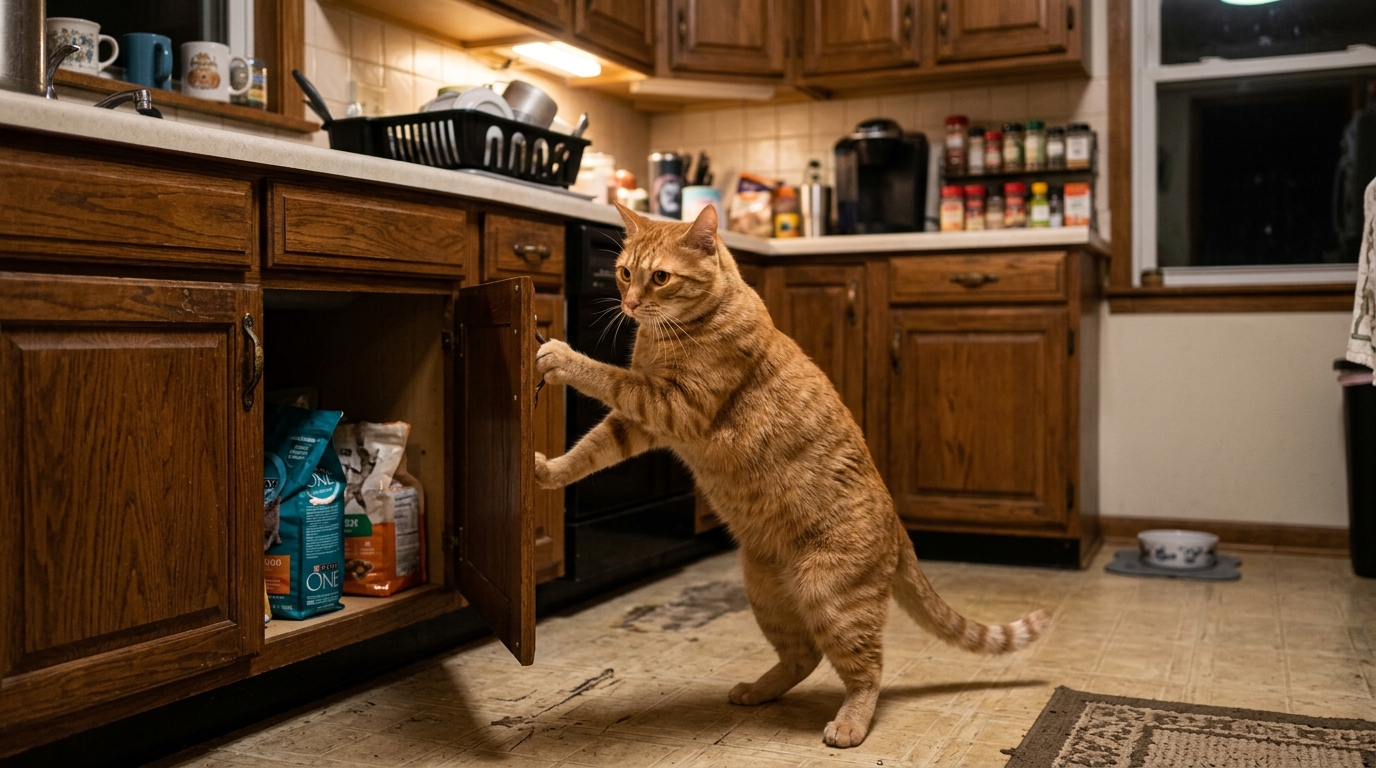
Dryers, washing machines, dishwashers, and ovens. Kittens seek out warm, dark, enclosed spaces, and an open dryer or a warm dishwasher looks exactly like an inviting hiding spot to a small cat. Always check inside before starting a cycle, and get in the habit of closing appliance doors the moment you’re not actively using them.
This is a habit worth keeping permanently. Cat deaths and injuries from dryers happen to adult cats too, not just kittens, so this is one precaution that shouldn’t get relaxed as your cat grows up.
When can I stop kitten-proofing and switch to standard cat-proofing?
Most cats reach physical and behavioral maturity between 12 and 18 months, and that’s a reasonable point to relax the most intensive precautions: constant floor sweeps, blocking every cord, and latching every low cabinet. Watch your specific cat rather than the calendar. Some cats stay mouthy or curious well past a year, especially if they’re still teething past the typical window or came from a background with less enrichment early on.
Two precautions are worth keeping for the cat’s whole life regardless of age: appliance checks before every cycle, and window screen maintenance.
Frequently Asked Questions
At what age can I stop kitten-proofing my house?
Most cats are considered behaviorally mature between 12 and 18 months, which is a reasonable point to relax most kitten-specific precautions. Appliance checks and window screen maintenance are worth keeping at any age.
What household items are most dangerous to kittens specifically?
Cords during the teething period (up to roughly six months), small objects under 1.5 inches that fit inside a mouth, and unsecured window screens. These carry higher risk for kittens than for adult cats due to chewing behavior and smaller body size.
Do I need to kitten-proof every room or just where the kitten sleeps?
Every room the kitten has access to. Kittens explore the whole house within days of arriving, and restricting proofing to one room only shifts the risk to whichever room you missed.
Are cat-proofing precautions ever unnecessary for adult cats?
No, but the intensity changes. An adult cat still needs tidy cords, secured window screens, and closed appliance doors. It’s the constant floor sweeps and full latching of every low cabinet that typically become unnecessary once a cat matures.
Is kitten-proofing different for an apartment versus a house?
The core hazards (cords, small objects, windows, appliances) are the same in both. Apartments often add balcony and higher-floor window risk, while houses may add garage chemicals and a wider range of accessible rooms to check.
Related reading: Check out The Ultimate Indoor Cat Care Guide, our complete pillar guide covering nutrition, litter, vet care, environment, grooming, and behavior. For plant-specific hazards, see our guide on Safe Indoor Plants for Cats (and 6 to Rip Out Today), which covers a different set of risks than the ones on this page.