This post contains affiliate links. We may earn a commission at no extra cost to you if you purchase through these links.
A note before this one: plant toxicity ranges from mild stomach upset to genuinely life-threatening depending on the species. This post is a starting reference, not a substitute for checking with the ASPCA toxic and non-toxic plants database or your vet if you’re unsure about a specific plant, or calling emergency poison control immediately if your cat has already eaten something you’re unsure about.
Quick answer: lilies are the most urgent plant to remove from any home with cats — even small amounts of pollen or leaf can cause fatal kidney failure. Beyond that, several common houseplants (sago palm, dieffenbachia, English ivy, aloe vera, pothos, and philodendron) range from mild to serious in toxicity and are worth swapping out. Safe, cat-friendly alternatives exist for almost every aesthetic — you don’t have to choose between houseplants and an indoor cat.
Why I actually checked this instead of assuming
I’d had a pothos hanging in my kitchen for over a year before I looked up whether it was cat-safe. Beans had never shown any interest in it, so I’d filed it under “fine” without ever confirming that. It’s not fine — pothos is toxic to cats, mild but real, and the only reason nothing had happened was that he hadn’t gotten curious about it yet. That’s a distinction worth sitting with: “my cat hasn’t touched it” and “it’s safe” are not the same claim, and a lot of plant safety advice online blurs the two.

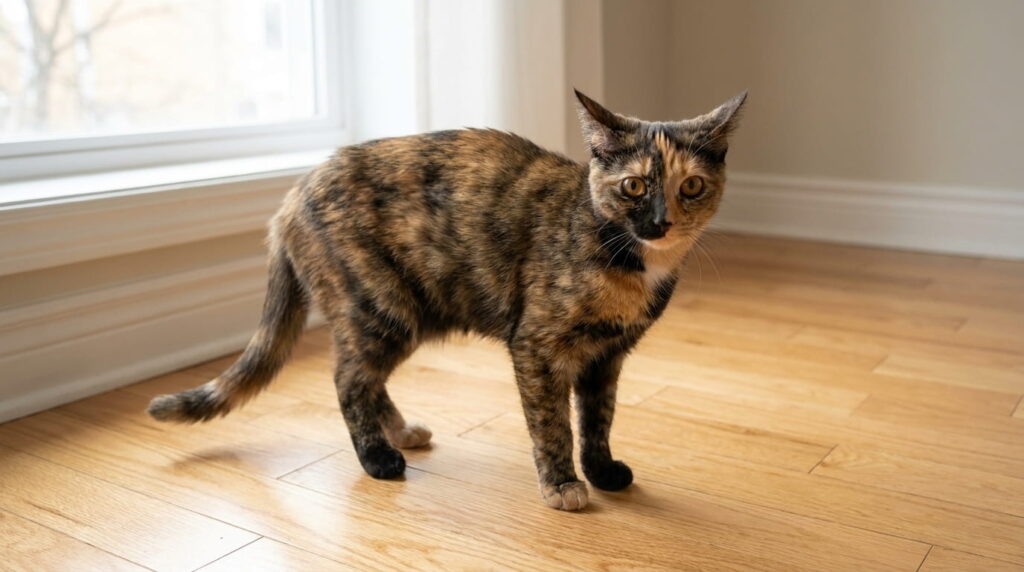
A typical apartment setup. Even if your cat has ignored a plant for years, a single curious nibble can be dangerous.
In this guide, we’ll cover:
- The one to remove immediately: lilies
- 5 more common toxic houseplants
- How toxicity severity actually varies
- Cat-safe alternatives that still look good
- Signs of plant poisoning to watch for
- What to do if your cat eats a toxic plant
- FAQ
The one to remove immediately: lilies
This gets its own section because the severity is genuinely different from everything else on this list. True lilies — Easter lilies, tiger lilies, Asiatic and Oriental lilies, and daylilies — are acutely toxic to cats in a way most other houseplants aren’t. Every part of the plant is dangerous: petals, leaves, stem, and even the pollen that brushes off onto a cat’s fur during normal contact and gets ingested during grooming. Even drinking water from a vase that held cut lilies has caused kidney failure in documented cases.
If you have lilies in the house — cut flowers included, not just potted plants — the safest move is removing them entirely rather than trying to keep them out of reach. Cats get access to things owners don’t expect.
5 more common toxic houseplants
- Sago palm: Every part is toxic, but the seeds are especially concentrated and dangerous. This is one of the more severe plants on any toxic list — organ damage is a real risk, not just stomach upset.
- Dieffenbachia (dumb cane): Causes oral irritation, drooling, and swelling if chewed, due to calcium oxalate crystals in the sap. Rarely fatal on its own, but genuinely unpleasant and worth avoiding.
- English ivy: Causes vomiting, diarrhea, and drooling if ingested in enough quantity. Common in hanging baskets and outdoor-facing windows, which puts it within easy reach for a cat that likes elevated perches.
- Aloe vera: This one surprises people, since it’s often positioned as a “natural” or health-focused plant. The gel itself is generally fine, but the plant’s outer layer contains compounds that cause vomiting and diarrhea if chewed.
- Pothos and philodendron: Both extremely common as low-maintenance houseplants, both mild-to-moderate toxic due to calcium oxalate crystals — oral irritation, drooling, difficulty swallowing if a cat chews on the leaves. To prevent chewing on leaves, a pet-safe bitter spray can serve as a temporary deterrent:
How toxicity severity actually varies
Not every plant on a “toxic to cats” list carries the same risk, and treating them all identically undersells how serious lilies specifically are compared to something like pothos. A useful way to think about it:
Severe: Remove entirely, don’t try to manage around it. Lilies, sago palm. The risk-to-benefit ratio doesn’t favor keeping these anywhere near a cat, regardless of placement.
Moderate: Genuinely uncomfortable, rarely life-threatening. Dieffenbachia, aloe vera, English ivy in large quantities. Worth avoiding or placing well out of reach, but an accidental nibble is a vet call, not typically an emergency.
Mild: Irritating rather than dangerous. Pothos, philodendron. A cat chewing a leaf will likely have a bad time — drooling, mouth irritation — without it being a serious medical event, though it’s still worth discouraging and worth a vet call if symptoms seem more than minor. Cats experiencing mouth pain or irritation may lick themselves excessively as a soothing mechanism; see our guide on compulsive self-soothing behaviors for details.
This distinction matters because “toxic to cats” as a blanket label leads people to either panic over a mild irritant or, worse, underestimate something genuinely dangerous because it’s filed under the same broad warning as something mild.
Cat-safe alternatives that still look good
You don’t have to give up houseplants entirely — there’s a solid list of genuinely safe options that cover most of the aesthetic ground the toxic ones do:
- Spider plant: Non-toxic, easy to grow, and cats often enjoy batting at the long leaves
- Boston fern: Safe, lush, works well in the same hanging-basket spots ivy usually occupies
- Calathea (prayer plant): Non-toxic and visually similar to some of the more decorative toxic options
- Areca palm: A safe substitute for the sago palm if you want that palm aesthetic
- Cat grass (wheatgrass): Not just safe but intentionally cat-friendly, giving cats a plant they’re allowed to chew
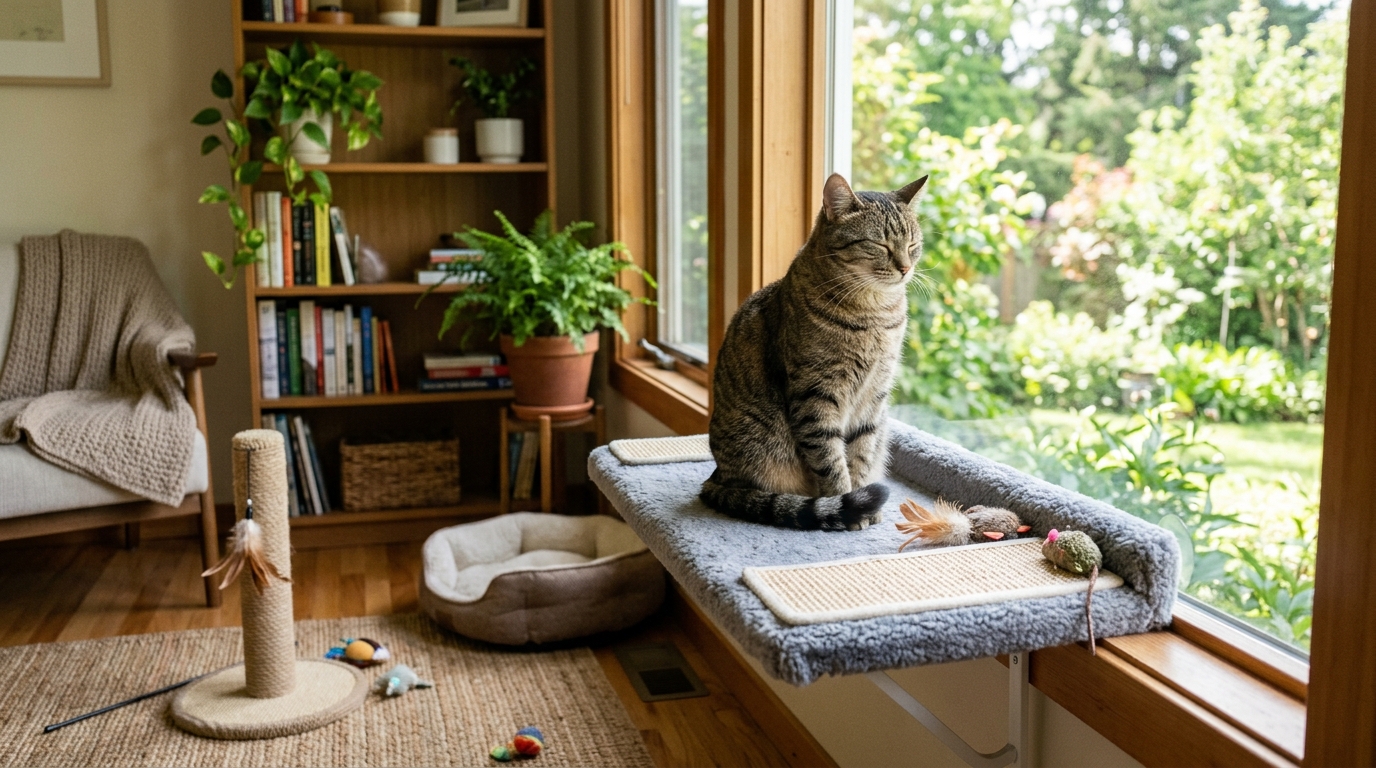
Providing safe alternatives like spider plants or cat grass satisfies their chewing urge without risk.
Swapping a toxic plant for a safe near-equivalent tends to work better long-term than trying to keep a toxic plant permanently out of reach. To give your cat their own green garden, an organic self-grow kit and a stable grass planter are perfect:
Signs of plant poisoning to watch for
Symptoms vary by plant and severity, but general signs worth watching for after any suspected ingestion:
- Drooling or pawing at the mouth
- Vomiting or diarrhea
- Lethargy or unusual hiding
- Loss of appetite
- Difficulty breathing or swallowing (more urgent)
- Changes in urination — increased, decreased, or straining (particularly relevant for lily exposure specifically)
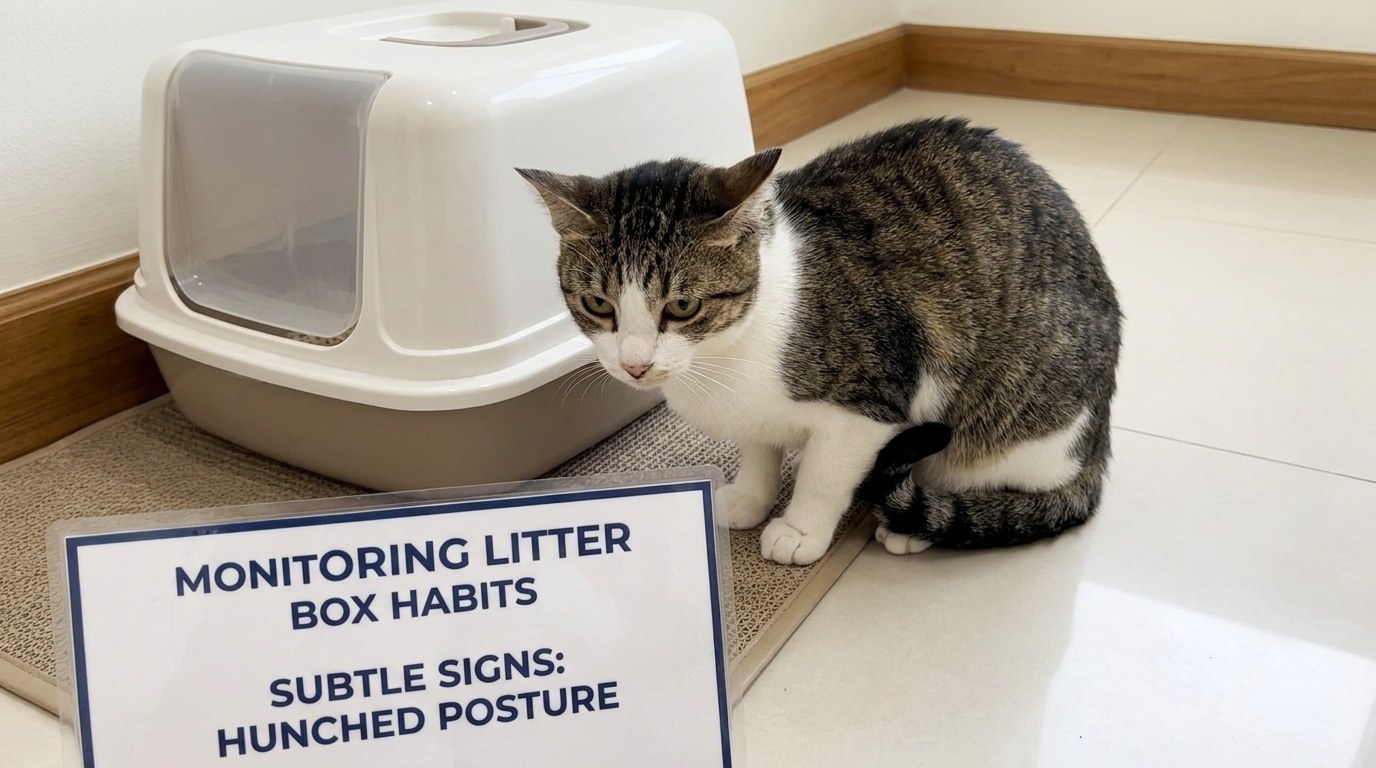
A tense, hunched posture or sudden lethargy can signal internal distress from plant ingestion.
The severity and speed of onset depend heavily on which plant and how much was ingested, which is part of why identifying the specific plant matters if you’re calling a vet or poison control. For a comprehensive overview of general feline health metrics, refer to our feline health and wellness guide and check out general indoor cat care guidelines.
What to do if your cat eats a toxic plant
If you catch it happening or suspect it’s happened, don’t wait to see if symptoms develop before acting, especially with anything on the severe end of the list. Remove any remaining plant material from your cat’s reach, note which plant it was (a photo helps if you’re not certain of the name), and call your vet or an animal poison control line right away.
The ASPCA Animal Poison Control Center and the Pet Poison Helpline both operate for exactly this situation — a call costs less time than waiting to see what happens, and with something like lily exposure, early treatment makes a real difference in outcome.
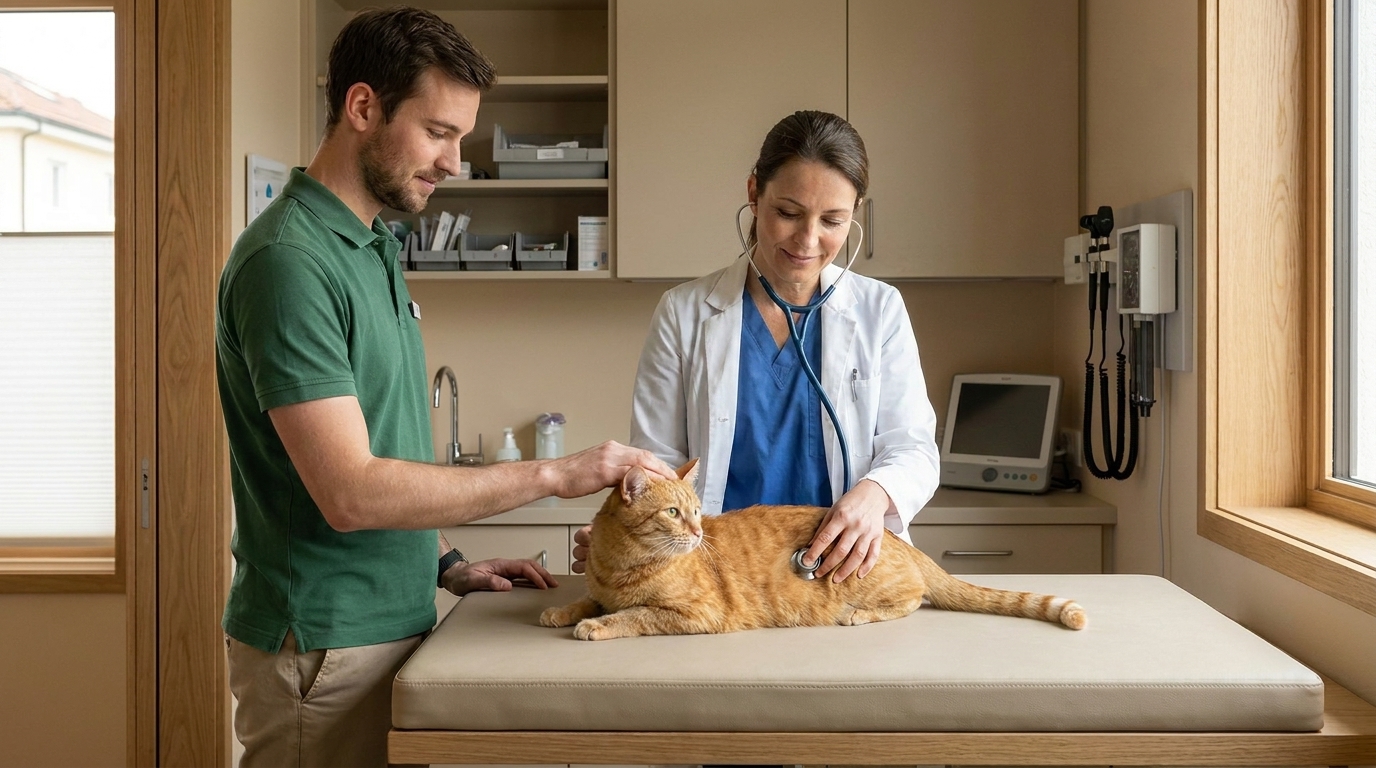
Early intervention is key. If you catch your cat eating a toxic plant, get them to a vet clinic right away.
Don’t try to induce vomiting at home without being told to by a vet or poison control first — for some substances this helps, for others it can make things worse, and it’s not a call to make without guidance.
FAQ
Are all lilies dangerous, or just certain types?
True lilies (Lilium and Hemerocallis species — Easter, tiger, Asiatic, Oriental, and daylilies) carry the severe kidney-failure risk. Other plants with “lily” in the common name, like peace lily or lily of the valley, have different toxicity profiles and different risks — peace lily is a milder oral irritant, lily of the valley is cardiac-toxic and serious in its own right. The common name alone isn’t a reliable guide; the specific plant matters.
Is it enough to just keep toxic plants on a high shelf?
Not reliably. Cats climb, jump, and access places owners consistently underestimate, and even a small amount of pollen transfer (as with lilies) doesn’t require direct plant contact to cause a problem. Removal is the more reliable approach for anything on the severe end of the spectrum.
Do cats instinctively avoid toxic plants?
No — this is a common assumption that isn’t reliably true. Cats chew on plants out of curiosity, boredom, or texture interest, with no built-in ability to distinguish safe from toxic species.
What should I do if I’m not sure what plant my cat ate?
A photo of the plant is the most useful thing to bring to a vet or poison control call — identification changes the urgency and treatment approach significantly.
Are cut flowers as risky as potted plants?
Yes, and sometimes people don’t think to apply the same caution to a bouquet that they would to a houseplant. Lilies in a cut arrangement carry the same severe risk as a potted lily, including from the vase water.
If you’ve had a close call with a plant you didn’t realize was a problem, I’d like to hear which one — it’s usually not the plant people expect going in.