This post contains affiliate links. We may earn a commission at no extra cost to you if you purchase through these links.
A note before this one: hairball frequency and vomiting patterns can overlap with several medical conditions that need a vet to actually diagnose. This post covers what’s generally considered normal versus concerning, but any real change in frequency or a cat that seems unwell alongside it should go to a vet rather than be managed at home.
Quick answer: an occasional hairball — roughly once every week or two for a normal-shedding cat — is generally considered within the range of typical. More than once a week, or any sudden increase from your cat’s usual pattern, is worth mentioning to a vet, since frequent hairballs can point to excessive grooming, a digestive issue, or an underlying condition rather than just being “a cat thing.”
Why I used to think more hairballs just meant more shedding
For the first year I had Beans, I assumed hairball frequency was basically a coat-length problem — short-haired cat, occasional hairball, nothing to think about. It wasn’t until his frequency roughly doubled over a couple of months, with no obvious change in shedding, that I actually looked into what “normal” is supposed to mean here, rather than just accepting whatever pattern I was seeing as baseline.
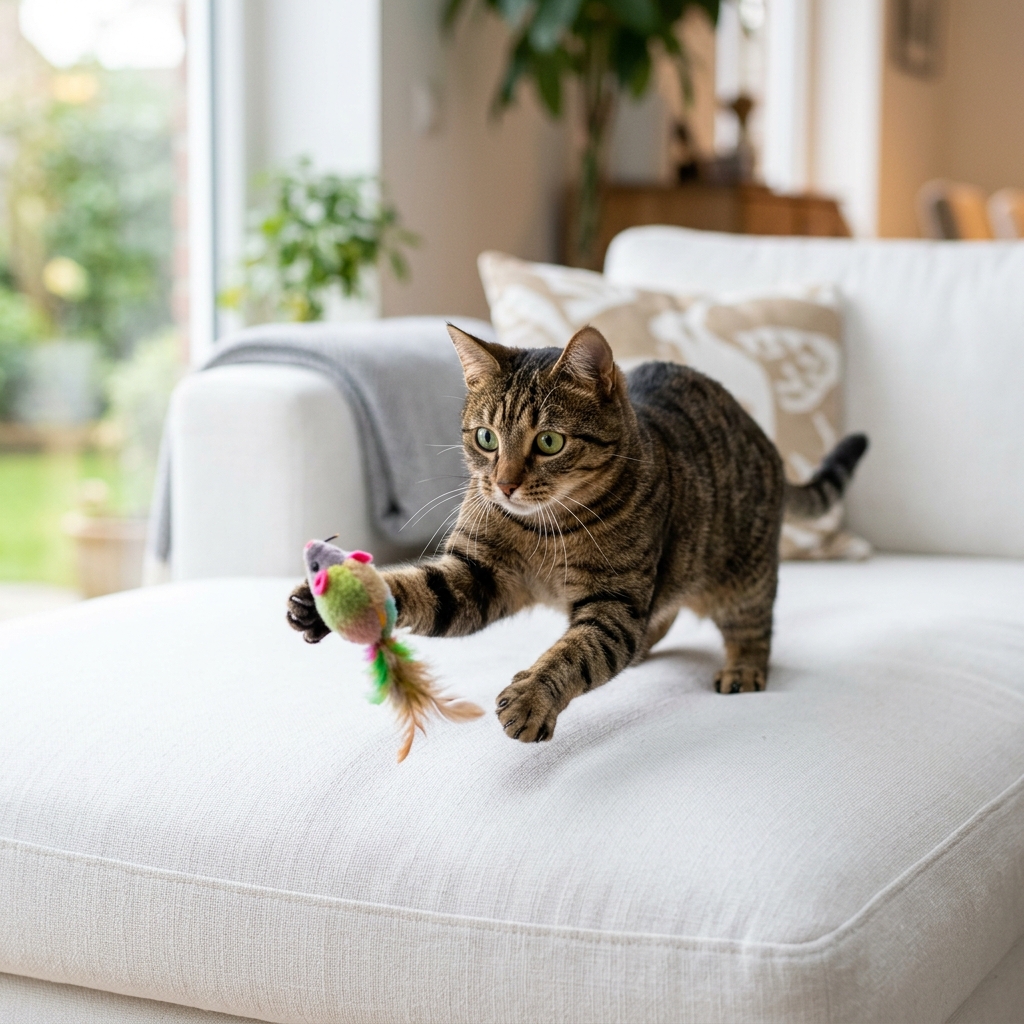
Frequent hairballs are often a symptom of underlying digestion or grooming shifts, not just standard shedding.
Turns out “cats just get hairballs” is one of those things everyone repeats without much precision behind it. There’s an actual range considered typical, and going outside that range is a signal worth paying attention to, not background noise.
In this guide, we’ll cover:
- What counts as normal frequency
- Why hairballs happen at all
- When frequency signals a problem
- Reducing hairballs at home
- When to see a vet
- FAQ
What counts as normal frequency
Most sources — vets included — put “normal” somewhere around one hairball every 1 to 2 weeks for an average shorthaired cat with typical grooming habits. Long-haired breeds tend to run somewhat more frequent simply due to more fur being ingested during normal self-grooming, so their baseline sits a bit higher without it being a red flag on its own.
The actual number matters less than the pattern for your specific cat. A cat that’s reliably had one hairball every 10 days for years and continues at that rate isn’t showing you anything new. A cat whose frequency changes — either direction, but especially an increase — is the one worth paying closer attention to, because a change from an established baseline is a more reliable signal than a raw number compared against a general guideline.
Why hairballs happen at all
Cats groom themselves constantly, and loose fur gets swallowed in the process as a completely normal side effect. Most of that fur passes through the digestive tract without issue. What becomes a hairball is the portion that doesn’t pass through cleanly — it accumulates in the stomach, mixes with digestive fluid, and eventually gets brought back up rather than continuing through the system.
This is a normal enough process that it’s not inherently a problem. What changes the picture is frequency and volume relative to your cat’s baseline, along with what else is happening alongside it.
When frequency signals a problem
A few patterns that move hairballs from “normal cat thing” to “worth investigating”:
- A real increase from your cat’s established baseline: Not just occasionally more or less — a sustained shift that holds for a couple of weeks or more rather than one unusual week.
- Vomiting that isn’t producing an actual hairball: Retching or vomiting attempts without anything coming up, or bringing up food or liquid rather than a hairball, points toward something other than typical hairball clearing and is worth a vet visit regardless of frequency.
- Accompanying symptoms: Appetite changes, lethargy, weight loss, or a change in litter box habits alongside increased hairballs suggests something broader than a grooming or fur-passage issue.
- Straining or apparent difficulty during the process: Occasional retching before a hairball comes up is typical. Repeated, prolonged straining, or a cat that seems distressed by the process, is a different situation.
This is also where increased grooming itself comes into the picture — if a cat is grooming more than usual for any reason, stress-related or medical, more ingested fur naturally leads to more hairballs as a downstream effect. If you suspect your cat is licking more than normal, check out our guide on overgrooming behavior to identify triggers.
Reducing hairballs at home
For hairball frequency that’s within a generally normal range but you’d like to reduce anyway, a few things that actually address the underlying cause rather than just masking symptoms:
Regular brushing: This is the highest-impact change available, and it works by removing loose fur before your cat ingests it during self-grooming. Short-haired cats benefit from once or twice weekly brushing; long-haired cats do better with more frequent sessions. Using a highly rated deshedding brush can make a massive difference. You can read our reviews of tested cat brushes to find the best match:
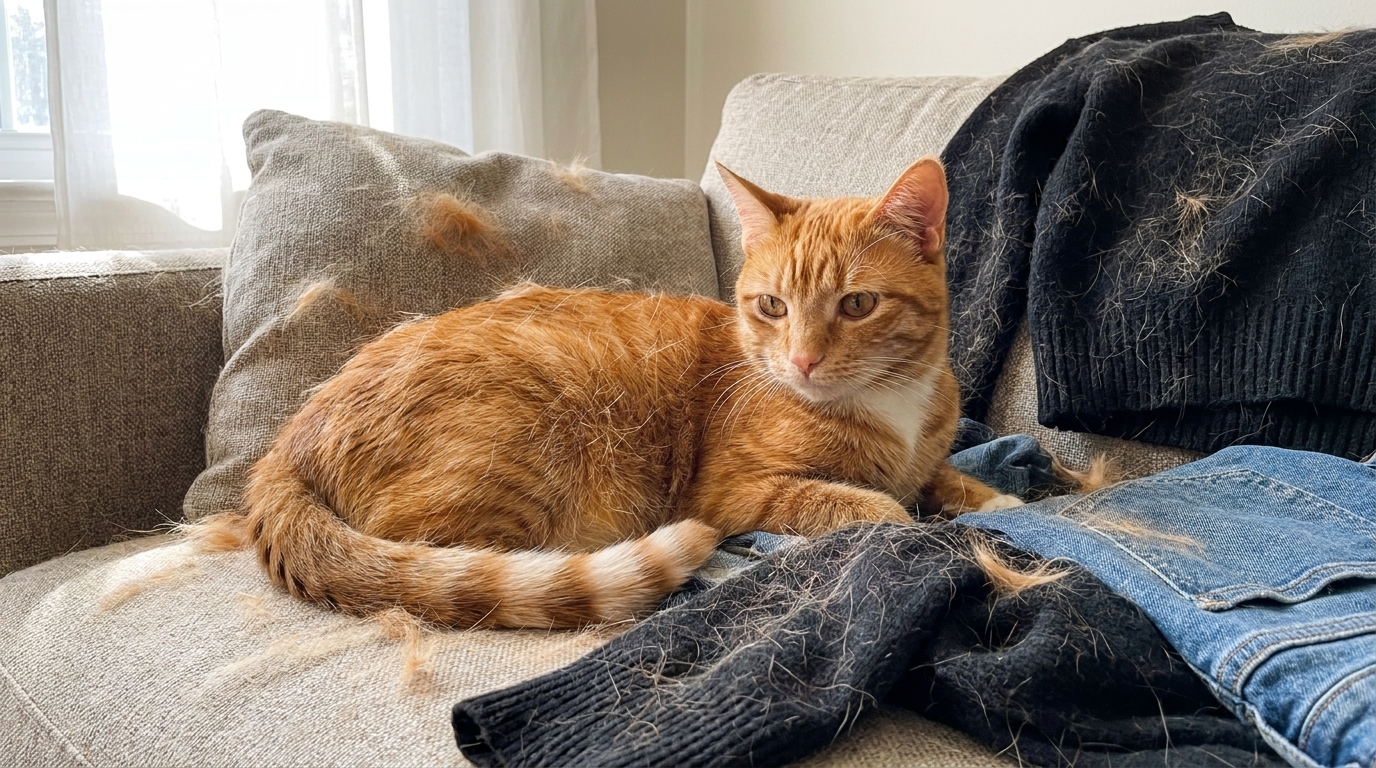
The amount of loose hair a deshedding tool removes, which otherwise would end up ingested.
Diet with adequate fiber and moisture: Wet food generally supports smoother digestive transit than dry food. Some diets are specifically formulated with hairball-control fiber blends, which help lubricate the digestive tract and sweep fur through safely:
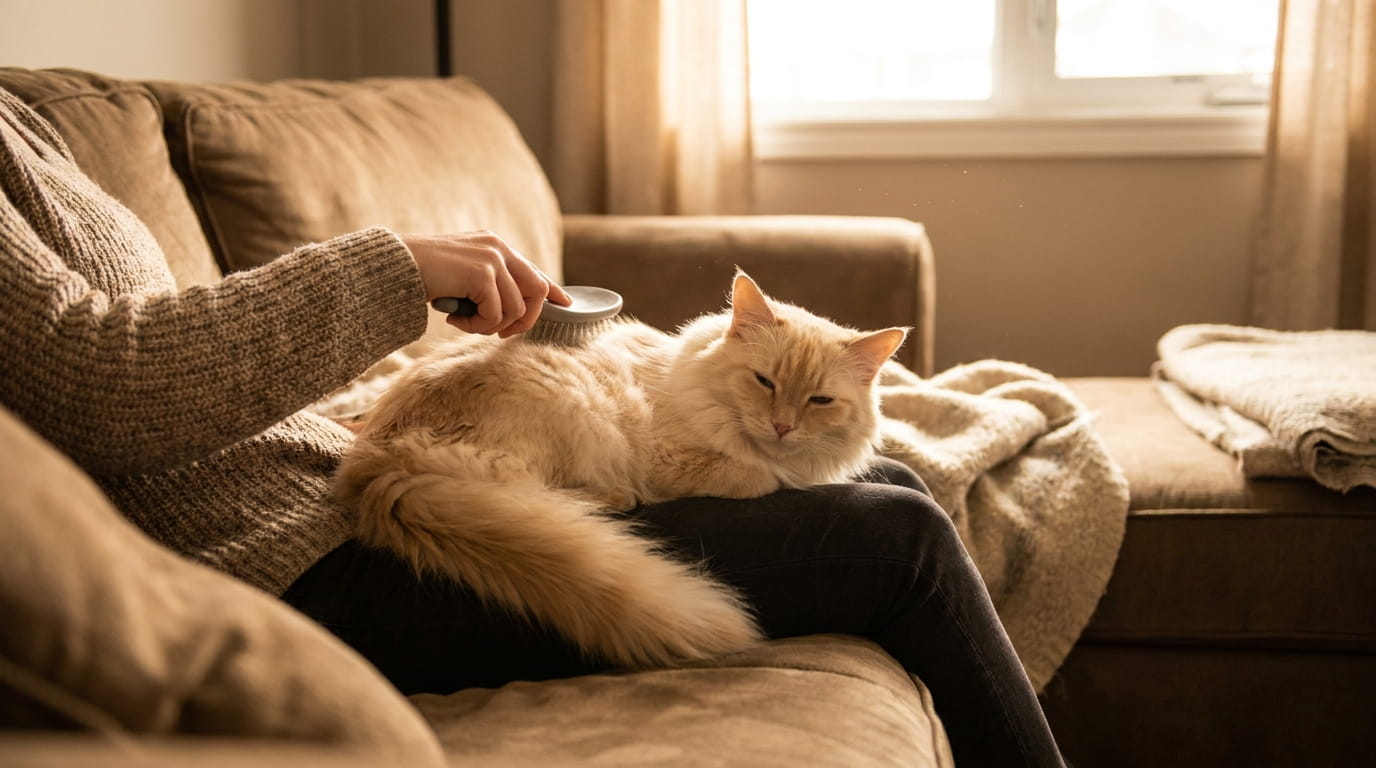
Making brushing a relaxing bonding activity helps maintain coat health and prevents hair build-up.
Hairball-specific treats or supplements: Petroleum-based hairball remedies can help lubricate the digestive tract. They’re meant for occasional use rather than a daily default:
When to see a vet
A few situations that move this from home management to a vet visit:
- A clear, sustained increase in frequency from your cat’s normal baseline
- Repeated vomiting or retching without producing an actual hairball
- Any signs of straining, distress, or apparent pain during the process
- Hairballs paired with appetite loss, lethargy, weight changes, or altered litter box habits
- A hairball-producing episode that seems unusually prolonged or difficult
None of these mean something is definitely seriously wrong — a lot of increased-frequency situations resolve with something straightforward like a diet or grooming adjustment. But they’re the signals that make “wait and see” the wrong call. To understand general care and health, read our feline health guidelines. For veterinary diagnosis steps, refer to the Cornell Feline Health Center guide to hairballs.
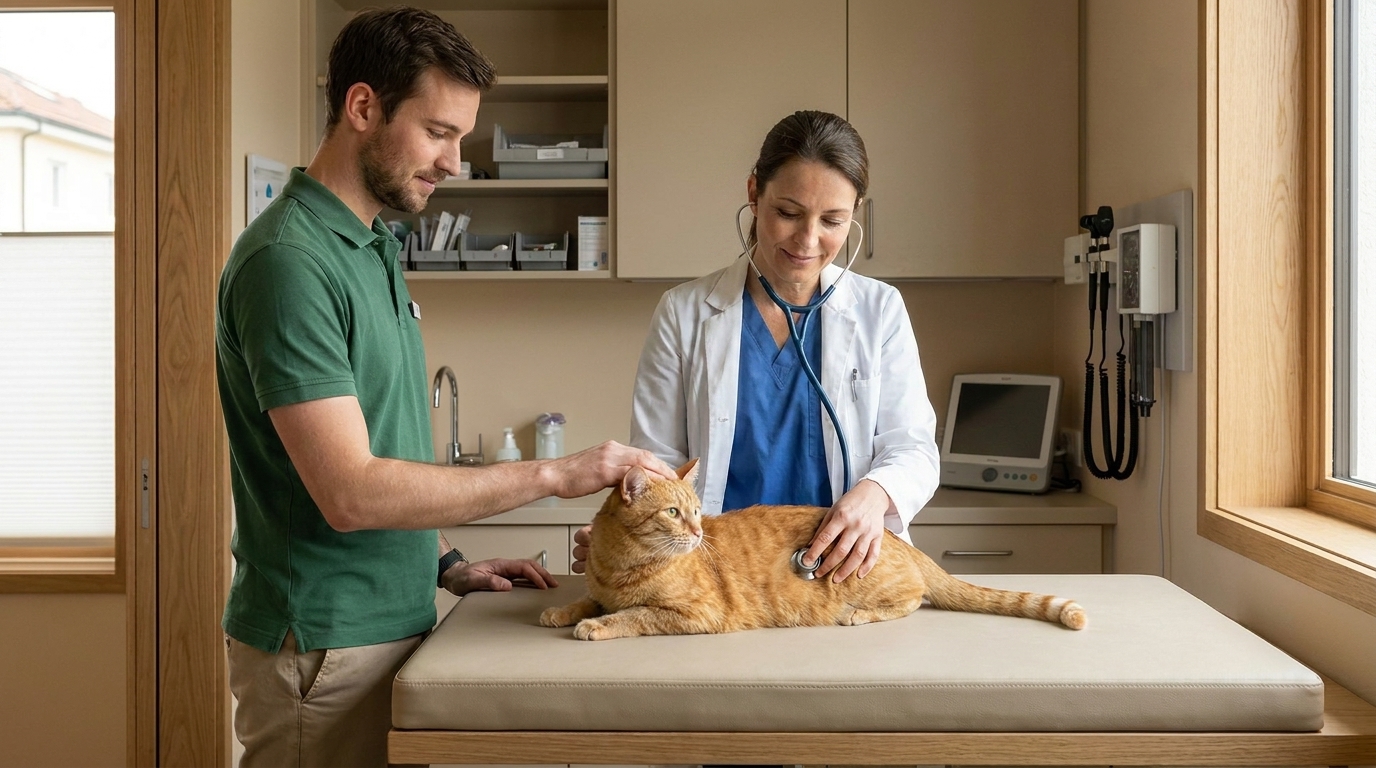
A vet examination can check for gastrointestinal or skin issues driving excessive hair ingestion.
FAQ
How many hairballs per week is too many?
More than one a week, or any noticeable increase from your specific cat’s baseline, is generally the point where it’s worth mentioning at a vet visit rather than assuming it’s normal variation.
Do certain cat breeds get more hairballs than others?
Long-haired breeds tend to run higher simply due to more fur volume during normal grooming, so a somewhat higher baseline in those breeds isn’t automatically concerning the way the same frequency would be in a short-haired cat.
Can hairball frequency change with age?
Yes — older cats sometimes groom differently, and changes in digestive function with age can affect how efficiently fur passes through, so a shift in an older cat’s pattern is still worth tracking against their own baseline.
Are hairball-control cat foods actually effective?
They can help as one part of an overall approach, generally through added fiber that supports fur passage through the digestive tract, but they work best alongside regular brushing.
Is it normal for a cat to never get hairballs?
Yes, some cats rarely or never produce visible hairballs, particularly if fur reliably passes through the digestive tract rather than accumulating. This isn’t a concern on its own.
If your cat’s had a noticeable shift in hairball frequency and you traced it back to something specific — diet, grooming routine, stress — I’d be interested to hear what it turned out to be.