This post contains affiliate links. We may earn a commission at no extra cost to you if you purchase through these links.
A note before this one: overgrooming can have medical causes that look identical to stress-related causes from the outside. This post covers how to tell the difference, but a bald patch that’s new, spreading, or paired with other symptoms should go to a vet before you try to fix it at home.
Quick answer: overgrooming shows up as thinning fur or bald patches, most often on the belly, inner legs, or flanks, and it splits into two broad causes — behavioral (stress, anxiety, boredom) and medical (allergies, parasites, pain, thyroid issues). The location and pattern of the hair loss are your best clues, but ruling out medical causes first is the right order to do this in, not the last resort.
Why I almost missed this with my own cat
Miso had a bald strip along her inner thigh for about three weeks before I really registered it as a problem rather than just “shedding weird.” Cats groom constantly — it’s one of the most normal things they do, from routine coat care to social bonding (see why cats lick their owners) — so a little extra grooming doesn’t set off alarms the way a limp or vomiting would. That’s exactly what makes overgrooming easy to miss until it’s already progressed.
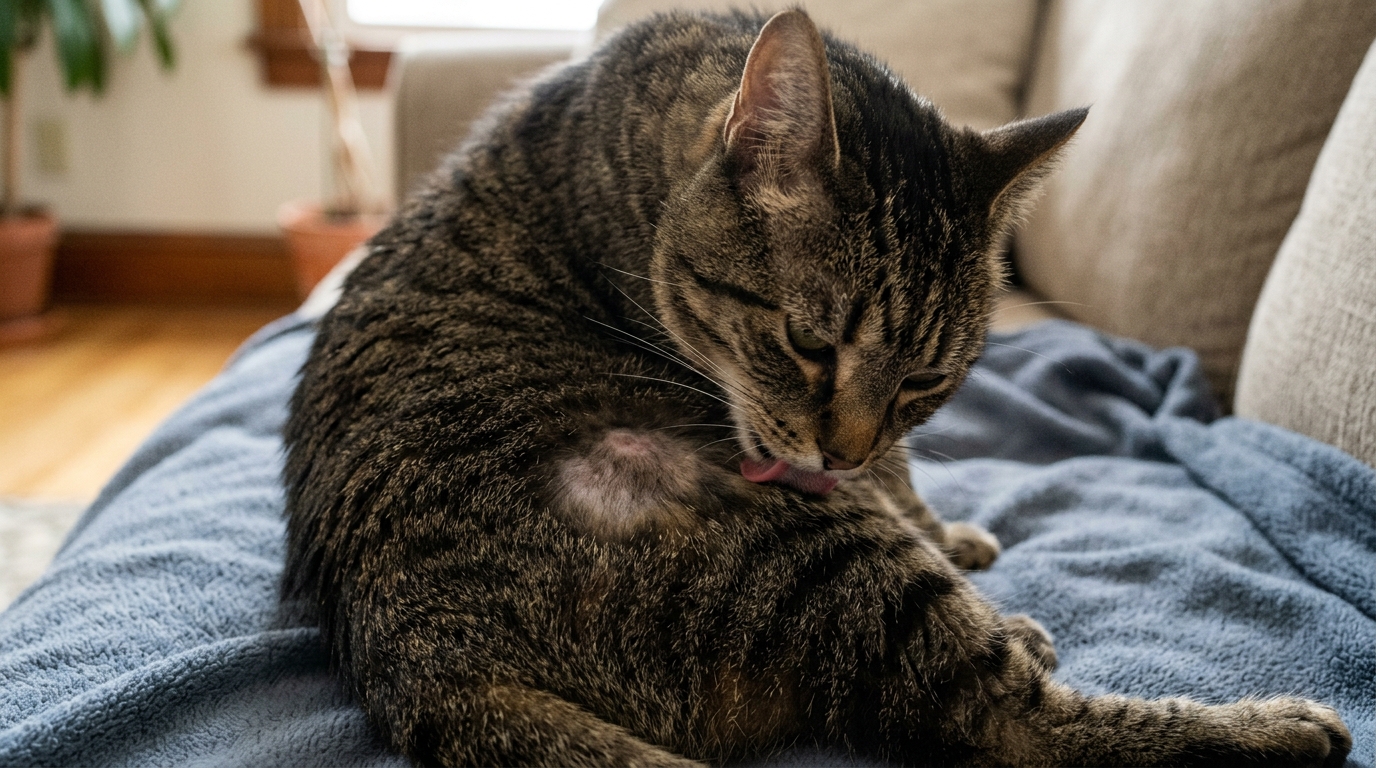
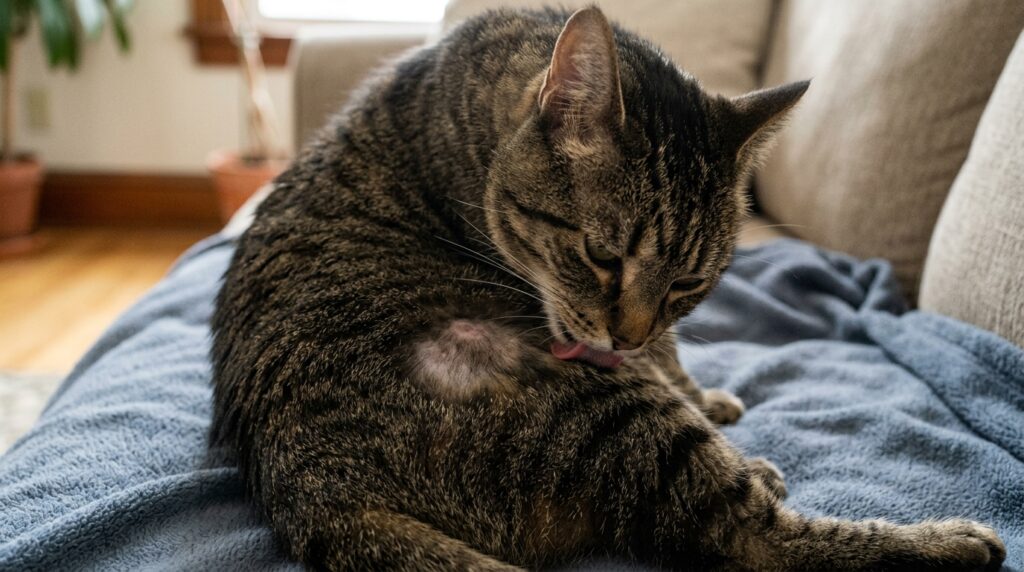
Miso licking her inner thigh, a repetitive behavior that can quickly lead to thinning patches.
Hers turned out to be stress-related, tied to a period where I’d changed her feeding schedule. But I want to be upfront that I didn’t know that going in, and I didn’t guess it — my vet ruled out fleas, allergies, and a skin infection first. That order matters, and it’s the order this post follows.
In this guide, we’ll cover:
- What overgrooming actually looks like
- Medical causes to rule out first
- Behavioral and stress-related causes
- How vets tell the difference
- What helped once it was confirmed behavioral
- When to see a vet immediately
- FAQ
What overgrooming actually looks like
Normal grooming leaves a full, even coat. Overgrooming leaves patches — usually symmetrical, often on the belly, inner thighs, flanks, or the lower back, sometimes extending down the legs. The skin underneath is typically not damaged or scabbed in early stages; it’s just thinner fur or visible skin from repeated licking rather than fur being pulled out or broken off from something external.
The pattern matters. Symmetrical thinning on both sides of the body, in areas a cat can easily reach while lying down, points toward self-grooming as the cause rather than something environmental like fleas or a skin condition, which tend to show up less symmetrically.
Medical causes to rule out first
This is the step that’s easy to skip, and it’s the one a vet will always want to do before anything else, because behavioral treatment for a medical problem doesn’t work and can let the actual issue progress.
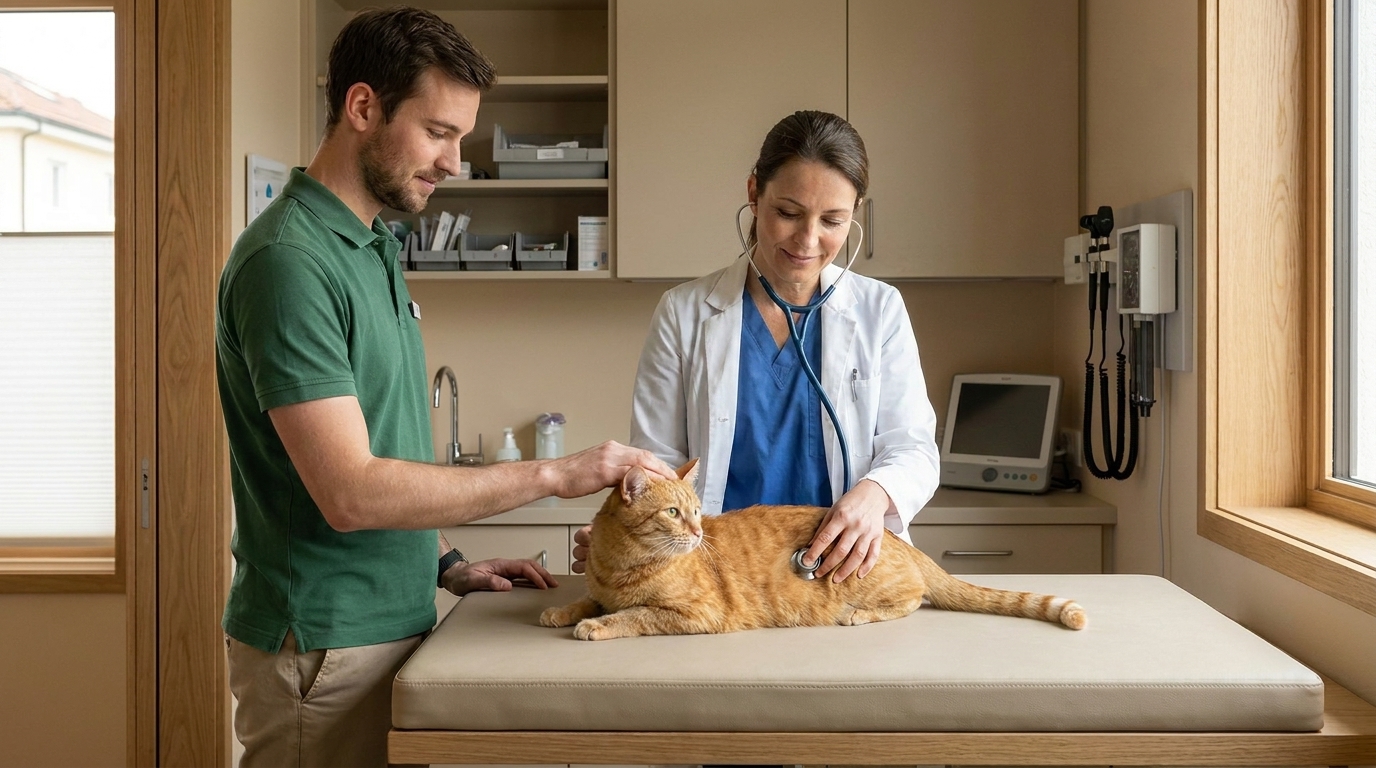
A thorough veterinary exam is crucial for ruling out underlying medical triggers.
- Fleas and parasites: Even indoor cats get fleas — they come in on shoes, clothing, other pets. Flea allergy dermatitis specifically can cause intense overgrooming even with a fairly low flea burden. According to the Cornell Feline Health Center, flea saliva contains allergens that drive severe itching. A vet can find evidence even when the fleas themselves aren’t obviously visible.
- Food or environmental allergies: Allergic skin reactions cause itching, and itching drives grooming as a form of self-soothing and scratching combined. This is one of the more common medical causes and often requires an elimination diet or allergy testing to actually pin down. If a food allergy is suspected, vets often recommend starting a specialized hypoallergenic elimination diet:
- Pain: Cats groom over areas that hurt, sometimes as a self-soothing behavior and sometimes because the sensation from an underlying issue (arthritis, a urinary problem, or internal discomfort) draws their attention to that spot. This is part of why a bald belly specifically gets flagged by vets — it can be behavioral, but it can also point toward abdominal discomfort or urinary problems in indoor cats.
- Thyroid or other hormonal issues: Less common but real, particularly in middle-aged and older cats. Hyperthyroidism in particular can drive changes in grooming behavior alongside other symptoms like weight loss or increased appetite.
- Skin infections: Bacterial or fungal skin infections cause itching and irritation that leads to grooming as a response, and they’re often accompanied by other signs like redness, scabbing, or a specific odor that a vet exam will catch.
A vet visit for new or worsening overgrooming typically involves a physical exam, a skin scrape or flea check, and depending on findings, bloodwork or an allergy workup. This isn’t overkill — it’s the actual process for narrowing down a symptom that has several genuinely different underlying causes.
Behavioral and stress-related causes
Once medical causes are ruled out, stress and anxiety are the most common remaining explanation. Grooming has a self-soothing function for cats similar to some repetitive behaviors in other species — it’s calming, it’s familiar, and under stress a cat can shift from normal grooming into a repetitive, excessive version of the same behavior.
Common triggers include:
- A change in routine — feeding schedule, work hours, a move
- A new pet or person in the home
- Boredom or under-stimulation, especially in single-cat households with limited enrichment
- Separation-related anxiety when left alone for long stretches
- Conflict with another cat in a multi-cat household, even if it’s subtle and not visibly aggressive
The tricky part is that stress-related overgrooming can start weeks after the actual trigger, and the trigger itself might not be obvious in hindsight. Miso’s started roughly two weeks after I shifted her feeding times by about an hour to fit a new work schedule — not something I would have guessed as a cause if my vet hadn’t specifically asked about recent routine changes.
How vets tell the difference
There isn’t a single test that separates “stress” from “medical” — it’s a process of elimination. A vet will typically check for fleas and mites first since those are common and treatable, look at the skin directly for signs of infection, ask about diet and any recent changes, and consider bloodwork if the picture doesn’t clearly point toward an external cause. Only once medical causes are reasonably excluded does a stress-related diagnosis become the working explanation, and even then, it’s often described as psychogenic alopecia — overgrooming with a behavioral origin, confirmed by ruling out everything else rather than diagnosed directly.
This is why home guessing isn’t a great starting point, even though it’s tempting when the bald spot looks “obviously” stress-related. Allergies and psychogenic overgrooming can look nearly identical from the outside.
What helped once it was confirmed behavioral
For Miso, once medical causes were off the table, the actual fix was less dramatic than I expected. I shifted her feeding times back closer to the original schedule, added a short play session in the window where the schedule change had created a gap in her day, and the hair loss stopped progressing within about two weeks. Regrowth took a couple of months, which is normal — hair loss from overgrooming doesn’t reverse instantly once the underlying cause is addressed.
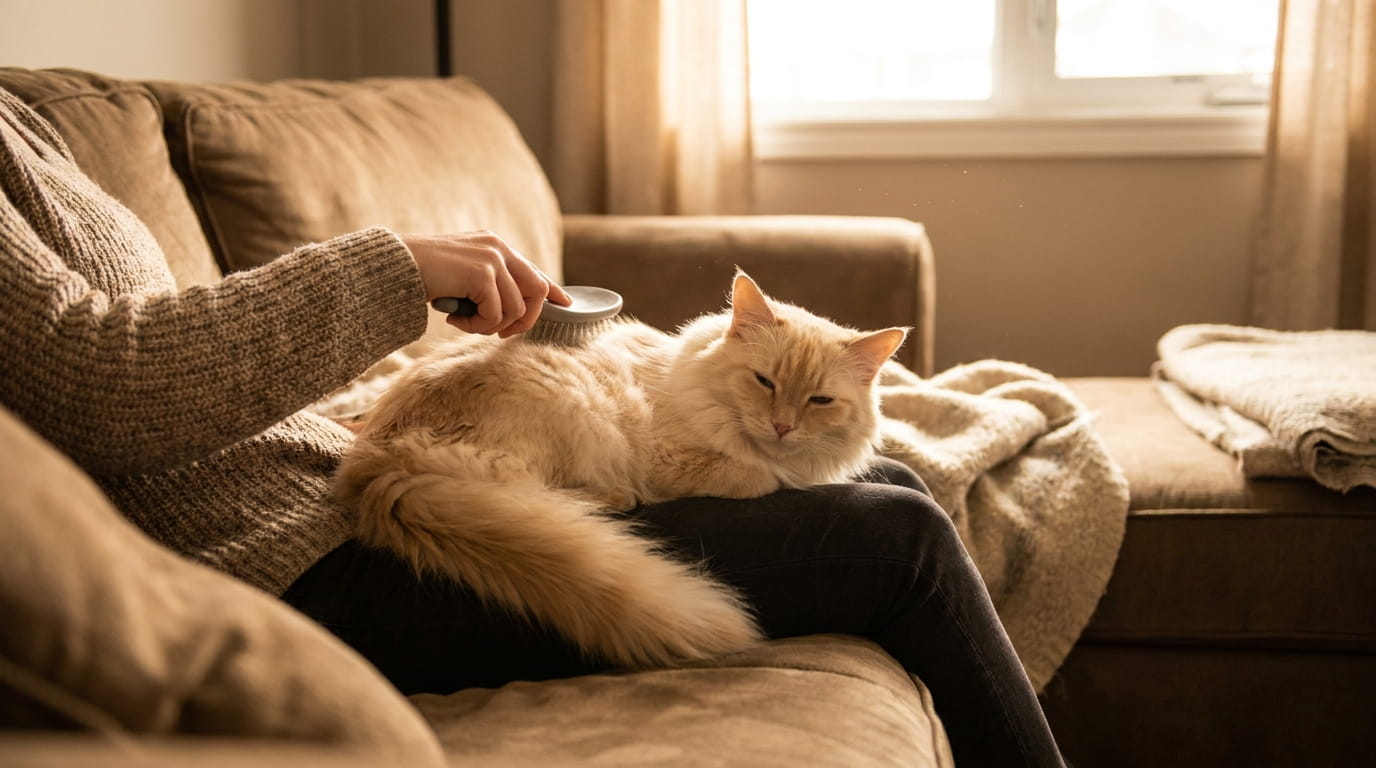
Regular grooming sessions with a soft brush can help distribute natural skin oils and serve as a soothing, stress-reducing routine.
To assist with skin health, regular grooming with a gentle, non-irritating brush is highly recommended. It keeps their coat clean and reduces hairballs. Check out our tested picks for the best deshedding brush.
More broadly, the same tools that help with general cat stress and boredom apply here: consistent routine, daily interactive play, enough vertical territory and safe retreat space, and addressing any multi-cat tension directly rather than hoping it resolves on its own. If anxiety remains high, a calming diffuser can work wonders to settle their nerves:
When to see a vet immediately
Most overgrooming isn’t an emergency, but a few signs mean don’t wait:
- Open sores, scabbing, or bleeding from the grooming itself
- Hair loss that’s spreading rapidly rather than staying in one area
- Grooming paired with other symptoms — weight loss, changes in appetite, vomiting, changes in litter box habits
- A cat that seems distressed or unable to stop the behavior even when you try to interrupt it
Any of these move it from “worth mentioning at the next checkup” to “worth calling about now.” For general care advice, refer to our comprehensive cat wellness guide.
FAQ
Can stress alone cause a cat to go bald?
Yes, though it’s typically diagnosed only after medical causes are ruled out. The behavioral explanation (psychogenic alopecia) is a diagnosis of exclusion, not a first guess.
Is overgrooming more common in certain breeds?
Some breeds, including Siamese and other Oriental breeds, are more frequently associated with stress-related overgrooming, though it can occur in any cat.
How long does it take for fur to grow back after overgrooming stops?
Regrowth generally takes several weeks to a few months once the underlying cause is resolved, similar to normal hair regrowth timelines.
Can I use a cone or deterrent spray to stop the licking directly?
These can prevent further damage in the short term but don’t address the underlying cause. They’re sometimes used temporarily alongside treatment for the actual trigger, not as a standalone fix.
Is a bald belly always a sign of stress?
No — a bald belly specifically is one of the patterns vets watch more closely because it can also be linked to internal discomfort or urinary issues, not just self-soothing. It’s one of the patterns worth a vet visit rather than a wait-and-see approach.
If your cat’s had a similar pattern, I’d be curious what it turned out to be — stress, allergy, something else. It seems to vary more than people expect once you actually get a diagnosis.