By Emma Hartley | Last updated August 2026 | Reviewed by IndoorCatWell Editorial Team
If your cat has ingested a plant on this list, do not wait for symptoms. Call immediately:
• ASPCA Animal Poison Control: (888) 426-4435
• Pet Poison Helpline: (855) 764-7661
• Your Nearest 24/7 Emergency Vet
If you take away exactly one thing from this guide: lilies are an immediate, life-threatening emergency for cats. Most owners don’t realize that even tiny amounts of pollen groomed from fur can cause acute, irreversible kidney failure in under 36 hours.
Here is the full toxic plant list, organized by severity and cross-referenced with the ASPCA Animal Poison Control Center Official Plant Database.
Level 1: The Deadliest Plants (Severe Emergency)
- True Lilies & Daylilies (Lilium & Hemerocallis species): Easter lilies, Stargazer, Asiatic, Tiger, and Oriental lilies. Every part of the plant (petals, leaves, stem, pollen, and even vase water) causes rapid renal failure. Never bring these into a home with cats.
- Sago Palm (Cycas revoluta): All parts are toxic; the seeds contain highest concentrations of cycasin, causing severe liver failure and death.
- Oleander & Lily of the Valley: Contain cardiac glycosides that disrupt heart rhythms and cause cardiac arrest.
- Autumn Crocus: Causes severe multi-organ failure, gastrointestinal hemorrhaging, and bone marrow suppression.
- Azalea / Rhododendron: Contain grayanotoxins that induce cardiovascular collapse and seizures.
Level 2: Common Toxic Houseplants (Moderate)
These plants contain insoluble calcium oxalate crystals or saponins. Ingestion causes immediate oral pain, hypersalivation (intense drooling), vomiting, and swelling of the mouth/esophagus:
- Pothos & Philodendron
- Monstera (Swiss Cheese Plant)
- ZZ Plant (Zamioculcas zamiifolia)
- Dieffenbachia (Dumbcane)
- Snake Plant (Mother-in-Law’s Tongue)
- Aloe Vera (causes vomiting, diarrhea, and lethargy)
- English Ivy (causes abdominal cramping and vomiting)

Level 3: Toxic Bulbs & Holiday Plants
- Tulips, Daffodils & Hyacinths: The bulbs contain concentrated alkaloids causing severe gastric upset and tremors.
- Amaryllis: Causes low blood pressure, vomiting, and tremors.
- Poinsettia: Mildly toxic; the milky sap causes localized mouth irritation.
Why 'High Shelves' Are Not Cat-Proof
Cats are agile, curious climbers. Placing a toxic plant on top of a bookshelf or refrigerator does not guarantee safety — falling dried leaves, dropped petals, and curious leaps can still expose your cat. The only safe strategy is removing dangerous species entirely from the home. Check overall home safety tips in our Indoor Cat Care Guide.
Emergency Protocol: What to Do If Your Cat Ingests a Plant
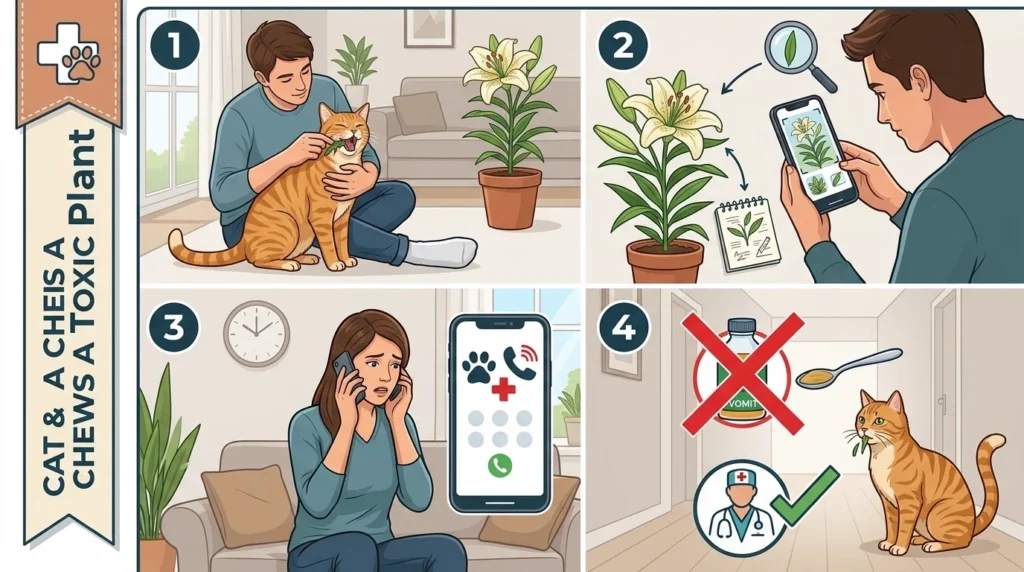
- Remove Plant Matter: Safely take the plant away from your cat and gently wipe any pollen from their face or paws using a damp cloth.
- Take a Clear Photo / Bring a Sample: Accurate botanical identification allows emergency vets to administer the exact antidote or protocol immediately.
- Do NOT Induce Vomiting: Never give hydrogen peroxide or home remedies to cats; it causes severe hemorrhagic gastritis.
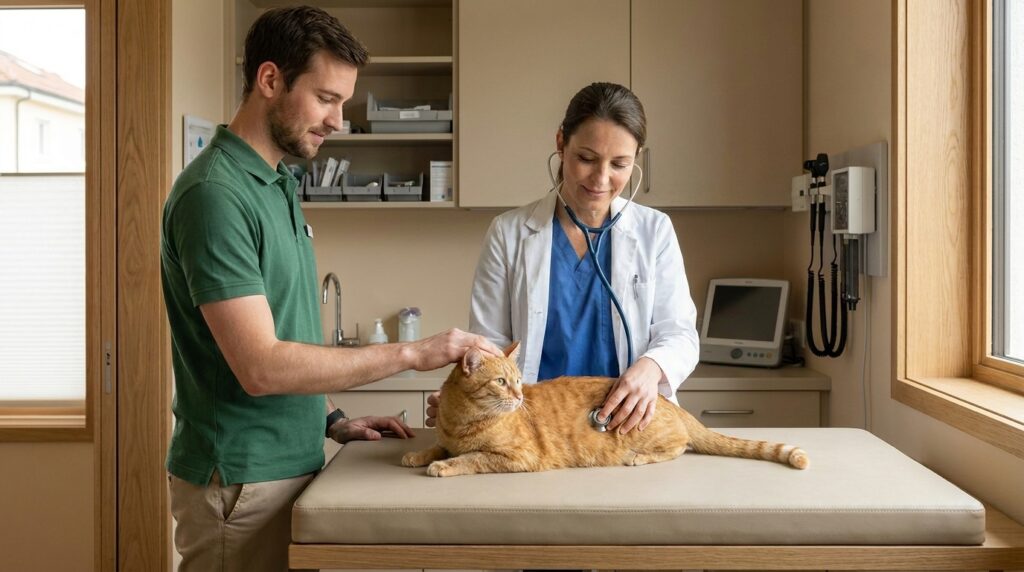
- Go to the Vet Immediately: Early IV fluid diuresis within the first 12–18 hours can reverse toxicity before permanent organ damage occurs (consult our Indoor Cat Annual Vet Checklist).
Frequently Asked Questions
Are all lilies toxic to cats, or just some types?
True lilies (Lilium) and daylilies (Hemerocallis) are fatal to cats. Peace lilies and calla lilies are not true lilies; they cause oral irritation from oxalate crystals but are not lethal.
What should I do if my cat licked a toxic plant but didn't eat much?
Treat it as an immediate medical emergency. Call your emergency vet or ASPCA poison control right away; do not wait to see if symptoms appear.
Is aloe vera safe for cats?
No. Aloe vera contains saponins and anthraquinones that cause vomiting, diarrhea, and lethargy in cats.
How quickly do symptoms of plant poisoning appear in cats?
Some plants cause immediate drooling and vomiting, while lily toxins cause silent internal kidney failure over 12–36 hours before outward symptoms appear.
What number do I call if my cat eats a poisonous plant?
Call your vet, ASPCA Animal Poison Control at (888) 426-4435, or the Pet Poison Helpline at (855) 764-7661.
🐾 Keep Your Home Safe & Cat-Enriched
Satisfy your cat’s craving for greenery safely with non-toxic cat grass kits, safe botanicals, and tested indoor enrichment toys.