By Emma Hartley | Last updated August 16, 2026 | Reviewed by IndoorCatWell Editorial Team
This guide outlines evidence-based veterinary wellness standards. If you purchase through our links, we may earn an affiliate commission at no extra cost to you. Read our full Affiliate Disclosure.
⚡ Quick Answer: Do Indoor Cats Really Need Annual Vet Visits?
Yes. While indoor living protects felines from cars, predators, and infectious outdoor fights, it does not protect against chronic internal diseases like chronic kidney disease (CKD), feline diabetes, hypertrophic cardiomyopathy (HCM), dental resorption, or hyperthyroidism. Cats instinctively mask illness until conditions reach advanced stages. Annual exams (and biannual exams for seniors 7+) with routine bloodwork baselines ensure early detection, dramatically improving longevity and reducing lifetime medical costs.
📌 Table of Contents
- Key Takeaways
- At a Glance: Exam Checklist by Life Stage
- The “Indoor Cat Paradox”: Why Masking Illness Kills Silently
- The 10-Point Nose-to-Tail Physical Exam Checklist
- Diagnostic Baselines: CBC, Chemistry Panel & Urinalysis
- Vaccine & Parasite Protocols for Strictly Indoor Cats
- Preparing for a Stress-Free Carrier & Clinic Visit
- Common Mistakes Cat Owners Make
- Red Flag Symptoms: When Not to Wait for the Annual Visit
- Frequently Asked Questions
Key Takeaways
- Instinctive Illness Masking: As solitary predators, cats hide weakness until organ damage is severe; regular physical palpation uncovers hidden pathology.
- Annual vs. Biannual Cadence: Healthy adult cats (ages 1–6) require annual exams; mature and senior cats (ages 7+) require biannual checkups every 6 months.
- Baseline Lab Work Saves Lives: Establishing baseline blood chemistry (BUN, creatinine, SDMA, liver enzymes) in adulthood allows early detection of chronic kidney disease.
- Core Vaccines Are Still Essential: FVRCP (panleukopenia, herpesvirus, calicivirus) and Rabies are mandatory even for strictly indoor cats due to accidental vector transmission and legal requirements.
- Dental Resorption Checks: Feline tooth resorption occurs below the gum line and is diagnosed during routine oral examinations.
At a Glance: Exam Checklist by Life Stage

| Life Stage | Frequency | Recommended Screening & Procedures |
|---|---|---|
| Kittens (0–12 mos) | Every 3–4 weeks until 16 wks | Core vaccine series (FVRCP + Rabies), FeLV/FIV retroviral testing, fecal deworming, spay/neuter, microchipping. |
| Adults (1–6 yrs) | Annually (Every 12 mos) | Complete physical exam, weight tracking, oral staging, booster vaccines, baseline bloodwork & urinalysis at age 5. |
| Mature & Senior (7–10 yrs) | Every 6–12 mos | Comprehensive Senior Panel (CBC, Chem, SDMA, T4 thyroid), blood pressure monitoring, arthritis mobility assessment. |
| Geriatric (11+ yrs) | Every 6 mos | Biannual senior panels, complete urinalysis (USG + protein/creatinine ratio), blood pressure, cognitive dysfunction screening. |
The “Indoor Cat Paradox”: Why Masking Illness Kills Silently
According to the American Association of Feline Practitioners (AAFP), indoor cats visit veterinarians at less than half the rate of dogs. Many owners believe: “My cat never goes outside, so they can’t get sick.”
This is a dangerous misconception. The primary causes of feline mortality — renal failure, cardiomyopathy, diabetes, and neoplasia — are internal metabolic diseases. Because cats are evolutionarily hardwired as both predators and prey, demonstrating pain or illness in nature invites predation. By the time a cat visibly looks “sick” to an owner, organ damage has often progressed to irreversible stages.
The 10-Point Nose-to-Tail Physical Exam Checklist
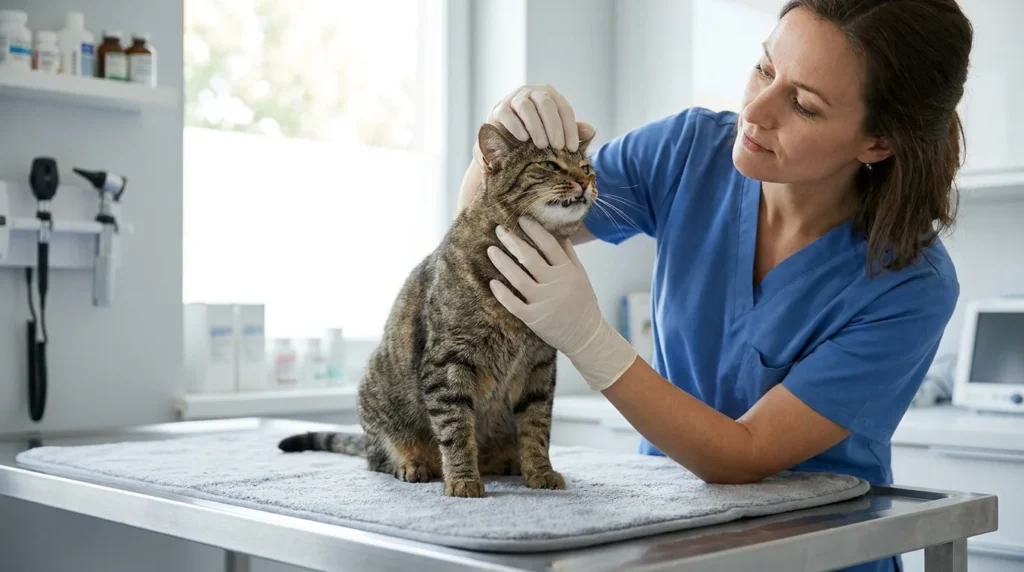
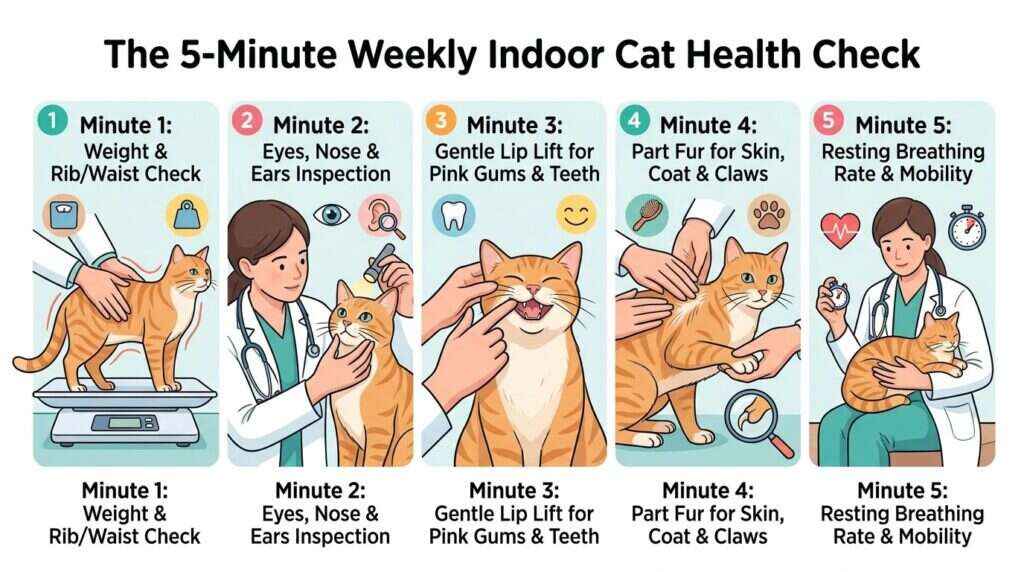
- Precision Body Weight & BCS Staging: Tracking weight on a gram-sensitive scale. A loss of just 8 ounces in an 8-pound cat represents a 6% body mass drop — equivalent to a 10-pound loss in a human.
- Ophthalmic & Retinal Exam: Inspecting eyes for lenticular sclerosis, corneal ulcers, and retinal detachment caused by systemic hypertension.
- Otoscopic Ear Canal Inspection: Checking for otitis externa, polyp formations, and ear mites.
- Dental & Gingival Staging: Assessing periodontal grade, tartar accumulation, and painful feline odontoclastic resorptive lesions (FORLs). Pair with home hygiene; see our Complete Cat Grooming Guide.
- Thoracic Auscultation (Heart & Lungs): Listening for heart murmurs, arrhythmias (gallop rhythms indicating cardiomyopathy), and wheezing.
- Abdominal Organ Palpation: Squeezing and feeling kidney size and symmetry, intestinal wall thickness (IBD/lymphoma screening), liver borders, and bladder comfort.
- Lymph Node Check: Palpating submandibular, prescapular, and popliteal lymph nodes for enlargement.
- Orthopedic & Joint Mobility Assessment: Checking spine, hips, and elbows for crepitus and osteoarthritis pain. Learn more in our Senior Cat Care Guide.
- Dermal & Coat Evaluation: Checking for alopecia, skin lesions, dander, and external parasites.
- Hydration & Skin Turgor: Testing capillary refill time and skin elasticity. See our Cat Hydration Guide.
Diagnostic Baselines: CBC, Chemistry Panel & Urinalysis
Complete Blood Count (CBC)
Measures red blood cells (screening for anemia), white blood cells (detecting hidden systemic infection or inflammation), and platelets.
Comprehensive Serum Chemistry
Evaluates blood glucose (diabetes screening), liver enzymes (ALT, ALKP), electrolytes (potassium, sodium, phosphorus), and renal markers (BUN, Creatinine, and SDMA). SDMA can identify chronic kidney disease at 25% to 40% nephron loss, years before traditional creatinine spikes.
Complete Urinalysis & Specific Gravity
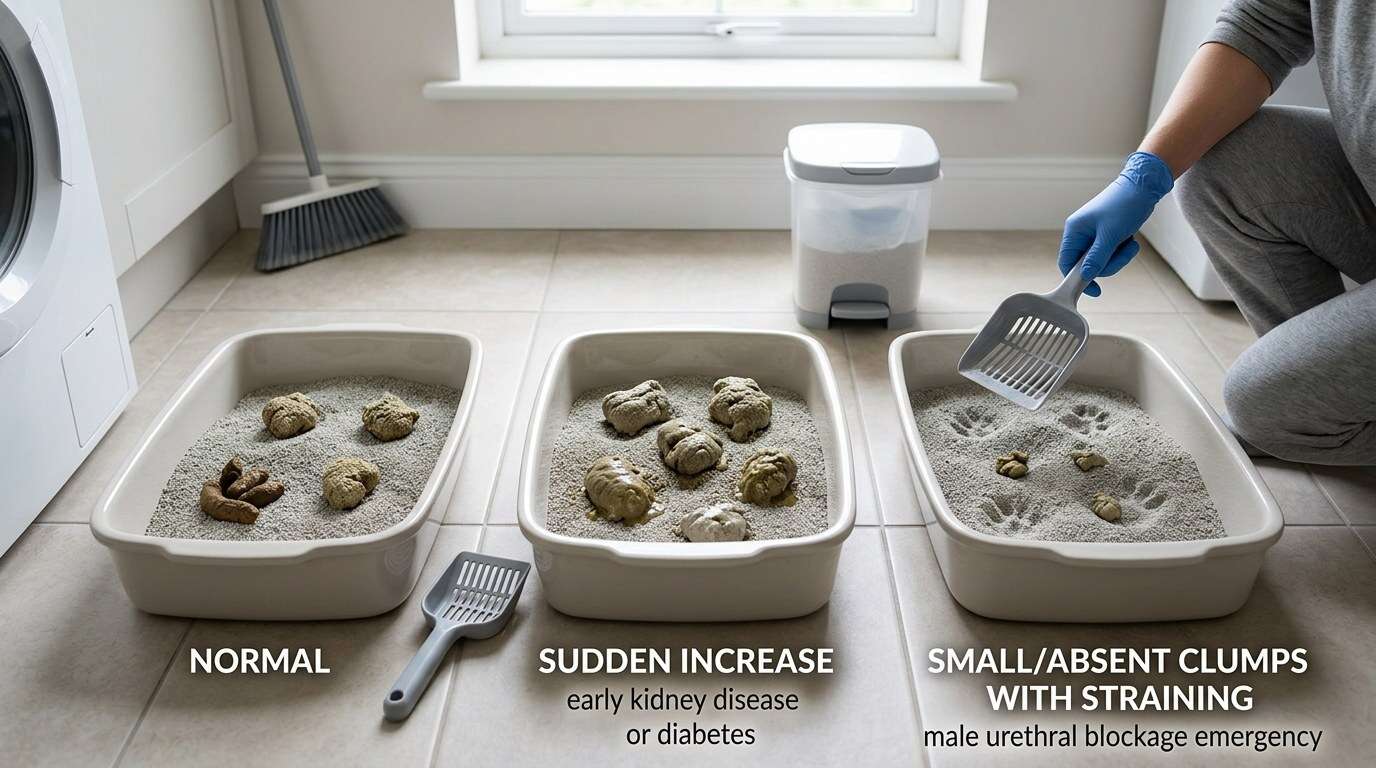
Urine specific gravity (USG) measures the kidney’s concentrating ability. Dipsticks check for microalbuminuria (protein leakage), glucose, ketones, and microscopic struvite or calcium oxalate crystals that lead to fatal urethral blockages.
Vaccine & Parasite Protocols for Strictly Indoor Cats
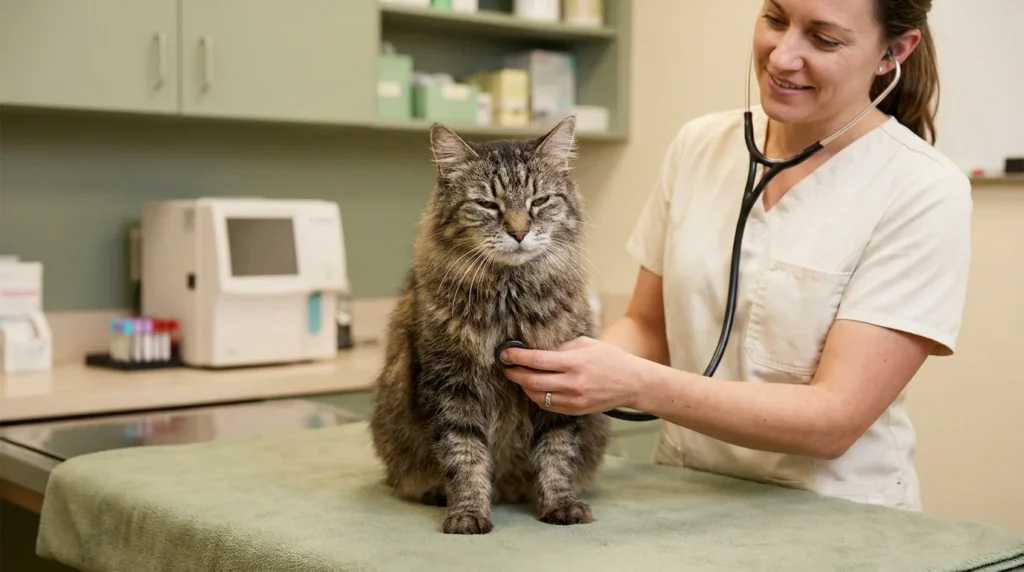
- FVRCP Core Vaccine: Protects against feline viral rhinotracheitis, calicivirus, and panleukopenia. Administered every 3 years after initial kitten boosters. Panleukopenia virus is exceptionally hardy and can be tracked indoors on human footwear.
- Rabies: Legally mandated in most states and municipalities regardless of indoor status. Bats and small rodents frequently enter attics and living rooms, posing lethal transmission risks.
- Year-Round Parasite Prevention: Fleas, ear mites, and heartworm-carrying mosquitoes readily enter climate-controlled homes. Use veterinary-prescribed topical preventatives.
Preparing for a Stress-Free Carrier & Clinic Visit
- Keep the Carrier Out 24/7: Place a top-loading hard carrier in the living room lined with a soft blanket and treats so it becomes a familiar nap sanctuary rather than a “vet-only trap.”
- Spray Feliway Classic: Spray the carrier interior with synthetic feline facial pheromones 15 minutes before departure.
- Cover with a Dark Towel: Drape a light towel over the carrier during transport to reduce visual motion sickness.
- Choose a Fear-Free Certified Feline Practice: Seek veterinary clinics that provide cat-only waiting rooms and feline-friendly gentle handling techniques.
Common Mistakes Cat Owners Make
- Waiting for Visible Symptoms: Delaying checkups until a cat stops eating; by then, hepatic lipidosis or renal crisis has already set in.
- Skipping Vaccines Due to “Indoor Only” Status: Forgetting that viral pathogens survive on shoes and bats enter attics.
- Declining Baseline Senior Lab Work: Relying solely on physical exams while missing early renal and thyroid elevations.
Red Flag Symptoms: When Not to Wait for the Annual Visit
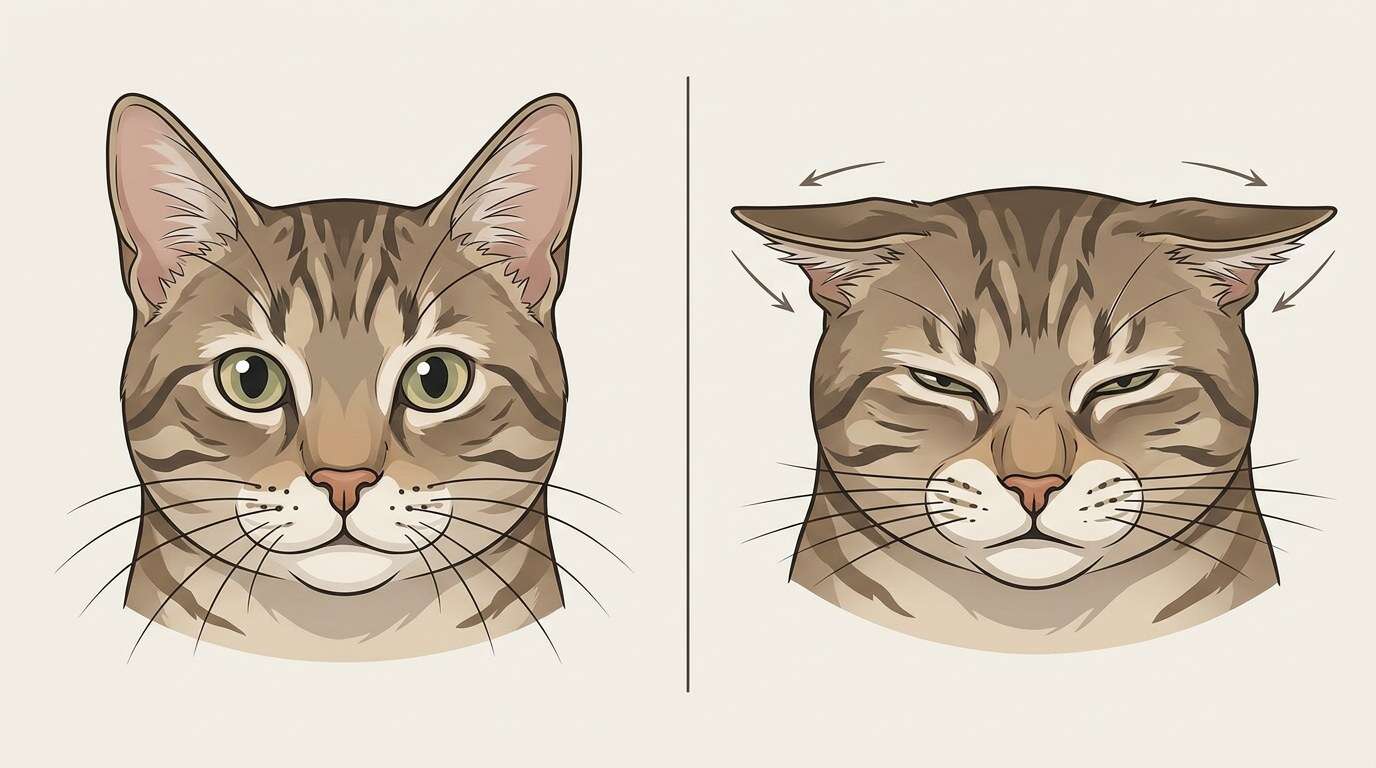
If your indoor cat displays any of the following signs, seek emergency veterinary care immediately:
- Straining in the Litter Box / Vocalizing (Urinary Emergency): In male cats, this is a life-threatening urethral blockage requiring emergency catheterization within hours.
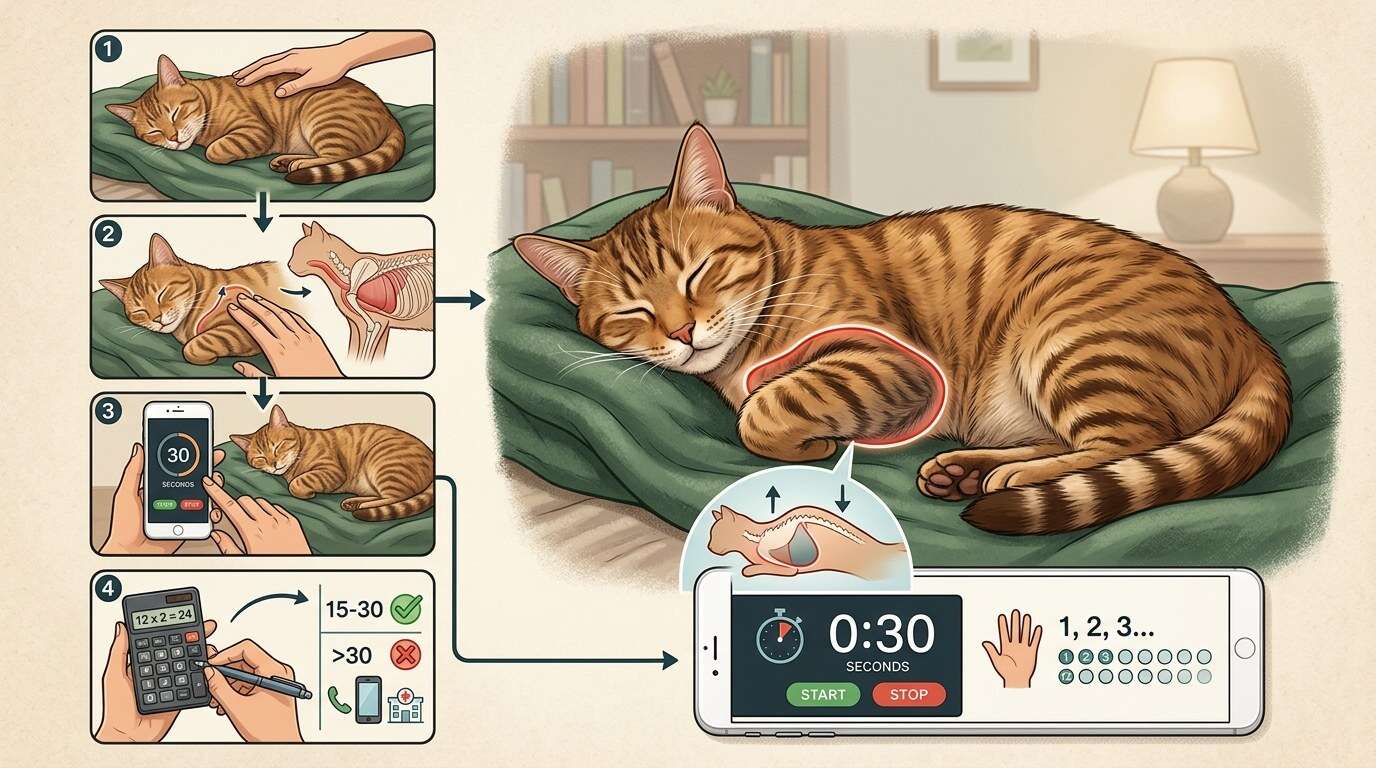
- Open-Mouth Breathing or Panting: Severe acute respiratory distress or congestive heart failure.
- Anorexia for >24 Hours: Feline fasting rapidly triggers fatal hepatic lipidosis (fatty liver disease).
- Sudden Hind-Leg Paralysis or Dragging: Aortic thromboembolism (“saddle thrombus”) secondary to heart disease.

Frequently Asked Questions
How often does a strictly indoor cat need to see a vet?
Adult cats (ages 1–6) need an annual exam. Mature and senior cats (ages 7+) require biannual exams every 6 months to monitor progressive metabolic conditions.
What blood tests should be run on a healthy adult cat?
A complete CBC, comprehensive chemistry panel (BUN, creatinine, SDMA, liver enzymes, glucose), and a complete urinalysis establish crucial baseline parameters.
Why does my indoor cat need a rabies vaccine?
Rabies is legally mandated in most regions. Bats and rodents frequently enter residences, creating fatal exposure risks. Vaccinated cats are safely protected.
🐾 Explore More Feline Health & Wellness Resources
Support your cat’s lifelong health with our comprehensive, veterinary-aligned guides: