By Emma Hartley | Last updated August 16, 2026 | Reviewed by IndoorCatWell Editorial Team
This article provides practical, veterinary-supported enrichment guidance. If you buy through our links, we may earn an affiliate commission at no extra cost to you. Read our full Affiliate Disclosure.
⚡ Quick Answer: How to Enrich a Senior Cat’s Life
Senior cats still need mental and physical stimulation, but the goal shifts from high-energy acrobatics to low-impact engagement that respects joint stiffness, reduced sensory acuity, and lower stamina. Scent-based enrichment, gentle puzzle feeders, short ground-level play sessions, and accessible ramp perches allow older felines to thrive without the painful jumping or sprinting demanded by kitten toys.
📌 Table of Contents
- Key Takeaways
- Why Senior Cats Still Need Daily Stimulation
- Low-Impact Physical Play (Ground-Level & Ramps)
- Mental and Scent-Based Stimulation (Puzzles & Window Perches)
- Gentle Social Interaction and Presence
- Adapting the Home Environment for Aging Joints
- Common Mistakes Cat Owners Make
- When to Involve a Veterinarian
- Frequently Asked Questions
Key Takeaways
- Modify, Don’t Eliminate: Senior enrichment should eliminate sudden leaping and impact, but preserve mental engagement and gentle movement.
- Scent & Food Puzzles Lead the Way: Older cats respond enthusiastically to olfactory stimulation (catnip, silvervine) and low-difficulty foraging trays.
- Micro-Sessions Beat Long Playtimes: 3 to 5 minutes of focused engagement multiple times a day perfectly matches senior stamina.
- Accessibility is Vital: Ramps, steps, and low-sided litter boxes prevent arthritis from isolating your cat from favorite perches.
- Cognitive Health Matters: Gentle mental problem-solving helps prevent feline cognitive dysfunction syndrome (CDS).
- Loss of Play May Mean Pain: Sudden disinterest in play is frequently an unvoiced symptom of feline osteoarthritis that requires veterinary pain management.
Why Senior Cats Still Need Daily Stimulation
It is easy to assume an older cat who sleeps 18 hours a day simply wants to be left alone. However, according to the American Association of Feline Practitioners (AAFP), over 90% of cats over 12 years of age show radiographic evidence of degenerative joint disease (osteoarthritis).
Reduced activity is rarely a loss of curiosity; it is a rational adaptation to physical discomfort. When jumping hurts, cats withdraw. Senior enrichment is about meeting your cat at their current physical capability — keeping their brain active, muscles gently conditioned, and spirits elevated without causing joint inflammation.
Low-Impact Physical Play (Ground-Level & Ramps)

Horizontal & Ground-Level Play
Ditch the high-flying feather wands that require vertical leaps onto hardwood floors. Instead, drag fleece ribbons slowly across rugs, roll lightweight felt balls gently into their paws, or use motorized ground-wand toys with slow speed settings. This stimulates hunting instincts while keeping all four paws securely planted.
Ramps and Padded Steps
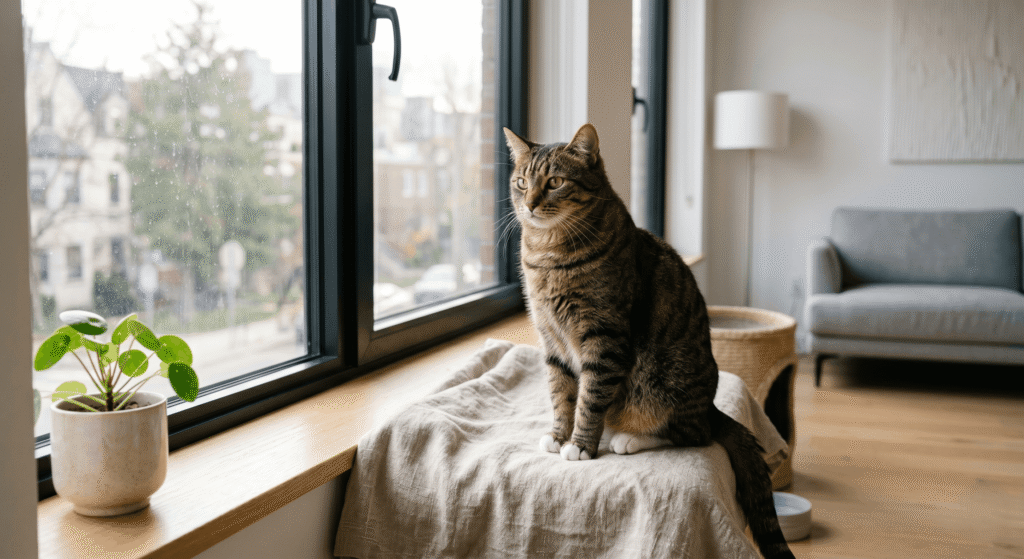
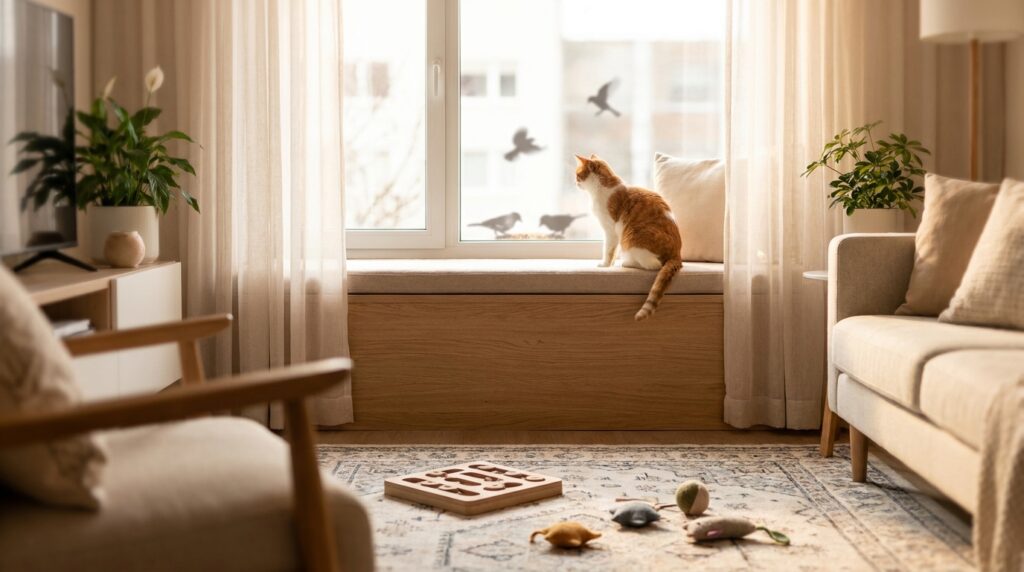
Window birdwatching is the premier visual entertainment for indoor cats. If your cat hesitates before jumping onto the couch or windowsill, install carpeted ramps or wide foam pet stairs. This preserves their independence and autonomy.
Mental and Scent-Based Stimulation (Puzzles & Window Perches)

Senior-Friendly Foraging Trays & Lick Mats
Complex puzzle toys that require vigorous paw-swatting or tipping can frustrate an older cat with reduced dexterity. Instead, use shallow silicone lick mats smeared with wet cat food, or a textured wooden foraging board with wide grooves. Check out our Hands-On Cat Product Reviews for tested senior-friendly slow feeders.
Novel Scent Exploration
Feline olfactory senses remain sharp even when vision and hearing decline. Introduce novel scent experiences like silvervine sticks, valerian root toys, or bringing in safe outdoor elements like clean pinecones or dried cat grass for supervised sniffing.
Gentle Social Interaction and Presence
Aging cats often crave consistent companionship. Slow, rhythmic brushing with a soft silicone glove distributes natural skin oils that older cats can no longer reach while grooming. Read our Complete Cat Grooming Guide for safe senior coat care.
Adapting the Home Environment for Aging Joints
- Low-Entry Litter Boxes: High-sided boxes force arthritic cats to painfully hoist their hind legs. Choose boxes with low entryways (<3 inches).
- Orthopedic Heated Beds: Self-warming thermal pads or low-voltage orthopedic foam beds soothe stiff hips and promote deeper rest.
- Non-Slip Rug Runners: Place runner rugs over slick hardwood and tile floors to give older paws confident traction.
- Accessible Hydration Stations: Provide shallow water bowls or quiet fountains on every floor. See our Cat Hydration Guide and Water Fountain vs. Bowl Comparison.
- Nutritional Support: Support aging metabolism with balanced nutrition. Read our Senior Cat Diet Guide.
Common Mistakes Cat Owners Make
- Assuming Lethargy is “Just Aging”: Overlooking manageable arthritis or dental pain that dampens play motivation.
- Forcing Kitten-Style Wand Sessions: Expecting an older cat to jump high in the air, risking tendon or spine sprains.
- Placing Puzzles & Perches Out of Reach: Putting enrichment in locations requiring vertical leaps.
- Neglecting Routine Vet Wellness Checks: Failing to schedule biannual exams. Review our Indoor Cat Annual Vet Checklist.

When to Involve a Veterinarian
If your senior cat shows sudden withdrawal, stops grooming, misses the litter box, or hesitates when stepping over small thresholds, schedule an exam. Modern veterinary medicine offers safe arthritis treatments (including monoclonal antibody injections like Solensia) that restore pain-free mobility and playfulness.
Frequently Asked Questions
Do senior cats need less enrichment than young cats?
Not less — just different. The physical intensity decreases, but cognitive stimulation, scent exploration, and gentle bonding remain crucial for their quality of life.
My senior cat stopped playing completely. Is this normal?
It is common, but rarely normal. It is frequently an early symptom of joint pain, dental disease, or systemic illness that can be successfully treated with veterinary care.
Are puzzle feeders safe for older cats with arthritis?
Yes, provided they are low-difficulty shallow foraging boards or lick mats that do not require complex balancing or heavy paw-swatting.
How much daily playtime does a senior cat need?
Two to three short micro-sessions of 3 to 5 minutes each day are ideal. Stop immediately if your cat shows signs of heavy panting or fatigue.
🐾 Explore More Senior Cat Health & Wellness Guides
Keep your aging feline happy, mobile, and comfortable with our tested senior guides: