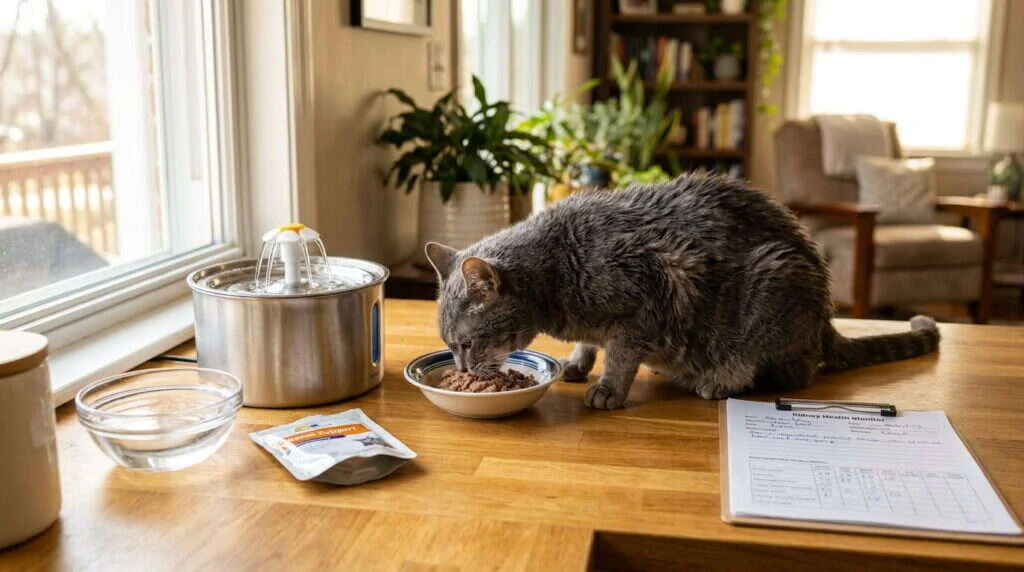
By Emma Hartley | Last updated August 15, 2026 | Reviewed by IndoorCatWell Editorial Team
This article provides clinical and practical hydration guidance. If you purchase through our links, we may earn an affiliate commission at no extra cost to you. Read our full Affiliate Disclosure.
⚡ Quick Answer: How Much Water Does a Cat Need?
Most healthy adult indoor cats require approximately 50 to 60 milliliters of total water per kilogram of body weight per day (approx. 225–270 ml or ~8–9 fl oz for an average 4.5 kg / 10 lb cat). This total includes both active water drinking and the moisture present in meals. Because domestic cats evolved from desert-dwelling felines with naturally low thirst drives, dry-kibble fed cats often run chronic fluid deficits. Feeding wet food, placing wide ceramic dishes away from litter boxes, and utilizing running pet fountains are proven ways to maintain optimal hydration.
📌 Table of Contents
- Key Takeaways
- At a Glance: Cat Water Requirements
- Why Cats Are Biologically Prone to Under-Drinking
- Daily Water Requirements by Cat Weight (Calculator Chart)
- Why Food Moisture Does Most of the Work (Wet vs. Dry)
- 5 Practical Ways to Increase Your Cat’s Water Intake
- Why Hydration Prevents Kidney Disease & Bladder Stones
- 5 Warning Signs of Dehydration to Watch For
- Common Hydration Mistakes Cat Owners Make
- When to See a Veterinarian (Sudden Thirst Changes)
- Frequently Asked Questions
Key Takeaways
- Total Water Includes Diet: Your cat’s daily hydration is the sum of liquid from the water bowl plus dietary moisture in food.
- Naturally Low Thirst Reflex: Descendants of the African wildcat (Felis lybica), cats produce highly concentrated urine and do not instinctively drink until they are already dehydrated.
- Wet Food Closes the Gap: Wet food contains ~78% water, supplying up to 80% of daily hydration needs passively, whereas dry kibble contains only ~8% moisture.
- Moving Water Stimulates Drinking: Cats strongly prefer circulating, oxygenated water from pet fountains over stagnant bowls.
- Under-Hydration Increases Medical Risk: Chronic low water consumption directly contributes to feline idiopathic cystitis (FIC), struvite crystals, and chronic renal disease.
- Sudden Thirst Spikes Signal Disease: A sudden dramatic increase in water consumption often signals feline diabetes, kidney disease, or hyperthyroidism.
At a Glance: Cat Water Requirements
| Hydration Question | Quick Answer |
|---|---|
| How much total water does a cat need daily? | Roughly 50–60 ml per kilogram of body weight (approx. 1 fluid ounce per pound of weight). |
| Do cats obtain hydration from wet food? | Yes — a standard 5.5 oz can of wet food provides approximately 120–130 ml of pure water. |
| Is a water fountain truly worth it? | Yes — clinical studies show running water fountains increase daily feline fluid intake by over 30%. |
| Is dry kibble alone sufficient for hydration? | No — dry-fed cats rarely drink enough still bowl water to compensate for the lack of dietary moisture. |
| What is the quickest home dehydration test? | Skin tent test: gently pinch the scruff; hydrated skin snaps back instantly; dehydrated skin recoils slowly. |
Why Cats Are Biologically Prone to Under-Drinking
Domestic felines originate from the African wildcat, an animal adapted to harsh arid climates where open water sources were scarce and often contaminated. As obligate carnivores, wildcats met almost their entire physiological fluid requirement through fresh prey (small rodents and birds consist of 70% to 75% water).
Consequently, cats evolved highly efficient kidneys capable of concentrating urine to extreme specific gravity levels. However, they never developed a sensitive behavioral thirst reflex. Unlike dogs, who will immediately gulp water after exercise or dry meals, a cat eating dry kibble experiences sub-clinical dehydration without an urgent instinct to drink.
Daily Water Requirements by Cat Weight (Calculator Chart)
Veterinary nutrition guidelines calculate basic maintenance fluid requirements using the standard formula: 50 to 60 ml of water per 1 kg of body weight.
| Cat Body Weight | Total Daily Water (ml) | Fluid Ounces / Standard Cups |
|---|---|---|
| 3.0 kg (6.6 lbs) | 150 – 180 ml | ~5.1 – 6.1 fl oz (~0.7 cups) |
| 4.5 kg (10.0 lbs) | 225 – 270 ml | ~7.6 – 9.1 fl oz (~1.0 cup) |
| 6.0 kg (13.2 lbs) | 300 – 360 ml | ~10.1 – 12.2 fl oz (~1.3 cups) |
| 7.5 kg (16.5 lbs) | 375 – 450 ml | ~12.7 – 15.2 fl oz (~1.6 cups) |
Why Food Moisture Does Most of the Work (Wet vs. Dry)
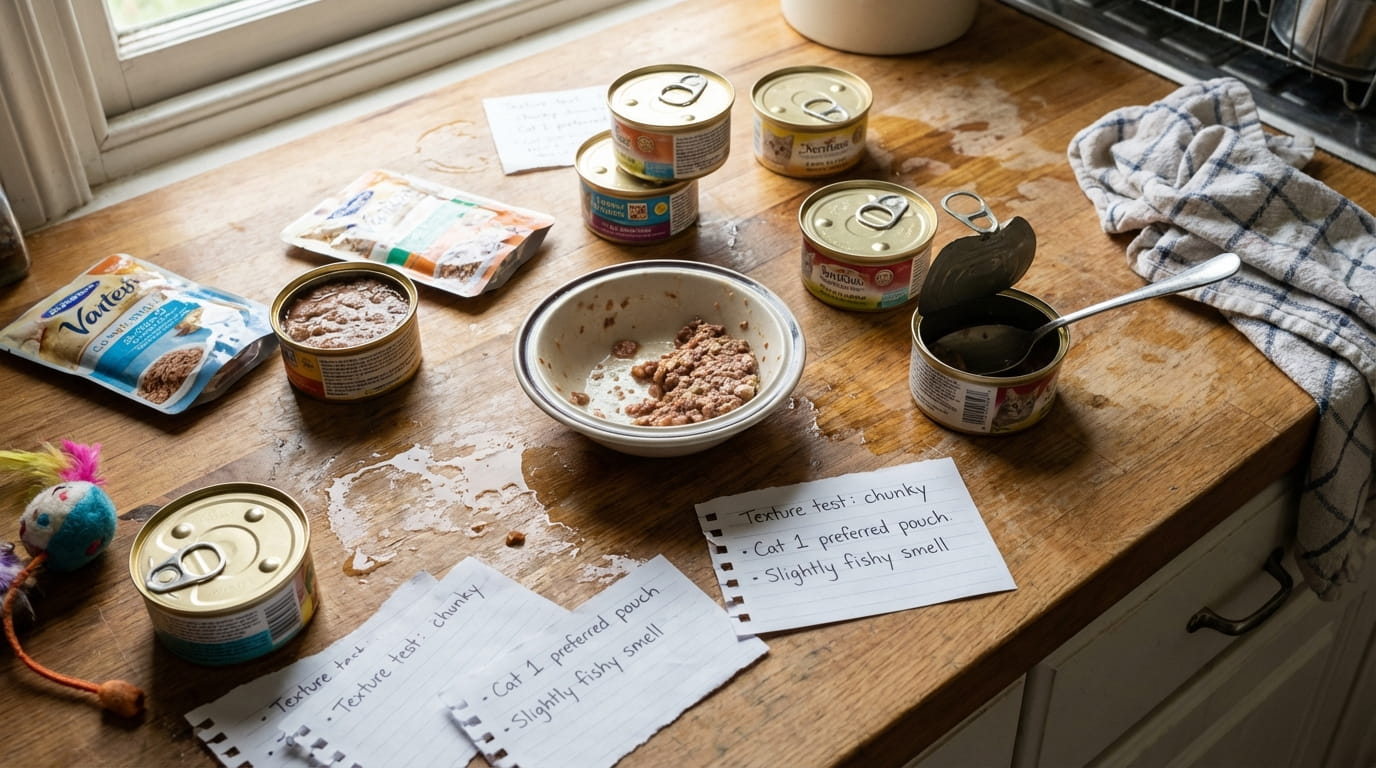
Comparing dietary moisture illustrates why food selection is the most significant factor in feline hydration:
- Commercial Dry Kibble: Contains roughly 6% to 10% moisture. A cat eating dry food must drink 200+ ml of still water daily from a bowl just to stay balanced.
- Commercial Wet Food: Contains roughly 75% to 82% moisture. Two 3-oz cans of wet food provide around 140 ml of biological moisture, effortlessly fulfilling over 60% of daily hydration needs.
Read our in-depth nutritional breakdown on Wet Food vs. Dry Food for Indoor Cats and our guide on Best Cat Food for Indoor Cats.
5 Practical Ways to Increase Your Cat’s Water Intake

- Introduce a Circulating Water Fountain: Moving water triggers a cat’s visual and auditory hunting senses while keeping water cool and aerated. Explore our hands-on tested models in our Cat Water Fountain vs. Bowl Guide.
- Separate Water from Food and Litter: In nature, cats do not drink near recent kill sites to avoid bacterial contamination. Place water stations at least 5 to 10 feet away from food dishes and far from litter boxes.
- Switch to Wide Ceramic or Stainless Bowls: Deep plastic bowls trigger whisker fatigue (when sensitive tactile whiskers rub against bowl rims) and harbor bacteria. Opt for wide, shallow ceramic or stainless steel dishes.
- Incorporate Warm Broth or Pure Water into Canned Meals: Add 1 to 2 tablespoons of warm water or unsalted, allium-free bone broth to wet food to create a hydrating gravy.
- Set Up Multiple Hydration Stations: In multi-level homes, ensure there is at least one clean water dish on every floor in low-traffic, quiet areas.
Why Hydration Prevents Kidney Disease & Bladder Stones
Adequate daily hydration directly protects feline organ systems against chronic pathology:
- Diluting Urinary Minerals: High urine volume reduces the concentration of dissolved minerals, preventing precipitation into painful struvite or calcium oxalate stones. See our guide on Indoor Cat Urinary Problems.
- Kidney Filtration Support: Proper systemic hydration maintains renal blood perfusion, easing glomerular filtration workload. Read our Feline Kidney Disease Diet Guide.
- Digestive Transit: Adequate fluid prevents obstipation (severe constipation) by softening fecal matter during colon transit.
5 Warning Signs of Dehydration to Watch For

- Loss of Skin Elasticity (Skin Tenting): When you gently lift the skin over the shoulders, it should instantly snap back. If it recedes slowly or remains tented, the cat is dehydrated.
- Tacky or Dry Gums: Healthy feline gums are moist and slippery. If they feel sticky or dry, fluid deficit is present.
- Sunken, Dull Eyes: In moderate-to-severe dehydration, eyeballs appear slightly retracted into the orbits.
- Lethargy and Weakness: Reduced movement and unwillingness to jump onto perches.
- Infrequent Urination / Hard Stools: Producing small, dense urine clumps in the litter box less than twice per day.
Common Hydration Mistakes Cat Owners Make
- Relying on Cow’s Milk for Hydration: Most adult cats are lactose intolerant. Milk causes severe osmotic diarrhea, which paradoxically accelerates dehydration.
- Leaving Water Stagnant for Days: Unwashed bowls develop bacterial biofilm that repels sensitive feline olfaction. Wash bowls daily.
- Placing Water Right Next to the Litter Box: Feline territorial hygiene instincts cause them to reject water placed near elimination areas.
- Assuming “Bowl is Still Full” Means Cat Is Fine: A full water bowl often indicates the cat is avoiding it due to location, whisker contact, or stale taste.
When to See a Veterinarian (Sudden Thirst Changes)
If you notice your indoor cat suddenly hanging over the water bowl, drinking obsessively (polydipsia), or producing abnormally large urine pools in the litter box, seek immediate veterinary evaluation. Sudden increased thirst is a hallmark clinical symptom of Chronic Kidney Disease (CKD), Diabetes Mellitus, or Hyperthyroidism. Never ignore sudden changes in feline drinking habits.
Frequently Asked Questions
Is municipal tap water safe for cats?
Yes, in areas with clean municipal drinking water. However, some cats dislike strong chlorine odor. Using a carbon-filtered pet fountain or filtered pitcher water significantly improves palatability.
Can an indoor cat get all its water from wet food alone?
Very nearly. An all-wet diet meets 70% to 85% of total fluid needs. However, fresh clean water should always be accessible at all times.
Do cats need more water in hot summer months?
Yes. Elevated temperatures increase respiratory moisture loss through panting and grooming saliva evaporation, raising daily fluid requirements by 15% to 25%.
Is milk a healthy hydration alternative for cats?
No. Most cats lack lactase enzymes to digest cow’s milk, resulting in abdominal cramping, gas, and severe diarrhea that worsens dehydration.
Why does my cat paw at the water bowl before drinking?
Cats have poor close-up depth perception. Pawing ripples the surface, allowing the cat to visually gauge water depth before dipping their tongue.
🐾 Explore More Cat Wellness & Hydration Guides
Discover more hands-on tested equipment and evidence-based nutrition tips for your indoor cat: