By Emma Hartley | Last updated August 15, 2026 | Reviewed by IndoorCatWell Editorial Team
This article provides unbiased editorial guidance. If you buy through our links, we may earn an affiliate commission at no extra cost to you. Read our full Affiliate Disclosure.
⚡ Quick Answer: What Is the Best Cat Food for Indoor Cats?
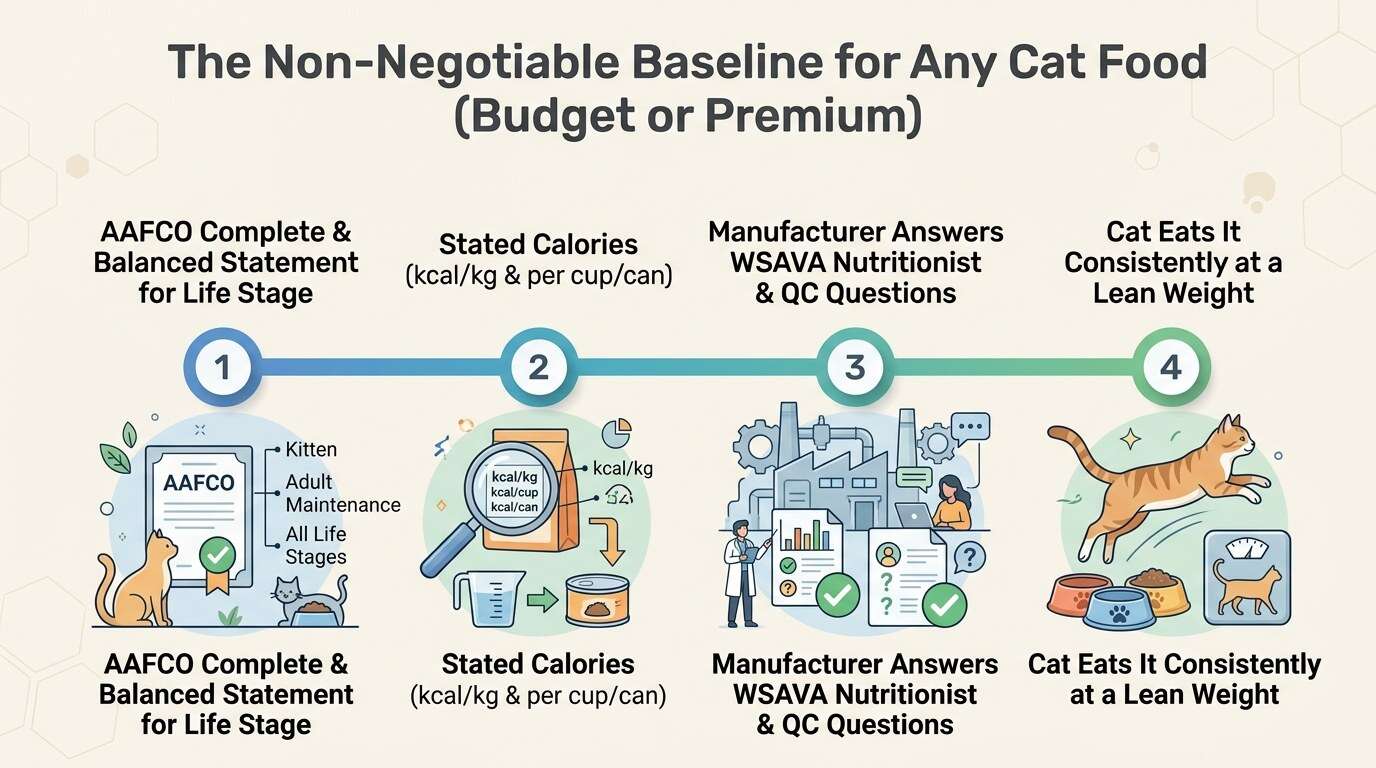
There is no universal “best” indoor cat food because the phrase “indoor formula” is an unregulated marketing term. What genuinely matters is selecting an AAFCO-certified complete and balanced diet matched to your cat’s specific life stage, controlling total caloric intake to reflect lower indoor activity, and prioritizing high-moisture wet food to safeguard urinary tract and kidney health. Calorie portioning, not a special bag logo, is the true key to indoor feline longevity.
📌 Table of Contents
- Key Takeaways
- At a Glance: Indoor Nutrition Q&A
- What “Indoor Formula” Actually Means
- The Real Indoor Challenge: Calories In vs. Calories Out
- Body Condition Scoring (BCS) vs. Bathroom Scales
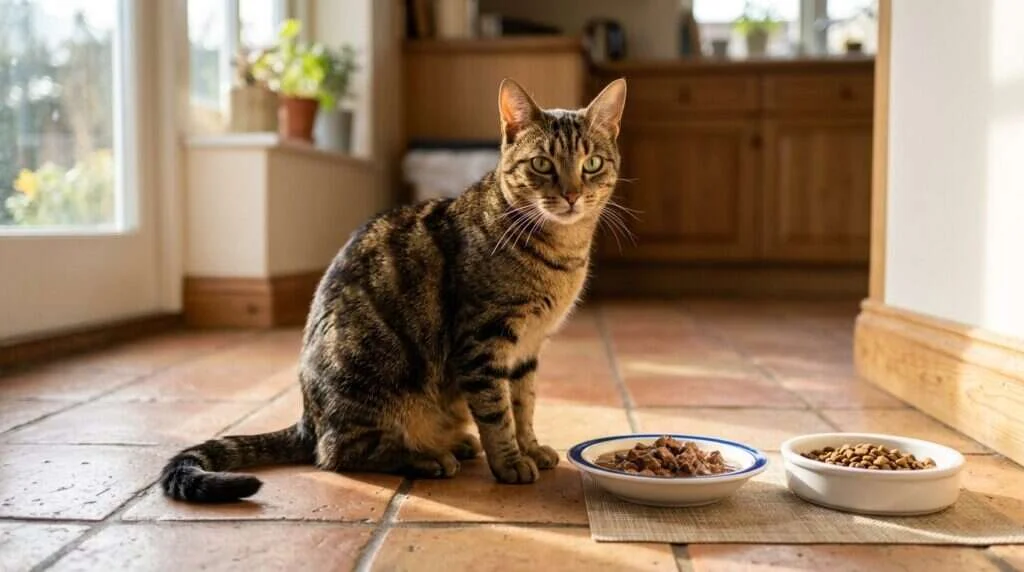
- Wet Food, Dry Food, or Mixed: The Full Breakdown
- Fiber and Hairballs: When It’s Actually Relevant
- Core Feline Nutrients That Never Change
- How to Choose Based on Your Specific Cat
- Common Mistakes to Avoid
- When to See a Veterinarian
- Frequently Asked Questions
Key Takeaways
- “Indoor Formula” Is Not a Medical Category: AAFCO has no separate nutrient standard for indoor cats — it is an adult maintenance food with slightly reduced fat and added fiber.
- Indoor Cats Burn ~20%–30% Fewer Calories: Without daily outdoor hunting and territorial roaming, sedentary indoor cats require strict portion measurement rather than open free-feeding bowls.
- Wet Food Offers a Hydration Advantage: Canned food provides ~78% moisture, significantly reducing the risk of feline lower urinary tract disease (FLUTD) and chronic kidney stress.
- Fiber Targets Hairball Transit: Added insoluble fiber helps sweep ingested grooming hair through the bowels, but regular brushing is equally critical.
- Biological Needs Remain Carnivorous: High animal-based protein, dietary taurine, and essential arachidonic acid fatty acids are mandatory regardless of an indoor lifestyle.
- BCS Trumps the Scale: Evaluating your cat’s rib-feel and waist tuck gives an immediate, accurate assessment of whether daily calories are dialed in.
At a Glance: Indoor Nutrition Q&A
| Question | Short Answer |
|---|---|
| Do indoor cats need special “indoor” food? | Not strictly — a high-quality standard adult maintenance food, portioned accurately, accomplishes the exact same goal. |
| What is the #1 health risk for indoor cats? | Obesity resulting from free-feeding high-carbohydrate kibble combined with low physical activity. |
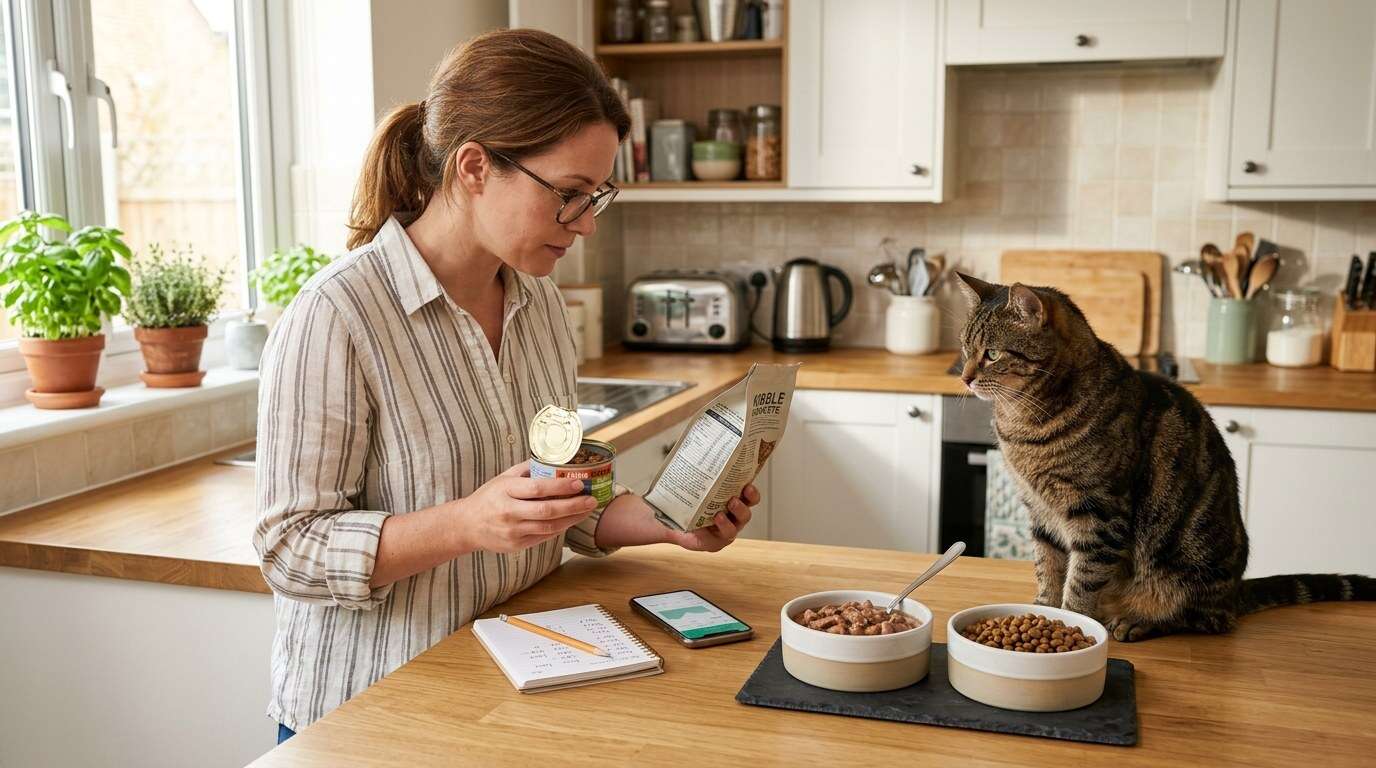
| Is wet or dry food better for indoor cats? | Wet food delivers higher hydration and lower calorie density; a mixed routine is an effective, practical compromise. |
| Do all indoor cats need hairball formula? | Only if your cat experiences chronic, recurring hairball regurgitation despite regular brushing. |
| How many calories does an indoor cat need? | Typically 180 to 240 kcal per day for an average 9–10 lb neutered cat. Use our Calorie Calculator Guide. |
What “Indoor Formula” Actually Means
When you walk down the pet food aisle, dozens of bags feature the label “Indoor Adult,” “Indoor Health,” or “Indoor Weight & Hairball.” Under pet food law, there is no official AAFCO nutrient profile designated for “indoor cats.” An indoor cat food is simply an adult maintenance formula modified in three predictable ways:
- Lower Fat & Calorie Density: Crude fat is often reduced from standard levels (18%–20%) down to 10%–14%, lowering total metabolizable energy to around 320–360 kcal per cup.
- Added Insoluble Fiber: Ingredients like powdered cellulose, beet pulp, miscanthus grass, or psyllium husk are boosted (crude fiber 6%–10% vs. standard 2%–4%) to physically bind hair in the stomach.
- Supplemental L-Carnitine: An amino acid derivative added to assist in fat metabolism and lean muscle maintenance.
While these modifications can be helpful for a sedentary cat prone to weight gain, you can achieve the exact same health outcomes with any premium adult food simply by measuring portions and brushing your cat weekly.
The Real Indoor Challenge: Calories In vs. Calories Out
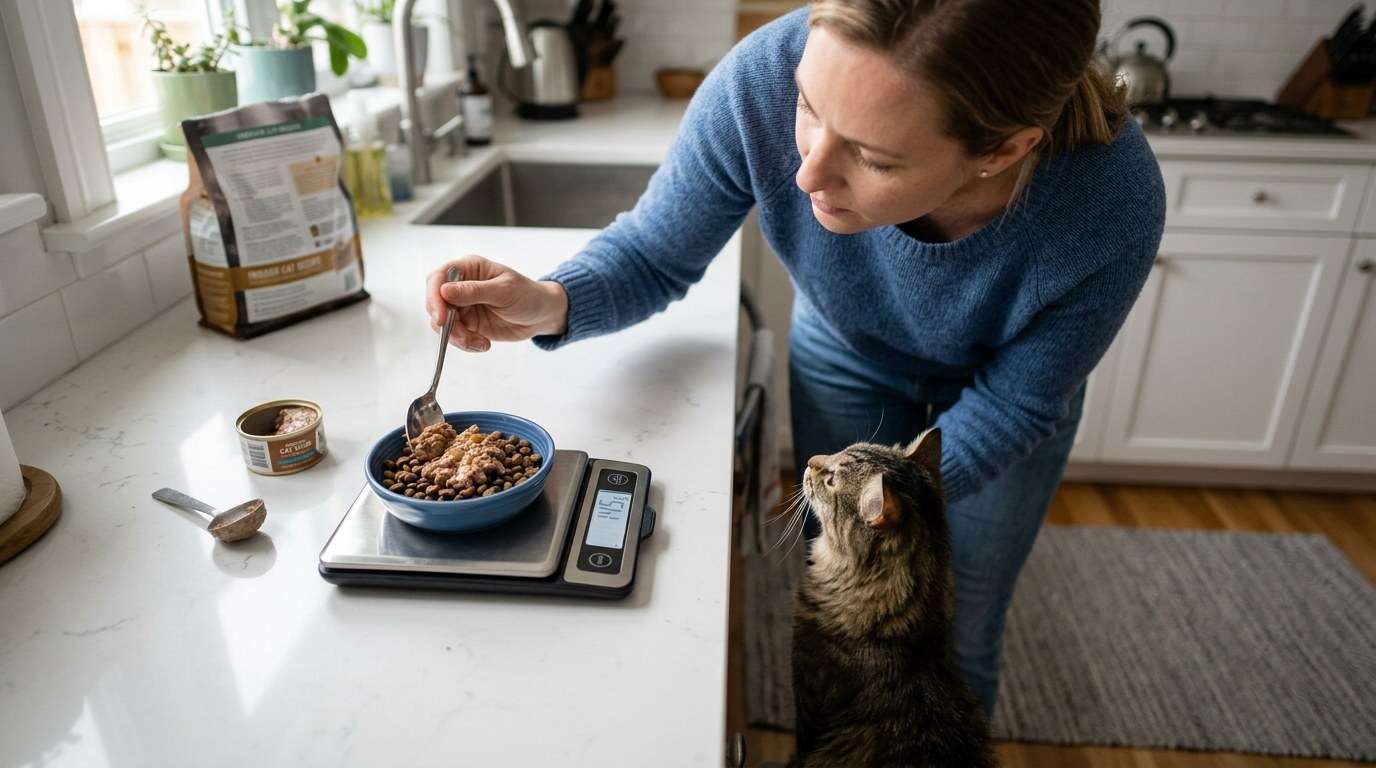
Indoor living extends feline life expectancy dramatically by eliminating traffic hazards, predators, and contagious diseases. However, indoor cats sleep 15 to 18 hours per day and burn significantly fewer calories than outdoor felines who hunt and defend outdoor territory.
When an indoor cat has unlimited access to a full bowl of dry kibble (free-feeding), they inevitably consume excess calories out of boredom. Over time, even 20 extra calories per day (equivalent to just 5–6 pieces of kibble) leads to progressive obesity, increasing the lifetime risk of feline diabetes, hepatic lipidosis, and arthritis.
Body Condition Scoring (BCS) vs. Bathroom Scales

A standard 9-point Body Condition Score (BCS) system established by veterinary nutritionists is the most reliable way to assess whether your cat’s calorie intake is balanced:
- Score 1–3 (Underweight): Ribs, spine, and hip bones clearly visible with no palpable fat covering.
- Score 4–5 (Ideal Body Condition): Ribs are easily felt under a slight fat layer; an obvious waistline is visible behind the ribs when viewed from above; a distinct abdominal tuck is visible from the side.
- Score 6–7 (Overweight): Ribs are difficult to palpate under a moderate fat layer; waistline is barely discernible; abdominal fat pad is noticeable.
- Score 8–9 (Obese): Ribs cannot be felt under a thick fat layer; abdomen is visibly rounded and pendulous; fat deposits on spine and face.
Wet Food, Dry Food, or Mixed: The Full Breakdown

| Factor | Wet Food | Dry Kibble |
|---|---|---|
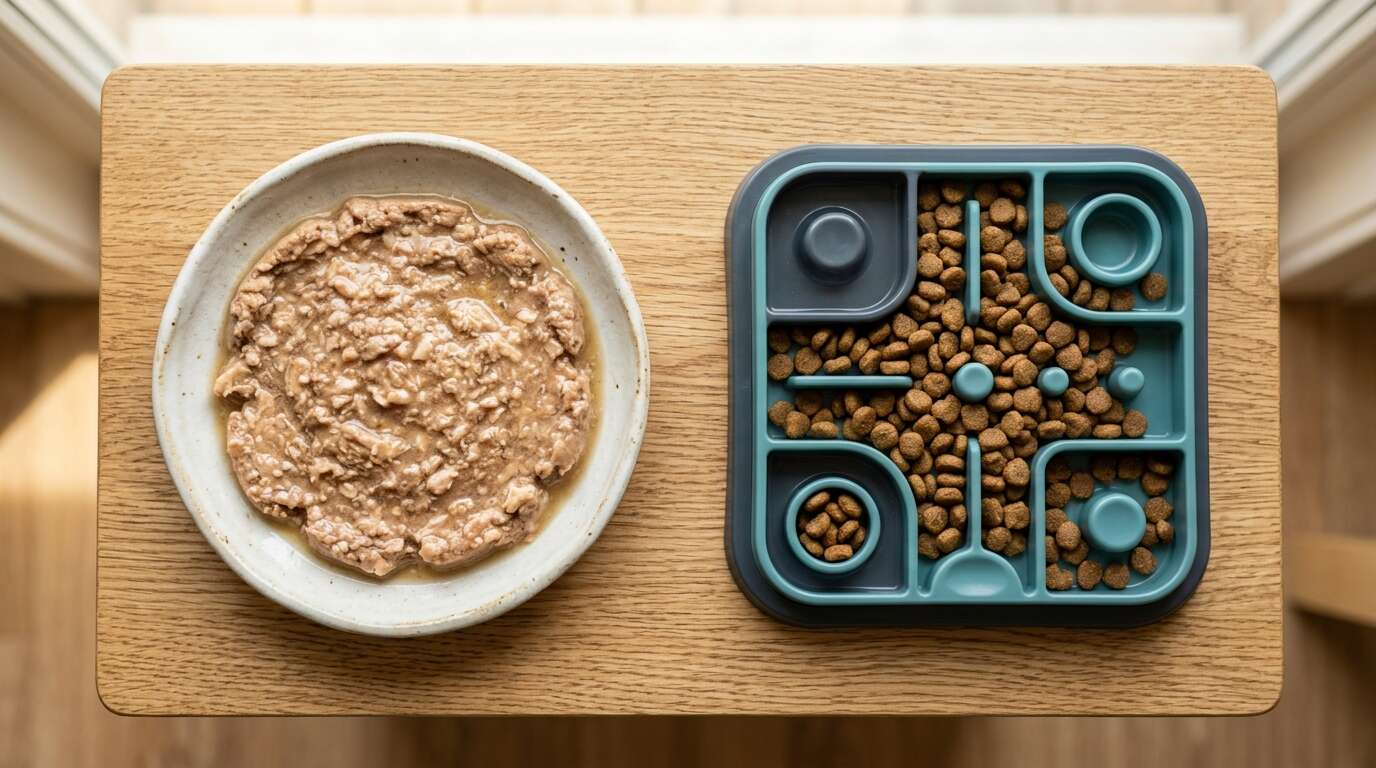
| Moisture Content | 75%–82% (Excellent natural hydration) | 6%–10% (Requires active bowl drinking) |
| Calorie Density | Low per ounce (High meal volume, greater satiety) | High per ounce (Easy to overfeed small volumes) |
| Carbohydrate Level | Typically <10% on a Dry Matter basis | Typically 25%–40% (Starches required for kibble shape) |
| Urinary Health | Dilutes urine, preventing bladder crystals | Concentrates urine if water intake is low |
| Cost & Convenience | Higher cost, requires refrigeration after opening | Budget-friendly, long shelf life, automatic feeder friendly |
For a comprehensive comparison of biological factors, read our guide on Wet Food vs. Dry Food for Indoor Cats.
Fiber and Hairballs: When It’s Actually Relevant
Because indoor cats spend significant portions of their day grooming in temperature-controlled environments, they shed continuously year-round. Ingested hair can accumulate in the stomach rather than passing into the intestines.
Indoor formulas with 6% to 9% crude fiber provide non-fermentable bulk that sweeps hair through the gastrointestinal tract. However, if your cat rarely coughs up hairballs, feeding high-fiber food is unnecessary and can lead to bulkier stools and reduced nutrient absorption. Pairing regular grooming with a balanced diet is more effective than relying on specialized fiber food alone.
Core Feline Nutrients That Never Change
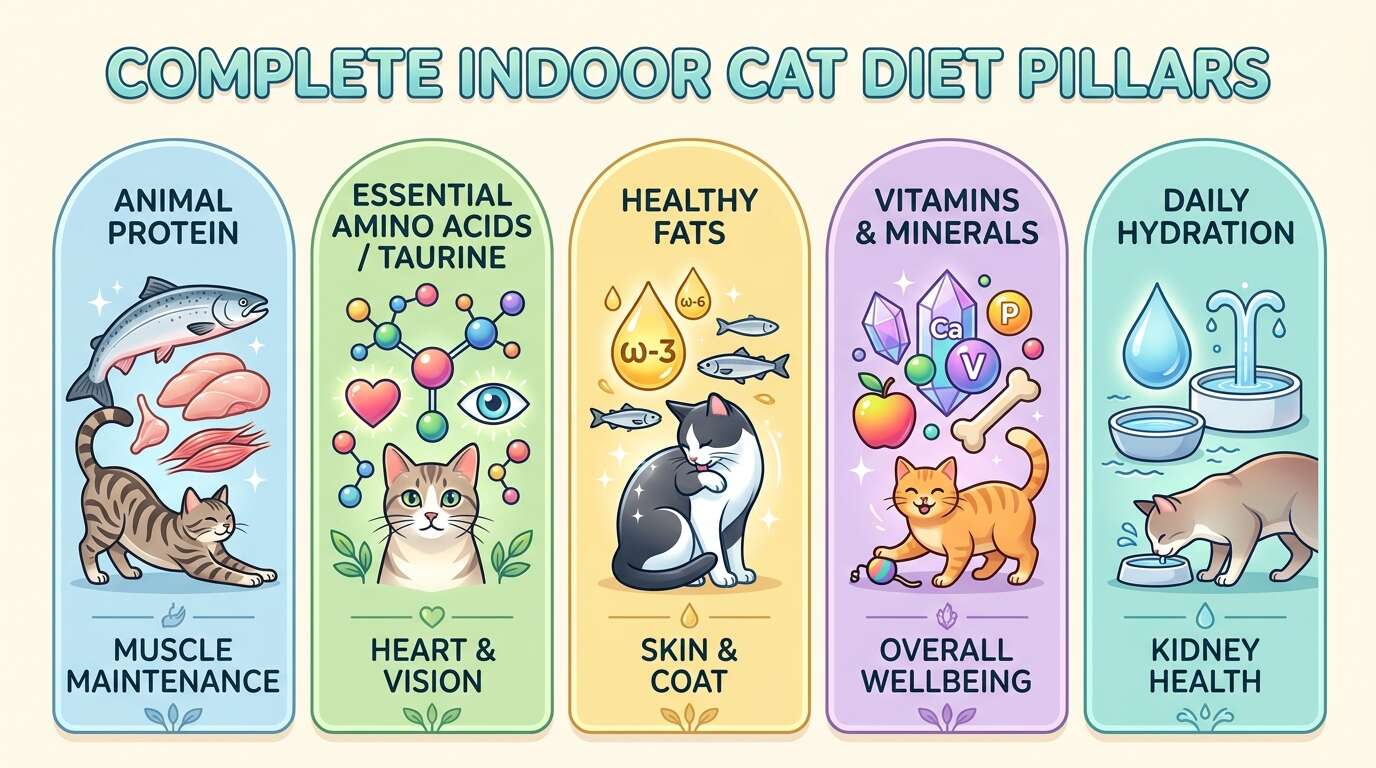

Regardless of whether a bag says “indoor,” cats remain strict obligate carnivores. Any formula you select must provide:
- High Animal Protein (30%+ DM): Muscle meats, poultry, and fish delivering essential amino acids.
- Taurine & Arginine: Essential amino acids cats cannot synthesize internally; deficiency causes dilated cardiomyopathy and blindness.
- Arachidonic Acid & Omega-3s (EPA/DHA): Essential fatty acids supporting skin barriers, joint mobility, and kidney filtration.
- Controlled Minerals: Balanced magnesium and phosphorus ratios to prevent struvite and calcium oxalate urinary crystals.
How to Choose Based on Your Specific Cat
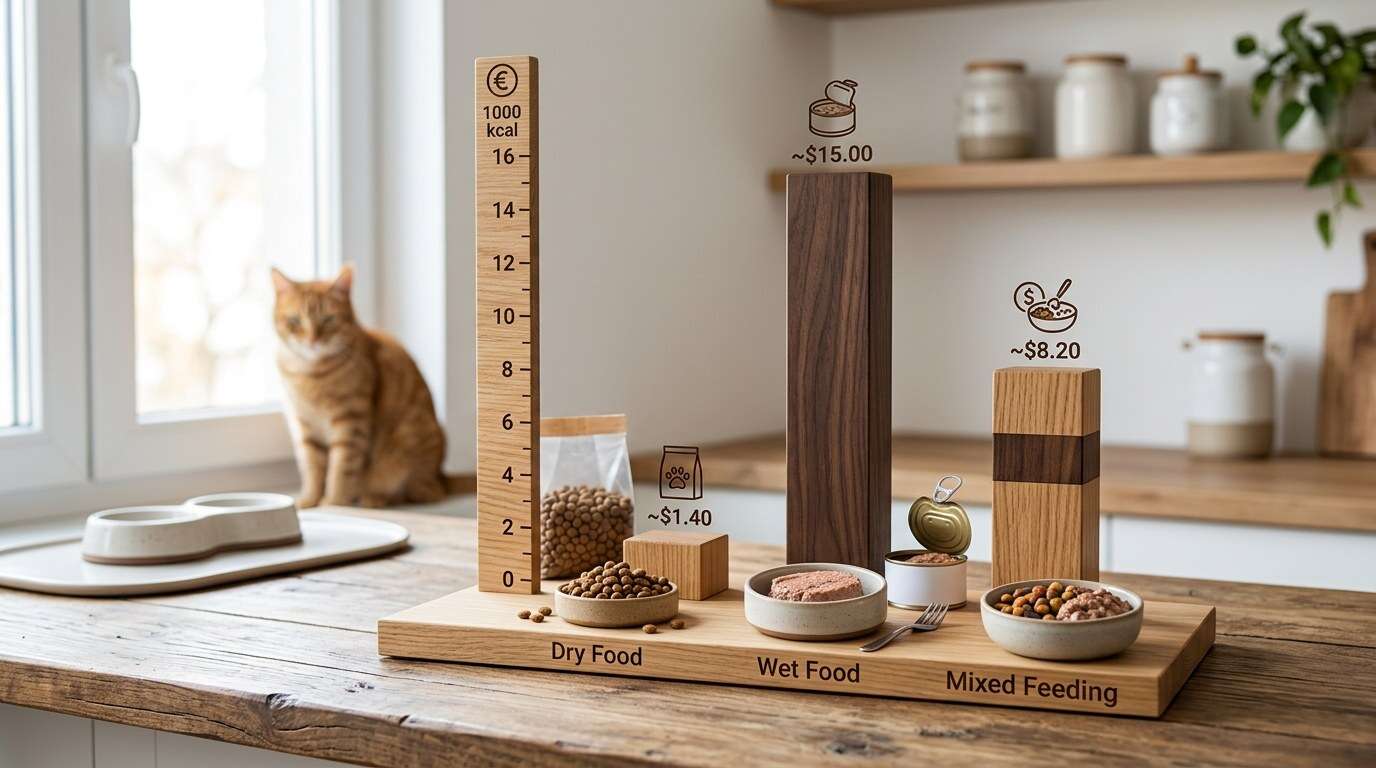
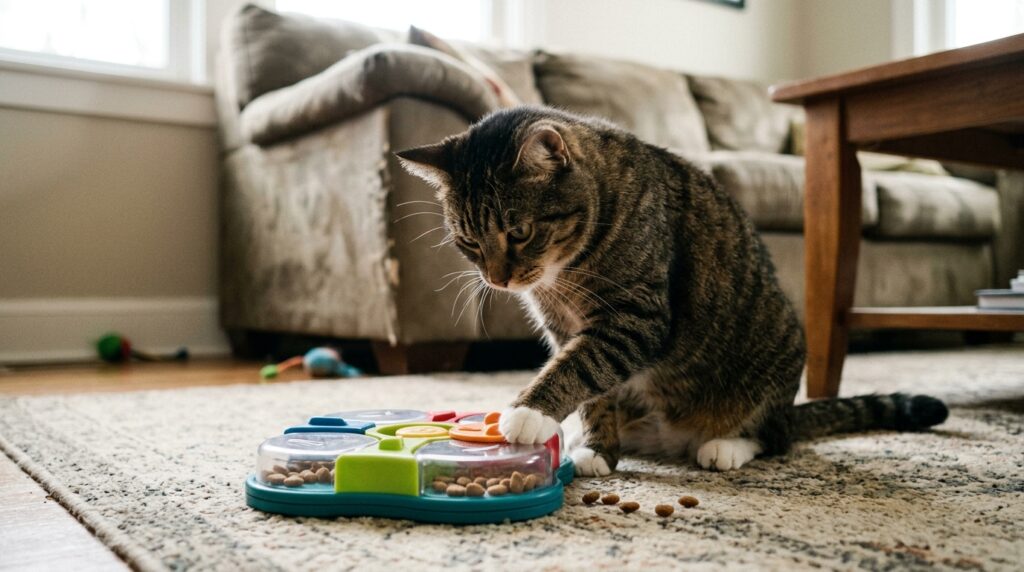
- For the Sedentary or Overweight Cat: Choose a high-protein, low-carbohydrate wet food or a measured moderate-calorie indoor kibble. Use puzzle feeders to slow eating pace. Explore our Hands-On Cat Product Reviews for tested interactive feeders.
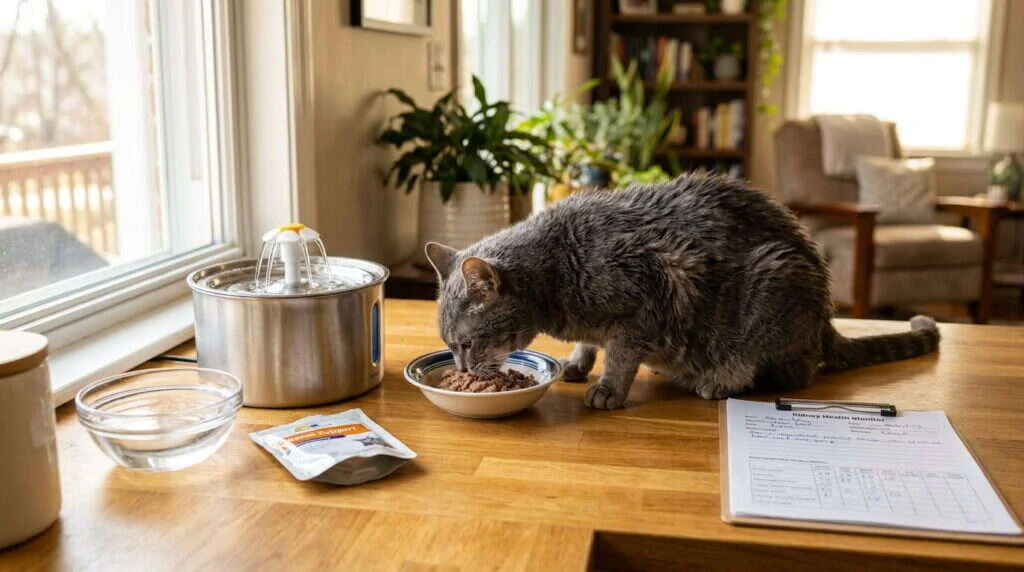
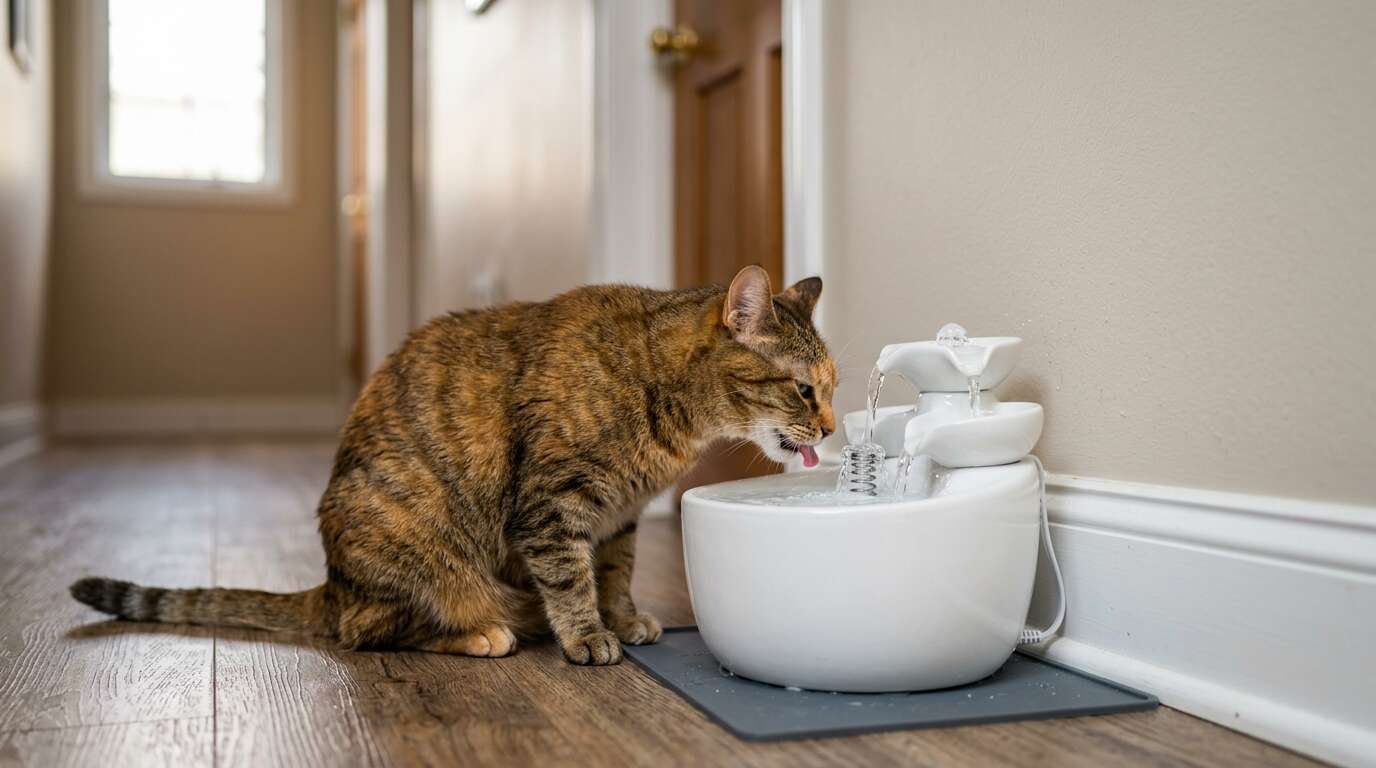
- For the Light Drinker: Prioritize wet canned food as at least 50% of the daily diet and install a stainless steel water fountain. Learn more in our Cat Water Fountain vs. Bowl Guide.
- For Senior Cats (Age 10+): Focus on highly digestible proteins and enhanced moisture to support aging kidneys. See our Senior Cat Nutrition Guide.
- For Growing Kittens: Never feed adult “indoor formula” to kittens under 12 months. Kittens require high calcium and calorie density; follow our Kitten Feeding Schedule.
Common Mistakes to Avoid
- Free-Feeding Kibble: Leaving a full bowl out all day guarantees overconsumption. Measure meals with a kitchen gram scale.
- Assuming “Grain-Free” Means Low-Carb: Many grain-free indoor formulas replace corn with starchy peas and tapioca. See Grain-Free Cat Food: Myths vs Facts.
- Ignoring Water Intake on Dry Diets: Cats eating dry food rarely drink enough still bowl water to match canned food hydration.
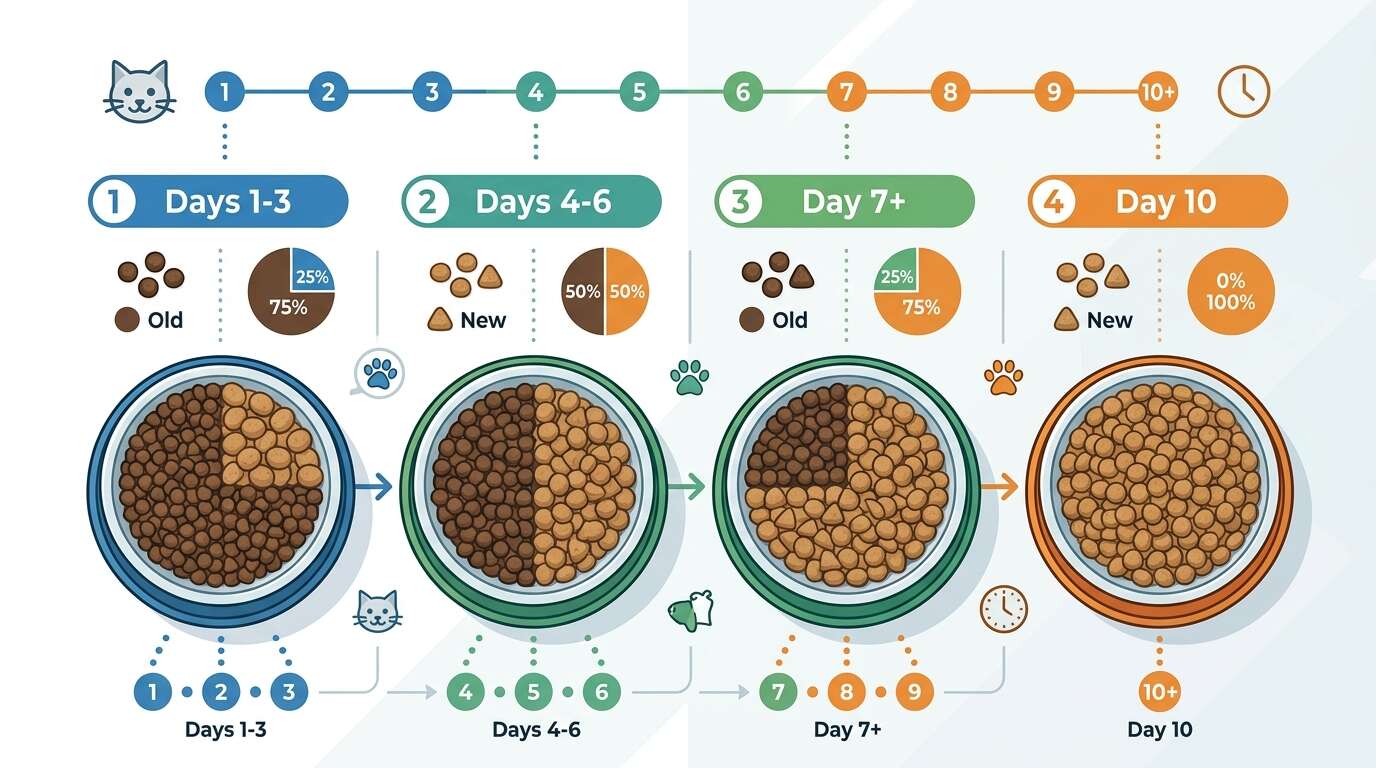
- Abrupt Diet Switching: Changing formulas overnight causes severe gastrointestinal upset. Transition gradually over 7 to 10 days.
When to See a Veterinarian
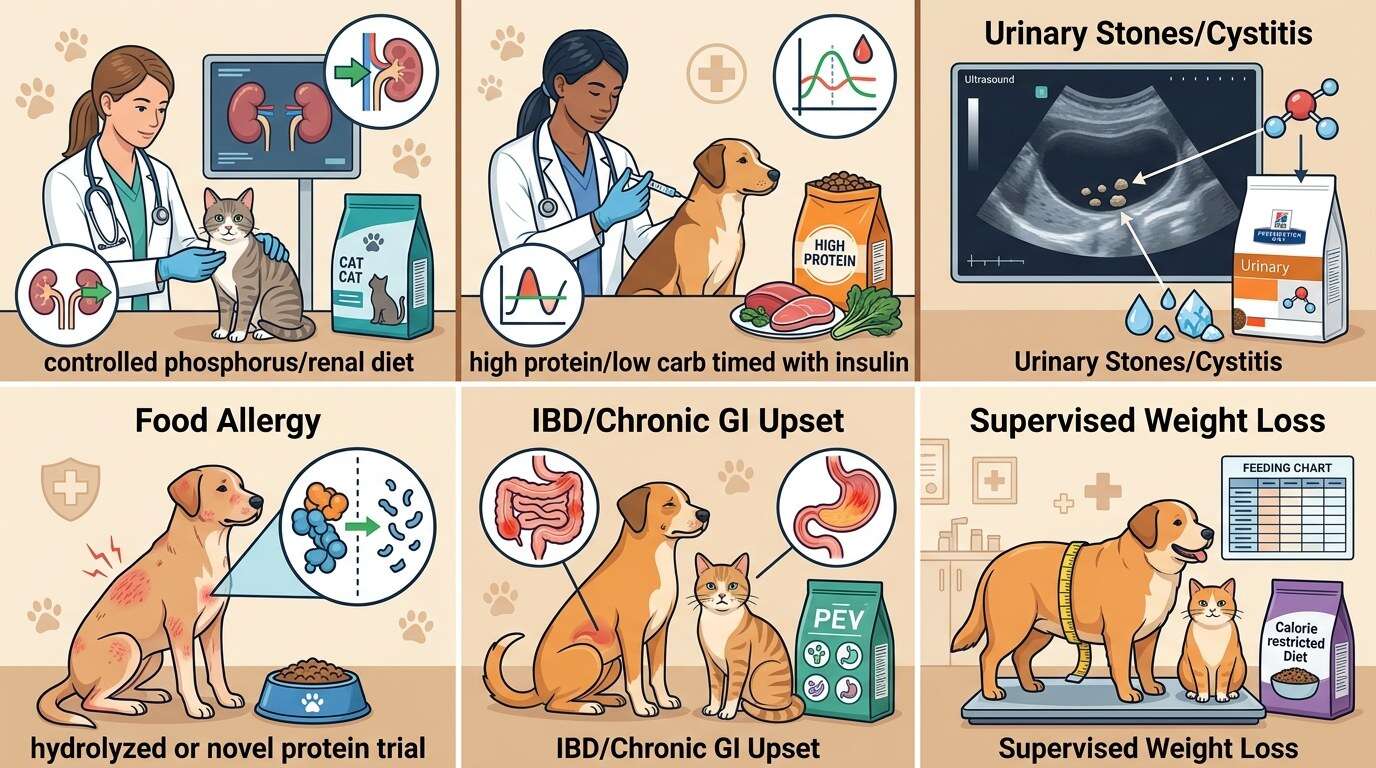
If your indoor cat experiences sudden weight changes, vomiting, litter box straining, or lethargy, consult your veterinarian immediately. Cats that stop eating for even 48 hours are at acute risk of hepatic lipidosis (fatty liver disease), a life-threatening metabolic condition.
Frequently Asked Questions
Is indoor cat food nutritionally different from regular adult cat food?
Not fundamentally. Both must meet standard AAFCO Adult Maintenance nutrient profiles. Indoor formulas simply tend to have slightly lower fat percentages and higher insoluble fiber levels for hairball management.
Do indoor cats need fewer calories than outdoor cats?
Yes. Because indoor cats do not roam large territories, hunt prey, or regulate body temperature against winter cold, they burn 20% to 30% fewer daily calories on average.
Should I switch my indoor cat to wet food only?
While not mandatory, an all-wet or primarily-wet diet offers substantial benefits for weight regulation and urinary hydration. A 50/50 mixed feeding schedule is also highly effective.
Does dry kibble clean an indoor cat’s teeth?
Standard dry kibble provides minimal dental benefit because most pieces shatter instantly upon biting. Only veterinary-approved dental diets with elastic fiber matrices or daily brushing effectively remove plaque.
How do I know if my indoor cat is overweight?
Perform a rib check: run your fingers along your cat’s ribcage. If you cannot easily feel the ribs without pressing firmly, your cat is carrying excess fat and daily portions should be reduced.
🐾 Explore More Feline Nutrition & Product Guides
Looking for more evidence-based feeding and wellness advice? Check out our top indoor cat guides: