By Emma Hartley | Last updated July 29, 2026 | This post contains affiliate links. If you buy through them, we may earn a commission at no extra cost to you. We only recommend products we’d actually put in our own home.
Is grain free cat food good or bad for your pet? For most cats, grain-free isn’t automatically better, and it isn’t automatically worse. It’s a marketing category that happens to overlap with some genuinely good foods and some genuinely mediocre ones, and the “grain-free” label itself tells you almost nothing about actual nutritional quality. Cats are obligate carnivores that don’t have a biological requirement to avoid grains the way the marketing sometimes implies, and grain-free doesn’t mean low-carb, since manufacturers typically replace grains with other starches like peas, potatoes, or lentils to bind the kibble, which can carry a similar or higher carbohydrate load.
I looked into this seriously after noticing how much of the premium shelf space at every pet store had shifted toward grain-free over the last several years, and the more I read, the less the blanket claim held up. Some cats do better on grain-free. Most don’t need it at all.
Where the “grain-free is healthier” idea actually came from
The narrative largely traces back to comparisons with dogs and wolves, and an assumption that carnivores shouldn’t eat “filler” grains at all. Cats are obligate carnivores, meaning they need animal protein specifically, but that’s a different claim from “grains are harmful.” Small amounts of grain in a cat’s diet aren’t inherently problematic for a healthy cat, and grain-free formulas still typically contain carbohydrates from other sources to hold kibble together, since dry food generally requires some starch component regardless of what that starch is.
What grain-free actually changes
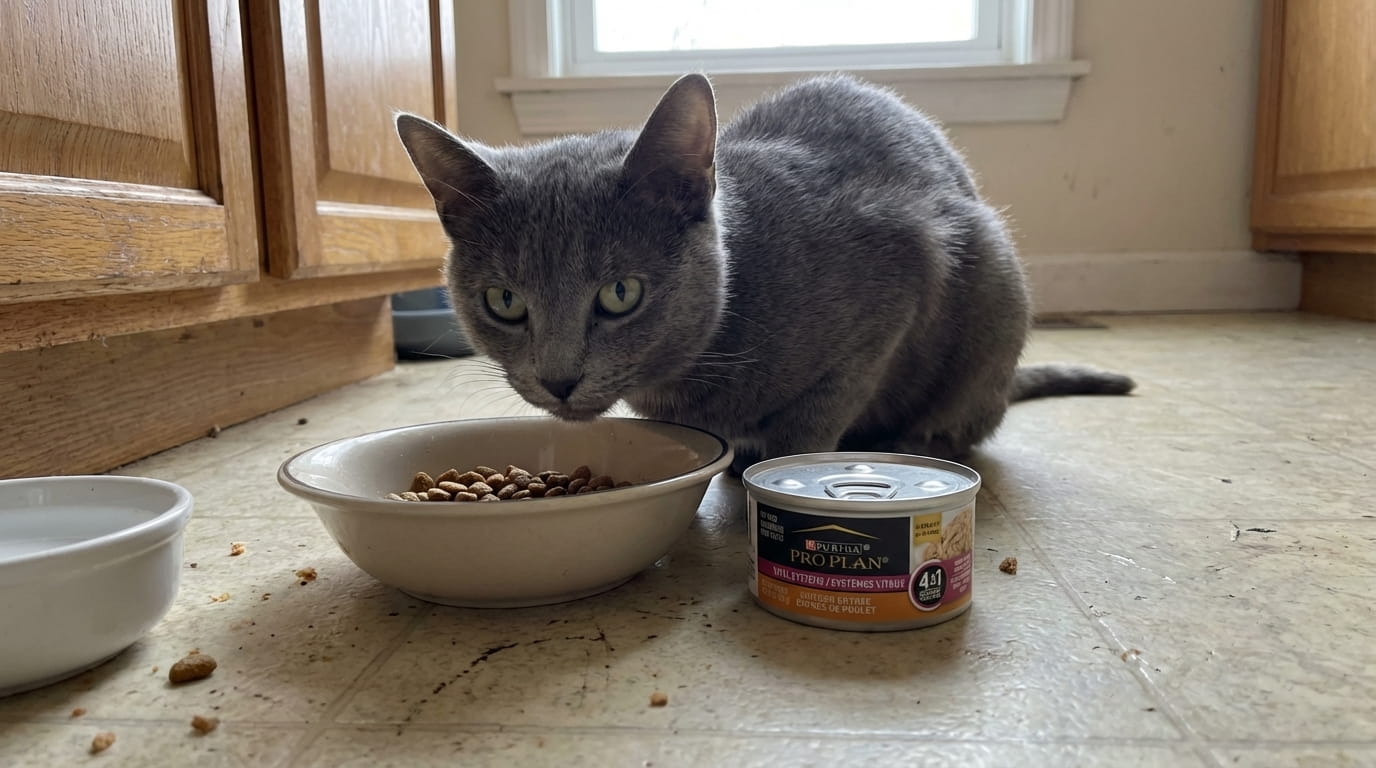
Removing grains and replacing them with legumes (peas, lentils, chickpeas) or other starches (potatoes, tapioca) changes the carbohydrate source, not necessarily the carbohydrate percentage, and not necessarily the protein quality. A grain-free food with a high percentage of pea protein isn’t automatically a high-meat-protein food just because it avoided wheat or corn. Reading the actual ingredient list and guaranteed analysis matters more than the grain-free label itself.
The DCM investigation, and why it matters here
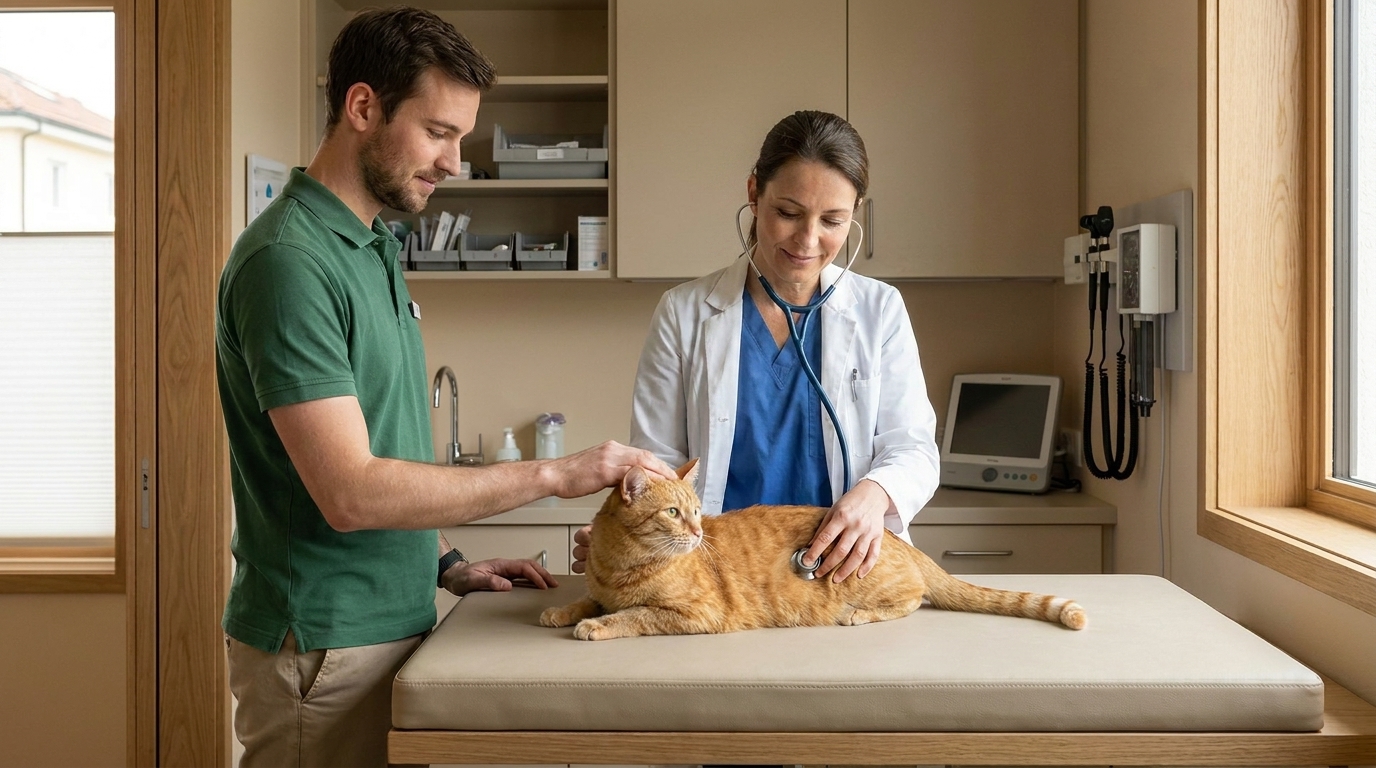
In recent years, there’s been ongoing veterinary and regulatory investigation into a possible link between certain grain-free, legume-heavy pet foods and dilated cardiomyopathy (DCM), a serious heart condition, primarily studied in dogs but relevant to how the pet food industry and vets now talk about grain-free formulas broadly. This is genuinely still an active area of research rather than settled science, and the studies to date focus predominantly on dogs, with far less direct data on cats specifically. The honest takeaway isn’t “grain-free causes heart disease,” it’s that the assumption “grain-free is automatically the safer, more natural choice” doesn’t hold up as cleanly as it did a decade ago, and it’s worth discussing with your vet rather than choosing grain-free by default based on marketing alone.
Does my cat actually need grain-free?
Cats with a diagnosed grain-specific allergy are genuinely rare, true grain allergies in cats are less common than most owners assume, and food sensitivity issues in cats more often trace back to specific proteins (chicken, beef, fish) rather than grains themselves. I go into the difference between a real diagnosed allergy and general sensitivity in my food allergies vs. food intolerance guide. If your cat doesn’t have a diagnosed grain allergy, grain-free isn’t solving a problem that exists for most cats.
What actually matters more than grain-free or not
The protein source and quality, the guaranteed analysis (protein, fat, carbohydrate percentages), and whether the food meets AAFCO standards for your cat’s life stage matter more than whether grains are present. A grain-inclusive food with a named animal protein as the first ingredient and a solid nutritional profile is often a better choice than a grain-free food padded with lower-quality plant proteins to hit its protein percentage on paper.
How to actually evaluate a food, grain-free or not
Look past the front-of-bag marketing language entirely and go straight to the ingredient list and guaranteed analysis on the back. I break down exactly how to read those numbers in my post on reading cat food labels, which is the more useful skill here than memorizing whether grain-free is good or bad as a blanket category.
Frequently Asked Questions
Is grain-free cat food better for cats with sensitive stomachs?
Not automatically. Digestive sensitivity in cats is more often linked to a specific protein or a sudden food change than to grains specifically. A slow transition and identifying the actual trigger matters more than switching to grain-free by default.
Do cats need grains in their diet?
No, cats don’t have a biological requirement for grains, but that doesn’t mean grains are harmful either. Small amounts in an otherwise balanced diet aren’t a concern for most healthy cats.
Is grain-free food linked to heart disease in cats?
The DCM investigation has focused primarily on dogs, with far less direct evidence in cats specifically. It’s an active area of research, not a settled conclusion, and worth discussing with your vet rather than assuming either way.
What should I look for instead of “grain-free” on a cat food label?
A named animal protein as the first ingredient, a guaranteed analysis with adequate protein for your cat’s life stage, and an AAFCO statement confirming the food is complete and balanced for that life stage.
Is grain-free food more expensive for no real benefit?
Often, yes, for a cat with no diagnosed grain sensitivity. Grain-free formulas are frequently priced at a premium that reflects marketing positioning more than a meaningful nutritional advantage for most cats.
Related reading: For full nutrition recommendations, see The Ultimate Indoor Cat Care Guide.