By Emma Hartley | Last updated July 29, 2026 | This post contains affiliate links. If you buy through them, we may earn a commission at no extra cost to you. We only recommend products we’d actually put in our own home.
This post is for informational purposes and isn’t a substitute for veterinary care. Diagnosing food allergies and intolerances in cats typically requires a supervised elimination diet under a vet’s guidance.
Recognizing cat food allergy symptoms early is essential for your cat’s health. A true food allergy is an immune system response to a specific protein, and it’s genuinely less common in cats than most owners assume. Food intolerance is a digestive reaction, not an immune one, and it’s more common but often gets mislabeled as an allergy because the visible symptoms overlap. The distinction matters because the actual fix, and how urgently to act, differs between the two.
I get asked about this a lot because “allergy” has become the default word owners reach for whenever a cat has any kind of food-related reaction, and it’s not always the accurate one.
What a true food allergy actually is
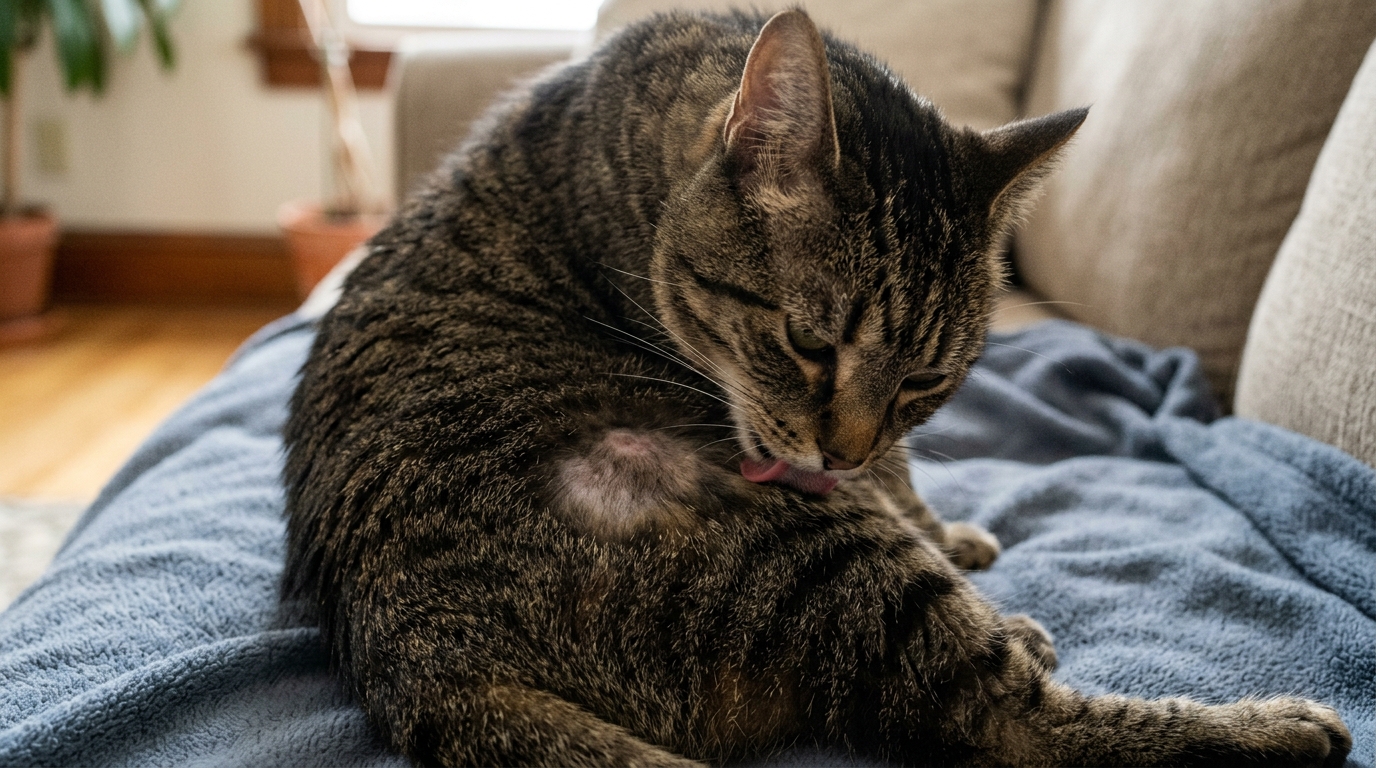
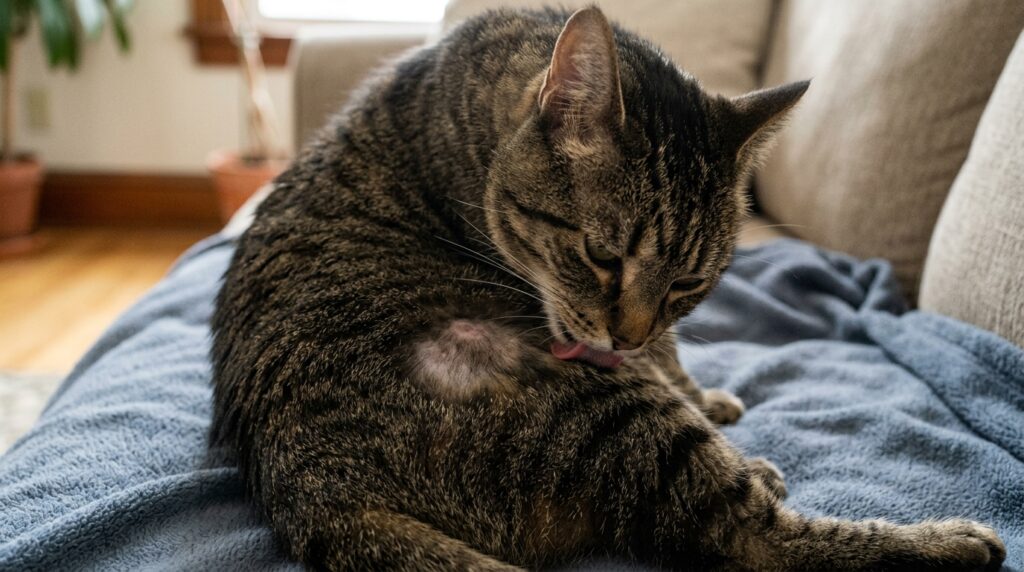
A food allergy involves the immune system identifying a specific protein, most commonly chicken, beef, fish, or dairy in cats, as a threat and mounting a response against it. This typically shows up as skin symptoms: itching, especially around the head, neck, and ears, recurrent skin infections, or overgrooming in specific areas. Gastrointestinal symptoms can occur too, but skin signs are often the more prominent and lasting indicator with a true allergy.
Food allergies tend to develop over time, sometimes after a cat has eaten the same protein source for years, not necessarily right after introducing something new. This surprises a lot of owners who assume an allergy would show up immediately with a new food.
What food intolerance actually is

Food intolerance is a digestive issue, not an immune response, meaning the cat’s system has trouble properly digesting a specific ingredient, which then causes vomiting, diarrhea, gas, or general digestive upset. This is more likely to show up soon after eating the trigger food, and it’s generally more common than a true allergy. A sudden diet change, richer food than a cat’s system is used to, or a specific ingredient that just doesn’t sit well with an individual cat’s digestion can all cause intolerance-type reactions without any immune involvement at all.
Why the overlap makes this confusing
Both can cause vomiting or loose stool. Both can seem tied to a specific food. Owners often assume any reaction to food is an “allergy,” when statistically it’s more likely to be intolerance or simply too abrupt a diet change. This matters practically because the fix for intolerance is often just a slower transition or avoiding one specific trigger ingredient, while a true allergy usually requires a more structured elimination process to identify and permanently avoid the actual protein involved.
How vets actually diagnose which one it is
There’s no simple blood or skin test that reliably diagnoses food allergies in cats the way there sometimes is for environmental allergies. The standard approach is an elimination diet: feeding a novel protein (one the cat has never eaten before) or a hydrolyzed protein diet (where the protein is broken down small enough that the immune system doesn’t recognize it) exclusively for 8-12 weeks, then reintroducing suspected trigger ingredients one at a time to see what causes symptoms to return. This process only works if followed strictly, no treats, no flavored medications, no exceptions during the trial period, since even small amounts of the trigger ingredient can prevent a clear result.
When it’s genuinely something else entirely
Not every digestive or skin issue is food-related at all. Environmental allergies, parasites, and various medical conditions can produce similar symptoms, which is part of why a proper vet workup matters rather than assuming it’s the food and cycling through diets on your own. If your cat is showing significant symptoms, vomiting frequently, losing weight, or has ongoing skin infections, that’s a vet visit, not a trial-and-error project to run alone at home.
What to actually do if you suspect a food issue
Don’t start randomly switching foods hoping to land on something that works. Talk to your vet about whether an elimination diet trial makes sense, and if so, use a genuinely novel or hydrolyzed protein source specifically for the trial period, not just a different brand of chicken-based food. I go into how to evaluate what’s actually in a food’s ingredient list in my guide on reading cat food labels, which becomes directly useful once you’re trying to identify or avoid a specific trigger protein.
Frequently Asked Questions
What are the most common signs of a food allergy in cats?
Itching, particularly around the head and ears, recurrent skin infections, and overgrooming in specific spots. Gastrointestinal symptoms can also occur but skin signs are often the more defining indicator.
How long does it take for food allergy symptoms to show up after eating a trigger?
This varies, and unlike a sudden intolerance reaction, true allergies can develop gradually, sometimes appearing after a cat has eaten the same protein source without issue for a long time.
Can a cat suddenly become allergic to a food they’ve always eaten?
Yes, this is actually a common pattern with true food allergies, which is part of why the fed-for-years food isn’t automatically ruled out as a suspect.
What is a hydrolyzed protein diet?
A prescription diet where the protein is broken down into pieces small enough that the immune system doesn’t recognize and react to it, commonly used during elimination diet trials to identify food allergies.
Should I switch my cat’s food if I suspect an allergy?
Talk to your vet first. A properly structured elimination diet trial gives a much clearer answer than randomly trying different commercial foods, which can actually make identifying the real trigger harder.
Related reading: For broader health and diet guidance, consult The Ultimate Indoor Cat Care Guide.