By Emma Hartley | Last updated July 29, 2026 | This post contains affiliate links. If you buy through them, we may earn a commission at no extra cost to you. We only recommend products we’d actually put in our own home.
A kitten’s nutritional needs change more in the first 12 months than at any other point in a cat’s life, and following a consistent kitten feeding schedule is essential for healthy development. Feeding a growing kitten like a small adult cat is one of the more common mistakes new owners make. Kittens need roughly two to three times the calories per pound of an adult cat, a higher protein percentage, and more frequent meals, because they’re building an entire body, not maintaining one.
I went through this with Fig, who came to us at around eight weeks old, and the thing that surprised me most wasn’t the amount of food, it was how often the right amount changed over just a few months. What worked at ten weeks was wrong by four months, and wrong again by eight.
0-4 months: small, frequent meals
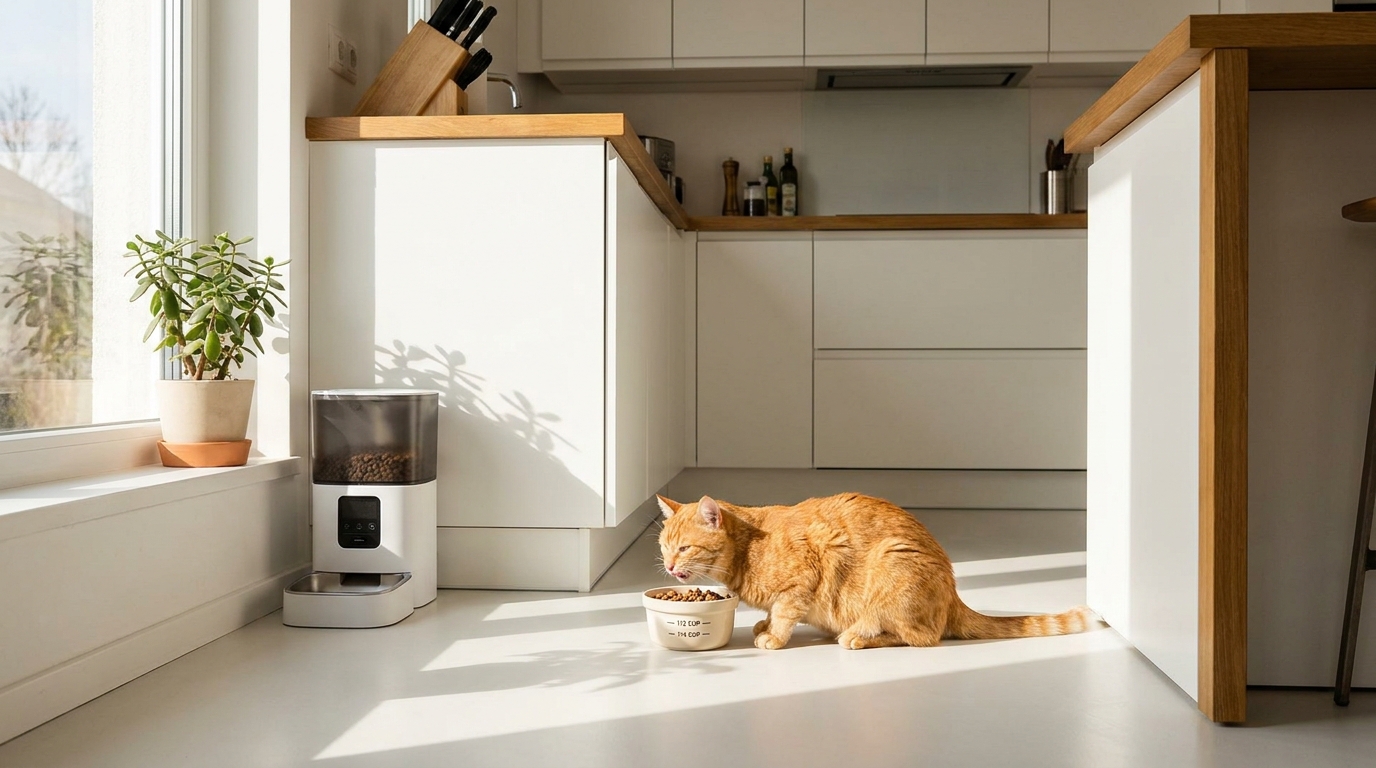
Young kittens have small stomachs and high energy needs, which means free access to food or four or more small meals a day works better than trying to fit a kitten onto an adult-style twice-daily schedule. Kitten-formula food, wet or dry, should be calorie-dense and higher in protein and fat than adult formulas, since this stage is almost entirely about growth. Weaning typically happens around 4-6 weeks with the breeder or shelter, so by the time a kitten comes home around 8 weeks, they should already be eating solid kitten food, not needing milk replacer. Check our Indoor Cat Starter Kit for our recommended kitten formula picks.
4-6 months: the biggest growth window
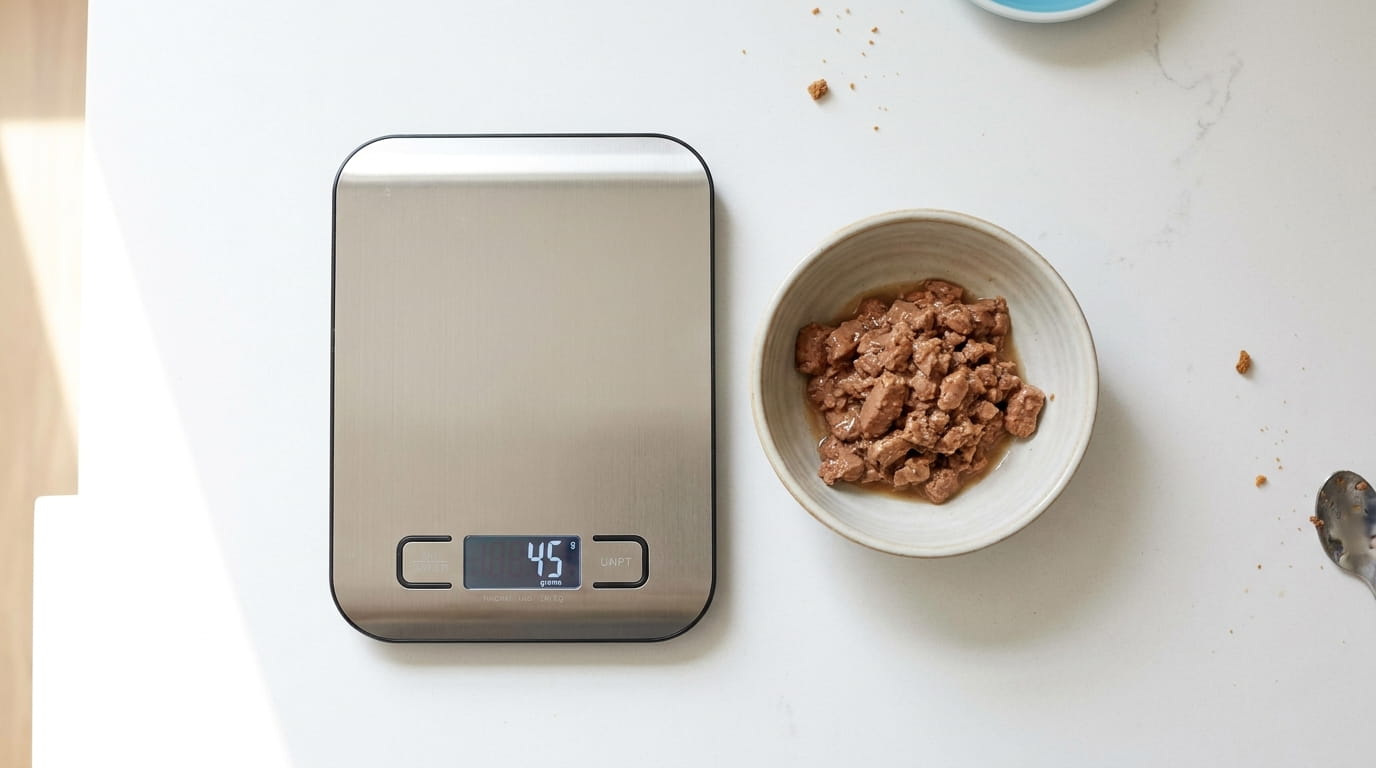
This is when a kitten grows the fastest and needs the most consistent access to food. Three to four meals a day, all kitten formula, is typical here. This is also usually when spaying or neutering happens, and it’s worth knowing that a kitten’s calorie needs don’t drop immediately after the procedure. The metabolic slowdown that comes with spay/neuter is real, but it becomes more relevant in the following months, not the same week.
6-12 months: growth slows, watch the transition

Growth rate starts tapering after 6 months, though cats, especially larger breeds, can keep filling out until closer to 12-18 months. This is the stage where overfeeding starts to matter more than it did earlier, since the kitten isn’t burning through calories at the same rate it was at 3 months old. Meals can typically drop to two to three times a day here.
When to switch to adult food
Most cats can transition to adult food somewhere between 10 and 12 months, though large or slow-maturing breeds sometimes stay on kitten formula slightly longer, worth checking with your vet if you’re unsure which category your cat falls into. Switch gradually over 7-10 days, mixing increasing amounts of adult food into the kitten food, the same slow-transition principle that applies to any food change in cats.
Signs you’re overfeeding or underfeeding
A kitten that’s gaining weight steadily, has good energy, and a coat that looks healthy is typically on track. Ribs that are difficult to feel under a layer of fat, or a kitten that seems consistently low-energy and isn’t gaining as expected, are both worth a vet check rather than a guess. Kittens should be weighed periodically during checkups specifically because weight gain patterns are one of the clearest signals of whether feeding is on track.
What actually matters more than the exact schedule
Consistency and formula matter more than hitting an exact number of meals per day. A kitten-specific formula (check the label for an AAFCO statement confirming it’s formulated for growth, not just “all life stages,” which is a different and less growth-targeted standard) covers the higher protein and calorie needs automatically, so you’re not trying to calculate exact grams from scratch. Free access to kitten food for the first few months, transitioning to scheduled meals as the kitten approaches 6 months, is a reasonable default that works for most healthy kittens.
Frequently Asked Questions
How many times a day should I feed a kitten?
Four or more small meals, or free access, for kittens under 4 months. Three to four meals from 4-6 months. Two to three meals from 6 months onward as growth slows.
When should I switch my kitten to adult cat food?
Typically between 10 and 12 months for most breeds, though larger or slower-maturing breeds may need kitten formula slightly longer. Transition gradually over 7-10 days.
Can I feed my kitten adult cat food early to save money?
Not recommended. Adult formulas don’t have the protein and calorie density kittens need for proper growth during this stage.
Is wet or dry kitten food better?
Both can work if labeled specifically for growth or kittens. A mix of both is common and gives some of the hydration benefit of wet food alongside the convenience of dry.
Why is my kitten always hungry even after eating?
Some kittens genuinely need more food than expected during rapid growth phases. If hunger seems extreme or paired with poor weight gain, that’s worth a vet visit rather than just increasing portions blindly. For more details on appetite in adult indoor cats, read our guide on indoor cat care routines.
Related reading: For complete care guidelines across all life stages, see The Ultimate Indoor Cat Care Guide.