By Emma Hartley | Last updated August 15, 2026 | Reviewed by IndoorCatWell Editorial Team
This article provides transparent, science-backed feline nutrition guidance. If you buy through our links, we may earn an affiliate commission at no extra cost to you. Read our full Affiliate Disclosure.
⚡ Quick Answer: Cat Food Ingredients Breakdown
Quality cat food ingredients center on named animal protein sources (like chicken, turkey, or salmon), mandatory taurine, and essential fatty acids like arachidonic acid. As obligate carnivores, cats require animal-derived amino acids that plant proteins cannot replace. Genuinely toxic ingredients to avoid at all costs include onions, garlic, chives, xylitol, and propylene glycol. Online controversy around wholesome grains and named organ by-products is largely marketing myth rather than biological hazard.
📌 Table of Contents
- Key Takeaways
- At a Glance: Ingredient Evaluation Verdicts
- What Obligate Carnivores Actually Need
- Taurine & Essential Fatty Acids (Arachidonic Acid)
- Ingredients Genuinely Worth Avoiding (Toxins & Hazards)
- Ingredients That Get Unfair Criticism (By-Products & Grains)
- Evaluating Ingredients for Allergies & Sensitive Stomachs
- 5-Step Framework for Evaluating Any Ingredient List
- Common Mistakes Cat Owners Make
- When to Involve a Veterinarian
- Frequently Asked Questions
Key Takeaways
- Animal-Derived Protein Is Non-Negotiable: Cats cannot synthesize essential amino acids like taurine and arginine from plant proteins like peas or corn.
- Taurine Deficiency Is Life-Threatening: Insufficient dietary taurine leads directly to dilated cardiomyopathy (heart failure) and irreversible retinal blindness.
- Alliums Are Highly Toxic: Onions, garlic, leeks, and chives destroy feline red blood cells (Heinz body anemia) even in tiny, cooked, or powdered doses.
- “Grain-Free” Is Not Hypoallergenic: The most common feline food allergies are beef, dairy, and fish — grains are rarely responsible for true food allergies.
- Named Organ Meats Are Superfoods: Clean organ by-products (chicken liver, heart, kidneys) deliver superior concentrations of natural vitamins and trace minerals compared to pure muscle meat.
- Artificial Dyes Add Zero Value: Synthetic colors (Red 40, Yellow 5) exist purely for human grocery visual appeal and provide no nutritional benefit to cats.
At a Glance: Ingredient Evaluation Verdicts
| Ingredient Category | Verdict & Practical Explanation |
|---|---|
| Named Animal Protein (Chicken, Turkey, Salmon, Duck) |
Essential (Gold Standard): Foundational primary source of digestible amino acids and energy. |
| Taurine | Mandatory: Essential amino acid that must be present in all feline diets to prevent heart failure. |
| Onion, Garlic, Chives (Alliums) | Strictly Avoid (Toxic): Causes oxidative breakdown of feline red blood cells and severe hemolytic anemia. |
| Xylitol (Birch Sugar) | Strictly Avoid (Toxic): Artificial sweetener causing acute hypoglycemia and hepatic failure. |
| Propylene Glycol | Strictly Avoid: Humectant banned in feline food due to its direct role in Heinz body formation. |
| Named Organ By-Products (Chicken Liver, Beef Heart) |
Nutrient-Dense & Beneficial: Packed with vitamin A, B-complex, iron, and taurine. |
| Whole Grains (Brown Rice, Oats, Barley) |
Safe for Most Cats: Easily digestible complex carbs providing fiber and energy in balanced formulas. |
| Artificial Food Colorants | Unnecessary: Added purely for owner aesthetic appeal; zero functional feline benefit. |
What Obligate Carnivores Actually Need
Unlike omnivorous dogs and humans who can synthesize various micronutrients from plant matter, cats are strict obligate carnivores. Evolutionary adaptation to an exclusively prey-based diet resulted in unique metabolic pathways that depend directly on animal tissue:
- High Dietary Protein Requirement: Feline liver enzymes continuously break down protein for energy, meaning cats cannot down-regulate protein metabolism during fasting.
- Preformed Vitamin A: Cats lack the intestinal enzyme to convert plant beta-carotene (from carrots or sweet potatoes) into active vitamin A. It must come preformed from animal liver or retinyl palmitate.
- Active Vitamin D3: Feline skin cannot synthesize vitamin D from sunlight; it must be supplied through animal fats, fish oils, or dietary supplements.
- Niacin (Vitamin B3): Cats cannot synthesize niacin from tryptophan and rely completely on animal tissue to meet their daily requirements.
Taurine & Essential Fatty Acids (Arachidonic Acid)

The Critical Role of Taurine
Taurine is an essential amino sulfonic acid found exclusively in animal muscle and organ meats. While dogs can synthesize taurine from methionine and cysteine, cats have limited enzyme activity and lose taurine continuously through bile acid conjugation. Any commercial diet must guarantee at least 0.10% taurine in dry food and 0.05% in wet food. A deficiency results in irreversible central retinal degeneration (blindness) and dilated cardiomyopathy.
Arachidonic Acid
While other animals convert plant-based linoleic acid (from vegetable oils) into arachidonic acid, cats lack the delta-6 desaturase enzyme. Arachidonic acid must come directly from animal fats (such as chicken fat or fish oil) to sustain cellular membrane integrity and reproductive health.
Ingredients Genuinely Worth Avoiding (Toxins & Hazards)
- Onions, Garlic, Shallots, and Chives: Contain thiosulfates and disulfides that cause oxidative damage to feline hemoglobin, precipitating acute Heinz body hemolytic anemia. Never feed table scraps or gravies seasoned with garlic or onion powder.
- Propylene Glycol: A chemical humectant previously used in semi-moist foods to retain softness; banned in feline nutrition due to its proven tendency to induce red blood cell destruction.
- Xylitol: An artificial sweetener found in human peanut butters, baked goods, and syrups that triggers acute liver necrosis in companion animals.
- Unnamed “Animal By-Products” & “Meat Meal”: Lack species transparency and allow manufacturers to cycle through low-grade slaughterhouse fractions of variable quality.
Ingredients That Get Unfair Criticism (By-Products & Grains)
Named By-Products
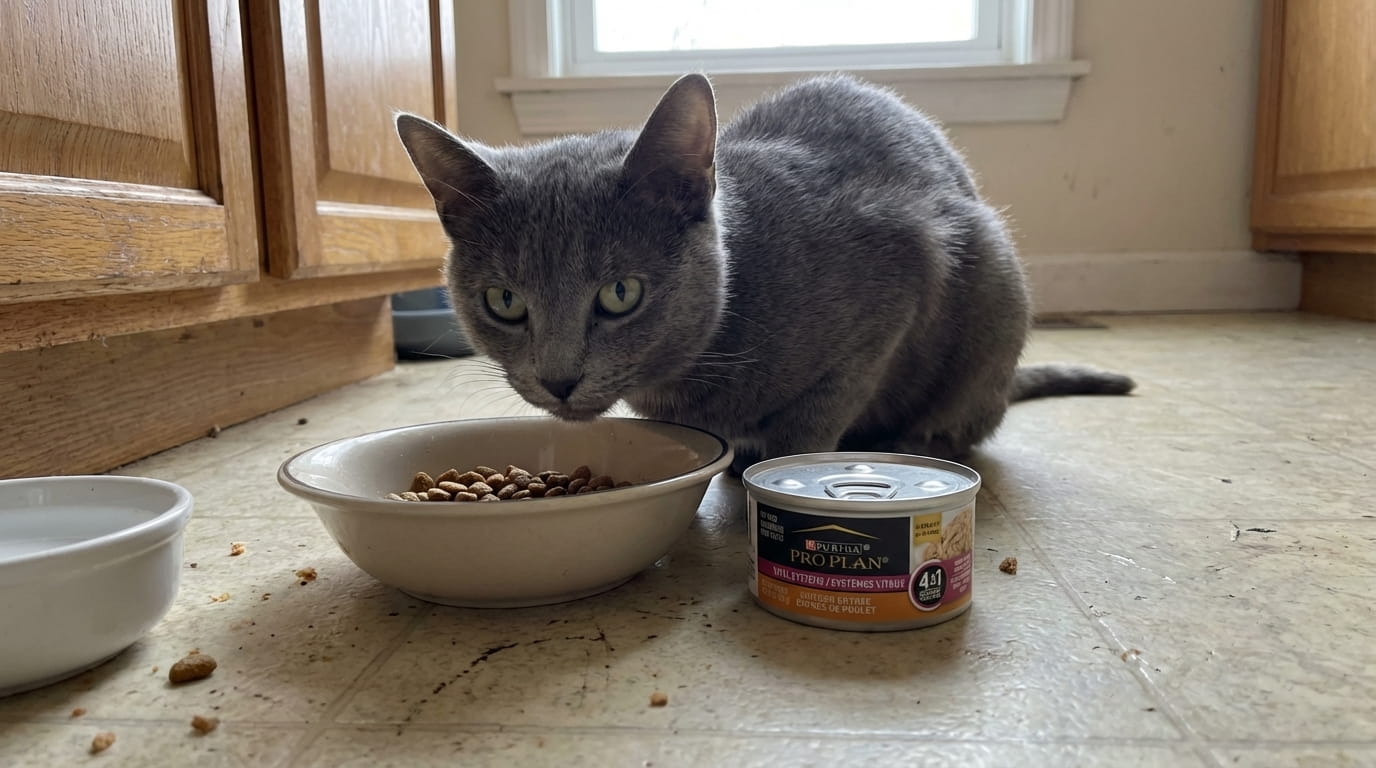
In the wild, cats eat whole birds and rodents, consuming the liver, spleen, and lungs first. In commercial pet food, “Chicken by-product meal” refers to these exact organ meats. They contain higher concentrations of taurine, vitamin A, and iron than skinless chicken breast. As long as the animal source is explicitly named, by-products are biologically beneficial.
Wholesome Grains
Grains like brown rice, oatmeal, and barley provide digestible carbohydrates and dietary fiber. Most cats digest cooked starches with over 90% efficiency. Furthermore, true grain allergies are rare; common food sensitivities in cats are overwhelmingly caused by animal proteins (beef, dairy, fish, or chicken). For a complete breakdown, read our guide on Grain-Free Cat Food: Myths vs. Reality.
Evaluating Ingredients for Allergies & Sensitive Stomachs
If your indoor cat suffers from chronic vomiting, loose stool, or obsessive face-scratching, selecting foods with transparent single-source proteins is critical. Avoid generic blends labeled “ocean fish” or “poultry dinner” and opt for limited-ingredient formulas featuring novel proteins like rabbit, duck, or venison. Check out our guide on Food Allergies vs. Food Intolerance in Cats.
5-Step Framework for Evaluating Any Ingredient List
- Verify Named Animal Protein at #1: Ensure real meat or named meat meal (e.g., Deboned Turkey, Salmon Meal) tops the list.
- Check for Mandatory Taurine: Confirm taurine is explicitly listed in the guaranteed analysis and ingredient panel.
- Scan for Ingredient Splitting: Watch for multiple pea or corn fractions (e.g., peas, pea protein, pea flour) that secretly outweigh the meat. Read our guide on How to Read a Cat Food Label.
- Confirm AAFCO Adequacy: Look for the official statement confirming the food is complete and balanced. Read What Does Complete and Balanced Mean?.
- Ensure Adequate Moisture: Pair dry food with wet food or water fountains to maintain hydration. Read our Water Fountain vs. Bowl Guide.
Common Mistakes Cat Owners Make
- Treating All By-Products as “Garbage”: Eliminating organ meats robs cats of essential micronutrients.
- Assuming High Protein Equals High Quality: A food can inflate crude protein using cheap pea protein concentrate that lacks vital animal amino acids.
- Sharing Human Food Seasoned with Garlic/Onion: Exposing cats to toxic alliums in broth or cooked meats.
- Ignoring Proper Life Stage Sizing: Feeding rich growth formulas to senior cats. Check our Senior Cat Nutrition Guide and Calorie Portion Guide.
When to Involve a Veterinarian
If you suspect an adverse food reaction or if your cat suffers from chronic renal insufficiency, urinary crystals, or diabetes, consult your veterinarian. Medical conditions require specialized clinical nutrition formulated with tightly regulated mineral ratios.
Frequently Asked Questions
Are by-products bad for cats?
Not inherently. Named organ by-products (such as chicken liver or beef heart) are exceptionally nutrient-dense sources of taurine, vitamins, and minerals. Unnamed generic “animal by-products” should be avoided for transparency.
Is grain-free food healthier for cats?
Not automatically. True grain allergies in cats are rare. Most grain-free foods simply substitute grains with other starch sources like peas or potatoes.
What ingredients should never be fed to cats?
Onions, garlic, chives, leeks, xylitol, chocolate, and propylene glycol are toxic to cats and should never appear in commercial foods, homemade meals, or treats.
Is taurine added synthetically or derived naturally?
Both. Natural meat provides taurine, but high-temperature cooking can degrade it. Reputable manufacturers add supplemental crystalline taurine to guarantee adequate levels.
Do artificial colors harm cats?
Approved food-grade dyes are not acutely dangerous, but they offer zero nutritional benefit to cats and exist solely to make kibble look attractive to human shoppers.
🐾 Explore More Cat Nutrition & Product Guides
Explore our complete collection of feline health, feeding schedules, and hands-on reviews: