By Emma Hartley | Last updated August 2026 | Reviewed by IndoorCatWell Editorial Team
NEVER use your bare hands or body to break up a real cat fight. High feline arousal causes severe redirected bites that frequently lead to medical hospitalization. Use a barrier, blanket, or loud distraction.
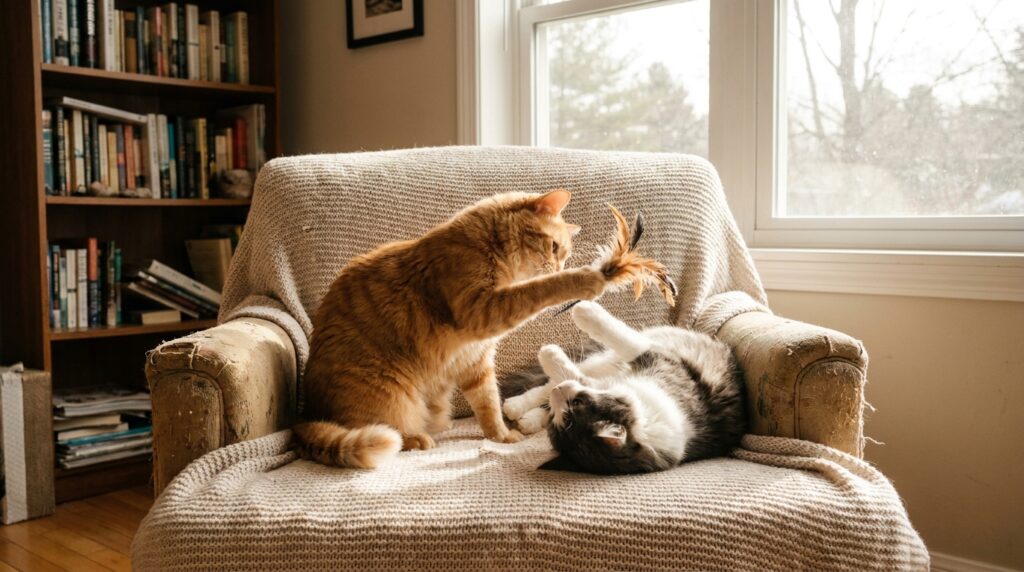
When cats play, it often looks aggressive to human eyes — fur flies, they tumble, they kick. But when a real cat fight breaks out, the difference in noise, adrenaline, and injury risk is unmistakable.
Here is how to tell play from fighting, how to safely break up a conflict without getting bitten, and how to stop fights from repeating, based on veterinary behavior protocols from the Cornell Feline Health Center Guide on Feline Aggression.
Play vs. Real Fight: How to Tell Instantly
Healthy Social Play:
- Role reversals: Cat A chases Cat B, then Cat B chases Cat A
- Loose, bouncy body postures with forward or neutral ears
- Silent or quiet chattering (no screaming or sustained growling)
- Claws remain retracted during wrestling
- Frequent natural pauses where both cats catch their breath before resuming

A Real Dangerous Fight:
- Loud, guttural yowling, hissing, and high-pitched shrieks
- Flattened “airplane” ears pinned tight against the skull
- Arched backs, puffed tails, and bared teeth (check warning signs in our Cat Body Language Guide)
- One-sided pursuit where the victim desperately seeks escape or corners defensively
- Claws out, biting to draw blood, and uncontrolled urination or anal gland release
How to Safely Break Up a Cat Fight (During)
- Use a Visual Barrier: Slide a large piece of cardboard, couch cushion, or broom between the two cats so they immediately lose eye contact.
- Toss a Blanket or Towel: Throwing a thick, soft blanket over the aggressor disorients them instantly and creates a physical buffer.
- Create a Sudden Distraction: Clap loudly or drop a heavy book on the floor near (not on) them. Do NOT yell their names in anger.
- Never Grab a Cat Mid-Fight: Cat bite infections (such as Pasteurella multocida) can escalate into severe deep-tissue infections within 24 hours.

Post-Fight Protocol (After)
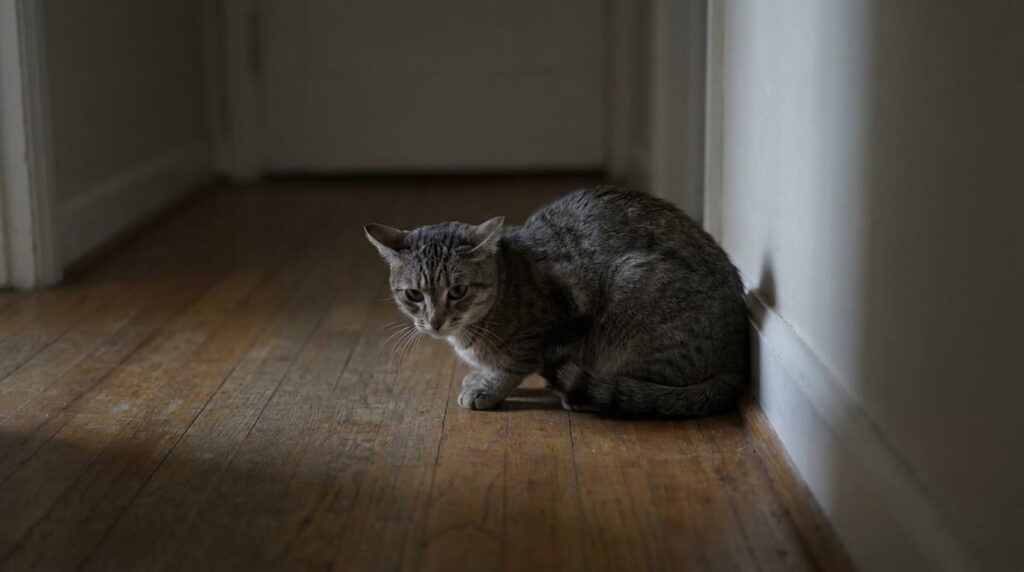
Once separated, herd the cats into different rooms with closed doors. Do NOT attempt to comfort or inspect the cats immediately with your bare hands — feline adrenaline takes anywhere from 4 to 24 hours to fully dissipate.
Provide food, water, and clean litter in both rooms. Once both cats are calm (eating, grooming, resting), inspect them gently for puncture wounds, scratches around eyes, or limping. If you see deep punctures or abscess swelling, visit your vet promptly (see our Indoor Cat Vet Checklist).
How to Prevent Future Fights (Reintroduction)
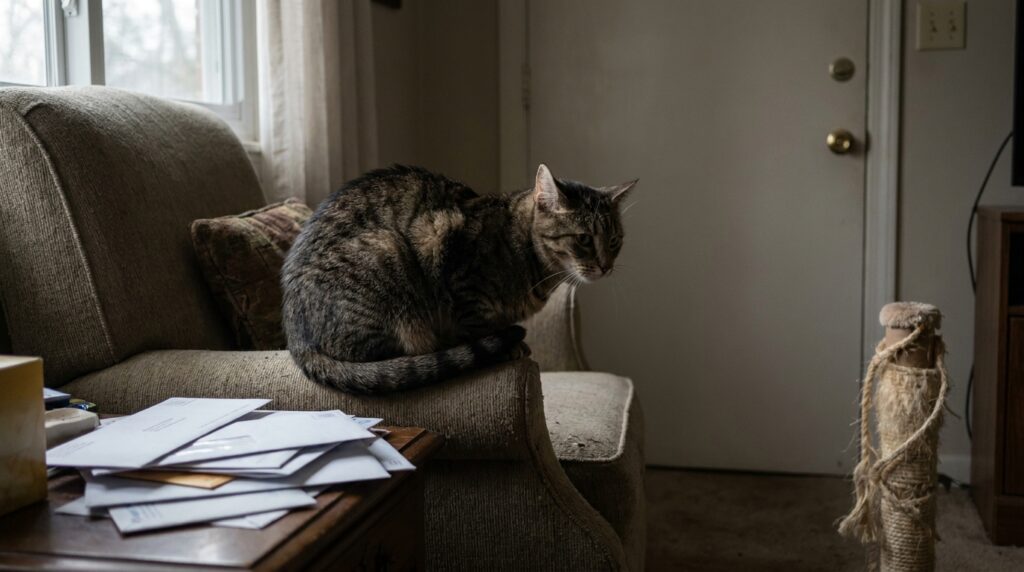
If fighting has become a recurring pattern, do not simply open the door and hope for the best. Follow a structured reintroduction protocol from our Multi-Cat Household Guide: scent swapping, feeding on opposite sides of a barrier, and expanding vertical territory with cat trees.
Frequently Asked Questions
What is the safest way to break up a cat fight?
Never reach in with your bare hands. Use a couch cushion, piece of cardboard, or throw a thick blanket over them to break eye contact and safely separate them without getting bitten.
How do I know if my cats are playing or fighting?
In play, cats take turns chasing, keep their ears forward, stay relatively quiet, and keep claws retracted. In a real fight, you will hear loud shrieking/growling, see flattened ears, puffed fur, and one-sided chasing with drawn claws.
Why did my cats suddenly fight after years together?
Redirected aggression occurs when a cat gets agitated by an outside stimulus (like a neighborhood cat outside the window) and attacks the nearest cat inside. Separate them for 24 hours to let adrenaline reset.
Do cat fight scratches need a vet visit?
Cat fight wounds frequently develop painful subcutaneous abscesses due to oral bacteria. Have a vet examine any puncture wound or swelling to administer appropriate antibiotics.
How long should cats stay separated after a fight?
Do not let them back together immediately. Keep them separated in different rooms for at least 24 hours until both cats are eating calmly and showing zero signs of tension.
🐾 Reduce Multi-Cat Friction with Proper Gear
Browse our real-world tests for pheromone diffusers, multi-level cat trees, and microchip feeders designed to eliminate territory battles.