By Emma Hartley | Last updated August 2026 | Reviewed by IndoorCatWell Editorial Team
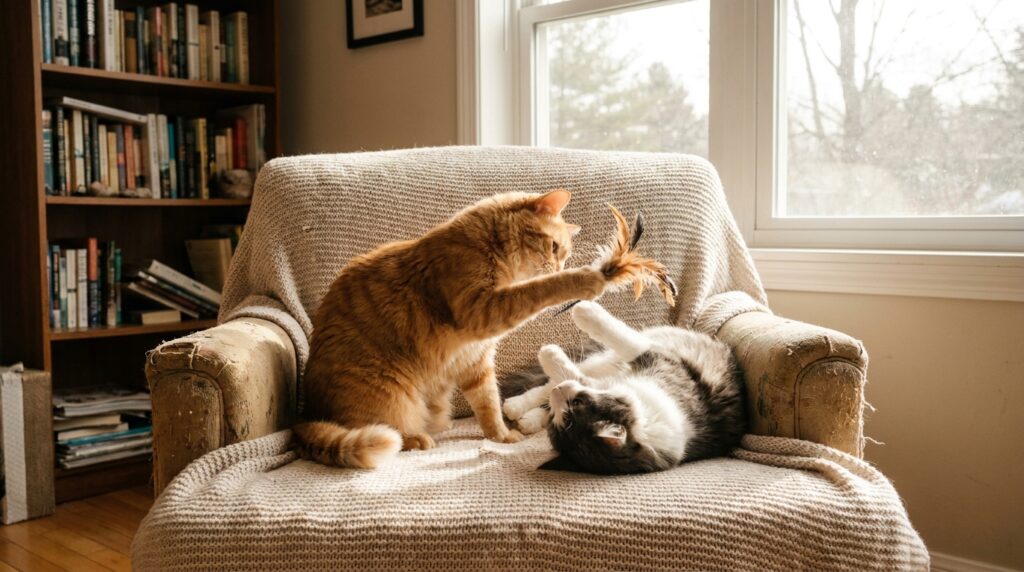
Cats are not small pack animals; they are solitary hunters who share territory through resource abundance, vertical highway space, and scent predictability.
Living with more than one cat can be amazing, but it can also turn into a quiet cold war if their environmental needs aren’t met. Feline territorial friction rarely looks like a dramatic cartoon brawl right away — it starts as subtle doorway blocking, litter box guarding, and silent staring.
This guide walks you through the core principles endorsed by the AAFP Feline Environmental Needs Guidelines to establish true multi-cat harmony.
The Core Resource Formula (N + 1)
In a multi-cat household, resource scarcity is the primary trigger for inter-cat aggression. Always follow the N + 1 formula (where N is the number of cats in your home):
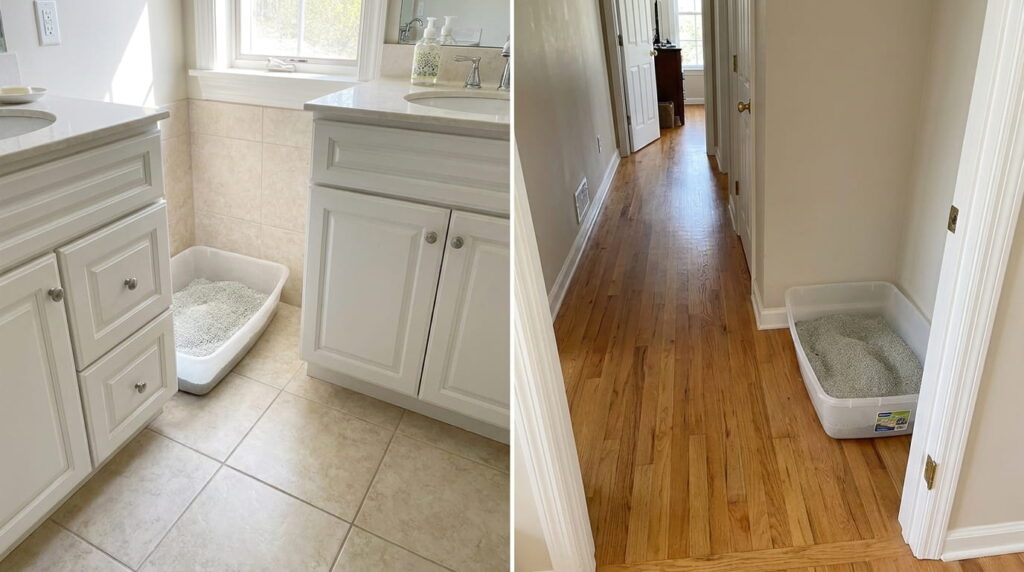
- Litter Boxes: If you have 2 cats, you need 3 litter boxes. Crucially, placing two boxes right next to each other counts as one box in a cat’s mind because one cat can guard both. Spread them across different rooms and floors. (Read our Litter Odor Control Guide for indoor maintenance).
- Water & Feeding Stations: Never force cats to eat shoulder-to-shoulder unless they are deeply bonded. Separate feeding zones prevent mealtime tension.
- Scratching Posts: Provide scratching surfaces in each cat’s preferred territory zone.
The Step-by-Step Introduction Protocol
Never rush an introduction. If you bring home a new cat, keep them strictly separated for at least the first 7 to 14 days and follow these four progressive steps:
Step 1: Scent Swapping
Gently rub a clean cloth or soft washcloth over the cheeks and head of Cat A, then place that cloth in Cat B’s sleeping area, and vice versa. This introduces scent before any visual contact occurs, triggering positive familiarity.

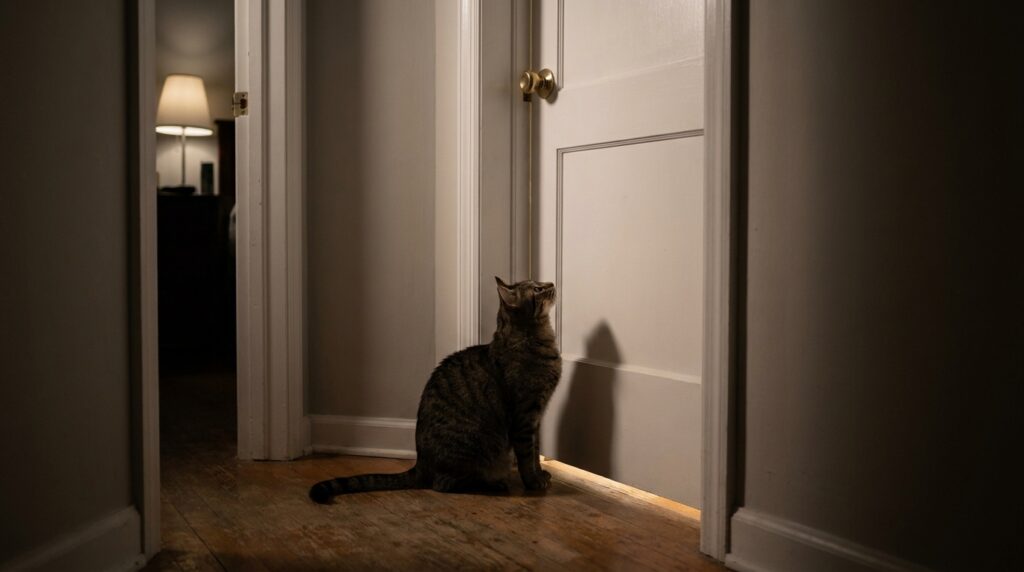
Step 2: Feeding on Opposite Sides of a Closed Door
Place food bowls a few feet away from the closed door separating the cats. Over several days, inch the bowls closer to the door crack. Both cats begin associating the other cat’s scent with high-value food rewards.
Step 3: Visual Contact Through a Barrier
Use a baby gate, screen door, or cracked door with a door stopper. Let them see each other while enjoying meals or treats. If either cat hisses or freezes, increase the distance between bowls and slow down. Learn how to interpret postures in our Cat Body Language Guide.
Step 4: Short, Supervised Room Sessions
Allow short 5-minute interactions in a neutral room with a wand toy to keep focus off each other. End on a positive note with treats before any tension builds. If a fight erupts, read our emergency protocol in How to Stop Cat Fighting.
Vertical Territory & The 'Cat Superhighway'
In apartments and small homes, square footage can be doubled by expanding upward. Cat trees, wall perches, and bookcase pathways allow cats to occupy the same physical room without invading each other’s direct floor space. High perches also give timid cats a safe vantage point to observe household activity without feeling trapped.

Frequently Asked Questions
How many litter boxes do I need for multiple cats?
Follow the N+1 rule: 1 box per cat plus 1 extra. For 2 cats, you need 3 boxes placed in separate locations so one cat cannot block access.
How long should a cat introduction take?
A gradual introduction typically takes between 2 to 6 weeks. Rushing face-to-face contact often leads to territorial conflict that takes months to undo.
What are signs of silent bullying between cats?
Subtle signs include hard staring, blocking hallway pathways, sitting near litter box entries to restrict access, and sleeping in high tension postures.
Should I feed my cats together or separately?
Feed in separate rooms or opposite corners of the room so neither cat feels rushed or threatened while eating.
What should I do if my cats suddenly start fighting after living peacefully?
Separate the cats immediately and restart the introduction process from Step 1 (scent swapping and separate rooms) to reset negative associations.
🐾 Build the Ultimate Multi-Cat Territory
Explore our tested reviews for multi-cat cat trees, top-rated water fountains, and extra-large litter boxes designed for multiple felines.