Affiliate disclosure: Some links in this post are affiliate links. If you buy through them, I earn a small commission at no extra cost to you. I only recommend products I’ve actually used with my own cats.
They’re not solving the same problem, so the honest answer is you probably want both, not one instead of the other. Cat grass is specifically grown for cats to chew and is linked to helping move hairballs through the digestive tract. Cat-safe houseplants are about giving an indoor cat something to interact with that isn’t going to send you to the emergency vet, but most of them don’t do anything for digestion specifically.
I keep a small tray of cat grass on the kitchen counter that gets refreshed every couple of weeks, separate from the actual houseplants in the living room. Beans goes for the grass tray specifically when he’s about to bring up a hairball, which lines up with what most vets say cat grass is actually good for.
What cat grass actually does
Cat grass, usually wheat, barley, oat, or rye grass grown specifically for this purpose, gives cats fiber they can’t get from an obligate-carnivore diet. The leading theory is that the fibrous texture helps trigger vomiting when needed to clear hairballs, and may also add roughage that helps hair pass through the digestive tract instead of accumulating. It’s not fully proven why cats seek it out, since cats aren’t able to properly digest grass either way, but the hairball connection is well-documented enough that most vets recommend it as a low-risk option.
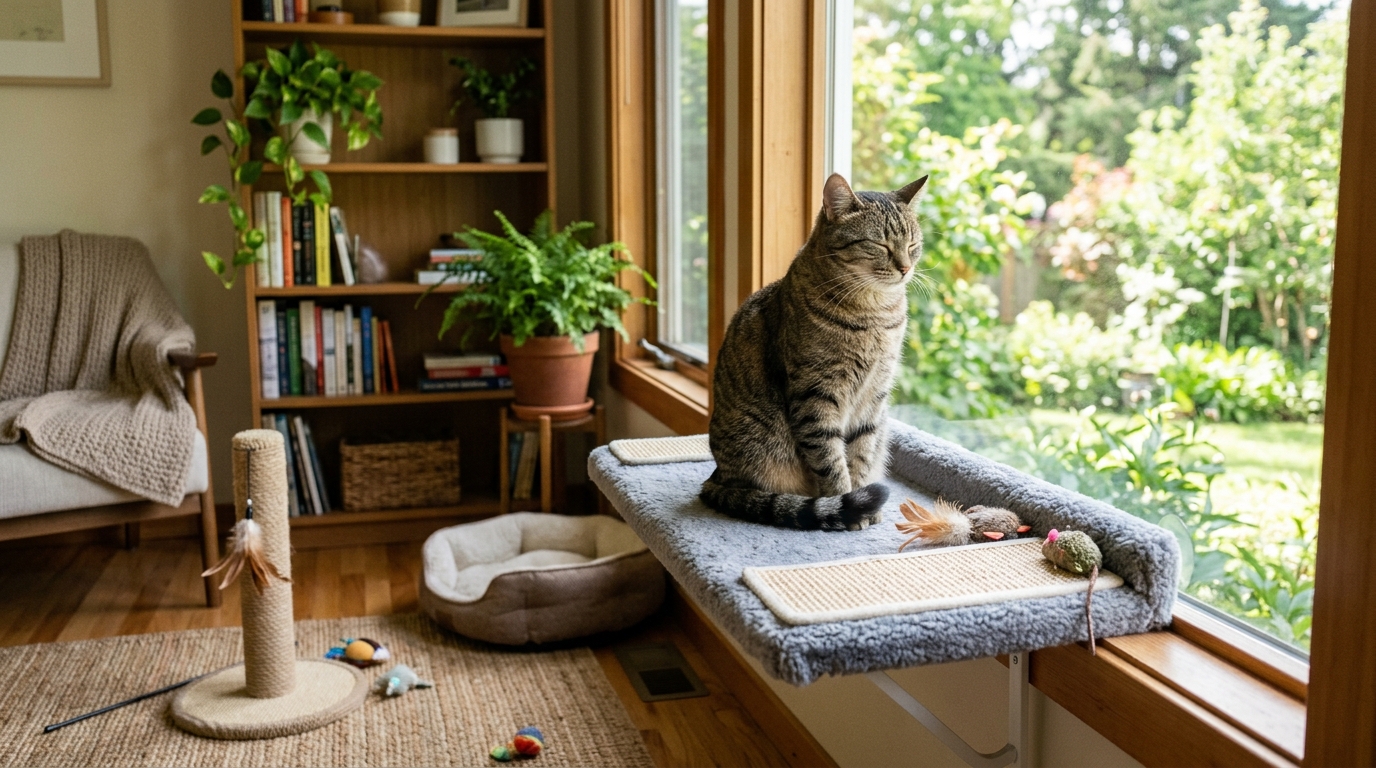
It’s also just something safe to chew. A lot of indoor cats will chew on regular houseplants out of instinct or boredom, and if the plant in question happens to be toxic, that instinct becomes a real problem. Cat grass gives that chewing behavior somewhere safe to go.
What cat-safe houseplants actually do
Cat-safe houseplants like spider plants, areca palms, or Boston ferns aren’t chosen because they help digestion. They’re chosen because they won’t poison your cat if chewed, which matters a lot given how many common houseplants are genuinely dangerous. I covered the specific list of what to avoid in my post on safe indoor plants for cats, and lilies in particular are worth repeating here because they’re severely toxic to cats even in small amounts, including just pollen contact.
Cat-safe houseplants serve an enrichment purpose more than a digestive one. They give a cat something in the environment to investigate, sniff, and occasionally nibble without real risk. That’s valuable for a bored indoor cat, but it’s a different job than what cat grass does.
Do I need both?
If your cat has any history of hairballs, yes, cat grass earns its spot regardless of what else is in your home. If your main concern is just having houseplants that won’t hurt your cat if they take a bite, cat-safe houseplants cover that on their own without needing a dedicated cat grass tray.
The overlap worth knowing about: if you have toxic houseplants and no cat grass or safe alternative, a bored or curious cat is more likely to go after the toxic plant simply because it’s what’s available. Giving cats a designated, safe thing to chew reduces how often they go looking for something else to chew instead.
How to actually grow cat grass at home
Cat grass kits come with seeds and a growing medium, and most sprout within a week on a sunny windowsill. It doesn’t need much: water every couple of days, indirect sunlight, and a shallow tray. Once it’s been chewed down or starts yellowing after a few weeks, it’s worth replacing rather than letting your cat eat wilted, past-its-prime grass. I keep two trays rotating so there’s always a fresh one ready when the current tray gets picked over.
Thinking of Adding Another Cat to the Family?
Expanding your cat family requires careful territory management, and introducing them too quickly is the most common pitfall. Read my step-by-step timeline for a stress-free introduction:
FAQ
Is cat grass safe for cats to eat every day?
Yes, cat grass grown specifically for cats is safe for regular access. It’s different from lawn grass, which can carry pesticide or herbicide residue.
Why does my cat throw up after eating cat grass?
This is a normal and expected response for some cats. The fibrous texture is believed to help trigger the expulsion of hairballs, which is part of why cat grass is recommended for cats with frequent hairball issues.
Can cat grass replace a cat-safe houseplant?
Not exactly. Cat grass serves a digestive and chewing-outlet purpose, while cat-safe houseplants serve more of an enrichment and environmental safety purpose. They’re not interchangeable, though both can coexist in the same home.
How long does cat grass last once it sprouts?
Typically two to three weeks of active growth before it needs replacing, sooner if your cat chews it down aggressively.
What houseplants are toxic to cats?
Lilies, pothos, sago palm, and dieffenbachia are among the most dangerous common houseplants for cats. A full breakdown is in my safe indoor plants for cats guide.