Affiliate disclosure: Some links in this post are affiliate links. If you buy through them, I earn a small commission at no extra cost to you. I only recommend products I’ve actually used with my own cats.
Budget somewhere between $50 and $120 a month for a single healthy adult indoor cat, not counting the upfront setup cost or an unplanned vet visit. That range is wide on purpose, because food quality, litter type, and how much you spend on toys and enrichment swing the number a lot. What most first-time owners get wrong isn’t the food and litter estimate, it’s forgetting the costs that don’t show up monthly but average out to a real number over a year.
I track spending on my own cats fairly closely since it feeds directly into what I recommend on this site, and the categories people underestimate are almost always the same three: vet care, litter (people budget for food and forget litter volume adds up fast), and the slow bleed of replacing toys, scratching posts, and beds that get destroyed faster than expected.
Monthly recurring costs
Food: $20-50/month. Budget dry food runs cheaper, quality wet food or a mixed diet runs higher. A cat eating mostly wet food will land toward the top of this range.
Litter: $15-30/month. This depends heavily on litter type and how many cats you have. Clumping clay litter is cheapest. Crystal or pine litters cost more but some owners find they need less volume, which partially offsets the price difference.
Litter box and grooming supplies: $5-15/month, averaged. Not a monthly purchase, but scoops, deodorizers, brushes, and nail trimmers wear out and get replaced regularly enough that it’s worth budgeting as if it were monthly.
Toys and enrichment: $10-25/month, averaged. Cats destroy cheap toys faster than most people expect, and this category is where people either overspend on things that get ignored or underspend and end up with a bored, destructive cat that takes it out on furniture instead.
Costs people forget to budget for
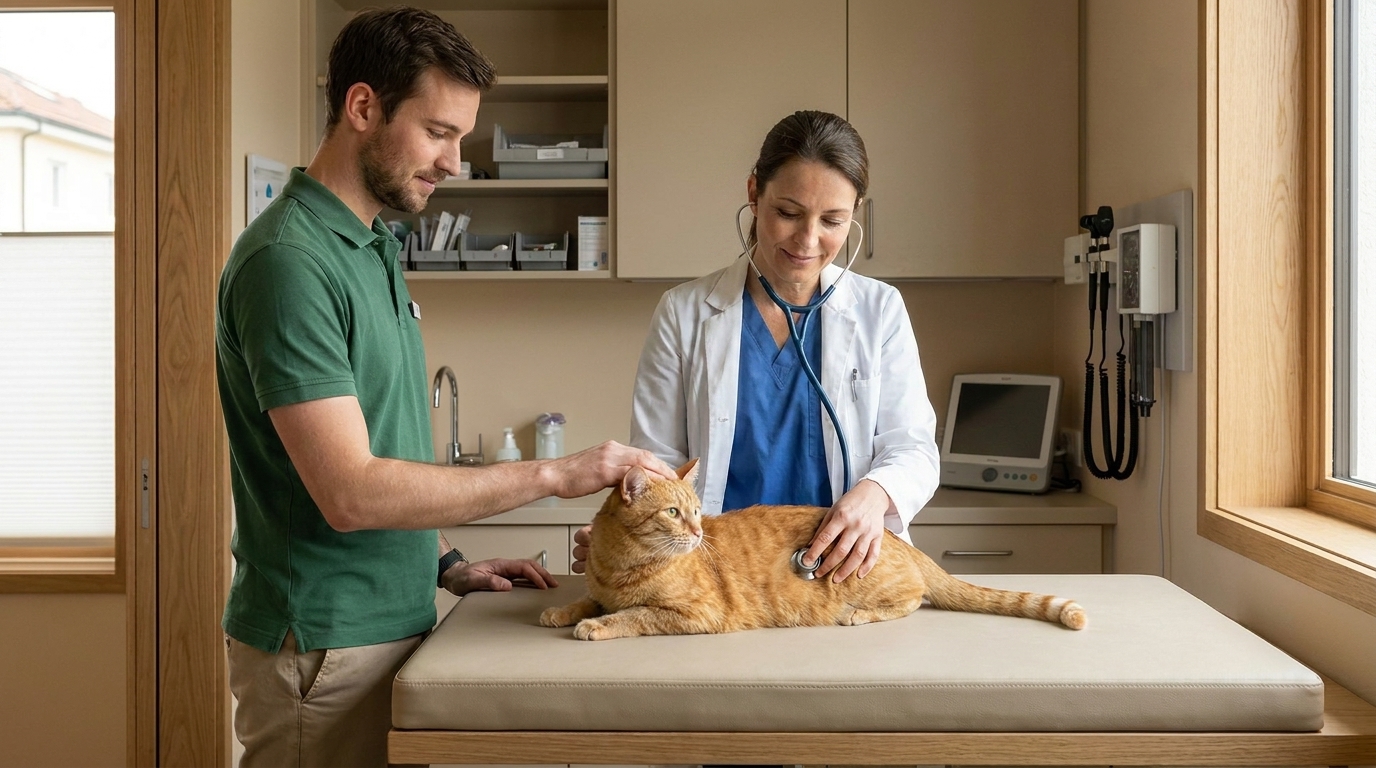
Annual vet visits: $150-300/year, or roughly $15-25/month averaged out. This covers a standard wellness exam and core vaccinations for a healthy adult cat. It does not cover anything unexpected.
Emergency or unplanned vet care. This is the one that actually wrecks a budget. A single ER visit for something like a urinary blockage, a swallowed foreign object, or an unexplained illness can run anywhere from a few hundred to several thousand dollars. This is exactly why pet insurance or a dedicated emergency savings fund matters more than people think when they’re budgeting month to month and ignoring the tail risk.
Dental care. Cats commonly need dental cleanings as they age, and a professional cleaning under anesthesia typically costs several hundred dollars. This isn’t an annual cost for most cats, but it’s a real one that shows up eventually and catches owners off guard when it does.
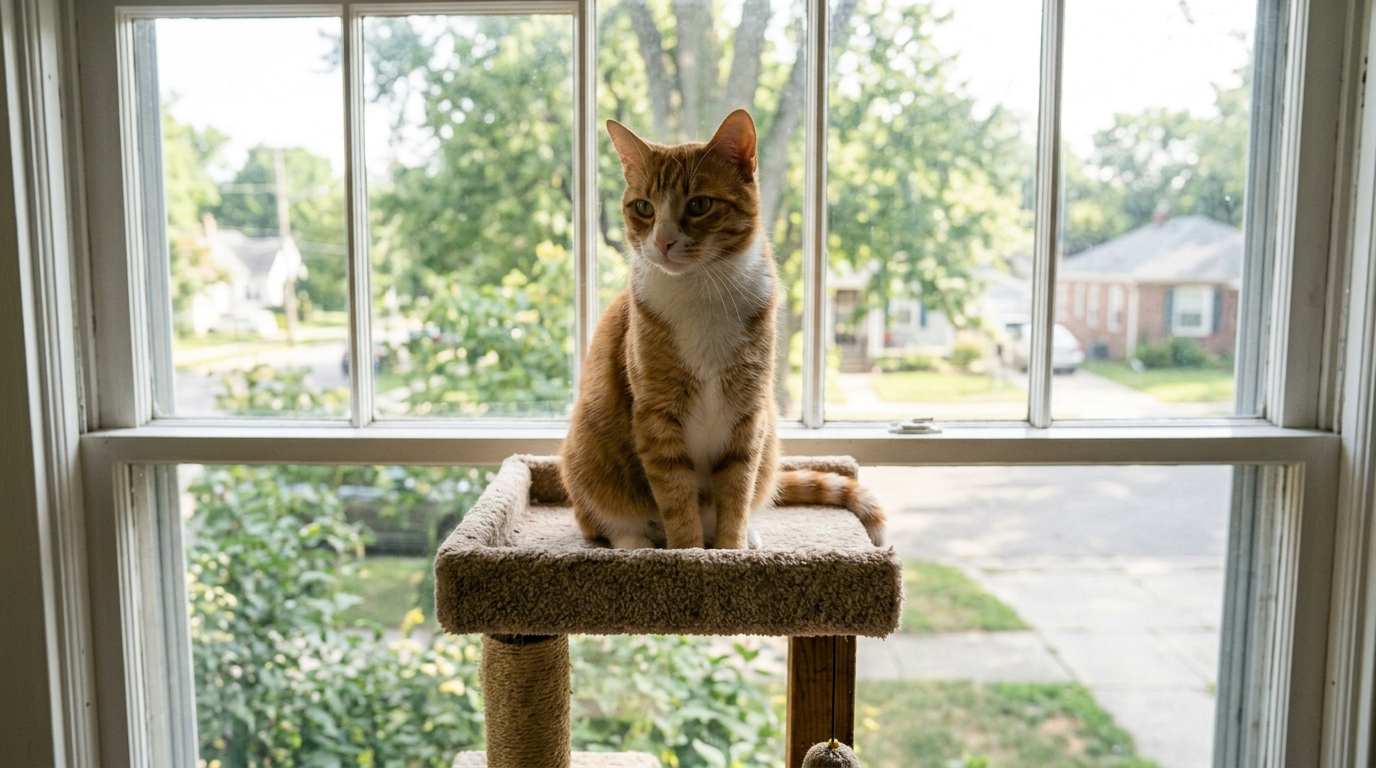
Replacing furniture-level enrichment. A cat tree or scratching post isn’t a monthly cost, but a decent one runs $50-150 and needs replacing every few years as it wears out or gets outgrown. Budgeting nothing for this category is how people end up with a destroyed couch instead.
One-time setup costs
A first-time cat owner is typically looking at $150-400 upfront for a litter box, carrier, initial food and litter supply, a scratching post, basic toys, and a bed. This range varies a lot depending on whether you’re buying budget or premium versions of each item, and whether the cat is coming from a shelter that includes some starter supplies.
Where the money actually goes if you’re trying to cut costs
Food and litter are the categories with the least room to cut without consequences, since going too cheap on either tends to create problems (poor nutrition, allergic reactions, or a cat that stops using a litter box it dislikes) that end up costing more later. Toys and enrichment extras are where trimming the budget does the least damage. A DIY cardboard scratcher and a wand toy do most of what an expensive automated toy does, at a fraction of the cost.
The category not worth cutting under any circumstances is an emergency fund or pet insurance. It’s the one expense that’s optional right up until it isn’t, and the difference between having it and not having it is sometimes the difference between treating a cat and not being able to.
Budgeting for Plant Safety in Your Home
Replacing toxic plants with cat-safe options is a cheap and effective way to safeguard your budget from accidental poisoning vet bills. Read my complete breakdown of cat grass versus cat-safe houseplants to see what your home needs:
FAQ
How much does it cost to own a cat per year?
Roughly $600-1,500 for routine costs alone, not including emergency vet care, which can add several hundred to several thousand dollars in any given year depending on what comes up.
Is pet insurance worth it for an indoor cat?
It depends on your risk tolerance and whether you have savings set aside specifically for vet emergencies. Indoor cats have lower injury risk than outdoor cats but aren’t immune to sudden illness, and insurance is most valuable for covering the costs you can’t predict.
What’s the biggest hidden cost of owning a cat?
Emergency vet care. Routine costs are predictable and easy to budget for. A single unplanned ER visit is the expense that catches most owners off guard.
Is it cheaper to have one cat or two cats?
Two cats cost more in total but slightly less per cat, since some costs like litter boxes, scratching posts, and enrichment items can be partially shared, while food and litter volume scale roughly linearly.
How much should I budget monthly for cat food?
Typically $20-50 a month for one adult cat, depending on whether you’re feeding budget dry food, premium food, or a wet-food-heavy diet.