
Affiliate disclosure: Some links in this post are affiliate links. If you buy through them, I earn a small commission at no extra cost to you. I only recommend products I’ve actually used with my own cats.
The short version: separate them completely for at least a week, swap scents before they ever see each other, and don’t let them meet face-to-face until the resident cat stops reacting to the newcomer’s smell. Most failed introductions aren’t a personality mismatch, they’re a timeline mismatch. People let two cats meet on day one or two, it goes badly, and they conclude the cats “just don’t get along” when the real issue is that neither cat had time to adjust to the idea of the other one existing before being confronted with it directly.
I went through this introducing Fig to a household that had only ever had Miso, and the process took closer to three weeks than the one-week timeline a lot of guides promise. It worked. It just wasn’t fast.
Why the first meeting shouldn’t be visual
Cats are territorial animals that navigate their environment largely through scent. A resident cat smelling an unfamiliar cat’s scent on a blanket is a manageable event. A resident cat suddenly seeing an unfamiliar cat standing in their space is a much bigger threat signal, and first impressions matter more with cats than with most animals, since a bad first encounter can set the tone for weeks.

That’s why the sequence matters: scent before sight, sight before shared space, shared space before shared everything. Skipping ahead to save time is the single most common reason introductions turn into ongoing conflict instead of a rocky first week.
The actual timeline
Days 1-3: Total separation. New cat gets its own room with litter box, food, water, and a hiding spot. No visual contact between the cats at all. This gives the new cat time to decompress from the move and gives the resident cat time to notice something’s changed without seeing what.

Days 3-7: Scent swapping. Swap bedding or a soft toy between the two spaces daily. Feed both cats near the closed door between their spaces, so eating (a positive experience) becomes associated with the other cat’s scent. Watch for hissing or avoidance at the door. If either cat won’t eat near it, slow down before moving forward.
Days 7-10: Visual introduction through a barrier. A cracked door, a baby gate, or a screen door works. Keep sessions short, five to ten minutes, and end on a calm note rather than letting it run until something goes wrong. Repeat daily.
Days 10-14: Supervised time in shared space. Let them be in the same room without a barrier, but supervised, and with an easy exit route for both cats. Don’t force proximity. Some hissing or posturing here is normal. Actual fighting is not, and means you need to go back a step.
Ongoing: Full integration. Once several supervised sessions pass without conflict, you can start leaving them unsupervised for short stretches, building up gradually. Keep separate food and water stations even after integration, and ideally separate litter boxes in different locations, since resource competition is a common source of tension that isn’t a personality issue at all.
What slows this down (in a good way)
Any hissing, growling, or one cat consistently avoiding a shared space is a sign to pause and repeat the previous step longer, not push forward. Rushing because you’re impatient is how a manageable adjustment period turns into a genuinely stressed household. If either cat stops eating normally or starts eliminating outside the litter box during this process, that’s stress showing up physically, and it’s worth slowing the whole timeline down by several days.
Signs it’s actually working
Cats sleeping in the same room without direct contact, eating on either side of a shared space without tension, and mutual grooming or play, even occasional, are all real signs of progress. Cats don’t need to be affectionate with each other to be considered successfully integrated. Tolerant coexistence, where both cats can move through shared space without stress, is a realistic and completely normal outcome.

Managing Resources for Multiple Cats
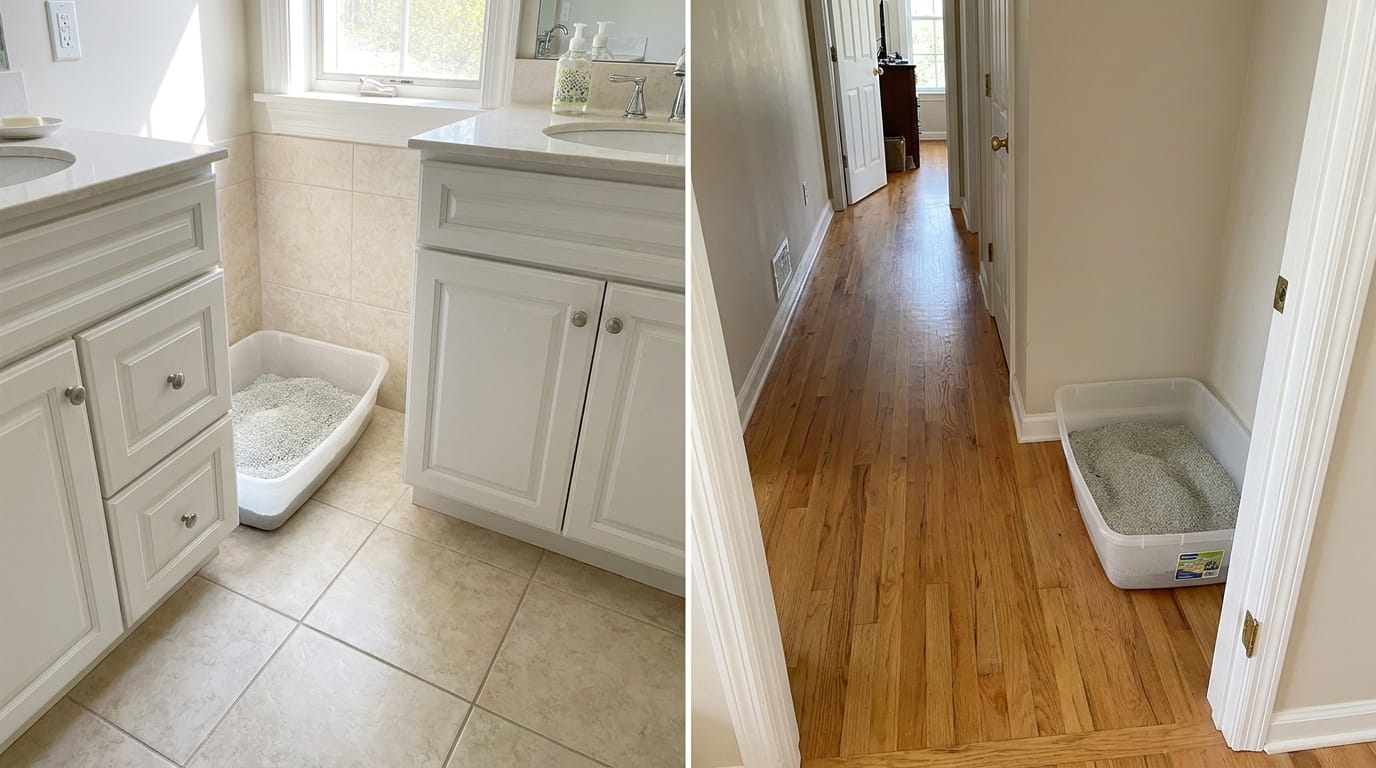
One of the biggest triggers for territorial conflict is competition over litter boxes. Read my practical guide to find out exactly how many litter boxes your new two-cat setup requires to maintain peace:
FAQ
How long does it take to introduce two cats?
Anywhere from two to six weeks depending on the cats’ temperaments. Rushing the process is the most common cause of introductions failing.
Will my cats ever actually like each other?
Some will become close, others will settle into peaceful coexistence without much interaction. Both outcomes are considered successful. Forcing closeness isn’t necessary or realistic for every pair.
What if my cats fight during introduction?
Occasional hissing or posturing is normal. Actual physical fighting means you moved too fast. Separate them, go back a step in the timeline, and slow the process down.
Do I need two litter boxes for two cats?
Yes, and ideally in separate locations. The general guideline is one litter box per cat plus one extra, particularly during and after introductions when resource guarding is more likely.
Should I introduce a kitten to an adult cat differently than two adults?
Kittens generally adapt faster and are less territorial, but adult cats can still find a kitten’s high energy overwhelming. The same scent-first timeline applies, though sessions may need to be shorter to avoid overwhelming the adult cat.