This post may contain affiliate links. If you buy through them I may earn a commission, at no extra cost to you. I don't recommend any product in this article that I haven't checked for cat safety.
Most cat repellents fail for the same reason: they tell the cat to stay away from something without giving her anything better to do. A few also put the cat at risk. Concentrated essential oils, some disinfectants, and several popular home remedies are harmful to cats, even when they are sold as natural. This guide covers which repellents are safe, which products to avoid, what the evidence says about devices and sprays, and how to use any repellent so it supports a better setup instead of becoming a stress source.
Short answer
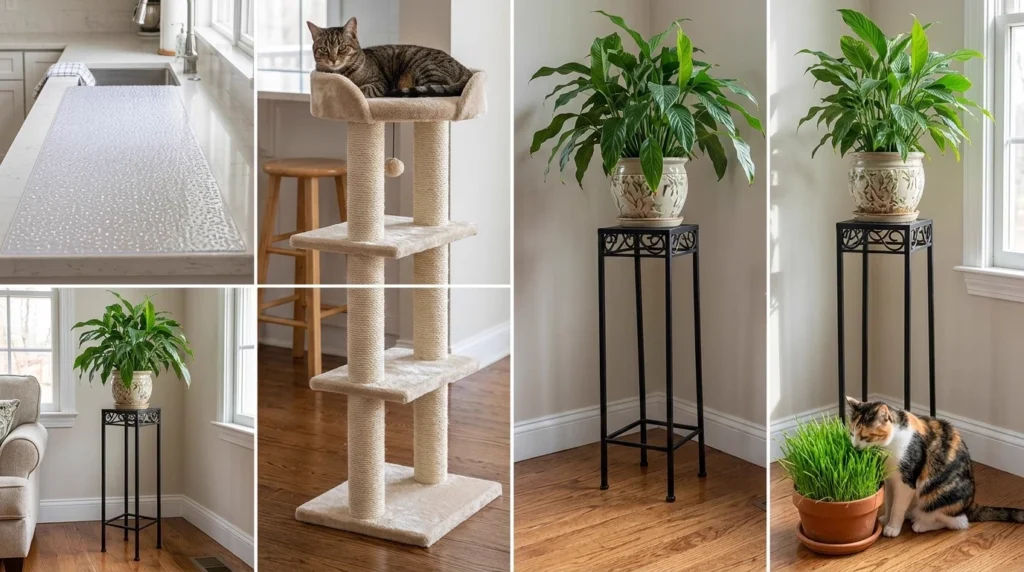
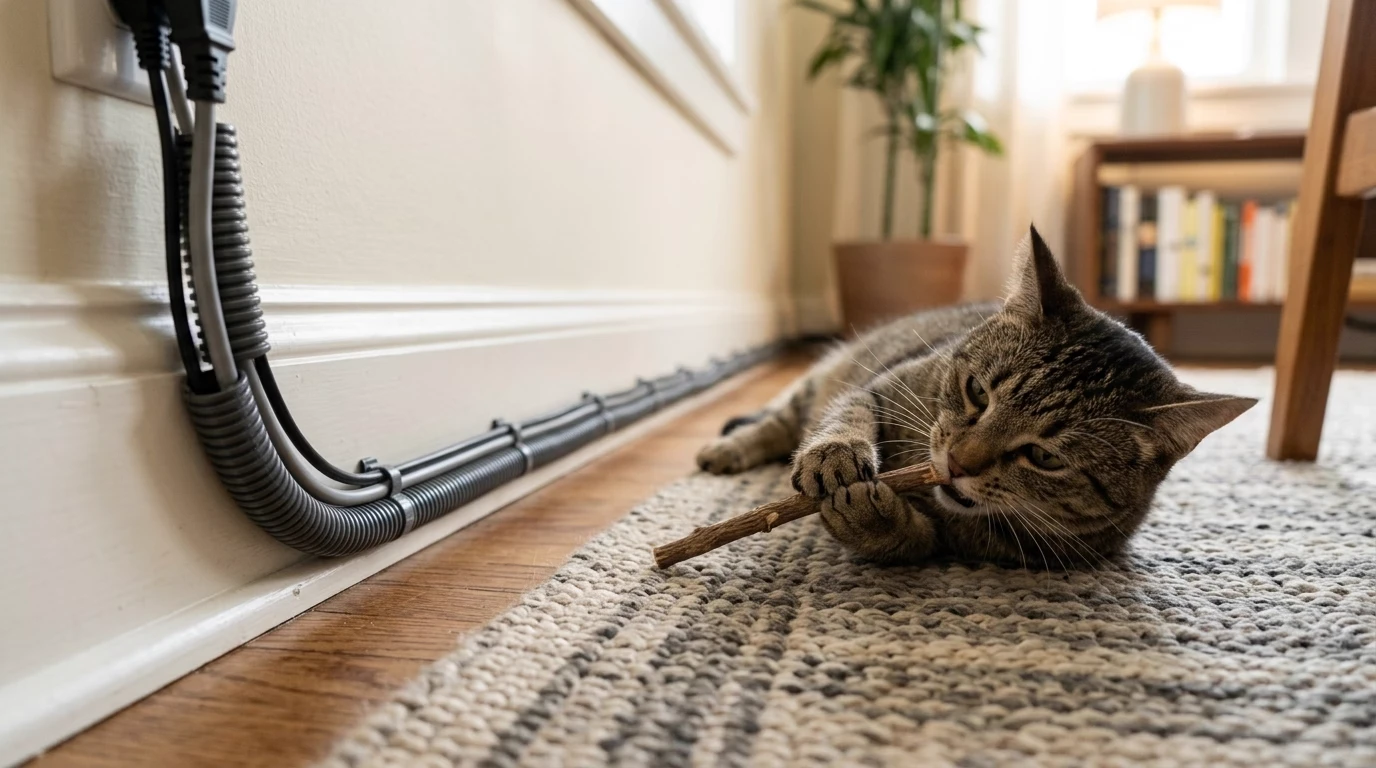
Choose physical barriers and surface changes first, such as double-sided sticky tape, foil, or a plastic runner, since they carry the lowest risk. Use a repellent product only if it is labeled safe for cats, and never use essential oils or products with phenols on or near a cat. Pair any repellent with an acceptable alternative, such as a scratching post, a perch, or cat grass. If the behavior continues, look for the cause before trying another product.
In this guide:
- Why repellents often disappoint
- What can harm cats
- Cleaners and disinfectants with phenols
- Other things to avoid
- Options that are lower risk
- A note on ultrasonic devices
- A note on spray bottles and scare tactics
- Matching the repellent to the problem
- How to use a repellent well
- When repellents shouldn't be the answer
- Frequently asked questions

Why repellents often disappoint
A cat that jumps on the counter, scratches the sofa, or chews a plant is doing something that makes sense to her: it's a good view, a good scratching surface, or a green thing to chew. A repellent makes one spot unpleasant, but it doesn't remove the reason for the behavior. The cat often moves to another spot, so you end up repelling the entire home.
The approach with the best chance is to make the unwanted option less appealing and the wanted option more appealing, at the same time. If she scratches the sofa, protect the sofa and place a better post next to it. If she jumps on the counter, remove food from the surface and give her a perch nearby. A repellent is a short-term support for that plan, not the plan itself.
What can harm cats
Essential oils
Cats are sensitive to many essential oils because their livers handle some compounds slowly, and these can build up in the body. Concentrated oils can cause drooling, vomiting, tremors, weakness, wobbliness, breathing trouble, and liver damage. The risk exists with skin contact, licking, and, for some oils, with diffusers, especially in a small, poorly ventilated room.
Oils that are commonly listed as dangerous to cats include tea tree (melaleuca), peppermint, eucalyptus, citrus oils, pine, cinnamon, clove, wintergreen, and ylang ylang. This is not a complete list. Because many "natural cat repellent" recipes on the internet contain these oils, they are among the most common mistakes.
Citrus is a good example. Cats tend to dislike the smell of citrus, so fresh peel is sometimes suggested. Peel placed where a cat can't eat it is a low-risk option, although some cats may chew it and get stomach upset. Concentrated citrus oil is a different matter and can irritate skin and cause toxicity.
Cleaners and disinfectants with phenols
Some household disinfectants, especially certain pine-scented or "cloudy when mixed with water" products, contain phenols and related ingredients that can be dangerous to cats. Cats can absorb these through the paws by walking on a wet floor and then grooming. Read labels. If you aren't sure, choose a product marked safe for pets, rinse surfaces, and keep the cat out until they're dry.
Other things to avoid
Mothballs and naphthalene. Toxic to cats.
Hot pepper or cayenne sprays. These can badly irritate eyes, nose, and mouth, and cats groom the residue off their paws.
Ammonia-based cleaners near litter or marked spots. They can smell like urine and encourage remarking. (See our spraying guide.)
Bleach mixed with urine or other cleaners. The combination can produce toxic fumes.
Home-made mixtures of oils, vinegar, and alcohol applied to the cat or her bedding.
Any repellent not labeled for use around cats. Products made for dogs, wildlife, or insects may contain ingredients that are unsafe for cats.
If you think your cat has been exposed, call your vet or a poison hotline immediately. In the US, the ASPCA Animal Poison Control Center is (888) 426-4435 and Pet Poison Helpline is (855) 764-7661. Both may charge a consultation fee, and both numbers are US-based. Bring the product label with you.
Signs of poisoning can include drooling, vomiting, tremors, wobbliness, lethargy, difficulty breathing, and skin redness or sores.
Options that are lower risk
The following are commonly used and, when used as directed, carry a lower risk than the items above. None is guaranteed to work with every cat.
A note on ultrasonic devices
Ultrasonic repellents emit high-pitched sound intended to drive cats away. Cats can hear very high frequencies, and the sound may stress them. The evidence that these work reliably is thin, and a device that she can't escape could make her anxious. If you try one, watch her closely and stop if she seems stressed.
A note on spray bottles and scare tactics
Squirting a cat with water or clapping to startle her tends to teach her to avoid you, not the behavior, and may increase fear and stress. It also works only when you are present. If you want a deterrent that works when you aren't home, use a surface or setup that makes the spot less attractive, not a punishment.
Matching the repellent to the problem
How to use a repellent well
Check the label and ingredients before buying. Ask your vet if unsure.
Test a small area first for staining or damage.
Apply it to the object, not the cat.
Keep it out of reach of licking where possible.
Ventilate the room if a product has a strong odor.
Offer an alternative at the same time, and reward her when she uses it.
Be consistent. An inconsistent barrier teaches cats to try again.
Review after one or two weeks. If she hasn't changed, remove the product and reconsider the setup. Don't escalate to stronger products.
Stop if she seems stressed or changes her eating, grooming, or litter habits.
When repellents shouldn't be the answer
If your cat is doing something that looks like stress behavior, a repellent won't fix it. This applies to:
- Urine marking or spraying
- Overgrooming or hair loss
- Aggression
- Sudden changes in scratching, chewing, or hiding
Talk to your vet to rule out pain or illness, and look at the environment. A repellent that blocks the symptom without treating the cause can make her more anxious.
When to see a vet
If you suspect your cat has licked or absorbed a harmful substance
If she develops drooling, tremors, vomiting, or breathing trouble after a product is used
If behavior changes suddenly
If she is chewing items that are not food, such as fabric or plastic, since this can signal a medical or behavioral problem
Frequently Asked Questions
Is vinegar a safe cat repellent?
Diluted vinegar is not usually dangerous in small amounts, but the evidence that it repels cats is weak, and the smell may bother you more than her. Don't spray it on the cat or in her face.
Are lavender or peppermint safe to diffuse?
Not reliably. Many essential oils are risky for cats, so it's best to avoid diffusing them where she lives.
What is the safest repellent?
A physical barrier, such as tape, a runner, or a cover. They don't involve chemicals.
Do motion-activated sprays work?
They can for some cats. They can also frighten anxious ones, so use them with caution.
Related reading
References
ASPCA Animal Poison Control, essential oil and household toxin information (aspca.org)
Pet Poison Helpline, essential oil and phenol toxicity (petpoisonhelpline.com)
Merck Veterinary Manual, toxicology in cats
International Cat Care, scratching and counter-surfing resources (icatcare.org)
Check each oil named above against current toxicology sources before publishing
Indoor Cat Enclosure for a Balcony or Patio: How to Choose One