By Emma Hartley | Reviewed by IndoorCatWell Editorial Team | Last updated September 2026
This article provides practical, veterinary-supported cat care guidance. If you buy through our links, we may earn an affiliate commission at no extra cost to you. Read our full Affiliate Disclosure.
Yes, animal welfare organizations and veterinary associations universally recommend that even 100% indoor-only cats wear a collar. Studies show that over 15% of pet cats escape their homes at least once. When an uncollared indoor cat escapes, good samaritans assume they are an unowned feral stray. A breakaway safety collar paired with an up-to-date microchip is the gold standard for rapid recovery.
⚡ Key Collar Safety Rules
- Always Use Breakaway Clasps: Quick-release buckles pop open under 3 to 5 lbs of tension to prevent strangulation.
- Never Use Buckle or Elastic Collars: Rigid buckles and elastic cords trap limbs and jaws, causing fatal injuries.
- Perform the “One-Finger” Fit Check: You should comfortably slide one finger between the collar strap and neck skin.
- Dual Protection: A visual ID tag provides instant phone contact; a microchip serves as permanent non-removable backup.
Why Indoor Cats Need Identification Even If They Never Go Out
Most feline escapes are completely unintentional. An open door during a grocery delivery, a ripped window screen, a plumber leaving a side gate unlatched, or a natural emergency (fire, earthquake) can propel a terrified cat into the street. Indoor cats possess zero outdoor territorial confidence and will instinctively bolt into neighbor yards or under porches.
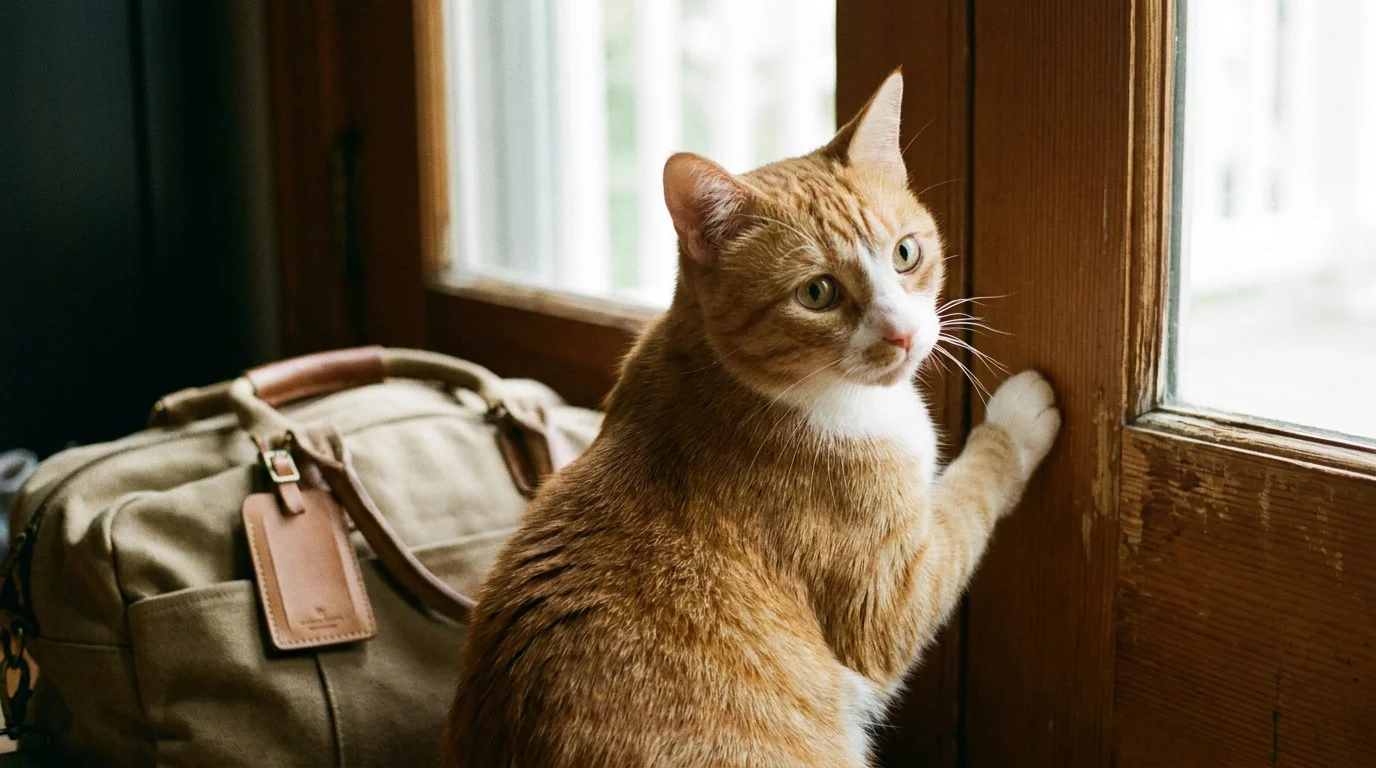
If your cat has no collar, a neighbor who spots them will assume they are a community feral cat and ignore them, or take them to an overcrowded shelter. A vibrant collar with an ID tag screams: “I have a family looking for me!”
Breakaway vs. Regular vs. Elastic: The Critical Distinction
| Collar Mechanism | How It Operates | Veterinary Safety Verdict |
|---|---|---|
| Breakaway (Quick-Release) | Plastic prongs release instantly when snagged with 3 to 5 lbs of pull force | 100% Recommended |
| Traditional Dog/Belt Buckle | Metal tongue and pin; cannot release under pressure | DANGEROUS (Strangulation hazard) |
| Elastic Expandable Insert | Stretches when pulled; designed to slip over head | HAZARDOUS (Foreleg/jaw entrapment) |

Collar vs. Microchip: Why You Must Use Both
Some owners assume a microchip makes a collar redundant. In reality, they perform complementary, life-saving roles:
- The Collar provides instant civilian access: A neighbor who finds your cat in their garden doesn’t own a universal RFID microchip scanner. They can read the phone number on the tag and call you within 60 seconds.
- The Microchip provides permanent fail-safe security: Because breakaway collars are designed to snap open under pressure, a cat crawling through a tight fence or dense hedge may lose their collar. The microchip remains permanently embedded under the shoulder blades.
How to Fit a Cat Collar: The “One-Finger Rule”
Feline skin is remarkably flexible. If a collar is too loose, a cat grooming their chest will wedge their lower canine teeth or a front paw under the strap, inducing panic. If it is too tight, it rubs fur raw and restricts swallowing.
- The One-Finger Test: Fasten the collar and slide one finger flat against your cat’s neck under the band. It should feel snug with slight friction.
- Test the release mechanism: Hold both ends of the collar and give a sharp tug. It should snap apart cleanly. If it requires two hands and full adult strength, discard it.
- Inspect every 6 months: Check for fraying threads and replace when the quick-release buckle loses its firm snap.
What to Engrave on the ID Tag
- Your primary mobile phone number: Include area code. Add a secondary number if space permits.
- “INDOOR ONLY”: This critical phrasing informs anyone who sees your cat outside that they are missing and in urgent need of rescue.
- “REWARD” or “MICROCHIPPED”: Signals that finding your cat is a priority.
- Medical flags (if applicable): E.g., “DIABETIC” or “NEEDS DAILY MEDS” prompts finders to seek immediate veterinary assistance.
Frequently Asked Questions
Is it safe to leave a breakaway collar on 24/7?
Yes. A properly fitted breakaway collar is engineered for continuous indoor wear. Remove it temporarily only when applying topical spot-on flea treatments or during veterinary medical procedures.
My cat constantly scratches at the collar and hates it. What should I do?
This is normal sensory adjustment during the first 3 to 7 days. Remove any jangling bell first (many cats hate the ringing noise), put the collar on right before a meal or playtime to distract them, and praise them calmly.
Do breakaway collars open too easily and fall off constantly?
High-quality cat breakaway buckles require intentional pressure (3 to 5 lbs). If a collar pops off daily during normal lounging, the buckle is defective and should be replaced with a reputable brand like Rogz or Coastal Pet.
Authoritative Sources & References
- Humane World for Animals: Should Cats Wear Collars? ID Guidance
- American Humane Society: Choosing a Safe Cat Collar
- Daily Paws: Why a Collar & ID Tags Are Important Even for Indoor Cats