By Emma Hartley | Reviewed by IndoorCatWell Editorial Team | Last updated September 2026
This article provides practical, veterinary-supported cat care guidance. If you buy through our links, we may earn an affiliate commission at no extra cost to you. Read our full Affiliate Disclosure.
Yes, cooked eggs are a safe, highly digestible protein treat for most healthy felines. However, raw eggs present two severe medical risks: bacterial infection from Salmonella or E. coli, and a protein called avidin that binds to biotin (vitamin B7), inducing serious metabolic deficiencies. Cooking eggs thoroughly eliminates both hazards completely.
⚡ Safe Serving Guidelines at a Glance
- Preparation: Hard-boiled or plain scrambled cooked to 160°F internal temperature.
- Zero Additives: Absolutely no butter, cooking oil, milk, cheese, salt, or seasonings.
- Strict Portion: 1 to 2 tablespoons maximum once or twice weekly as an occasional treat.
- Never Replace Meals: Eggs lack essential taurine, calcium, and fatty acid balances required for complete feline diets.
Why Cooked, Never Raw: The Science of Avidin & Bacteria
While wild predators occasionally consume wild bird eggs, raw chicken eggs from modern commercial agriculture pose serious hazards for indoor domestic cats:
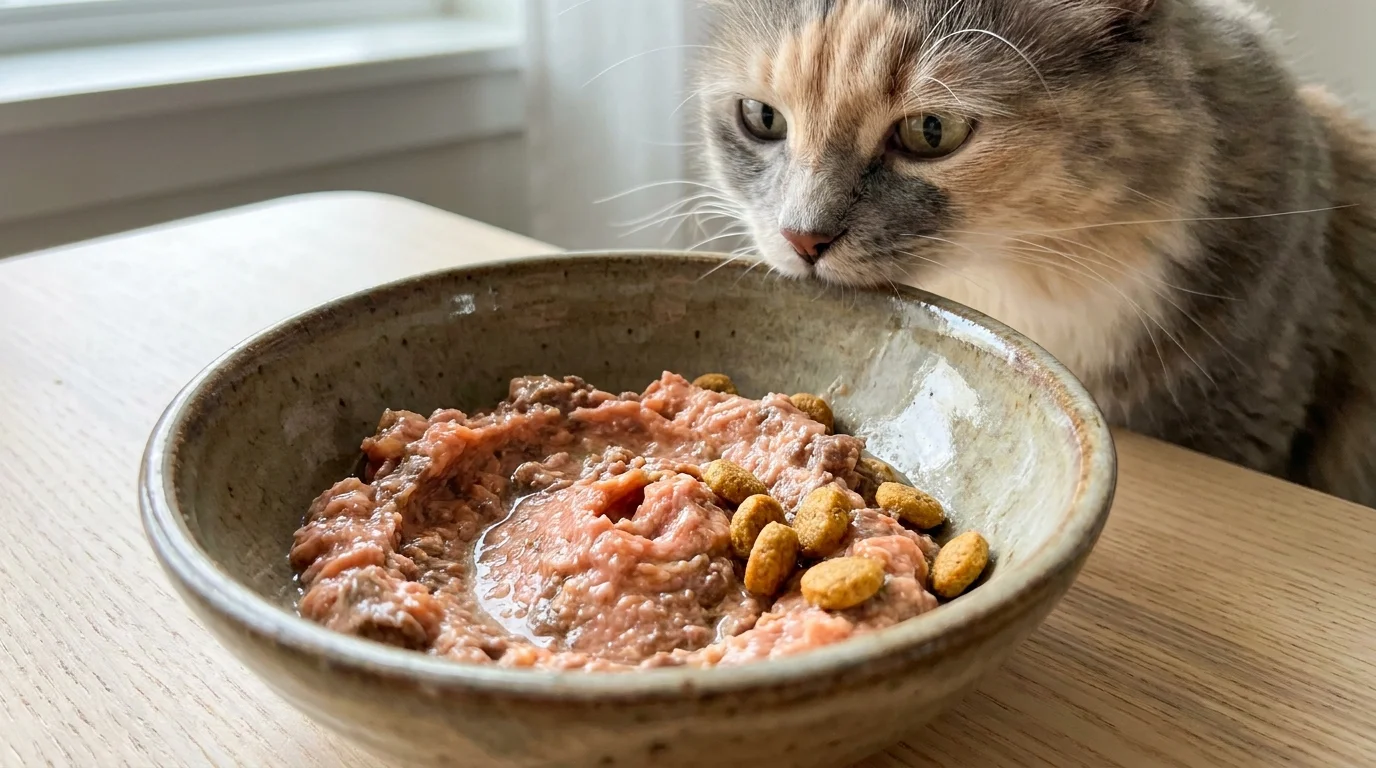
- Bacterial Pathogen Risk: Raw eggs frequently harbor Salmonella enterica and Escherichia coli. Ingesting raw egg causes acute gastroenteritis, bloody diarrhea, dehydration, and septic shock. Furthermore, infected cats shed Salmonella in the litter box, creating a zoonotic danger for children and immunocompromised adults.
- The Avidin-Biotin Blockade: Raw egg whites contain high concentrations of avidin, a tetrameric glycoprotein that bonds with extraordinary affinity to biotin (vitamin B7). This prevents intestinal absorption, leading to severe hair loss, scaly dermatitis, and neuromuscular weakness.
- Heat Denaturation: Cooking eggs to 160°F denatures the avidin protein structure entirely and neutralizes dangerous bacteria, converting the egg into a nutritious snack.
How to Prepare Eggs Safely for Cats
- Hard-boiled & diced: Boil for 10 minutes until both yolk and white are solid. Peel, cool completely, and finely dice into pea-sized bits.
- Microwave or pan scramble (No fat): Whisk an egg in a ceramic dish with 1 tablespoon of water and microwave for 45 seconds until firm. Never use Teflon cooking sprays, olive oil, or butter.
- Never serve runny or soft-boiled styles: Over-easy, poached, or sunny-side-up eggs retain semi-raw yolk and albumin, carrying persistent bacterial vectors.
- Powdered eggshells for calcium: If using eggshells, boil them for 15 minutes, bake at 250°F to dry, and pulverize in a coffee grinder into micro-fine dust before sprinkling 1/4 teaspoon over food.
Portion Sizing & Caloric Reality
A standard whole chicken egg contains roughly 74 calories. For an average 10-pound indoor cat whose total daily requirement is only 200 calories, eating an entire egg represents nearly 40% of their daily energy intake—the human equivalent of eating two double-cheeseburgers on top of normal meals!
Follow the universal veterinary 10% treat rule: feed no more than 1 to 2 tablespoons (about 1/4 of an egg) once or twice per week. To compare safe treat portions, read our guides on can cats eat tuna safely and can cats eat cheese.
Cats That Should Avoid Eggs Entirely
| Condition | Underlying Mechanism | Clinical Recommendation |
|---|---|---|
| Chronic Kidney Disease (CKD) | High phosphorus in yolks taxes compromised nephrons | Avoid or vet approval only |
| Pancreatitis History | Rich yolk lipids trigger inflammatory flare-ups | Feed cooked whites only |
| Obesity & Weight Loss | High caloric density stalls necessary weight loss | Limit to small pinches |
| Food Allergies | Immune hypersensitivity to egg proteins | Discontinue immediately |
Frequently Asked Questions
Can I feed my cat a whole egg every day?
No. One egg provides nearly half an indoor cat’s total daily calories, leading to rapid obesity and digestive imbalance. Treat eggs as an occasional garnish, not a daily meal.
My cat licked raw egg off the floor. What should I do?
A small lick rarely causes acute illness in an adult cat. Monitor for vomiting, lethargy, or diarrhea over the next 24 to 48 hours. If symptoms manifest, contact your veterinarian.
Can growing kittens eat cooked eggs?
A tiny bite of cooked egg is safe for weaned kittens over 10 weeks old. However, kittens require strictly balanced growth food containing synthetic taurine, DHA, and calcium, so never substitute eggs for kitten food.
Authoritative Sources & References
- PetMD: Can Cats Eat Eggs? Are Scrambled or Raw Eggs Good for Cats?
- Purina: Can Cats Eat Eggs? Safety and Nutritional Value
- Daily Paws: Can Cats Eat Eggs? What Veterinary Experts Recommend