Persistent meowing during car trips is almost universally a physiological stress reaction—not spite or stubborn misbehavior. Gradual practice drives around the neighborhood, carriers lined with familiar home-scented garments, partial towel wraps, and securing the carrier tightly with seatbelts relieve distress for many cats. Remember: some felines may never become silent passengers, and that is completely normal.
Meowing in the car is almost always a stress response, not misbehavior, and it’s genuinely common. Cats are territorial by nature and find being removed from their home environment, placed in an unfamiliar, moving space with new sounds and smells, stressful in a way that’s hard to reason them out of.
Practice drives, a familiar-smelling carrier, and reducing sensory input all help many cats, but it’s worth knowing upfront: some cats never fully stop meowing in the car, and that’s not a sign you’re doing something wrong. Pairing your vehicle prep with our cat travel packing checklist ensures you have emergency calming remedies, extra litter supplies, and secure carriers ready before turning the ignition.
Why cats meow in the car
Understanding the root triggers behind vocalization helps pet owners address feline distress empathetically rather than with frustration:
Removal from a familiar territory: Cats are strongly attached to their home environment, and a car doesn’t offer the scent and spatial familiarity that usually keeps them calm and grounded.
An unfamiliar-smelling space: A car simply smells different from home—filled with exhaust fumes, synthetic upholstery, and air fresheners—which quickly heightens a cat’s sense that danger is imminent.
Association with unpleasant destinations: If the only car rides a cat has experienced end at the veterinary clinic or an emergency hospital, that negative association alone can trigger acute panic before the vehicle even pulls out of the driveway.
Genuine fear or motion sickness: Some cats also drool excessively, pant with open mouths, or vomit during vehicular movement. These physiological signs point directly to vestibular motion sickness rather than simple behavioral grumbling.
Territorial disruption and fear of unfamiliar environments are the primary drivers of car ride distress.
What tends to help reduce car ride vocalization
Implementing a gradual desensitization routine alongside soothing sensory modifications can significantly reduce transit vocalization:
Practice drives before the real trip. Short drives around the block, with zero destination pressure, let your cat get used to engine hums, vibrations, and vehicle sway gradually, rather than having their maiden voyage be an exhausting, high-stakes road trip.
A carrier that already smells like home. Place your cat’s favorite bed, fleece blanket, or an unwashed t-shirt carrying your natural scent inside the carrier days beforehand. Felines navigate through pheromonal landmarks; infusing the carrier with comforting domestic scents establishes a secure base. For nervous felines, take time to learn how to train a cat to accept a carrier comfortably at home first.
Partial covering. Draping a breathable cotton towel or lightweight blanket over three sides of the carrier creates a sheltered, den-like sanctuary. This shields your cat from disorienting flashes of speeding highway scenery while maintaining unobstructed front airflow. Cats vary: some settle better completely tucked away, while curious felines rest easier when able to look out toward their owner.
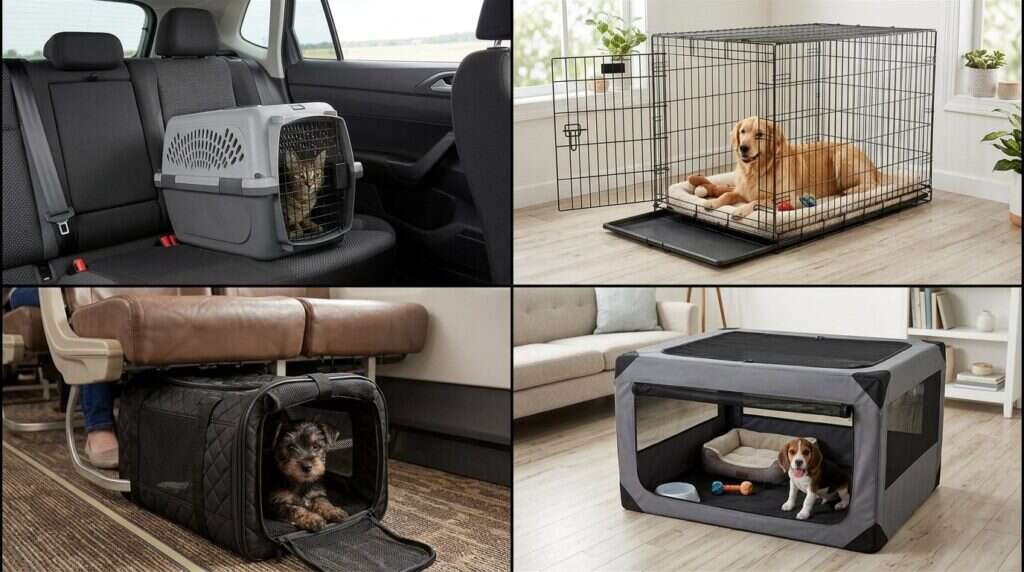
Secure, stable positioning. Always buckle the carrier firmly onto the back seat using the vehicle’s three-point seatbelt or wedge it into the rear passenger footwell. A sliding, tipping crate turns normal road bumps into alarming turbulence.
A stable carrier cushioned with familiar blankets and synthetic pheromones creates a comforting micro-environment.
A calm, steady voice or soft music. Speaking in low, rhythmic, reassuring tones or streaming classical music and species-specific cat audio frequencies can dampen sudden road thumps. Avoid blaring podcasts or jarring radio static.
Calming pheromone sprays (Feliway). Lightly misting the carrier interior and blanket with synthetic feline facial pheromones (such as Feliway Classic) 15 minutes before loading your cat signals security and territorial safety. Never spray directly onto your cat.
Pre-trip play sessions. Engaging your cat in 20 to 30 minutes of vigorous interactive play with a wand toy prior to departure expends pent-up nervous energy, encouraging them to nap once the drive commences.
Frequent, predictable breaks on long journeys. On extended highway road trips, schedule rest stops every two to three hours to offer bottled water and disposable litter pan access while keeping your car doors firmly shut.
What generally doesn’t help, or isn’t safe
⚠️ Critical Safety Warning
Never let your cat roam free inside a moving car: Even if freedom temporarily quiets their crying, an unrestrained cat can crawl under brake pedals, obstruct your blind spots, or become a lethal projectile during sudden braking.
Never scold, yell, or tap on the carrier: Punishing vocalizations compounds terror with interpersonal fear, prolonging anxiety and damaging your pet’s bond. If your cat is deeply frightened, review our guide on how to get a scared cat to trust you.
Do not assume they will just ‘get over it’: Leaving an acutely distressed cat unassisted trip after trip can cement chronic travel phobias and trigger stress-induced cystitis.
When to talk to your vet about medication
If your cat exhibits severe transit phobia—manifesting in uncontrolled vomiting, panting, hyperventilation, urination inside the carrier, or frantic clawing at mesh doors—behavioral conditioning alone may prove insufficient. Modern veterinary medicine favors mild, targeted anti-anxiety medications (such as prescription gabapentin) administered 90 to 120 minutes prior to travel over outdated heavy sedatives like acepromazine.
Prescription anxiolytics lower neurological fear arousal without impairing cardiovascular regulation or respiratory stability. Always consult your veterinarian for an accurate weight-based prescription, and execute a trial dose at home days before travel to observe your individual cat’s reaction.
Frequently Asked Questions
My cat has been meowing non-stop for hours on a multi-day drive. What should I do?
If your cat shows signs of acute physical distress beyond vocalizing—such as heavy panting, drooling, or complete refusal to settle during hotel breaks—contact a veterinarian along your route for guidance. For upcoming multi-day moves, coordinate a pharmacological anxiety management protocol with your home vet well in advance.
Is it normal for my cat to meow the entire time, every single trip?
Yes, this is surprisingly common. Some cats remain vocal commentators regardless of conditioning. If your cat eats normally upon arrival, uses their litter box, and shows no lingering physiological trauma, vocal protest alone is simply their emotional release valve, though calming aids remain strongly recommended.
Should I feed my cat before a car trip?
Offer a light meal roughly 3 to 4 hours prior to travel rather than a heavy meal right before departing. Having an empty stomach curbs nausea and reduces the likelihood of car sickness and vomiting while in transit.
Sources & Veterinary References
meowbox: “How to Keep Your Cat Calm During Car Rides” – behavioral techniques and vehicle prep.
Comfort Zone: “Cat Scared of the Car? How to Calm Down a Nervous Cat” – pheromone therapy and environmental acclimation.
Outward Hound / Furtropolis: “How to Travel with a Cat (Minus the Meows of Protest)” – road trip safety protocols and carrier placement.
🚗 Quick Takeaway: Managing Car Ride Vocalization
Persistent meowing during car trips is almost universally a physiological stress reaction—not spite or stubborn misbehavior. Gradual practice drives around the neighborhood, carriers lined with familiar home-scented garments, partial towel wraps, and securing the carrier tightly with seatbelts relieve distress for many cats. Remember: some felines may never become silent passengers, and that is completely normal.
Meowing in the car is almost always a stress response, not misbehavior, and it’s genuinely common. Cats are territorial by nature and find being removed from their home environment, placed in an unfamiliar, moving space with new sounds and smells, stressful in a way that’s hard to reason them out of.
Practice drives, a familiar-smelling carrier, and reducing sensory input all help many cats, but it’s worth knowing upfront: some cats never fully stop meowing in the car, and that’s not a sign you’re doing something wrong. Pairing your vehicle prep with our cat travel packing checklist ensures you have emergency calming remedies, extra litter supplies, and secure carriers ready before turning the ignition.
Why cats meow in the car
Understanding the root triggers behind vocalization helps pet owners address feline distress empathetically rather than with frustration:
Removal from a familiar territory: Cats are strongly attached to their home environment, and a car doesn’t offer the scent and spatial familiarity that usually keeps them calm and grounded.
An unfamiliar-smelling space: A car simply smells different from home—filled with exhaust fumes, synthetic upholstery, and air fresheners—which quickly heightens a cat’s sense that danger is imminent.
Association with unpleasant destinations: If the only car rides a cat has experienced end at the veterinary clinic or an emergency hospital, that negative association alone can trigger acute panic before the vehicle even pulls out of the driveway.
Genuine fear or motion sickness: Some cats also drool excessively, pant with open mouths, or vomit during vehicular movement. These physiological signs point directly to vestibular motion sickness rather than simple behavioral grumbling.
Territorial disruption and fear of unfamiliar environments are the primary drivers of car ride distress.
What tends to help reduce car ride vocalization
Implementing a gradual desensitization routine alongside soothing sensory modifications can significantly reduce transit vocalization:
Practice drives before the real trip. Short drives around the block, with zero destination pressure, let your cat get used to engine hums, vibrations, and vehicle sway gradually, rather than having their maiden voyage be an exhausting, high-stakes road trip.
A carrier that already smells like home. Place your cat’s favorite bed, fleece blanket, or an unwashed t-shirt carrying your natural scent inside the carrier days beforehand. Felines navigate through pheromonal landmarks; infusing the carrier with comforting domestic scents establishes a secure base. For nervous felines, take time to learn how to train a cat to accept a carrier comfortably at home first.
Partial covering. Draping a breathable cotton towel or lightweight blanket over three sides of the carrier creates a sheltered, den-like sanctuary. This shields your cat from disorienting flashes of speeding highway scenery while maintaining unobstructed front airflow. Cats vary: some settle better completely tucked away, while curious felines rest easier when able to look out toward their owner.
Secure, stable positioning. Always buckle the carrier firmly onto the back seat using the vehicle’s three-point seatbelt or wedge it into the rear passenger footwell. A sliding, tipping crate turns normal road bumps into alarming turbulence.
A stable carrier cushioned with familiar blankets and synthetic pheromones creates a comforting micro-environment.
A calm, steady voice or soft music. Speaking in low, rhythmic, reassuring tones or streaming classical music and species-specific cat audio frequencies can dampen sudden road thumps. Avoid blaring podcasts or jarring radio static.
Calming pheromone sprays (Feliway). Lightly misting the carrier interior and blanket with synthetic feline facial pheromones (such as Feliway Classic) 15 minutes before loading your cat signals security and territorial safety. Never spray directly onto your cat.
Pre-trip play sessions. Engaging your cat in 20 to 30 minutes of vigorous interactive play with a wand toy prior to departure expends pent-up nervous energy, encouraging them to nap once the drive commences.
Frequent, predictable breaks on long journeys. On extended highway road trips, schedule rest stops every two to three hours to offer bottled water and disposable litter pan access while keeping your car doors firmly shut.
What generally doesn’t help, or isn’t safe
⚠️ Critical Safety Warning
Never let your cat roam free inside a moving car: Even if freedom temporarily quiets their crying, an unrestrained cat can crawl under brake pedals, obstruct your blind spots, or become a lethal projectile during sudden braking.
Never scold, yell, or tap on the carrier: Punishing vocalizations compounds terror with interpersonal fear, prolonging anxiety and damaging your pet’s bond. If your cat is deeply frightened, review our guide on how to get a scared cat to trust you.
Do not assume they will just ‘get over it’: Leaving an acutely distressed cat unassisted trip after trip can cement chronic travel phobias and trigger stress-induced cystitis.
When to talk to your vet about medication
If your cat exhibits severe transit phobia—manifesting in uncontrolled vomiting, panting, hyperventilation, urination inside the carrier, or frantic clawing at mesh doors—behavioral conditioning alone may prove insufficient. Modern veterinary medicine favors mild, targeted anti-anxiety medications (such as prescription gabapentin) administered 90 to 120 minutes prior to travel over outdated heavy sedatives like acepromazine.
Prescription anxiolytics lower neurological fear arousal without impairing cardiovascular regulation or respiratory stability. Always consult your veterinarian for an accurate weight-based prescription, and execute a trial dose at home days before travel to observe your individual cat’s reaction.
Frequently Asked Questions
My cat has been meowing non-stop for hours on a multi-day drive. What should I do?
If your cat shows signs of acute physical distress beyond vocalizing—such as heavy panting, drooling, or complete refusal to settle during hotel breaks—contact a veterinarian along your route for guidance. For upcoming multi-day moves, coordinate a pharmacological anxiety management protocol with your home vet well in advance.
Is it normal for my cat to meow the entire time, every single trip?
Yes, this is surprisingly common. Some cats remain vocal commentators regardless of conditioning. If your cat eats normally upon arrival, uses their litter box, and shows no lingering physiological trauma, vocal protest alone is simply their emotional release valve, though calming aids remain strongly recommended.
Should I feed my cat before a car trip?
Offer a light meal roughly 3 to 4 hours prior to travel rather than a heavy meal right before departing. Having an empty stomach curbs nausea and reduces the likelihood of car sickness and vomiting while in transit.
Sources & Veterinary References
meowbox: “How to Keep Your Cat Calm During Car Rides” – behavioral techniques and vehicle prep.
Comfort Zone: “Cat Scared of the Car? How to Calm Down a Nervous Cat” – pheromone therapy and environmental acclimation.
Outward Hound / Furtropolis: “How to Travel with a Cat (Minus the Meows of Protest)” – road trip safety protocols and carrier placement.