
Quick Summary: Give the cat complete control over the pace, keep every human interaction calm and predictable, and use high-value food as a bridge rather than physical force. A fearful cat that is cornered, grabbed, or pulled from under furniture learns that humans are unpredictable threats. True trust is built slowly over days or weeks of consistent, zero-pressure exposure.
Earning the affection of a confident cat can feel almost instantaneous, but building a bond with a scared or skittish feline requires a completely different mindset. Whether you recently adopted a nervous rescue or your long-time companion has become unusually wary, pushing for affection will invariably backfire. Cats are both predators and prey animals, and when an indoor cat feels unsafe, their survival instincts command them to hide, freeze, or defend themselves.
Rule out a medical cause first
Before assuming that your cat’s fear stems purely from temperament or a lack of socialization, consult your veterinarian. If a previously relaxed, friendly cat suddenly becomes fearful, skittish, or aggressive, an underlying medical issue is frequently the trigger.
Physical pain, systemic illness, or gradual sensory decline (such as deteriorating eyesight or hearing loss) can leave a cat feeling intensely vulnerable. When jumping hurts due to feline arthritis or touch causes discomfort, a cat will naturally retreat into defensive isolation. Ruling out physical ailments ensures you aren’t misinterpreting pain signals as psychological stubbornness.
Setting up a safe sanctuary space
A fearful cat placed in an open, cavernous multi-room house will feel completely overwhelmed. Setting up an intentional, low-stress environment establishes immediate boundaries of safety:
- Limit the territory: Start the cat in a single quiet room (such as a guest bedroom or home office) with minimal foot traffic. This gives them a manageable territory to map and secure without worrying about sudden encounters.
- Provide accessible sanctuary spots: Place an open carrier lined with a soft, familiar towel or a covered pet bed in a corner. Crucially, avoid letting them wedge into unreachable crevices (behind refrigerators or inside box springs) where you cannot monitor them or assist in an emergency.
- Introduce gentle ambient sound: A television, white noise machine, or low-volume classical radio masks sudden outside noises, doors slamming, and footsteps, normalizing human ambient presence.
- Maintain strict schedule predictability: Serve meals, refresh water, and scoop the litter box at identical times each day. Predictability breeds confidence.
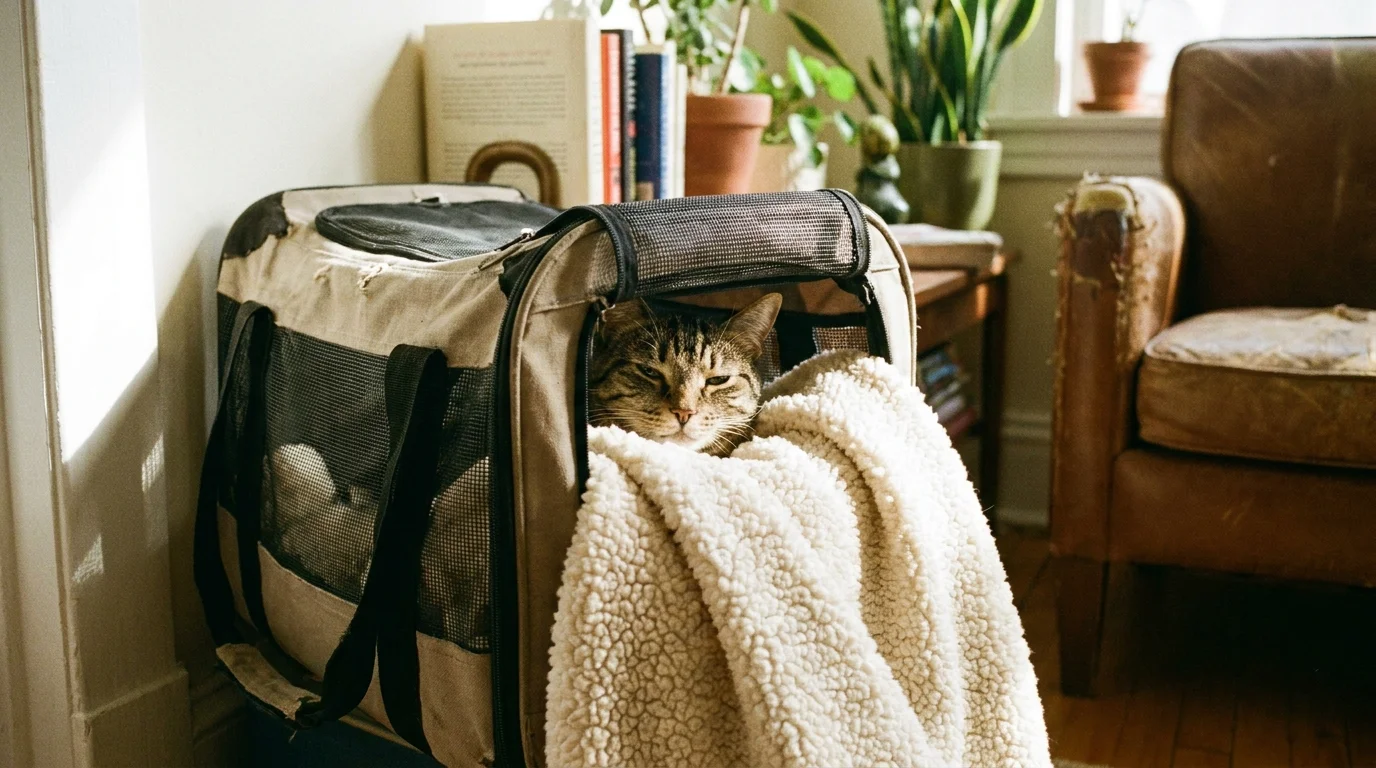
The step-by-step trust-building approach
To win over a scared cat, reverse the conventional human impulse to approach. Let the cat dictate the proximity, duration, and tone of every single encounter:
1. Practice passive companionship: Sit quietly on the floor of the room for 15 to 30 minutes at a time. Read a book, work on your laptop, or scroll on your phone. Make zero attempt to interact, speak loudly, or look at the cat. This demonstrates that your mere presence carries no threat.
2. Speak softly and rhythmically: Talk in a low, gentle, soothing tone. Narrate what you are doing or read aloud. This familiarizes the cat with the pitch and cadence of your voice without putting demands on them.
3. Avoid direct staring and towering posture: In the feline world, prolonged direct eye contact is an unambiguous predatory challenge. Keep your body low to the ground. When the cat looks your way, look slightly off to the side and offer a slow, gentle blink—the universal feline signal for “I am relaxed and peaceful.”
4. Use food as an irresistible bridge: Offer a spoonful of delectable wet food, squeeze treats, or roasted plain chicken while you are present. Place the treat a few feet away from you initially. Gradually, over days, position the treat closer to where you sit so the cat builds a positive association between your proximity and safety.
5. Allow the cat to initiate physical proximity: When your cat gathers the courage to step forward and sniff your shoe or outstretched knuckles, remain completely still. Resist the reflex to reach out and pet them immediately, which often shatters their nascent courage.
6. Always end sessions on a high note: Keep early sessions brief (5 to 10 minutes of active proximity). Step away while the cat is still calm and relaxed rather than pushing until the cat panics or bolts back under a bed.

Reading signals: Progress vs. warning signs to back off
Cats communicate their internal emotional thresholds clearly through nuanced body language. Recognizing when your cat is feeling confident versus pushed too far is vital to maintaining upward momentum.
| Milestone Phase | Signs of Real Progress | Warning Signs (Slow Down Immediately) |
|---|---|---|
| Early Exposure (Days 1–5) | Eats treats while human is in room; upright tail tip; gentle slow blinking. | Refuses food; crouched tightly against floor; wide dilated pupils; dilated panting. |
| Proximity Phase (Days 6–14) | Steps out of hiding unprompted; sniffs extended fingers; grooms or stretches. | Flattened airplane ears; low growling; sudden freeze; tail tucked beneath body. |
| Physical Touch (Weeks 2+) | Rubs cheek scent glands against knuckles; soft purring; relaxed whiskers. | Skin rippling; sudden tail-tip twitching; sharp swatting or turning to bite. |
Common mistakes that derail trust
- Forcing contact or pulling them out: Dragging a cat from under a sofa or bed destroys security instantly.
- Trapping or cornering: Never block their escape path or stand over them in doorways.
- Sudden loud bursts: Keep voices, footsteps, and household electronics muted during early introductions.
- Rushing the timeline: Attempting to turn an anxious cat into a lap cat in 48 hours only results in behavioral regression.
Frequently Asked Questions
How long does it take for a scared cat to trust you?
The timeline varies significantly depending on the cat’s background. A mildly shy adult cat or well-handled kitten may warm up in 5 to 10 days. Conversely, cats with histories of trauma, abuse, or zero early human socialization can require several months of quiet, patient consistency.
Should I pick up my scared cat to comfort them?
No. Picking up a frightened cat takes away all their control over their environment, triggering intense panic and defensive flight-or-fight reactions. Let all four paws stay firmly planted on the ground until your cat willingly climbs into your lap.
My cat trusts me completely but bolts whenever guests visit. Is this normal?
Yes. Many companion cats are “one-person” or “family-only” felines who remain naturally guarded around unfamiliar voices, scents, and movements. Learn more about managing this in our guide on why cats hide when visitors arrive.
Related reading and authoritative sources
Continue supporting your cat’s emotional confidence with our related guides:
- Why does my cat hide when someone comes over?
- Why does my cat run away when I try to pet it?
- How to train a cat to come when called with positive reinforcement
Scientific and Shelter Reference Resources: