Quick Summary: Visitors bring unfamiliar scents, heavy footsteps, loud laughter, and an unpredictable interruption to your cat’s established territory. Hiding is an innate, healthy coping mechanism, not a flaw to be corrected by force. Rather than dragging your cat out to socialize, establish a dedicated quiet retreat and educate your guests to ignore the feline entirely.
You invite friends or family over, the doorbell chimes, and before your guests can even kick off their shoes, your cat vanishes into thin air. Hours later, you find them wedged beneath the guest bed or pressed into the tightest crevice behind your bedroom dresser. If your feline companion turns into an invisible phantom whenever company arrives, you are far from alone.
To understand why this happens, remember that domestic cats occupy a unique dual role in nature as both predators and prey. Within the confines of an indoor home, territory is everything. An unexpected human visitor introduces sensory chaos: foreign pheromones, booming vocal timbres, heavy stomping footwear, and a sudden disruption to the cat’s carefully monitored patrol routes.
The 4 primary reasons cats hide from visitors
Feline behavioral specialists identify four main drivers behind visitor-induced avoidance:
- Limited early socialization: A kitten’s primary socialization window occurs between 2 and 7 weeks of age. Kittens that were not exposed to diverse human voices, body types, handling, and gentle noise during this critical period naturally view novel humans with deep suspicion as adults.
- Disrupted environmental predictability: Cats thrive on rigid routines. An influx of visitors changes acoustic levels, furniture arrangements, and owner availability, signaling potential danger to an anxious cat.
- Inherited temperament: Genetic research indicates that a kitten’s disposition is heavily influenced by their father’s boldness or wariness. Some cats are genetically predisposed to high vigilance.
- Traumatic past handling: If a past visitor cornered the cat, picked them up roughly, or allowed children to chase them, the cat retains that negative memory and implements a preemptive retreat whenever the door chimes.
Why you must let your cat hide (and never force socialization)
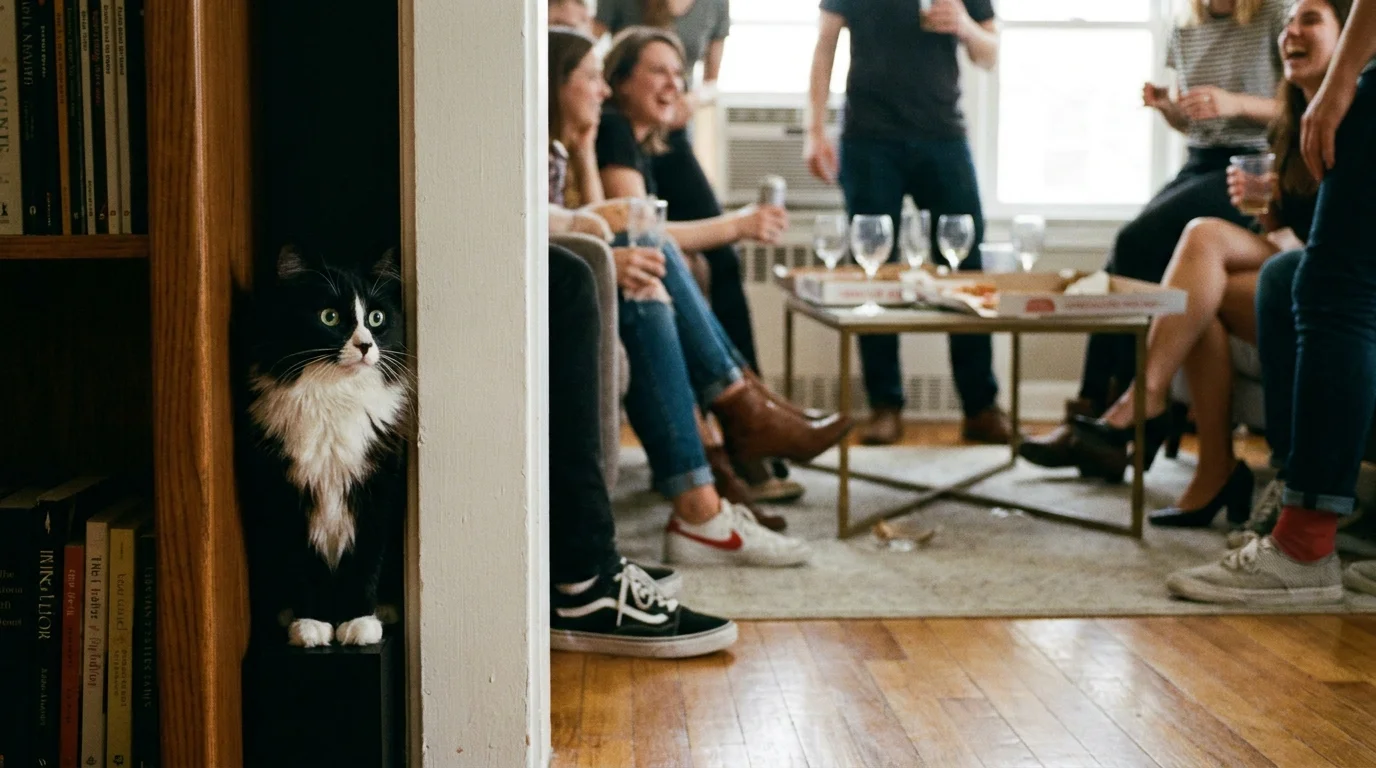
The single most damaging mistake a well-meaning pet parent can make is physically dragging an unwilling cat out from under a bed to “say hello” or “show them off.” Forcing a cat into an unwanted social interaction eliminates their escape route, escalating mild wariness into acute panic or defensive aggression.
Allowing your cat to retreat preserves their sense of autonomy. When a cat knows they possess an inviolable, guaranteed sanctuary where nobody will disturb them, their baseline cortisol levels drop significantly. Over time, that emotional security gives them the courage to emerge and investigate on their own timetable.
Practical steps for lower-stress visits
Transforming your home into a hospitable environment for both guests and an anxious feline requires a few proactive adjustments:
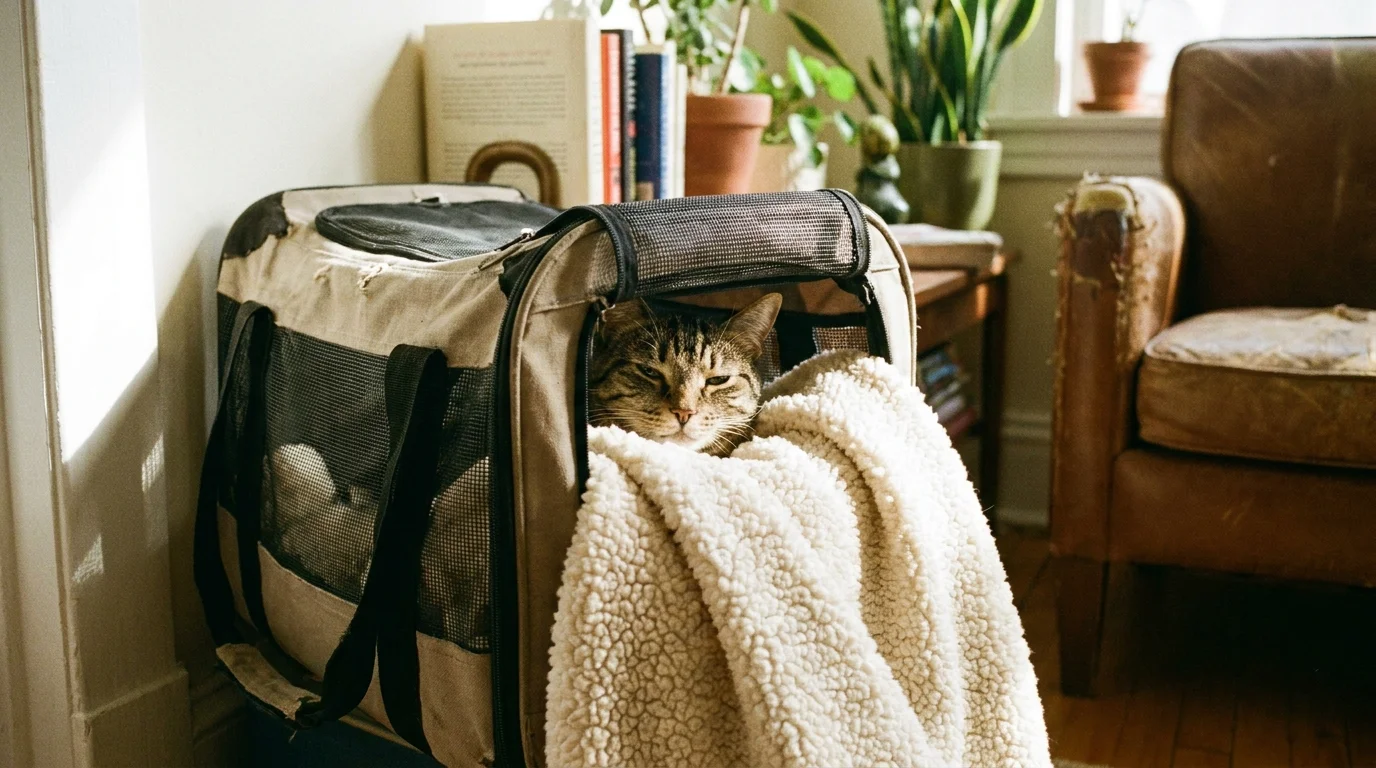
1. Prepare a dedicated sanctuary room: Before guests arrive, move your cat into a quiet, closed-door bedroom equipped with their litter box, fresh water, a comforting bed, and a bowl of food. Place a gentle sign on the door asking guests not to enter.
2. Coach your guests on feline etiquette: Instruct visitors to ignore the cat completely if they spot them. Counterintuitively, the person who actively avoids making eye contact, never reaches out, and keeps their voice relaxed is invariably the first person a curious cat will approach.
3. Deploy feline facial pheromones: Plug in a synthetic calming pheromone diffuser (such as Feliway or Comfort Zone) in the sanctuary room 24 to 48 hours before the scheduled gathering to promote relaxed territorial marking.
4. Preserve standard feeding routines: Feed and play with your cat around your usual schedule. Consistency provides psychological reassurance that life remains orderly.
Gradual desensitization protocol for repeat guests
If you have a frequent guest (such as a partner or close family member) whom you want your cat to accept, follow this structured desensitization routine:
| Step | Guest Action | Cat Goal | Reinforcement Technique |
|---|---|---|---|
| Session 1 | Sits across the room, reads quietly, makes zero eye contact. | Observes guest from doorway or perch without fleeing. | Owner gently tosses freeze-dried treats toward the cat. |
| Session 2 | Remains seated; extends a loose fist toward the floor. | Steps forward to investigate the novel scent on their own. | Guest drops a high-value treat on the rug and pulls hand back. |
| Session 3 | Speaks in a gentle monotone voice, offers a wand toy trail. | Engages in brief predatory play in guest’s presence. | Reward with a spoonful of wet food or lickable puree treat. |
Frequently Asked Questions
Will my cat ever stop hiding when guests arrive?
With patient desensitization and zero-pressure handling, many cats become substantially bolder over time. However, some cats will always possess an introverted temperament that prefers solitude when strangers are present. Respecting that boundary is part of good feline guardianship.
Should I take my cat to the vet if hiding suddenly gets worse?
Yes. If a cat that normally greets people warmly suddenly starts diving under furniture or staying hidden for days on end, an underlying medical illness, dental abscess, or joint pain should be ruled out immediately by your vet.
Why does my cat run away when I reach down to pet them?
A hand looming downward from above often mimics the approach of an aerial predator or triggers overstimulation aversion. Explore our full troubleshooting guide on why cats run away when petted.
Related reading and authoritative sources
Explore companion guides to nurture a peaceful, secure home environment:
- How to get a scared cat to trust you: A complete step-by-step plan
- Why does my cat run away when I try to pet it?
- How to train your cat to come when called
Authoritative Behavioral Reference Links: