By Emma Hartley | Reviewed by IndoorCatWell Editorial Team | Last updated September 2026
This article provides practical, veterinary-supported cat care guidance. If you buy through our links, we may earn an affiliate commission at no extra cost to you. Read our full Affiliate Disclosure.
The biggest mistake first-time cat travelers make isn’t forgetting an item—it is packing the wrong version of it. Bringing a brand-new unfamiliar carrier, buying different litter at your destination, or rationing food with no delay buffer can turn travel into a feline nightmare. Cats rely on scent familiarity and routine; the core rule of feline packing is bringing as much of “home” with you as possible.
⚡ Quick Travel Checklist Essentials
- Acclimated Carrier: Pre-conditioned with home blankets, secured with seatbelts or airline approved.
- Double Food & Bottled Water: 3 to 4 days extra of their exact daily diet plus familiar home tap/bottled water.
- Familiar Litter Pan: Disposable pan packed with litter scooped from home to anchor territory.
- Medical Dossier: Printed rabies certificate, vet emergency contacts along route, and microchip number.
- Sanctuary Basecamp Gear: Portable bowls, absorbent pee pads, and calming pheromone spray.
1. The Carrier: Your Cat’s Mobile Safehouse
Your carrier is the single most critical investment for feline travel. It must be a secure haven rather than a terrifying confinement box:
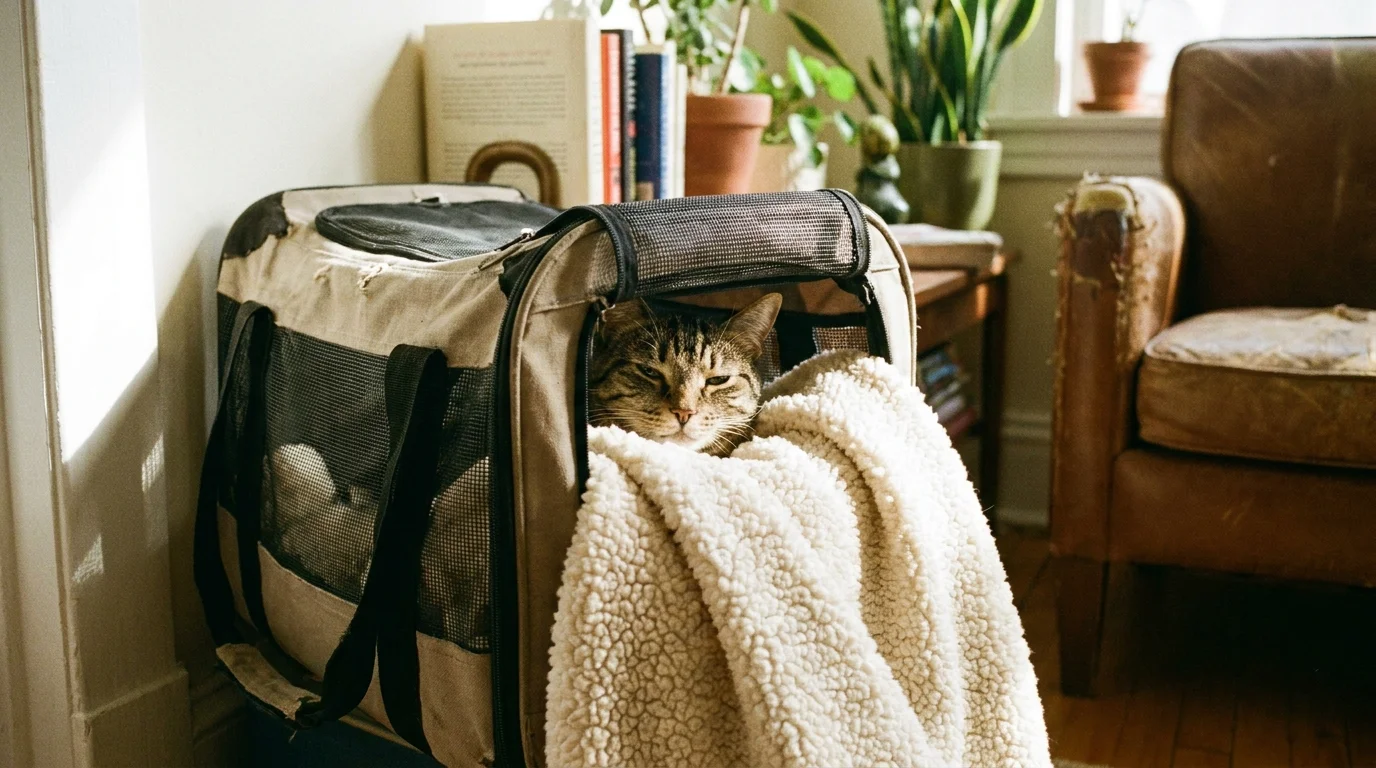
- Size appropriately: Ensure your cat can stand, execute a full 360-degree turn, and stretch out completely, without sliding loosely during vehicle turns.
- Hard vs. soft-sided: Hard-shell composite carriers offer superior physical protection and crush-resistance during car rides; soft-sided ballistic nylon carriers compress easily under airline seats for in-cabin flights.
- Pre-trip conditioning: Leave the carrier open on your living room floor at least 14 days before departure. Place daily treats, catnip, and their favorite sleeping fleece inside.
- Automotive security: Thread the vehicle seatbelt through carrier handles. If visual movement triggers car meowing, drape a breathable towel over three sides (see our guide on how to stop a cat from meowing in the car).
2. Nutrition & Hydration: Buffer for Delays
Feline digestive tracts react severely to sudden changes. Travel stress combined with a new food brand can induce explosive diarrhea in a confined vehicle.
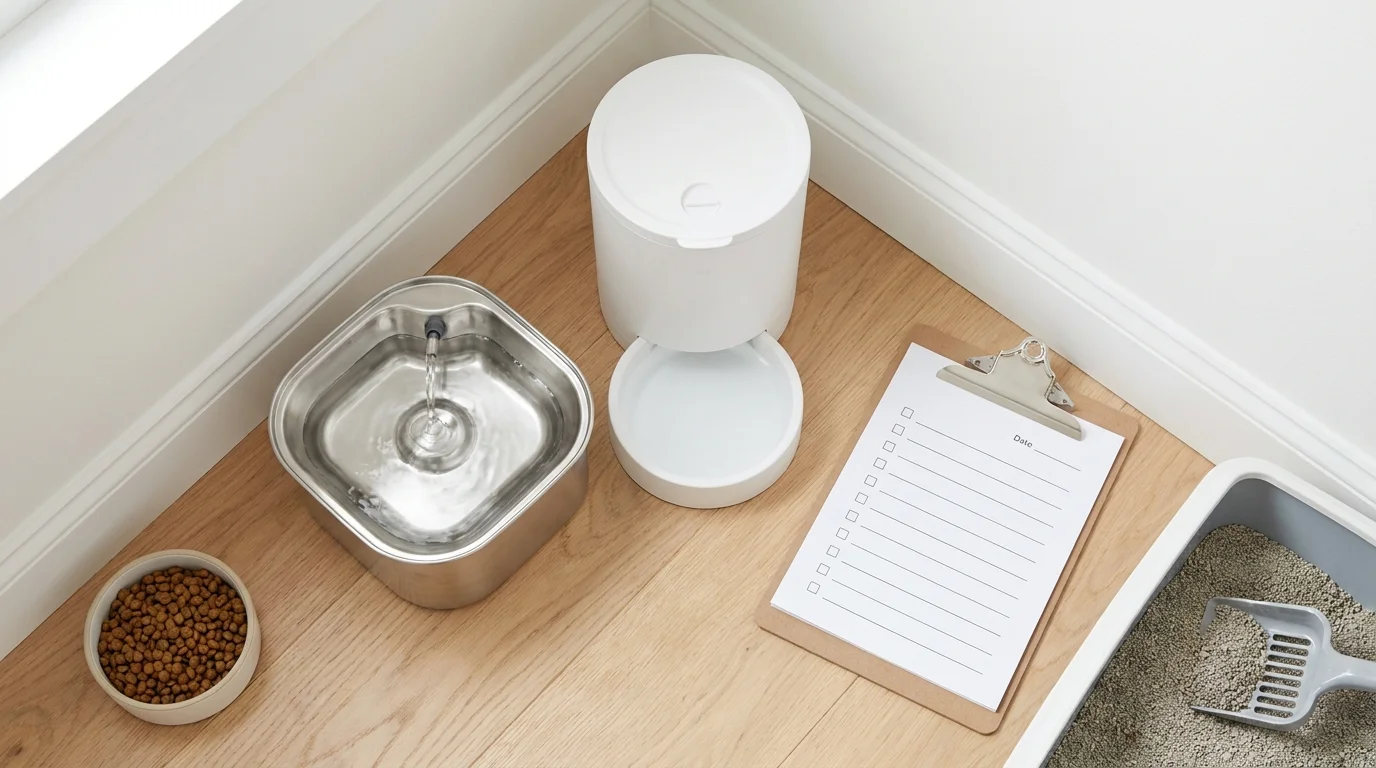
- Pack a 100% buffer: For a 3-day journey, pack 6 days of food in sealed, airtight containers to guard against flight cancellations or road detours.
- Bottled water from home: Municipal water supplies feature radically different chlorine, fluoride, and mineral balances. Carry gallon jugs of your cat’s usual home water.
- Collapsible silicone bowls: Lightweight, non-tipping silicone dishes tuck flat into side pockets and won’t shatter if dropped.
3. The Portable Sanitation Kit
- Disposable litter pans: Biodegradable cardboard trays or collapsible waterproof fabric pans pack flat and can be discarded easily.
- Home litter supply: Never buy a new brand at your destination. The scent of familiar litter gives cats territorial security to eliminate without holding urine.
- Carrier puppy pads: Layer 2 to 3 absorbent pee pads under carrier fleece. If motion sickness or an accident happens, simply peel off the top pad at a rest stop.
- Odor bags & scooper: Pack heavy-duty biodegradable waste bags, a sturdy scooper, and enzyme wipes for fast surface cleanups.
4. Veterinary Dossier & Identification
| Document / Item | Purpose | Storage Format |
|---|---|---|
| Rabies Certificate | Legally required by airlines, hotels, state borders | Laminated paper & phone photo |
| Microchip Number | Permanent registry recovery in case of escape | Saved in notes app & collar tag |
| Prescription Medication | Maintenance doses plus 7-day reserve supply | Original labeled pharmacy bottle |
| En Route Emergency Vets | Addresses and 24/7 phones along driving route | Pinned in navigation map app |
5. Destination Arrival: Establishing an Instant Sanctuary
When you arrive at your hotel or vacation rental, do not open the carrier in the middle of a massive open room. Follow this decompression sequence:
- Place the carrier inside the bathroom, close the door, and set up the litter tray, food, and water dishes.
- Unzip the carrier door and allow your cat to step out on their own terms into this small, enclosed territory.
- Inspect the main bedroom for hazards (open windows, gaps behind dressers, reclining chairs) before granting full room access.
- Ensure your cat wears a breakaway collar with an ID tag throughout the journey. Learn why in our article on should indoor cats wear a collar.
Frequently Asked Questions
Should I feed my cat right before we get in the car?
No. Offer a small, light meal 3 to 4 hours before departure. A full stomach combined with vehicle vibration and motion significantly increases the risk of nausea, vomiting, and car sickness.
Is it safe to give my cat over-the-counter sedatives for travel?
Never administer human sedatives or OTC drugs. Heavy sedation impairs feline body temperature regulation, blood pressure, and airway reflexes. If anxiety is severe, consult your veterinarian for targeted prescription medications like gabapentin.
How early should I start carrier training before travel?
Begin at least two weeks before your trip. For nervous or rescue cats, leaving the carrier open as a permanent resting cave year-round completely removes travel-day panic.