This post contains affiliate links. If you buy through them I may earn a commission, at no extra cost to you. I don't rank products here, because the right choice depends on how you'll use it.
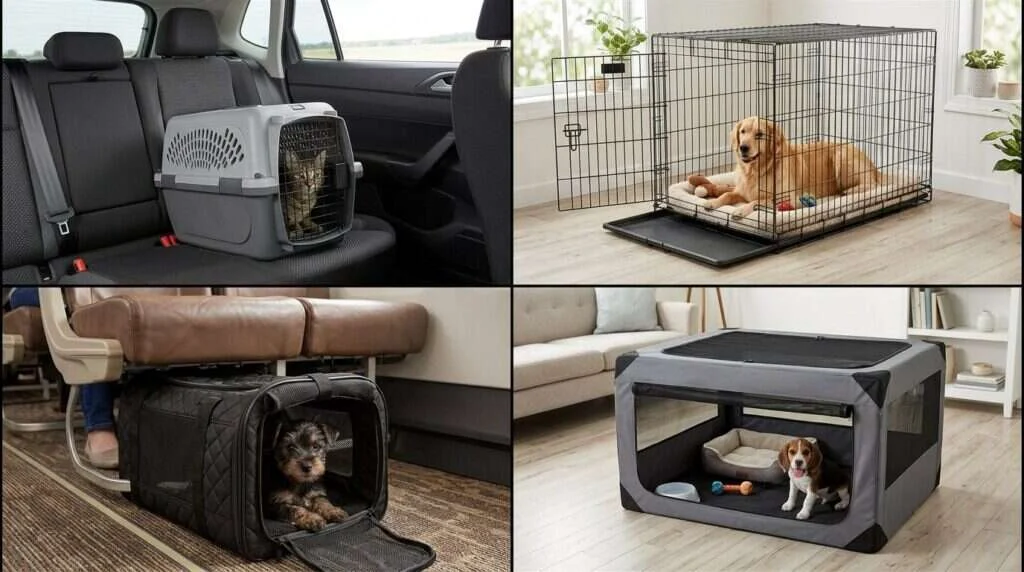
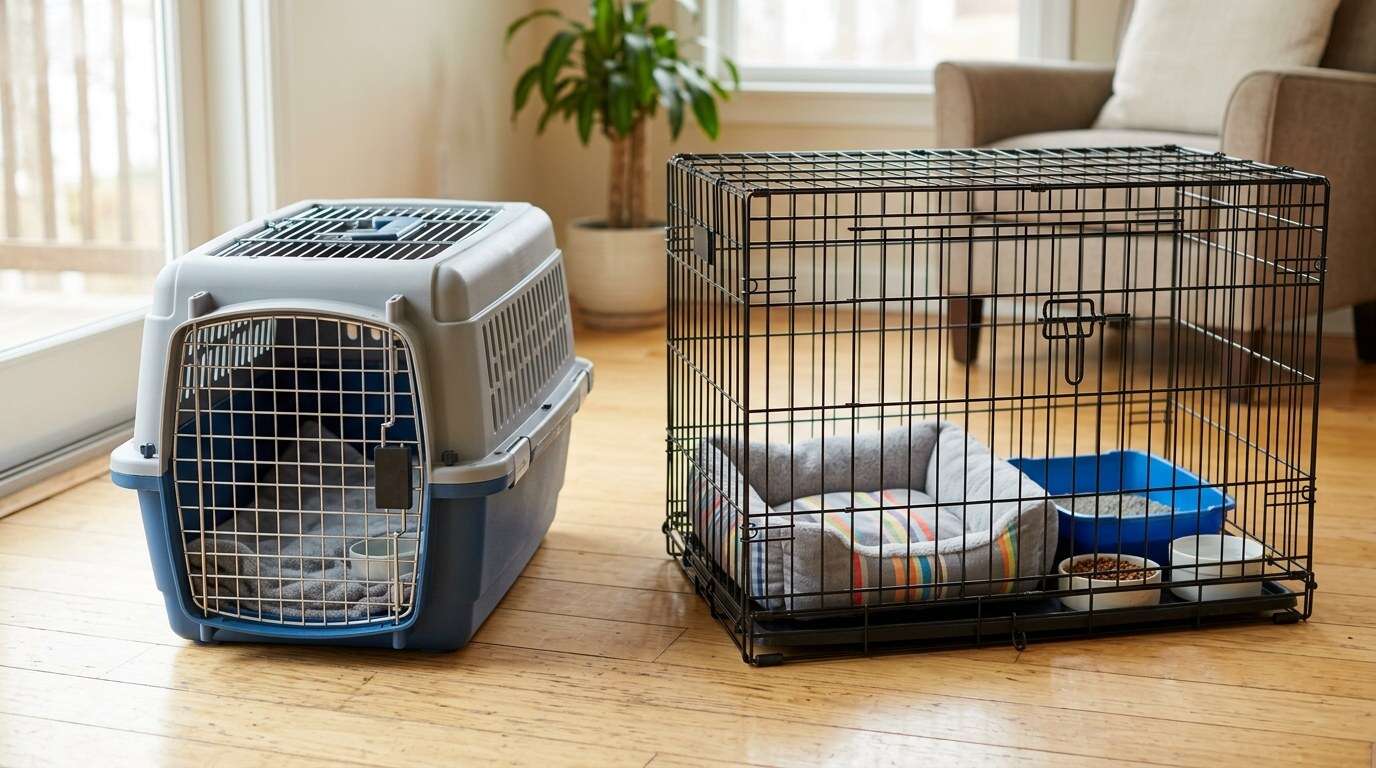
People use "kennel," "crate," "cage," and "carrier" for the same thing, but the jobs differ. A carrier is built to move a cat safely. A kennel, in the way most cat owners use the word, is a larger enclosure meant for holding a cat in one place, usually at home or at a clinic. Buying the wrong one is a common mistake, and a cat kept in a kennel that was never meant for the car, or in a carrier that is too small for days of confinement, pays the price. This guide sorts out the terms, compares the options, and gives you a way to decide.
Short answer
If you need to take your cat to the vet, travel by car, or evacuate, buy a carrier designed for transport. If you need to contain your cat at home for a limited time, such as for recovery, a new-cat introduction, or when workers are in the home, a larger kennel or playpen suits better, and you should still own a proper carrier. One does not replace the other.
In this guide:
What the words mean
Carrier. A portable container with a handle and a secure door, built for moving a cat. Hard plastic, soft-sided fabric, and wire-and-plastic combinations are common.
Kennel. In US usage, this can mean a dog crate, a wire cage, or a boarding facility. For a cat owner it usually refers to a wire or plastic enclosure bigger than a carrier.
Crate. Often used for a wire or plastic enclosure similar to a kennel.
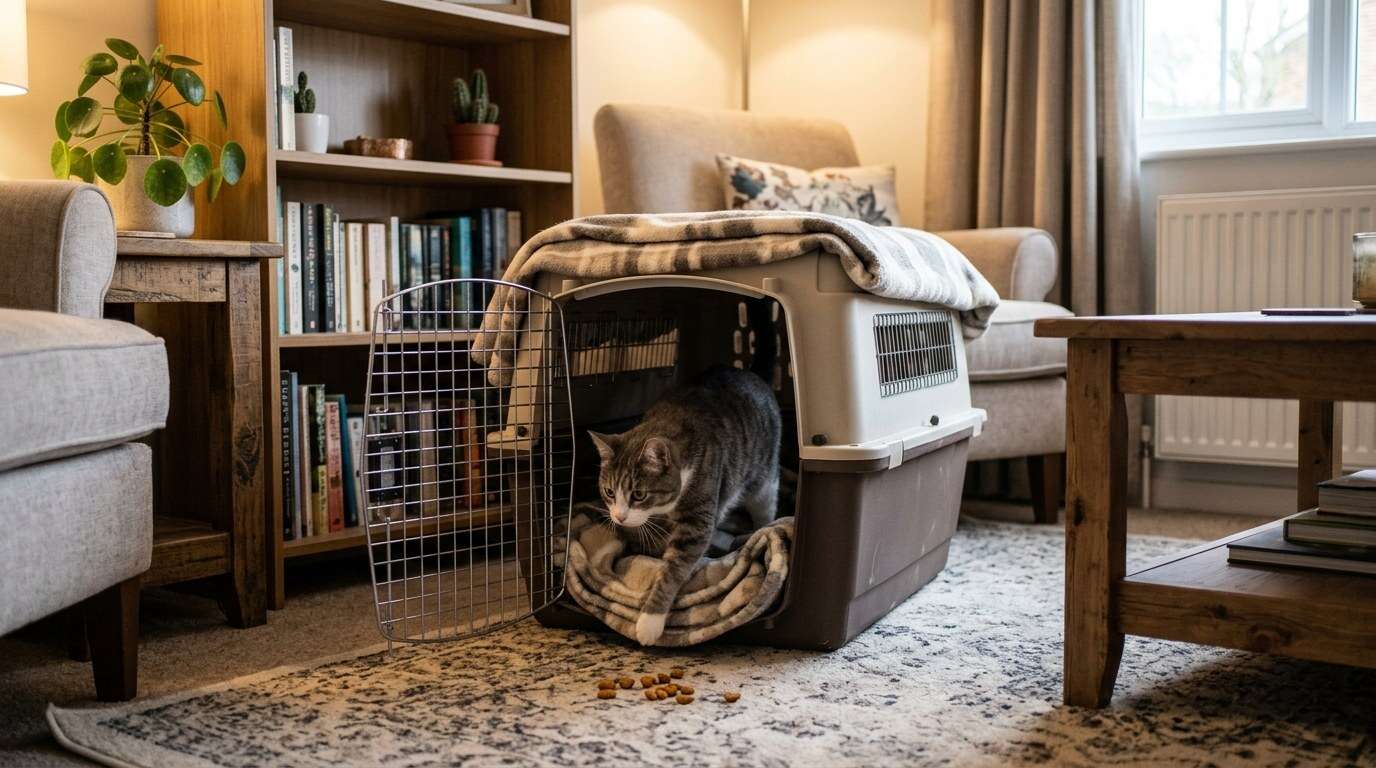
Cage. A wire enclosure, sometimes used at vet clinics or for temporary housing.
Playpen or exercise pen. A collapsible enclosure with panels and sometimes a roof, giving more space.
Cattery. A UK term for a facility that boards cats.
Product listings use these words loosely, so check the dimensions and the stated purpose rather than the name.
Comparing the options
Car safety
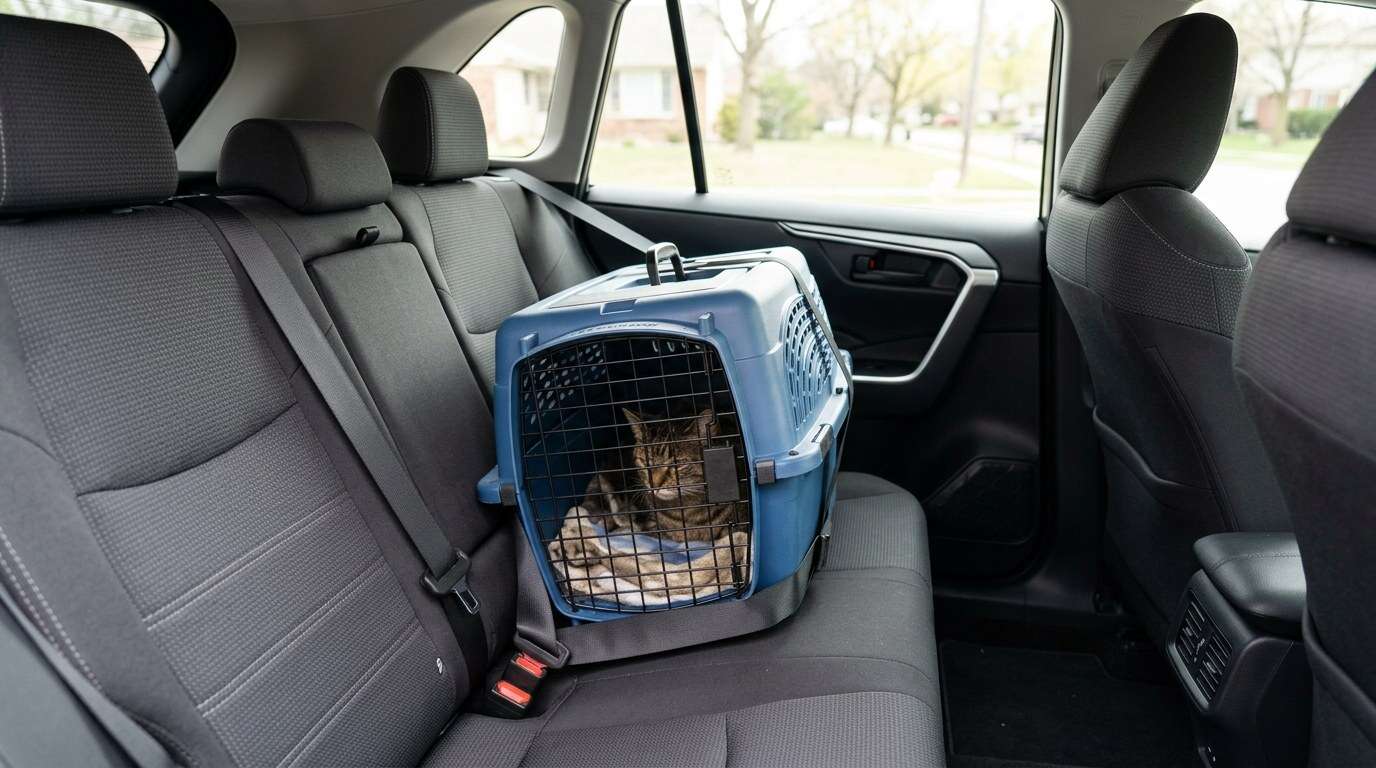
A carrier that holds your cat safely in a car has to survive sudden stops. Not all do. The Center for Pet Safety, a US nonprofit, runs crash tests on some pet carriers and publishes results. If you drive with your cat often, check whether a carrier has independent testing, and install it as the manufacturer directs, for example with a seat belt strapped around it or wedged in the footwell. Don't place a carrier on a seat without securing it, and don't put it in a front seat with an airbag.
Wire kennels and crates are heavy and not designed for crash protection. Don't treat them as a travel solution unless the manufacturer states they are suitable.
What to look for in a carrier
Size. Large enough for your cat to stand, turn, and lie down comfortably, but not so large that she is thrown around.
Top and front doors. A top opening makes it easier to put a nervous cat in and take her out at the vet.
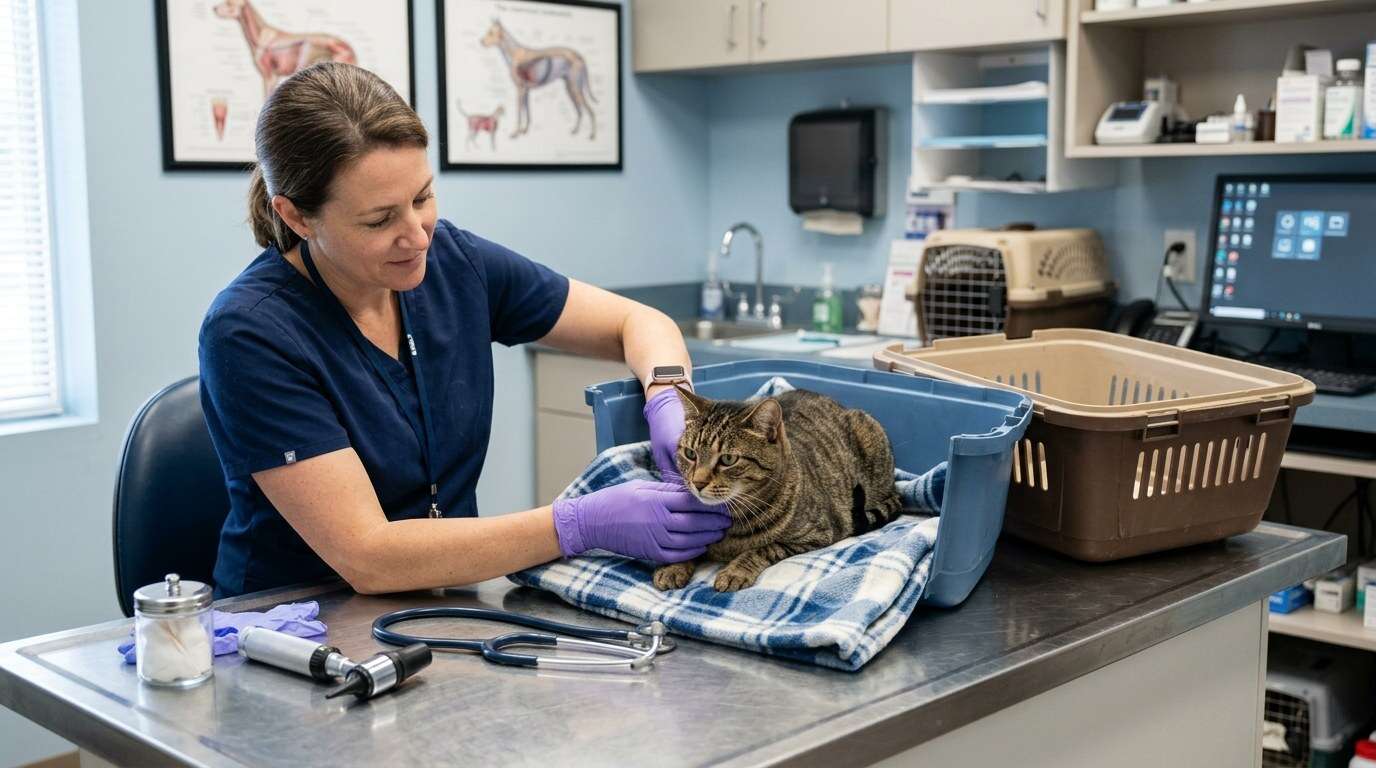
Removable top. Lets a vet examine her without pulling her out.
Secure latches. Check that they can't pop open.
Ventilation. Openings on several sides.
Stability. A solid, flat base.
Easy cleaning. Wipeable surfaces. Cats may vomit or urinate in stress.
Weight rating. Check it against your cat.
Comfort. A soft pad or a familiar blanket.
What to look for in a kennel or playpen
Space. Enough for litter, food, water, and a bed in separate areas. See our cage setup guide.
Roof or lid. Cats jump.
Mesh gaps. Small enough that a cat can't get her head stuck.
Doors. Wide and secure.
Cleaning access. A removable tray or wipeable floor.
Stability. Doesn't tip or fold.
Choosing by situation
Training your cat to accept a carrier
A carrier that only appears on the way to the vet becomes frightening. Leave it out in a room, with the door open and a blanket inside. Put treats or meals nearby, then inside. Let her explore. Close the door briefly, then open it, and build up slowly. Take short practice trips. This takes weeks for some cats.
Some tips:
- Use a carrier with a top door for ease.
- Cover it with a light blanket for the journey, if she feels safer.
- Spray a calming pheromone product if you like, although results are mixed.
- Stay calm. Cats pick up on your stress.
- Never chase her to get her in.
Cleaning and care
Wipe with mild, unscented soap and water. Avoid strong-smelling disinfectants and essential oils. Let the carrier dry. Wash bedding after each trip. Check for cracks and worn latches regularly, and replace a damaged carrier.
Common mistakes
Using a kennel for car travel when it is not designed for it
Choosing a carrier that is too small
Leaving the carrier in a cupboard until needed
Using a carrier or kennel as a long-term enclosure
- Putting an unsecured carrier on a car seat
- Using a carrier with a poor latch
Carrying a carrier by the handle with the cat banging against your leg. Support the bottom and keep it level
- Forcing a cat inside by tipping her in
- When to talk to your vet
If your cat is extremely distressed by travel. Ask about calming strategies or medications.
Before long trips or flights
If she vomits, pants, or drools during transport
Frequently Asked Questions
Is a kennel the same as a carrier?
No. A carrier is for transport and a kennel is usually for containment.
Can I use a dog crate for my cat?
For short-term containment at home, a clean, secure crate with a lid can work, as long as the bars are suitable for a cat. It's not suitable for car travel unless stated.
Which carrier is best for the vet?
A hard-sided one with a top door is often easiest, but your cat's preferences matter.
How big should a carrier be?
Big enough for her to stand and turn around, but snug enough to feel safe.
Do I need a carrier if my cat never goes out?
Yes. You may need it for emergencies, vet visits, or evacuation.
Is a soft carrier safe?
For short trips and calm cats, yes. For car travel, a hard-sided carrier that's secured is generally preferred.
Related reading
References
Center for Pet Safety, crash-test information for pet carriers (centerforpetsafety.org). Verify what they have tested and the current results before naming any product.
AAFP and International Cat Care resources on carrier training and travel
Airline policies for any airline you mention
Indoor Cat Cage Setup: Litter, Water and Comfort for Temporary Use

