This post contains affiliate links. If you buy through them I may earn a commission, at no extra cost to you. I don't rank products here, because the right playpen depends on your cat's size, your space, and why you need it.
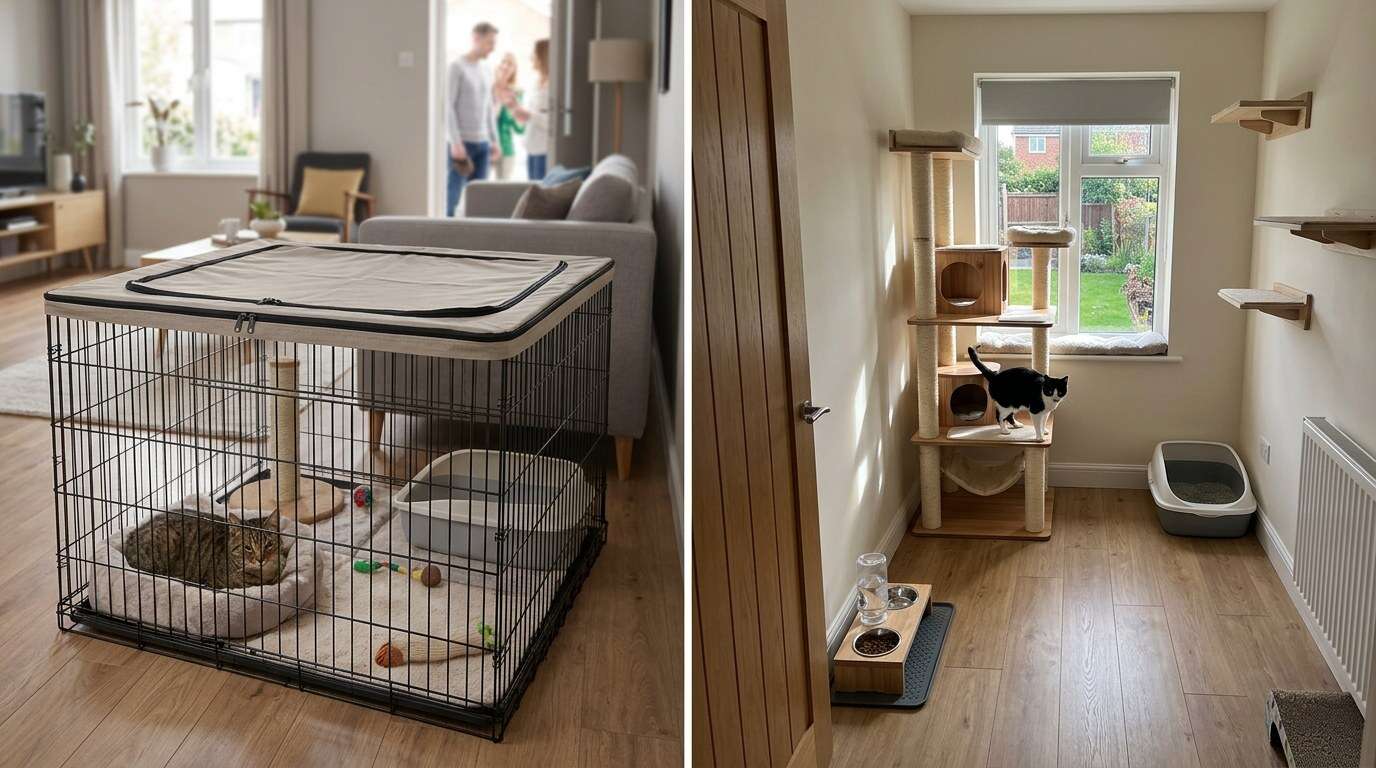
A cat playpen is a collapsible enclosure with a floor, walls, and sometimes a roof, used when you need your cat contained for a limited time. Common reasons include rest after surgery or injury as your vet directs, introducing a new cat, separating a sick cat from others, giving a nervous cat a safe base in a busy home, or hosting guests. A playpen isn't a place to leave a cat for long periods, and it is not a substitute for enrichment and company. This guide covers when one makes sense, what to look for, what size to choose, and how to set it up so your cat is comfortable and safe.
Short answer
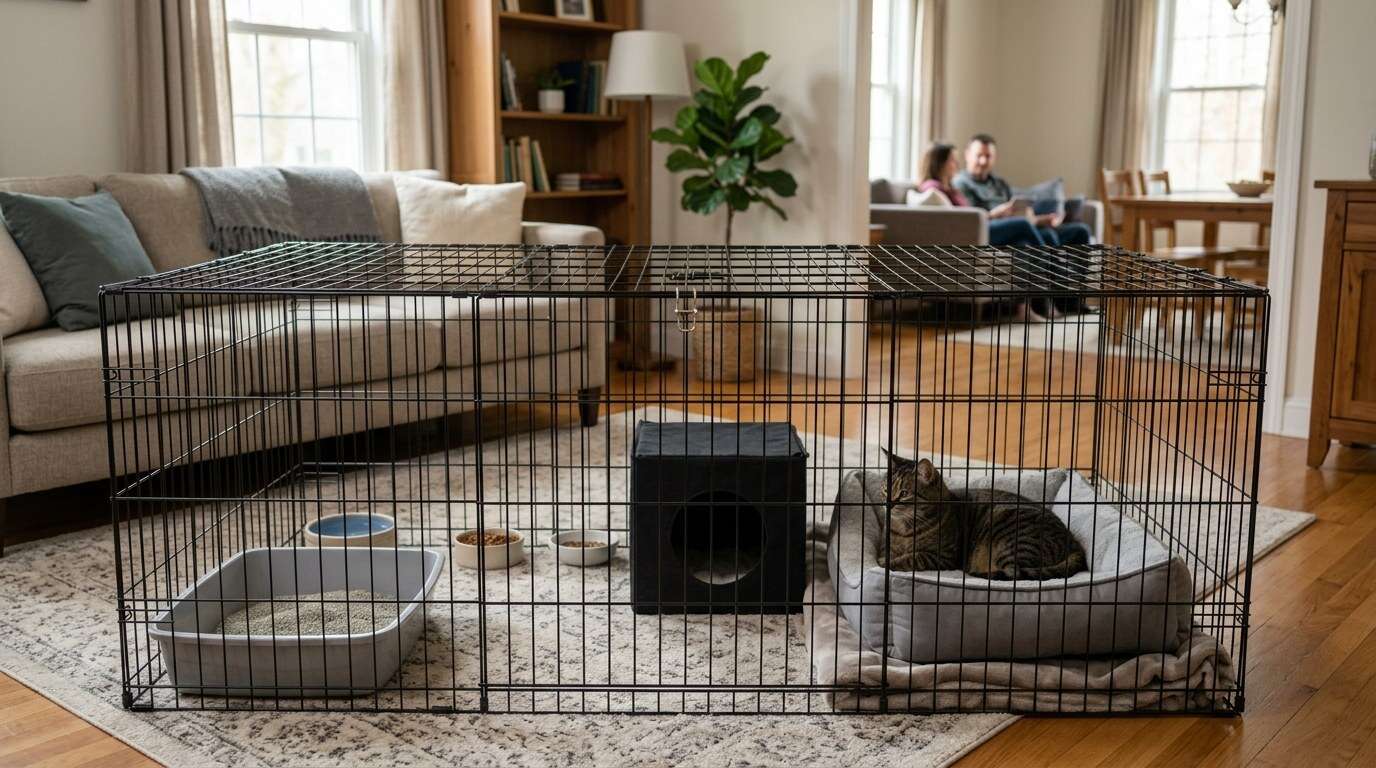
Choose a playpen big enough for a litter box, bed, food and water, and a hiding place, with room to stand, stretch, and turn. It should have a secure lid or roof, a door you can open without a struggle, mesh or bars she can't squeeze through or chew, and a stable frame. Use it only for as long as needed, put it somewhere she can see and hear the household, and follow your vet's instructions if it is for recovery.
In this guide:
- When a playpen makes sense
- When a playpen is not the right tool
- What to look for
- Size
- Height and roof
- Mesh, panels, and gaps
- Doors
- Stability
- Ventilation and visibility
- Cleaning
- Portability and storage
- Safety certifications and claims
- Types of playpen
- How to set it up
- Using it for recovery
- Using it to introduce a new cat
- Signs of stress
- Keeping her company
- Frequently asked questions
- Ventilation, supervision, and time limits

When a playpen makes sense
If your vet has recommended restricted activity, ask how long, how much space, and whether to use a playpen or a smaller space. Don't extend the period on your own.

When a playpen is not the right tool
- As a long-term home
- As punishment
For a cat with severe anxiety who becomes more distressed when confined. Ask your vet about alternatives.
As a replacement for a separate "safe room," which often gives more space
When a cat needs more space than the playpen offers
What to look for
Size
Cats need room to move, stretch, and use separate areas for eating, resting, and toileting. A tiny enclosure leads to stress and hygiene problems. Many shelter and veterinary welfare guidelines for temporary housing recommend considerably more space than a small carrier or small cage. As a practical guide, choose the largest option you can fit, and check the dimensions against the items you plan to put inside. Our cage setup guide covers sizing in more detail.
Height and roof
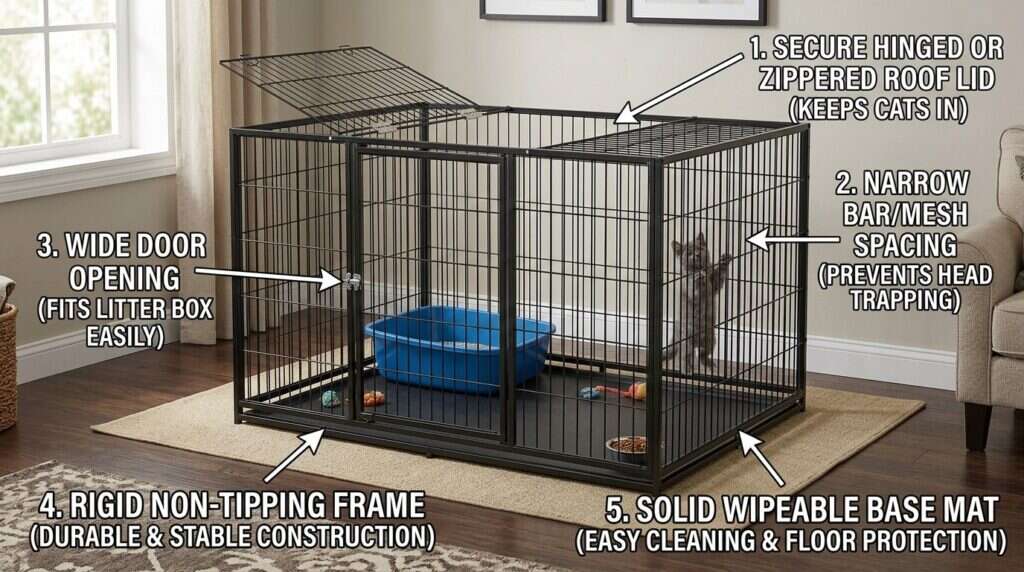
Cats jump. A playpen with low walls and no lid can be cleared by an athletic cat. Choose one with a roof or a secure lid, or walls tall enough that she can't climb or leap out. Some designs have a zip-up top or a hinged lid. Check that the top can't be pushed open from inside.
Mesh, panels, and gaps
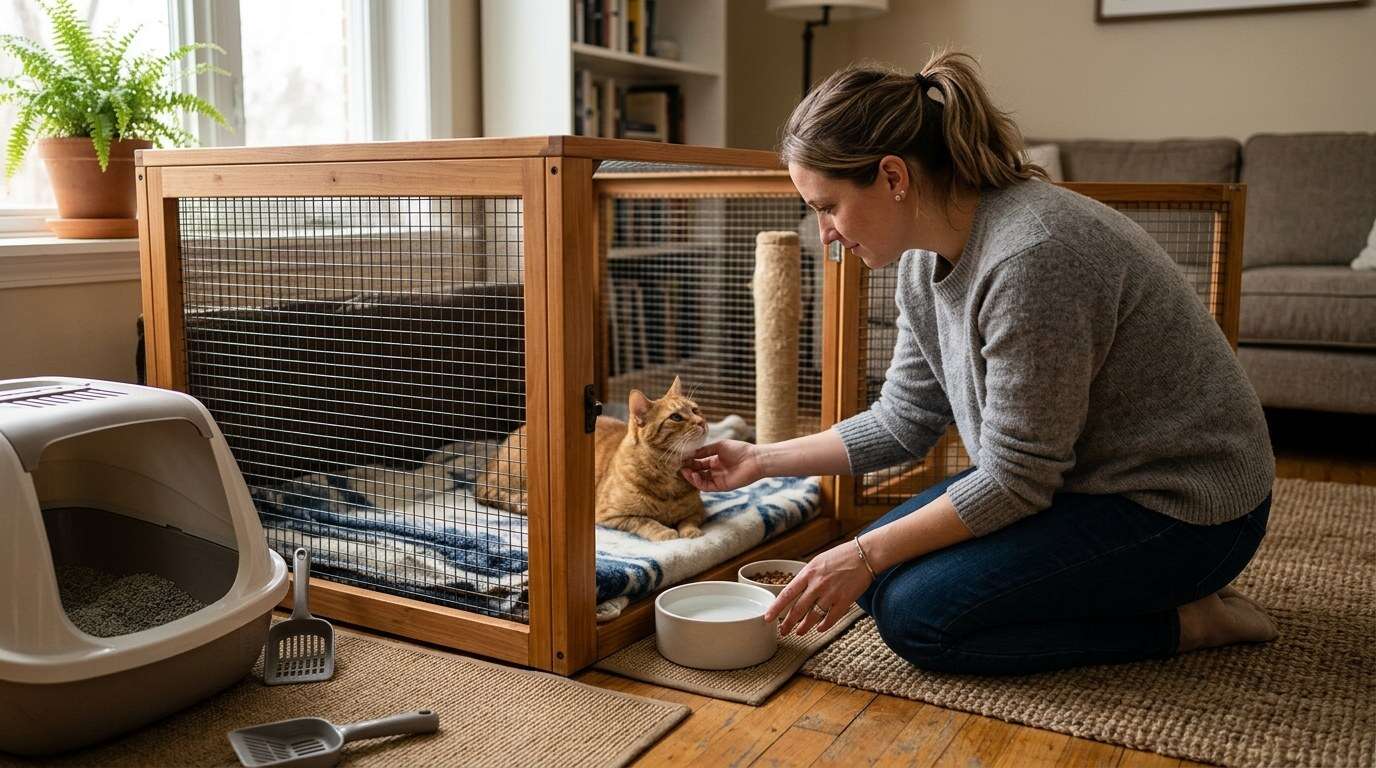
Mesh openings should be small enough that a cat can't push her head or paw through to get stuck. Kittens need smaller openings.
Materials. Metal grids, coated wire, or sturdy fabric mesh. Check that the fabric is strong and tear resistant, because claws and teeth can damage it.
Edges. No sharp points, loose wires, or gaps at the corners.
Floor. A solid, wipeable base is easier to clean than mesh. If the floor is mesh, add a mat.
Doors
A large door makes it easier to reach in, clean, and remove a cat who doesn't want to come out. Check that latches close securely, and that she can't open them. Look for a door that opens wide enough for a litter box.
Stability
A playpen that wobbles or collapses can frighten a cat or let her escape. Look for rigid frames, locking joints, and a flat base. Fabric playpens can sag and may not suit strong jumpers.
Ventilation and visibility
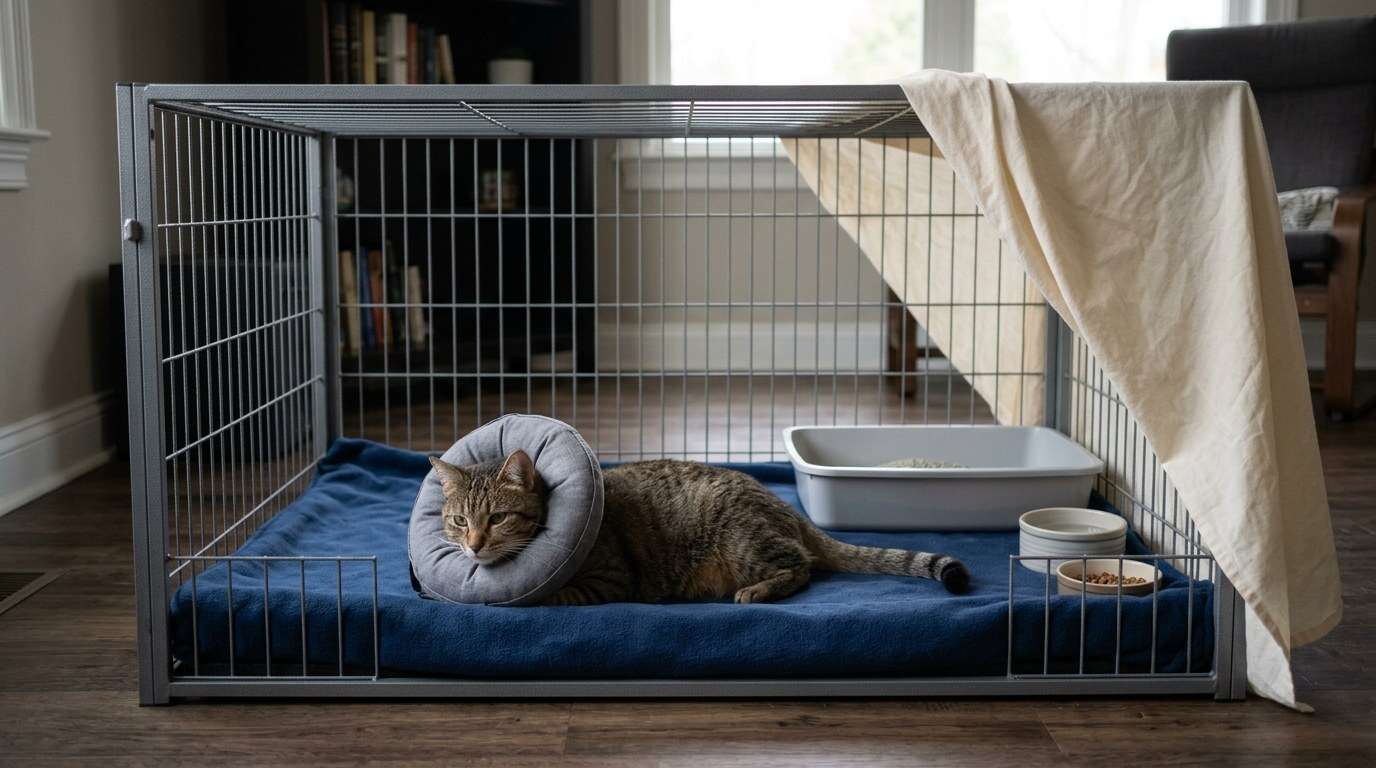
Mesh sides allow airflow and let her see out. Some cats like partial covering with a light blanket for security. Make sure there's still ventilation.
Cleaning
Wipeable materials, removable trays, and washable covers save time. Cats may have accidents during stressful periods.
Portability and storage
If you need to store it, look for folding designs. Check how it folds and whether that is practical for your home.
Safety certifications and claims
There is no universal standard for cat playpens. Check the manufacturer's weight limits and materials. Be skeptical of claims such as "escape proof."
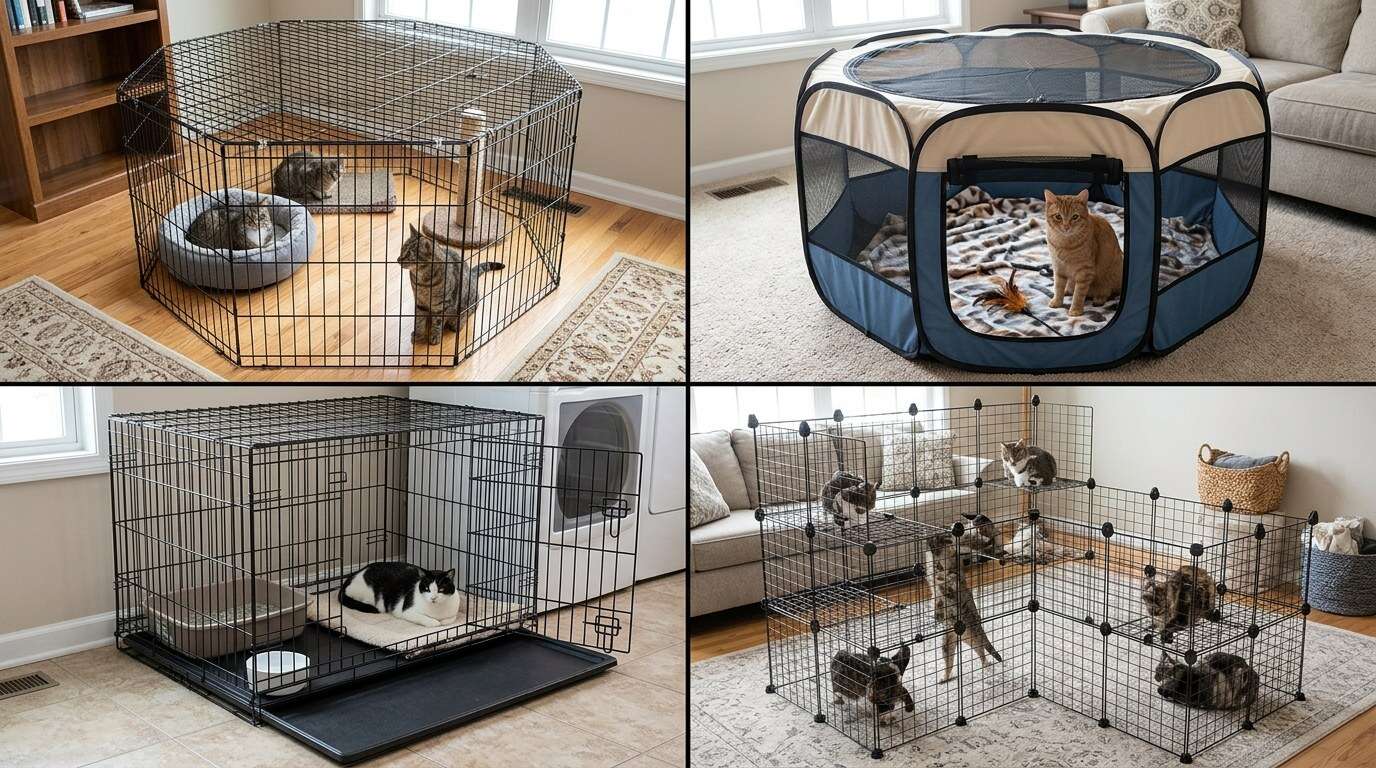
Types of playpen
How to set it up
Choose a spot. A place where she can see and hear the household but isn't in the middle of traffic. Keep it away from drafts and direct sun.
Add a litter box, away from the food and water. Use a shallow box if your cat is recovering from surgery and has trouble stepping in.
Add food and water, placed at the opposite end.
Provide a bed or a blanket that smells like her.
Include a hiding place, such as a box or a covered bed.
Add a low perch, if your vet allows. If she is restricted, skip anything she has to jump onto.
Offer enrichment. A safe toy, a scratching pad, and a food puzzle if suitable.
Cover part of the enclosure with a light sheet if she's nervous, leaving openings for air.
Check it daily for damage, cleanliness, and signs of stress.
Using it for recovery
If your vet has recommended restriction after surgery or injury:
- Follow their instructions on how long and how strict.
- Place the litter and food within easy reach.
- Check any wound or bandage as advised.
- Make sure she can't jump out or reach stitches.
- Provide a soft, supportive surface.
- Keep other pets away from her.
- Ask what signs mean you should call.
Don't release her early because she looks bored. Ask your vet whether you can add gentle enrichment.
Using it to introduce a new cat
A playpen can let your resident cat and the newcomer sniff and see each other with a barrier. Swap bedding to share scent, feed them near each other on either side, and watch body language. Take it slowly. A behaviorist or your vet can advise if there's aggression.
Signs of stress
- Constant crying or pacing
- Hiding and refusing to eat
- Not using the litter box
- Frantic attempts to escape
- Overgrooming
- Aggression when you approach
- Panting or drooling
Mild adjustment is normal, but prolonged distress is not. Contact your vet if it continues. Consider a bigger space, or a different arrangement.
Keeping her company
Cats confined for recovery still need attention. Sit near her, talk softly, and let her see you. Offer gentle play if allowed. If she must be alone, leave a radio on at low volume. Don't leave her confined while you're away for long hours unless the plan is safe and your vet agrees.
Cleaning
Spot-clean daily, and wash the litter box regularly. Use mild, unscented products. Avoid strong disinfectants and essential oils. Wash bedding often. Check for odors and moisture.
When to talk to your vet
Before using a playpen for post-operative or injury recovery
If your cat is not eating, drinking, or using the litter box while confined
- If she is very distressed
- If a wound looks worse
Frequently Asked Questions
How big should a cat playpen be?
As large as you can fit, with room for a litter box, bed, food, and water, plus space to stretch. Follow your vet's guidance for recovery.
Is a playpen cruel?
Not when used briefly, with enough space and attention, for a good reason. Long-term confinement is not appropriate.
Can I leave my cat in a playpen overnight?
Sometimes, if she has what she needs and your vet agrees. Check she's calm.
Can a playpen be used outside?
Not unsupervised. Outdoor use adds risks such as heat, predators, and escape.
Is a playpen better than a crate?
It usually offers more floor space. A crate may suit short stays.
Related reading
References
Association of Shelter Veterinarians, Guidelines for Standards of Care in Animal Shelters (for housing space recommendations)
International Cat Care, introducing cats and confinement resources (icatcare.org)
Your vet's own post-operative instructions
Manufacturer dimensions and material claims for any product you name
[PASTE-IN SECTION — Row 61: 61. Playpens: ventilation and safe use (paste into article 41, do not publish a new page)]
Your sheet's note for this row is the right one: don't promote a playpen as a substitute for adequate living space. Article 41 already covers choosing one. Add this section to it, since it answers the "safe use" half of the row's title.
Ventilation, supervision, and time limits
A playpen is a short-term tool, and the risks of using it badly are practical.
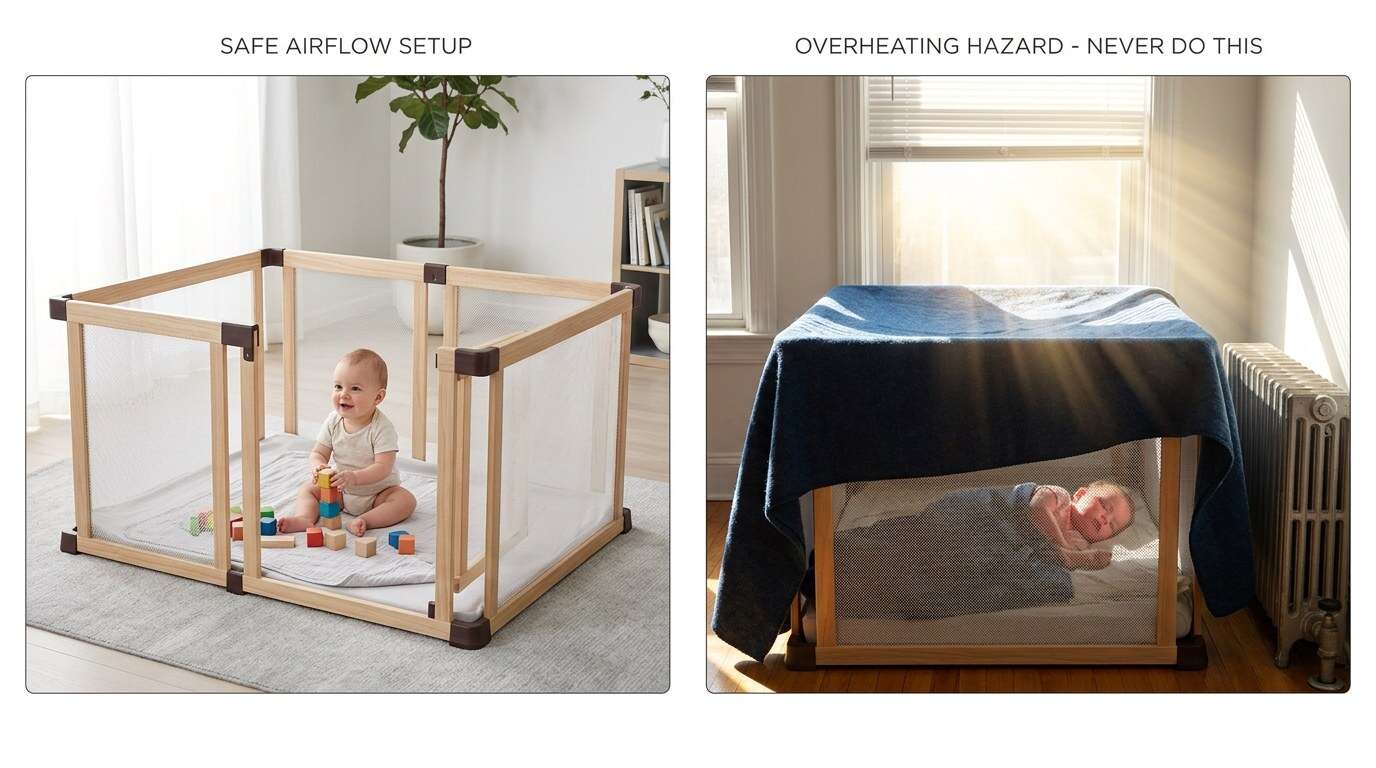
Ventilation. Mesh sides give airflow, but covers do not. If you drape a blanket over part of the pen for privacy, leave at least two sides open, and never cover all of it. Keep the pen out of direct sun and away from heaters, vents, and drafts. A cat in a closed, sunlit enclosure can overheat quickly, and signs include panting, drooling, and restlessness.
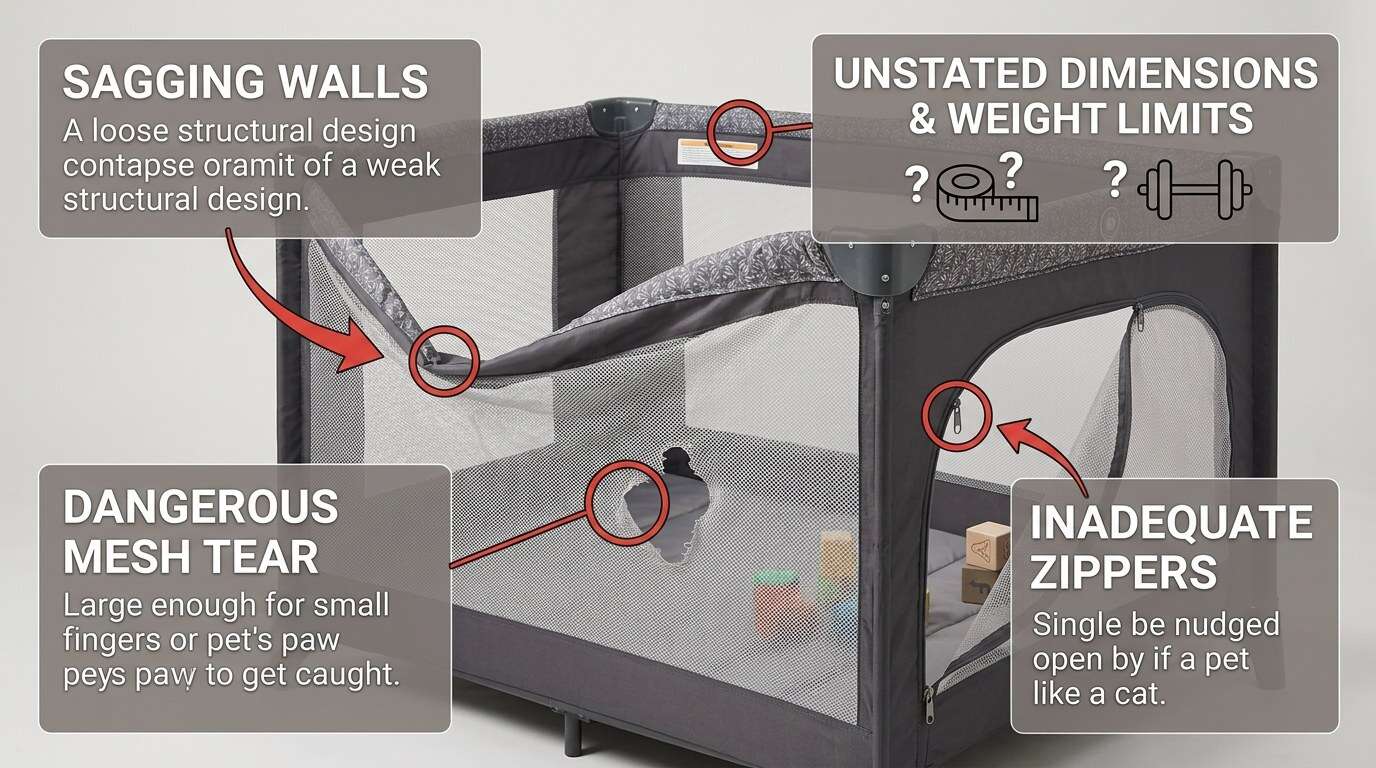
Supervision. Check on her several times a day. Look at her breathing, her posture, whether she has eaten and used the litter box, and whether the pen is intact. Soft-sided pens can be clawed or chewed open, and a cat that has gotten a paw or head through a gap can be hurt.
Time limits. There is no universal number, because the right duration depends on why you're using it. For recovery, your vet sets the period. For introductions or visitors, think in hours, not days. If you need a cat contained for longer than that, a spare room gives more space. A cat that spends most of a day confined, with nothing to do, is not being housed adequately.
Not a substitute for space. If your home is too small for a cat to move, climb, and rest, a playpen doesn't fix that. It reduces her space further. Treat it as one tool among several, alongside vertical space and daily play.
Red flags in product listings: "escape proof" claims with no description of the latch, no stated dimensions, no weight limit, sides that sag in the photos, and reviews that mention cats chewing through the fabric.
Signs it isn't working for her: constant crying or pacing, refusing food, avoiding the litter box, hiding with her face pressed into a corner, panting, or aggression when you approach. If you see these for more than a short period, give her more room and call your vet.
Link this section to your carrier training guide and your new-cat setup guide, as your sheet suggests.
Indoor Cat Kennel vs Carrier: Which One Do You Need?