This post may contain affiliate links. If you buy through them I may earn a commission, at no extra cost to you.
Windows are one of the few places in an indoor cat's life where a single mistake can be fatal. Cats fall from windows and balconies more often than most owners expect, and the injuries can be serious even from lower floors. The most common wrong assumption is that an ordinary insect screen will hold a cat. It won't. This guide explains how falls happen, why standard screens fail, which fixes are stronger, what to do about tilt windows and sliding doors, how to approach a landlord, and what to do if your cat does fall.
Short answer
Treat any open window as an exit. Use a lock or window stop that limits the opening to a gap your cat can't pass through, replace or reinforce screens with pet-proof versions, avoid leaving tilt windows open where she can reach them, and supervise a cat near open windows. If your cat falls, take her to a vet even if she seems fine, because serious injuries are not always obvious.
In this guide:
- Why cats fall
- High-rise syndrome
- Why standard screens aren't enough
- Stronger options
- Pet-proof screens
- Window guards
- Window stops and limiters
- Locks
- Fixed or secure panels
- Keep it closed
- Special risks
- Tilt windows
- Sliding windows and sliding doors
- Casement windows
- Balcony doors
- Air conditioner units
- Windowsills
- Talking to your landlord
- Habits that protect your cat
- If your cat falls
- Checklist for each window
- Frequently asked questions

Why cats fall
Chasing. A bird, insect, or moving object can trigger a leap.
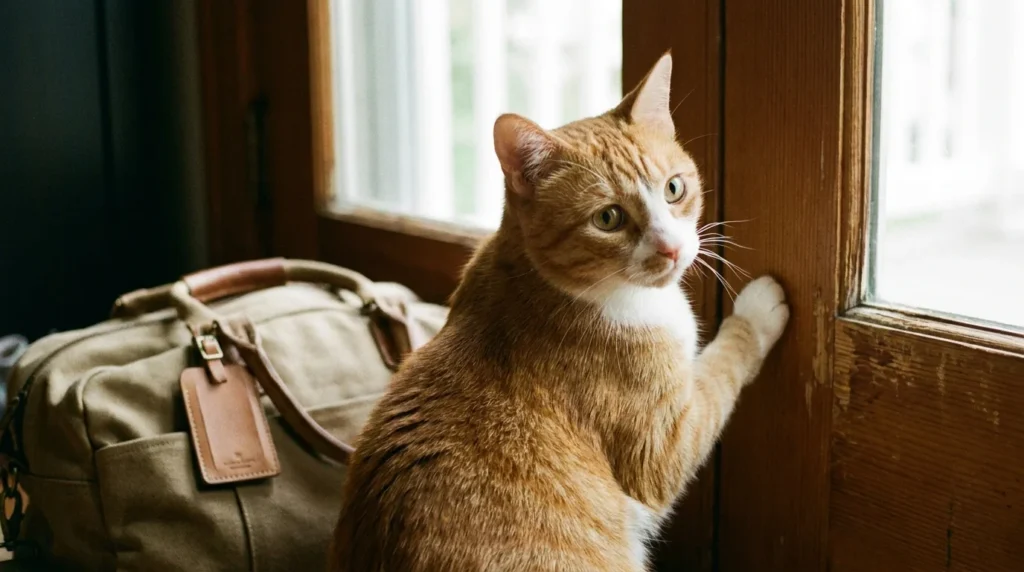
Leaning and misjudging. A cat can lean on a screen that looks solid.
Screen failure. The screen pops out or tears.
Startle. A loud noise or another animal can cause a sudden jump.
Balancing on a ledge. Windowsills can be narrow and slippery.
Sleeping in the sun on a ledge. A cat that rolls over can fall.
The idea that cats "always land on their feet" is only partly true. Cats can twist in the air, but that doesn't prevent injuries, especially from heights where they don't have enough time to adjust or where they hit hard surfaces.
High-rise syndrome
Veterinarians use the term high-rise syndrome for injuries in cats that fall from heights, typically from buildings. Studies of cats presented to emergency clinics after falls describe injuries such as broken limbs and jaws, chest injuries including collapsed lungs, and a cracked hard palate. Cats can survive significant falls, and some do so with surprisingly mild injuries, but others die. Falls from lower floors can also cause serious harm, so don't assume your floor is low enough to be safe.
Why standard screens aren't enough
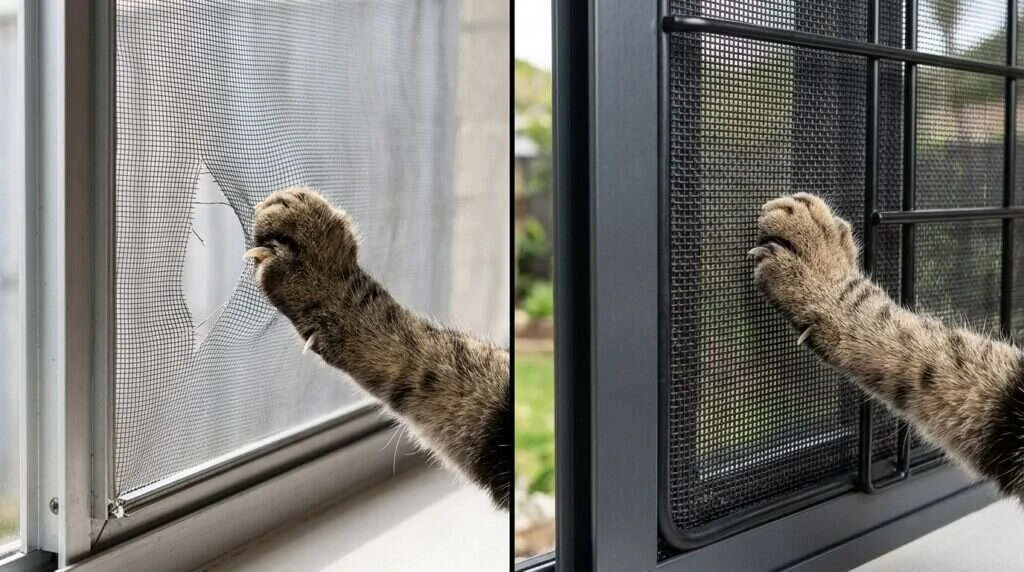
An ordinary insect screen is a thin mesh in a light frame, held in place by tension or clips. It's made to keep bugs out. A cat can:
- Claw through the mesh
- Push the frame out of its track
- Lean and cause the whole screen to detach
A screen that looks sturdy to a human may fail under a cat's weight and momentum. Older screens, screens with bent frames, and screens held by small clips are the weakest.
Stronger options
Pet-proof screens
Heavy-duty screens made of tougher material, such as vinyl-coated polyester, are designed to resist claws and chewing. Some come with reinforced frames. They are stronger than standard screens, but they still depend on the frame and the way they're installed. Check the manufacturer's claims, and ask whether they are intended to hold a cat's weight or only to resist claws.
Window guards
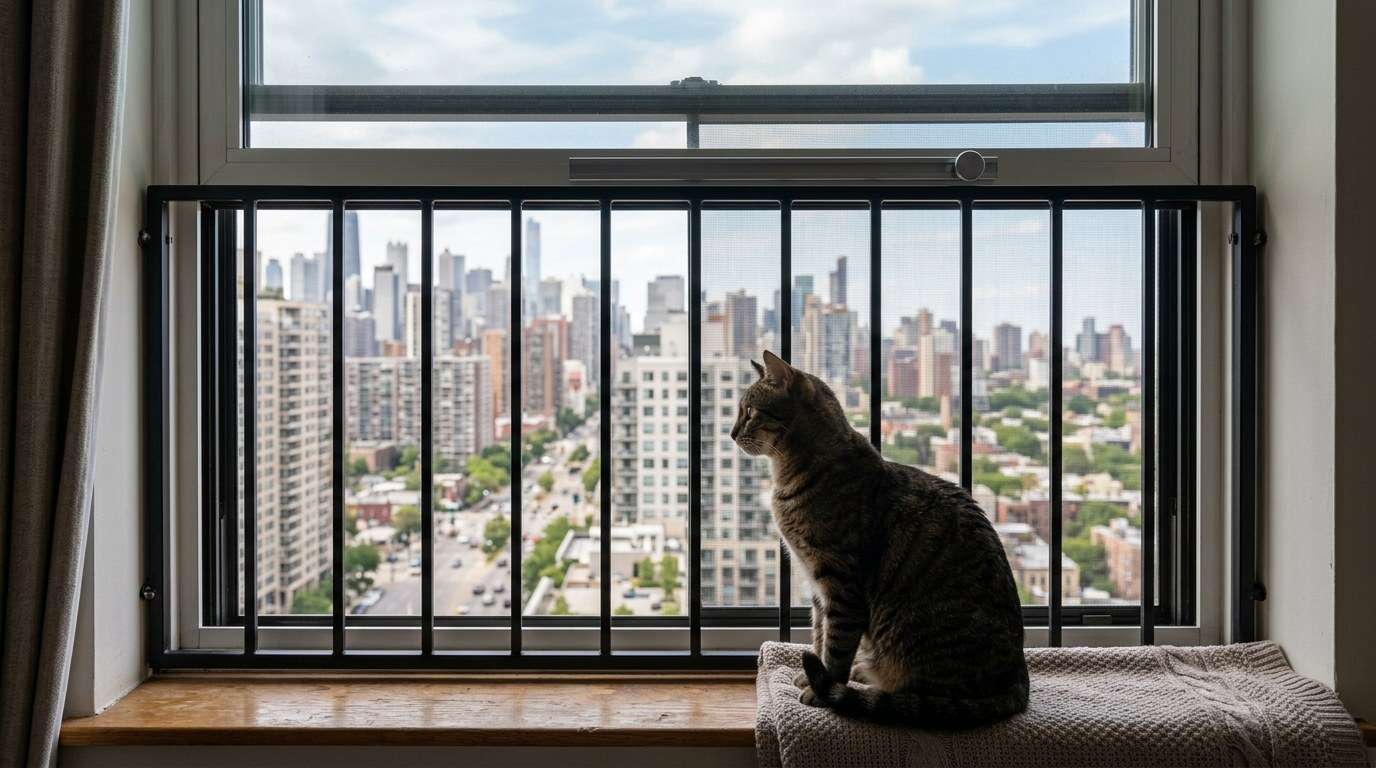
Metal bars or grilles fixed to the window frame. Some cities require landlords to install window guards in apartments where young children live, and some tenants can request them. Ask your landlord or building manager whether guards can be installed for pet safety, and check local rules.
Window stops and limiters
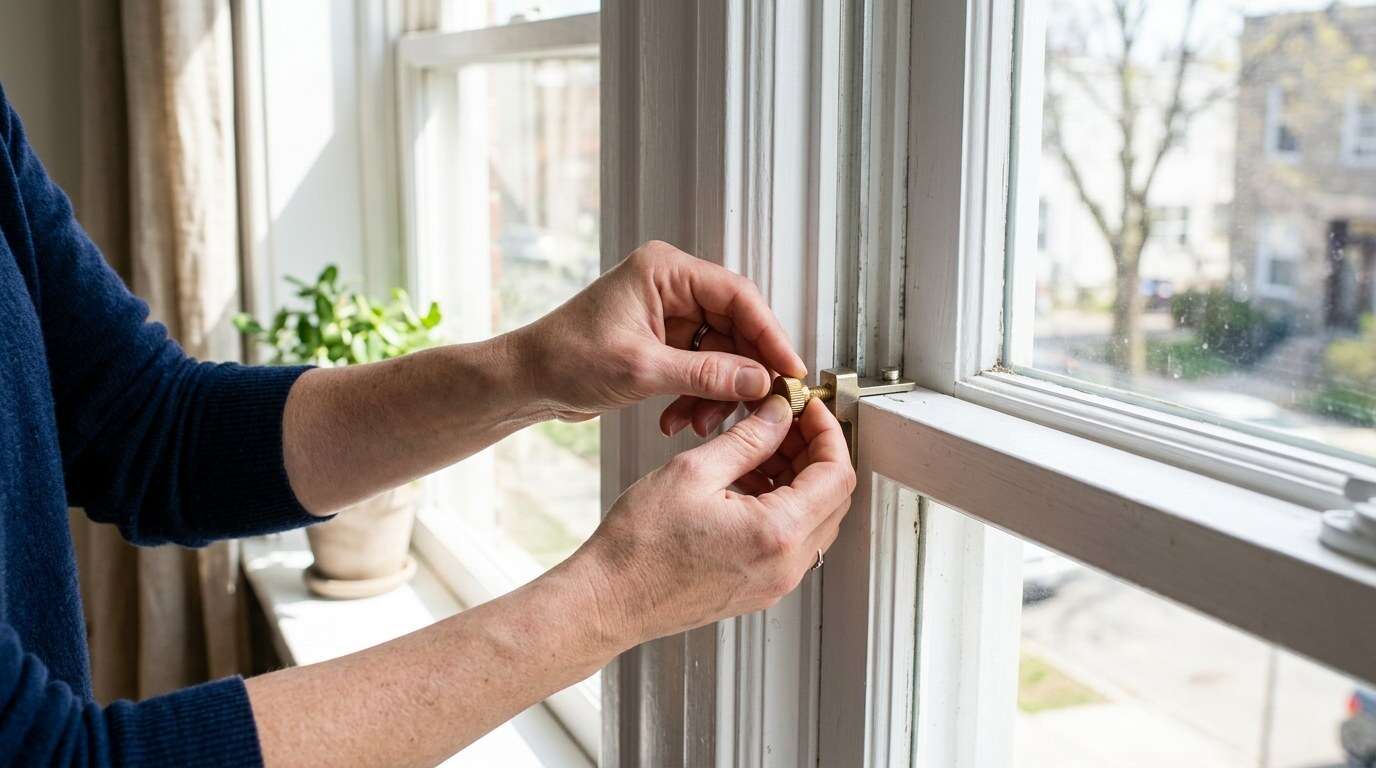
These limit how far the window opens. They can be built into the window or added as a bracket or pin. Make sure the remaining gap is too small for your cat's head and body. Cats can squeeze through narrow gaps. Kittens need smaller openings.
Locks
A window lock stops the window from being pushed open. Some can lock the window in a partly open position.
Fixed or secure panels
Some owners fit a clear panel or a fixed mesh into the opening so the window can be opened for air. If you do this, make sure it is anchored and the cat can't push it out.
Keep it closed
The simplest option is to keep the window closed when you can't supervise, and use fans or air conditioning for ventilation.
Special risks
Tilt windows
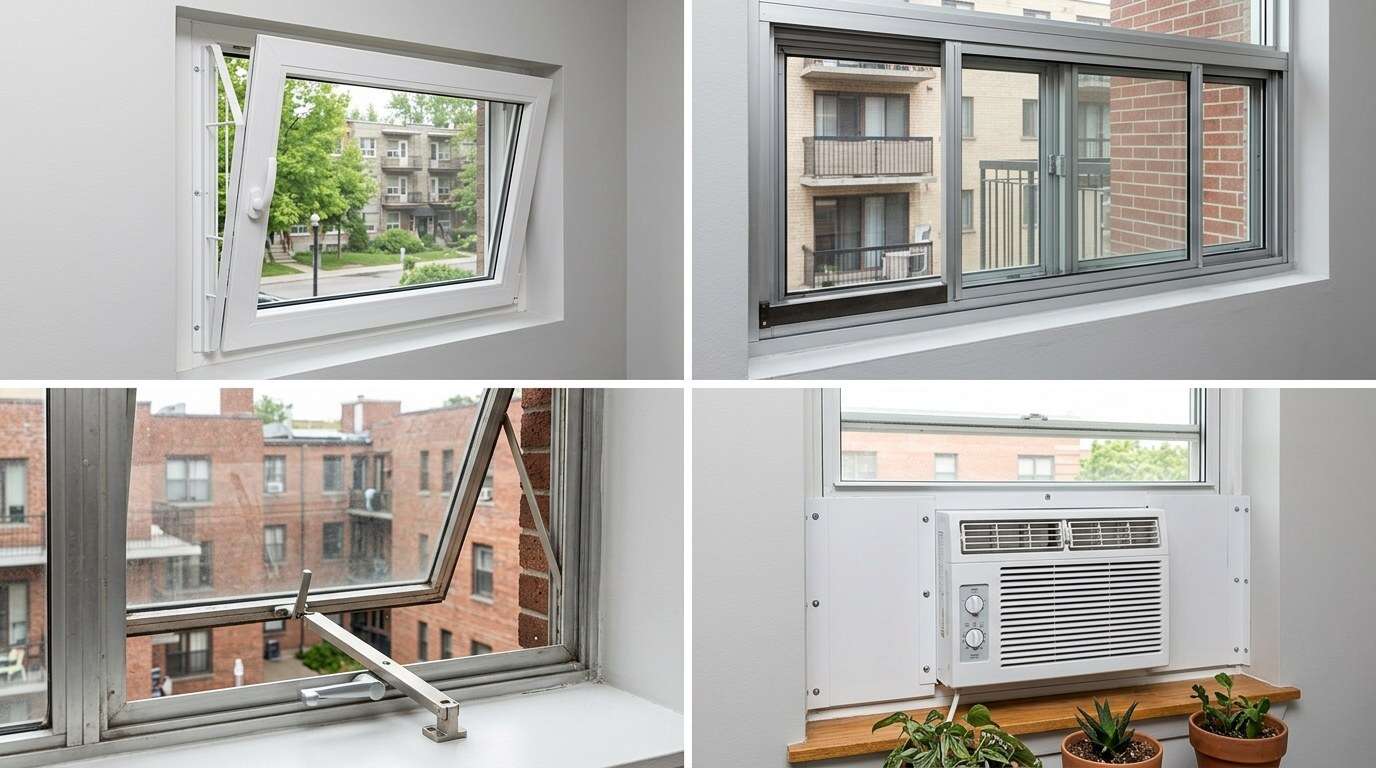
Windows that tilt open at the top can create a V-shaped gap. A cat can slip into the space and become trapped, causing serious injury or death. Avoid leaving tilt windows open where a cat can reach them, or use a barrier that fills the gap.
Sliding windows and sliding doors
Check the track for gaps, and the latch for strength. A cat can slide a loose window open. Use a bar or lock in the track.
Casement windows
These open outward on a hinge. A cat can fall through if the opening is large. Use a limiter.
Balcony doors
Treat these like windows. If you use a balcony, make sure it is secured with a cat-proof barrier. See our enclosure guide.
Air conditioner units
Window units can leave gaps at the sides. Seal them with a solid barrier.
Windowsills
Narrow sills, wet surfaces, and objects on the sill can make a cat slip. Keep the sill clear and consider a wider, stable perch. See our window watching station guide.
Talking to your landlord
If you rent, you may be limited in what you can change. A short, polite request in writing often works.
Hello [Name], I have an indoor cat and I'm concerned about falls through windows. Could you tell me whether it would be possible to install window stops or pet-safe screens in my unit, or whether I can install them myself at my own cost and remove them when I leave? I'm happy to follow any rules about the work. Thank you.
Keep a copy of the reply. Some leases forbid altering windows, so ask before you do.
Habits that protect your cat
Keep windows closed or secured when you aren't home.
Don't open windows wide when your cat is nearby and you're distracted.
Close the window if your cat is excited by something outside.
Keep her microchip and ID information current.
Give her safe windows to watch, so she isn't tempted to find a way out.
Make sure all family members and visitors know the rules.
Check screens and frames regularly for damage.
Don't leave her unsupervised on a balcony.
If your cat falls
Stay calm and go to her safely. Don't put yourself at risk.
Handle her gently. Support her body, and avoid pressure on her chest or limbs. Use a towel or a flat board if she can't move well.
Take her to a vet or an emergency clinic right away, even if she seems fine. Cats may hide pain and shock, and internal injuries, chest injuries, and facial injuries may not be obvious. Call ahead so they can prepare.
Watch for signs. Open-mouth breathing, bleeding from the nose or mouth, inability to stand, pale gums, and extreme lethargy are emergencies.
Follow your vet's advice. She may need X-rays, pain relief, and monitoring.
If your cat escapes through the window and isn't injured, search close to the building first, because frightened cats often hide nearby. Our escape response guide has details.
Checklist for each window
- ☐ Window can be locked or limited
- ☐ The gap is too small for your cat's head and body
- ☐ Screen is a pet-proof type and firmly mounted, or the window is closed
- ☐ No tilt-window gap she can reach
- ☐ Track and latch are secure
- ☐ Air conditioner gaps sealed
- ☐ Sill is clear and stable
- ☐ Balcony door secured
- ☐ Everyone in the household knows the rules
- When to talk to your vet
- Immediately after any fall
If your cat is anxious or tries to escape through windows
If she is frantic at the sight of animals outside, since this can signal stress
Frequently Asked Questions
Will a regular window screen keep my cat in?
No. Standard screens are not designed to hold a cat's weight.
Are pet-proof screens fully safe?
They are stronger, but their safety depends on the frame and installation. They're not a substitute for supervision and locks.
Can cats really survive falls from high floors?
Some do, but many are seriously injured or killed. Don't rely on survival.
Do I need to worry about low floors?
Yes. Falls from lower heights can still cause serious injuries.
Is a tilted window safe?
It can trap a cat. Avoid it where she can reach.
Is my cat too old to jump?
Older cats can still fall. Assume every cat can.
Related reading
References
A published veterinary study on feline high-rise syndrome (for example from the Journal of the American Veterinary Medical Association or a veterinary school). Find the exact citation and verify any survival or injury figures before stating them.
AVMA or AAFP guidance on indoor cat safety
Local window guard rules for your region, if you mention them
Manufacturer specifications for any pet-proof screen or window stop you name
How to Choose a Cat Playpen for Recovery or Short-Term Separation