By Emma Hartley | Reviewed by IndoorCatWell Editorial Team | Last updated September 2026
This article provides practical, veterinary-supported cat care guidance. If you buy through our links, we may earn an affiliate commission at no extra cost to you. Read our full Affiliate Disclosure.
A clean travel carrier is vital not just for sanitary health, but for emotional comfort. Cats experience the world predominantly through scent; if a crate carries the lingering chemical stench of harsh bleach, artificial fragrances, or residual clinic pheromones, your cat will fiercely resist entering it. Cleaning a carrier properly requires fragrance-free detergents, non-phenolic disinfectants, and complete drying.
⚡ Sanitizing Rules at a Glance
- Detergents to Use: Unscented dish soap, mild enzymatic pet cleaners, or 1:1 distilled white vinegar solutions.
- Chemicals to Banish: Phenolic disinfectants (Lysol/Dettol), pine oils, tea tree oils, and concentrated bleach.
- The Odor-Eraser Trick: Dust interior surfaces with plain baking soda overnight to neutralize urine odors without scent.
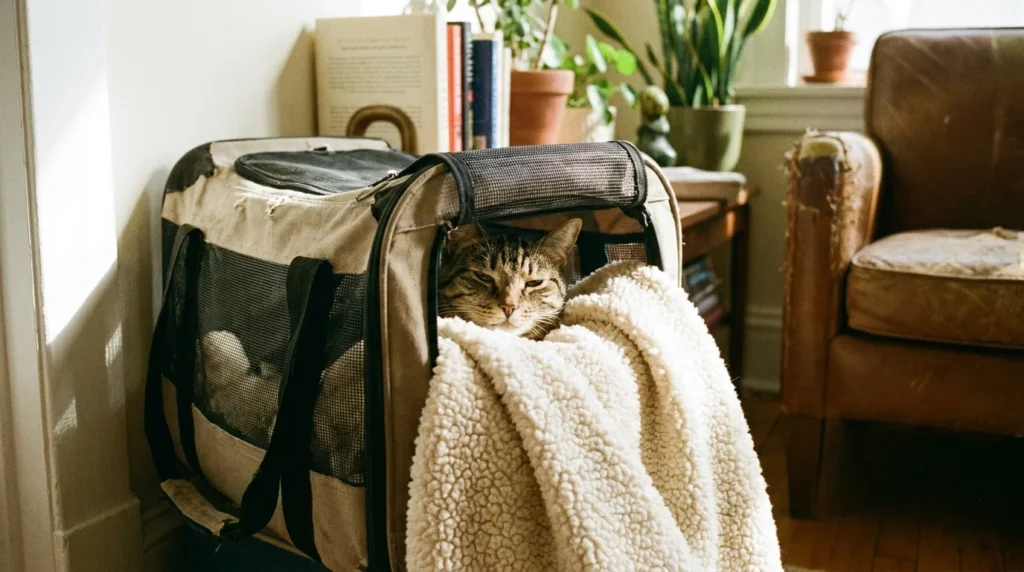
- Post-Wash Scent Restoring: Always place a familiar, home-scented unwashed blanket inside once fully air-dried.
Why Scent-Safe Cleaning Matters to Your Cat
Felines possess 40 times the olfactory receptors of human beings. When humans clean a plastic crate with heavily fragranced lemon or pine cleaners, the smell seems “fresh” to us. To a cat trapped inside that confined plastic box, those volatile organic compounds (VOCs) are agonizingly suffocating, triggering instant panic before travel even starts.
Step-by-Step: Cleaning a Hard-Sided Plastic Carrier
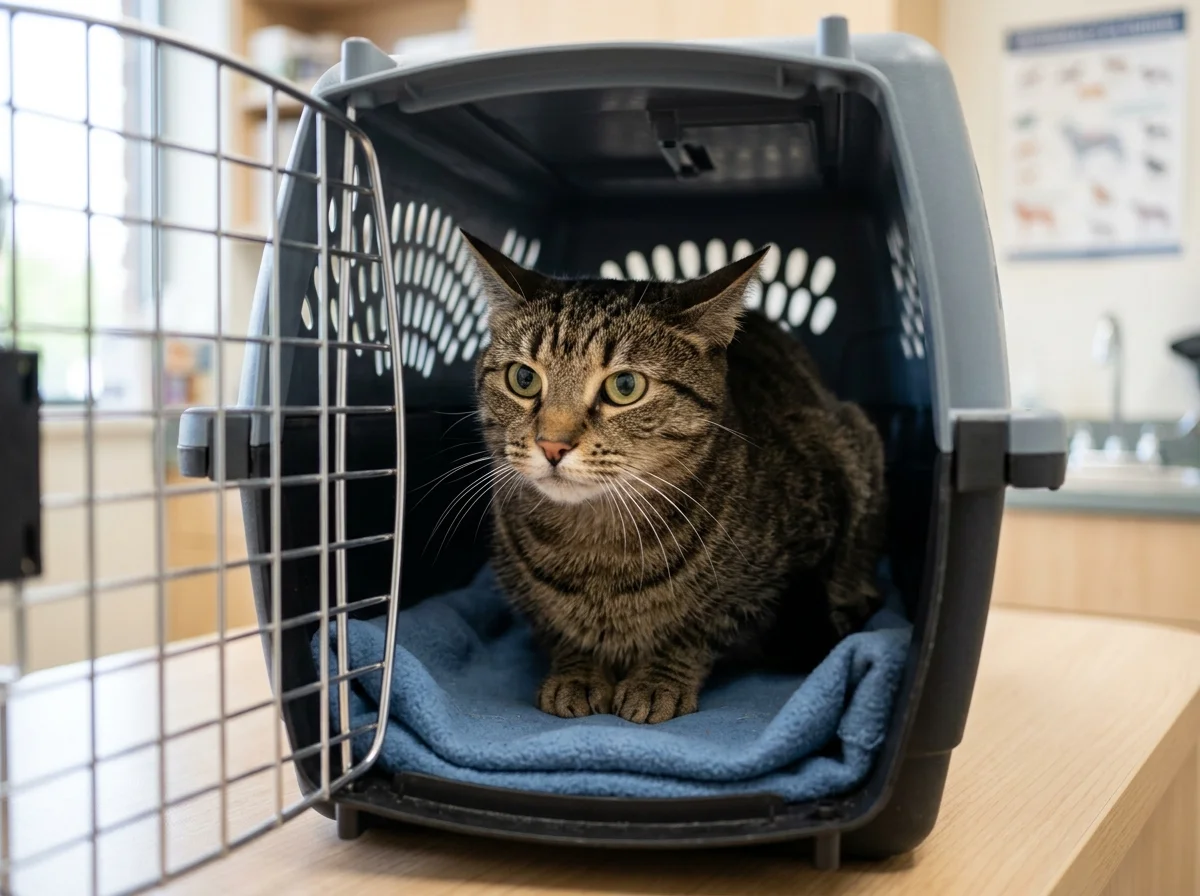
- Disassemble the shell: Unclamp or unscrew the plastic bolts holding the top and bottom clamshell halves together. Remove the wire metal grate door and take out all bedding for a separate machine wash.
- Scrub with warm soapy water: In a bathtub or garden patio, use warm water and a dye-free, fragrance-free dish soap (like Seventh Generation or Dawn Free & Clear). Use a stiff nylon brush to scrub the deep floor channels and vent grilles where hair and dried saliva collect.
- Neutralize urine or vomit accidents: If an accident occurred, spray an enzymatic cleaner (such as Nature’s Miracle) liberally over the plastic floor. Enzymes actively consume uric acid crystals rather than merely masking the scent.
- Rinse copiously: Hose down both halves thoroughly with clean water until absolutely zero soap bubbles remain. Residual soap leaves a sticky film that attracts dirt.
- Sun-dry completely: Place the halves in open air or indirect sunlight until 100% dry. UV light provides natural antimicrobial sanitization.
Step-by-Step: Cleaning a Soft-Sided Fabric Carrier
- Extract the support board: Soft-sided carriers feature a removable rigid plywood or plastic baseboard tucked inside the bottom fleece pad. Always slide this board out before washing; submerging cardboard or wood ruins the structural integrity of the crate.
- Vacuum seams and mesh: Use a handheld vacuum hose to clear shedding fur, grit, and dried treats trapped in the internal corner seams and nylon mesh windows.
- Spot-clean the nylon exterior: Sponge down the ballistic nylon outer fabric with a mixture of warm water and a dash of gentle laundry detergent. Never toss soft carriers into a heavy machine wash unless the manufacturer tag explicitly permits it, as agitation bends internal wire support frames.
- Disinfect with distilled vinegar: Mist the interior fabric with a 1:1 solution of white vinegar and distilled water. Acetic acid kills surface bacteria, eliminates odors, and dissipates to a neutral smell once dry.
- Air dry fully: Hang unzipped in a well-ventilated room for 24 hours before reinserting the base pad.
Toxic Cleaners You Must Never Use Near Cats
| Cleaning Chemical | Common Household Forms | Feline Toxicity Danger |
|---|---|---|
| Phenols & Cresols | Lysol concentrate, Dettol, Pine-Sol | FATAL (Felines lack glucuronyl transferase) |
| Essential Oils | Tea tree, eucalyptus, citrus, lavender | Acute liver failure & neurological tremors |
| Undiluted Chlorine Bleach | Standard laundry bleach | Chemical paw burns & respiratory ulceration |
| Artificial Fragrances | Scented laundry sheets, Febreze | Permanent crate aversion & feline asthma |
For a detailed review of essential oil dangers around felines, read our guide on are essential oils safe to diffuse around indoor cats.
How to Keep the Carrier Appealing Year-Round
Never stow your clean carrier away in a dark, dusty garage or attic closet. If the carrier only appears 10 minutes before a stressful car ride (read how to stop a cat from meowing in the car), your cat will immediately sprint under the bed.
- Place the clean carrier in a corner of your living room or bedroom with the door propped wide open.
- Line the bottom with a plush fleece blanket carrying your cat’s familiar scent.
- Toss in organic catnip or daily crunchy treats so the carrier serves as an everyday sleeping cave. Pack properly for trips using our cat travel packing checklist.
Frequently Asked Questions
Can I wash a removable carrier fleece in my regular laundry?
Yes, but use only unscented, dye-free hypoallergenic laundry detergent. Never add commercial fabric softeners or scented dryer sheets, as artificial perfumes cause carrier aversion.
Is it safe to use Clorox or Lysol wipes inside a cat carrier?
Avoid standard household disinfectant wipes. Many contain benzalkonium chloride or phenolic compounds that can burn feline footpads and cause oral ulceration when cats groom their paws after resting in the crate. Use veterinary-specific Rescue (accelerated hydrogen peroxide) wipes instead.
How do I remove the stubborn “vet clinic smell” from my carrier?
Wash with unscented soap, rinse thoroughly, and spray with a 50/50 mixture of distilled white vinegar and water. Let it dry completely in the sun, then place a blanket your cat slept on inside for 48 hours to restore familiar pheromones.